
[Sheet music] Johann Christoph Schmidt (1712-1795) - Lesson I, Op.3 (c.1757)
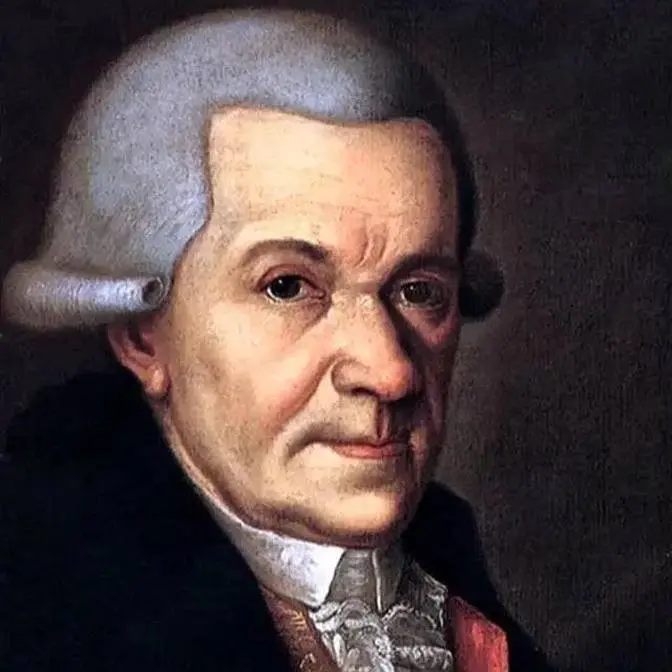
♫ Recovery project of sheet music by Johann Michael Haydn (1737-1806) and by other neglected composers ♫
Composer: Johann Christoph Schmidt (1712-1795)
Work: Lesson I, Op.3 (c.1757)
Software: Sibelius + Instruments samples
World Premiere: No
Real performance: https://open.spotify.com/album/5rw3us0sI00Mpg4b2hyree
Sheet music (pdf): https://ks4.imslp.net/files/imglnks/usimg/f/f1/IMSLP553214-PMLP850160-Smith_J.C_Lessons_Op.3.pdf
Sheet music (xml): https://www.mediafire.com/file/8yfxkxvysfkbe91/SCHM%2ADT-Lesson1.xml/file
Info about sheet music recovering project: https://i.ibb.co/hML4xyJ/HAYDN-M-3.jpg
---
Johann Christoph (John Christian) Schmidt [Smith]
(Ansbach, 1712 - Bath, 3 October 1795)
German composer and organist mainly active in England. Smith arrived in England in 1720, having been called to London by his father, who in turn had immigrated there in 1716 to serve as George Frederick Handel’s chief copyist and financial advisor. He received his musical education from Johann Pepusch, Thomas Roseingrave, and probably Handel, serving Handel as his private secretary after 1730. In 1733 he premiered his first opera, Ulysses, which gave him a reputation as one of Handel’s disciples. He eventually wrote three other opera serias: Dario, Il Ciro rinconosciuto, and Issipile. In 1753, he took over conducting Handel’s oratorio series when the elder composer was no longer able to do so, eventually partnering with John Stanley after 1760. During this period he also composed for Drury Lane Theatre three operas, two of which, The Fairies (1755) and The Tempest (1756), were based upon Shakespeare. David Garrick himself wrote the libretto for his last opera, The Enchanter of 1760. Smith also served as the chief organist of the Foundling Hospital, where many of the oratorios were performed. He retired to Bath following the composition of a funeral service for the Prince of Wales in 1772. Smith was one of the major composers of the English oratorio; between 1760 and 1772 he wrote no fewer than seven, beginning with Paradise Lost. The remainder consists of Tobit, Jehoshaphat, Redemption, Nabal, Rebecca, and Gideon, the last three of which are arrangements of music by Handel. He also published five volumes of pieces for the keyboard (1732-1763). While this composer influenced his use of counterpoint and vocal style, his style was much more akin in his music to his colleague Thomas Arne. #ClassicalMusic