
Johann Christoph Altnikol (1720-1759) - Cantata 'Frohlocket und jauchzet in prächtigen'
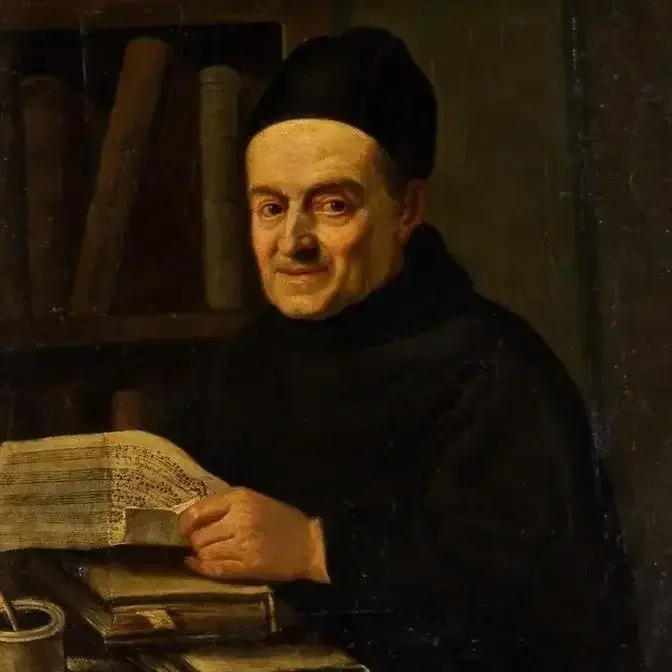
Alles Gute zum Geburtstag Johann Christoph Altnikol! 🎺👑
Composer: Johann Christoph Altnikol (1720-1759)
Work: Cantata 'Frohlocket und jauchzet in prächtigen'
Performers: Barbаra Schlіck (soprano); Hеіn Mееns (tenor); Hаrry van der Kаmp (bass);
Rhеinischе Kantorei; Das Klеinе Konzert; Hermаnn Mаx
Cantata 'Frohlocket und jauchzet in prächtigen'
1. Coro 0:00
2. Rezitativ 6:24
3. Aria 7:35
4. Rezitativ 14:48
5. Aria 15:40
6. Rezitativ 20:06
7. Accompagniato 20:47
8. Coro 21:56
9. Choral 23:52
Painting: Franz Anton Maulbertsch (1724-1796) - Die göttliche Vorsehung und Tugenden (1765)
HD image: https://flic.kr/p/2o7iEBL
Engraving: Johann Georg Schreiber (1676-1750) - Das Stifft Naumburg und Zeitz nebst einen grossen Theil derer angraentzenden Laender (1718)
HD image: https://flic.kr/p/2nxjQmG
Further info: https://www.prestomusic.com/classical/products/7955279--sacred-cantatas
Listen free: https://open.spotify.com/album/68SEUCNcA37xbbpXfo2WOZ
---
Johann Christoph Altnikol [Altnickol]
(Berna bei Seidenberg, bap. 1 January 1720 - Naumburg, bur. 25 July 1759)
German organist and composer. He attended the Lauban Lyceum in 1733, and was a singer and assistant organist at St Maria Magdalena, Breslau, from about 1740 until the beginning of 1744. He then wished to return to Germany and devote himself to ‘higher studies’ at Leipzig, and as his parents were poor, he asked for a viaticum. He was granted four thalers on 23 January 1744, and on 19 March he matriculated at Leipzig University as a theological student. He soon began to assist Bach, chiefly as a bass, and did so regularly from Michaelmas 1745. In taking on a university student Bach exceeded his authority, but he was always short of basses, for the boys of the Thomasschule often left before their voices had settled. On 16 April 1746 W.F. Bach recommended Altnickol as his successor at Dresden, saying that he had studied the keyboard and composition with his father; but he was disregarded. On 26 April 1747 Altnickol applied to the Leipzig Council for a grant, saying that he had been singing bass for three years. Burgomaster Stieglitz seized the opportunity to say that the Kantor had no business to make such appointments; but the council agreed to pay 12 thalers (19 May), given proof that Altnickol had actually done the work. Bach certified on 25 May 1747 that Altnickol had worked continuously from Michaelmas 1745. On 8 November 1747 a vacancy for an organist and schoolmaster arose at Niederwiesa (near Greiffenberg, Silesia); on 3 December the son of some local worthy drafted a letter inviting Altnickol to apply. The draft went to another local worthy for approval (no names are given) with a covering letter stating that the writer had known Altnickol at Lauban and Leipzig, and that he was a peaceable and upright man, no great theologian, but a good bass, violinist and organist, who understood composition and had endeared himself to Herr Bach.
Subsequent events show that he had also endeared himself to Fräulein Bach. On 1 January 1748 Bach testified that Altnickol was a pupil of whom he need not be ashamed; on 18 January Altnickol was appointed, and he gave satisfaction. He is said to have been a fine organist. A post at St Wenzel, Naumburg, fell vacant in the summer, and on 24 July 1748 Bach recommended Altnickol to the council, who unanimously appointed him on 30 July, before they had even received his formal application. There is a story that the council preferred Bach’s candidate to Johann Friedrich Gräbner, who was being put forward by the all-powerful Count Brühl; by rushing the matter, they were able to say that the Count’s recommendation came too late. Gräbner nevertheless became Altnickol’s successor in 1759. Altnickol moved in at mid-September, and married Bach’s daughter Elisabeth Juliana Friderica on 20 January 1749. He invited the Naumburg Council to the wedding, thus securing a present of six thalers. A son, Johann Sebastian, was born on 4 October, but was buried on 21 October. On 24 November Altnickol’s father died, and a few months later Bach fell seriously ill. According to Forkel, it was to Altnickol that Bach dictated his last chorale prelude (though the familiar manuscript fragment is not in Altnickol’s hand). After Bach’s death, Altnickol exercised the function of a trustee, with responsibility for distributing his estate. He took Bach's mentally handicapped son Gottfried Heinrich with him to Naumburg, where he also taught J.G. Müthel, Bach’s pupil, until 1751. At the end of 1753 he, like W.F. Bach, competed unsuccessfully for an appointment at the Johanniskirche, Zittau; and in 1757 he taught the trumpeter J. Ernst Altenburg. In Naumburg Altnickol directed performances of a pasticcio Passion cantata with music by C.H. Graun, Bach and Telemann and of a presumably early version of Bach's St Matthew Passion. #ClassicalMusic