Get 50% OFF your first 6-bottle box https://bit.ly/BrightCellarsFung for $53 plus taxes. Bright Cellars is the monthly wine club that matches you with wine that you’ll love. Get started by taking the taste palate quiz to see your personalized matches!
Do you want to give a shout out what part of the Philippines you're from?
Most of the time when you talk about Filipino food in New York City, people will point you to Queens, New York.
And that's definitely true for the traditional stuff.
But these new Filipino spots in the city are doing something you've never seen before.
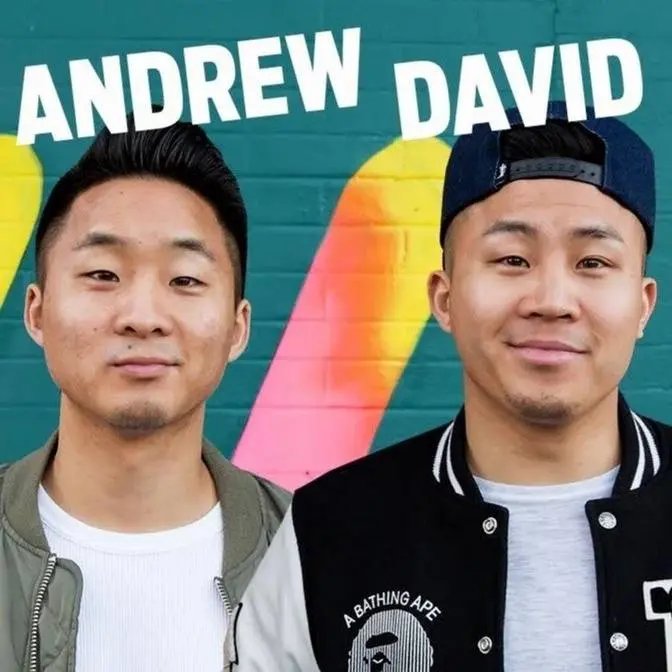
What's going on everybody? Welcome to a very special Filipino episode of Fun Bros Food.
Today, we are exploring the future of Filipino cuisine in America through New York.
And with us, we got Ryan Benson, the half Filipino.
What's up guys? Long time no see.
We are in the Lower East Side, which is not historically known for Filipino food.
But there is something that has been very special happening over the past couple of years.
Basically, every type of cuisine you can think of, they have it right here.
The Lower East Side really is almost like a micro United Nations when it comes to food.
For years now, we have been covering Filipino food on our channel.
All different types from the fast food to the traditional food.
But now, we got to cover this next generation.
These are the type of spots that do appeal to Filipino Americans.
You know, especially the hip ones.
But also appeal to the traditional Filipinos as well.
2021, the future of Filipino food. What's our first spot, Benson?
Alright guys, so we're going to our friend Arus's new spot here in LES, Chismis.
It's actually a Filipino word for gossip.
Which, you know, a lot of titas would gossip over food.
That's kind of like the culture.
Gossip! Gossip!
Did you see who Ryan brought back to the family dinner last week?
No, that is exactly what happens.
It's like, you know, everyone meets over food.
It was a new girl!
Everyone meets over food, man.
The future of Filipino food.
Alright guys, so we're here with the chef proprietor, Arus.
What are the challenges of introducing elevated Filipino food to an audience?
Some of them, people have never even had the food.
The hardest part is, I think, introducing them to dishes from different regions.
Because Philippines is just not like one cuisine itself.
You know, there are so many regions.
So Sinigang can be three, four different types.
And they can taste pretty different from each other.
Chismis! Let's go to Chismis and talk about some Chismis.
Let's head in, man. I'm excited.
Alright everybody, big shout out to our sponsor today, Bright Cellars.
They are a fine wine service that is pairing you with wines from across the world.
Based off of a really quick online survey.
And they're delivering them straight to your doorstep.
It's like having a personal expert wine matchmaker.
This is great for people who know nothing about wine and want to learn.
And also wine drinkers who know what they like.
I just started drinking wine this past year and I realized I like fruity, bright wines in either red or white.
And for watching our video, they're giving you, our viewers, 50% off your first six bottle box of wine.
If you click on my link down below.
50% off. That is half off.
That is enough to make you consider almost anything.
Each box comes with wine education so you know where it comes from.
What temp to serve it at.
Suggested pairings.
Basically all the info you need to impress your friends or a date.
I love how you can get educated so quickly about wines.
I'm not a psalm yet, but at least maybe I could have a convo about it.
With great customer service and sustainable packaging, I got to say Bright Cellars is doing it right.
Making getting great wines super easy.
Some of the wines they sent me that I'm super excited about are this humdrum, which is a Viognier.
This batik, which is a Chenin Blanc.
And this watch keeper, which is a Verdeo.
And they're all very bright and light and cut the fat well.
And since we're eating Filipino food, such as kari-kari, which tend to be a little bit on the heavier side.
A light bodied white wine would work perfect for the food at Chismas and Mama Fina's, for example.
But again, don't take my word for it.
You should just give it a shot and try it yourself by clicking on the link down below.
Leading off here at Chismis.
Okay, guys.
So we have isaw, deep fried, like pig intestine.
And then it's usually given with a dip called suka, which is a vinegar based dip.
Very commonly eaten with beer.
Isaw.
It's a good drinking food because it's salty, it's fried.
It makes you want to drink beer.
All right, you guys.
We are looking at bone marrow sinigang, short rib kari-kari.
And that is...
Intestines again.
Snout and ears.
All right.
So let's start off with these, man.
Because this is like sinigang like I've never seen.
Yeah, I've never seen sinigang like this.
Can't wait to try this.
Let's prep it.
Should we get some of the bone marrow guys first?
Scoop that with a knife.
I'm already in here with the fork.
You're going to take a lot.
Try the sinigang with this.
There we go.
Look at this.
Bone marrow going on to the rizz eyes.
That is some juicy gossip.
Bone marrow sinigang.
Oh, wow.
Wow, bro.
The tamarind really comes out in this broth.
But it's super balanced.
Dipping sauce.
Wow.
You dip it.
That sauce.
I'm going to try a little bit.
The short rib from the sinigang with this.
With a little bit of bone marrow melted in to give it that creaminess.
Five out of five.
Hands down.
I'm not saying that just to say it.
That's a five out of five.
Wow.
Danger.
Yo, that was so good.
Ryan said it was better than his mom's.
Yeah?
Did I beat your mom?
Sorry, mom.
I mean, listen.
My mom's sinigang is amazing.
But this, it just takes it to the next level.
Moving on.
Ryan, to reference, you had a funny moment in another video with the bagong in the sense
of you like a lot.
I like a lot in it.
It's like how my aunt used to make it for me.
It was her favorite dish growing up.
And guys, it's been portioned out already.
So this is how you're supposed to eat it.
Yeah, yeah.
You guys got to get messy.
Come on, man.
It's still Filipino food, right?
That's right.
We can still get messy right now, right?
That's right.
You still got your hands dirty?
That's right.
Short rib kare-kare.
Oh, my god.
The best kare-kare I have ever had.
I love it.
It has that peanut flavor, but it doesn't taste like peanut butter.
Yeah.
And it's just working so well on that short rib.
Now, Ares, would you say this is kind of like your take on a sisig?
Pretty much sisig style, but we call it dinakdakan.
Dinakdakan.
Hey, this is Ilocano food, guys.
My god.
Wow, I love that.
For me, I'm going with the bone marrow sinigang for me.
See, the kare-kare is the best kare-kare I've had, but this dinakdakan is out of this world.
I got to roll with the dinakdakan and then the kare-kare tied for my favorite, man.
Ares, I got to say, man, I think Chismis is setting a new standard for new Filipino restaurants,
man.
Thank you so much.
Oh, my goodness.
Thank you for having us here.
And you guys, we are continuing on our New Filipino Food Crawl 2021, hosted by Ryan Benson.
All right, you guys, next up on our Modern Filipino Food Crawl through the LES East Village
is Mama Fina's.
Ryan, where we at?
So Mama Fina's is known as the house of sisig.
They've been serving up different varieties of sisig since they opened in New Jersey in 2004.
The demographic here is a lot of students, locals, family.
My mom knows Mama Fina's back in Jersey.
We're going to try different types of sisig.
OK, so you're here.
What do you think about all the different varieties of sisig that they have here?
Is that traditional?
Is that something you might find in the Philippines?
You'll probably find something, because this one is mostly catered to the New Yorker taste.
But this is the closest that you can get.
Sisig and all of that.
So especially the boneless sisig or the pork.
What is your favorite sisig?
For me, I'd go with the boneless piece.
Do you want to give a shout out what part of the Philippines you're from?
From Calabas.
All right, you guys, we are here at Mama Fina's.
So we have the sisig musig, which is the squid sisig.
Sisig what?
Musig.
Yeah.
Yeah?
Yeah.
I'm 15.
You're going to make that joke, huh?
As you guys know, sisig is usually used from leftover parts.
It kind of originated from a Navy base in the Philippines,
because they were able to get pig heads for basically free.
Here we have laing, which is shredded taro leaves.
It usually has a coconut influence in it.
And then we have the crispy fried galangal, which is like baby crabs.
Is it interesting to see these things represented in Manhattan?
Yeah, I think it's really cool.
And it kind of speaks to how diverse the Filipino cuisine can be.
And to that note, everywhere that we've been going here today,
there's been a different crowd of Filipinos coming in and out.
Sagot Gulamon, which is the Filipino version of boba.
Squid sisig.
Wow.
It's got this really cool crunch to it.
I might personally like that better than the pork one.
So if you guys look really closely, you can see the little pieces of squid right there.
That's the tentacle that's usually like kind of purple or dark colored.
And it's really fried to a crisp.
So this is the crispiest squid I've ever had.
Laing.
This is like the Filipino collard greens.
That's good laing.
Mama Fina's would be more of your traditional fare.
And I think that's why you see a little bit more people from back home here in Mama Fina's.
And obviously they put a little bit of a twist on it by making it like squid.
But everything else is pretty much traditional.
Crispy galangal.
AKA fried crabs.
But this is really good.
Goes super well with that vinegar-based sauce.
I mean, you can't go wrong.
The food here has been really good.
The food at Mama Fina's is good.
It's really good.
And I mean, they've really upheld the standards that I remember back in Jersey.
This drink is very sweet.
It almost tastes like a sugar cane drink.
Super well with all this fried food.
Kind of helps cut through that fried, like, fattiness a little bit.
All right.
We're wrapping it up here at Mama Fina's for our Future of Filipino Food episode.
We've got to go to a couple more spots.
All right, you guys.
We are on the world-famous MacDougall Street right now.
There's a ton of ethnic street foods, comedy clubs, the comedy sellers here.
And, of course, what are we in front of?
So we're right here in front of Mighty Bowls.
Where they put a modern fusion twist on Filipino rice bowls.
Right.
They kind of do Pan-Asian flavors as well, right?
I think it's really cool what they're doing here.
They're making it in bowl form.
That's great for lunchtime.
It delivers great.
And I will say this.
Based on the current and immediate demographic of the street,
I would not expect a Filipino-owned bowl spot to be on MacDougall.
Shout-out to them opening during the pandemic for delivery.
We did order from them several times.
This one is from Manila.
It's called the Manila because…
Why is that?
Because I know this is called lechon, right?
Yeah, the lechon.
Lechon kawali.
All right, you guys.
We are doing what this bowl spot allows you to do.
We're on one of the liveliest streets in New York City right now, MacDougall.
Having a lechon kawali in a bowl.
Yeah, man.
So we're eating this real New York style.
We're walking.
We're talking.
We're working right now.
So we've got the lechon kawali, the Manila bowl right here with poached egg,
some crispy garlic, and also some bok choy.
Oh, man.
That lechon kawali is so good.
So crispy yet fatty.
Yo, I feel like this is a marathon, right?
Here, quick.
Take a hit of this coconut water.
You get the bowl.
What do you think it means that, you know,
the creators of Mighty Bowls were still from the Philippines?
Like it was still very authentic,
even though obviously they have to twist the recipes to make money
and be successful in the business environment.
I think it's really cool that, you know,
the owners can come from the Philippines and make this concept
so that it's a lot more palatable to the New York crowd, right?
Because everybody eats like rice bowls out here,
but nobody really sees the Filipino rice bowl in that game.
It's almost like Panda Express-izing Filipino food,
which despite how long Filipinos have been in America,
has yet to happen, right?
Yeah, man.
But it's kind of put a little bit of an elevated twist on it.
Obviously, you're not getting the food quality of a Panda Express.
You're still getting real, like, well-cooked pork belly, lechon kawane.
No, Panda still could be, it could be good.
Honestly, that is one of the best quick Asian bowls I've ever had before.
It was from Mighty Bowls, Filipino-owned, McDougall Street,
one of the craziest streets, really, in New York, in an ecology way.
You know, by doing this video,
that people will come and support Mighty Bowls a little bit more
and try out this new way to do Filipino on the go.
Filipino bowls, on to the next spot.
Okay, now we're here at our last spot, Cabocera on Allen Street.
This spot is really like a Filipino hub of culture, food, desserts.
They have hot food as well.
Oh, man, this place is, like, known for serving merienda-type snacks,
really elevated desserts and slushies and drinks here.
And you know what they do that is similar to our last video
in LA's historic Filipino town is sometimes,
now today, they have almost that dollar hit style of Filipino barbecue skewers.
So on Saturdays and Sundays, they have a pop-up here that comes in,
and they do the barbecue right outside.
Guys, come check it out.
The food is unreal.
The dessert trend has been on the rise,
and this place does dessert right.
Let's check it out, Cabocera.
All right, Joey, you are from Bataan?
Yes.
Two hours from Manila.
What are we looking at right here?
What we are looking at here is the Filipino desserts, the halo-halo,
the famous halo-halo and the calamansi juice, slushy calamansi,
and we have the matcha ube.
The way that they do it here, they kind of really elevate it.
The presentation is kind of next level.
Look at that shaved ice, though.
It is like an ube-flavored shaved ice, if I'm not mistaken.
Cabocera halo-halo.
It's honestly the best halo-halo that I've had on any of the food series that we've done.
Thank you.
Hey, man. Kudos to you guys, man.
All right, man.
Like we said, they're bringing all types of stuff to the Lower East Side.
Halo-halo.
We got the calamansi juice right here,
and then we got a little bit of a fusion item right here.
This is an ube matcha.
Super, super fragrant.
Tastes really good.
Has a nice tart citrus to it, but it's still sweet.
Bring you guys the cassava cake and the bico.
Cassava is a traditional Filipino dessert,
and it's made of grated cassava, coconut milk, and—
Which one's the cassava one?
This one.
Oh, okay.
Cassava's what they make bobas out of.
Yeah.
It has that QQ.
And then they finish it on top with some custard.
And this is a bico, which is a sweet rice flavored with purple yam and coconut flakes on top.
You got to try some of this.
It's super well-balanced.
It's not too sweet.
It's like super glutinous from the rice.
Oh, man.
For me, I'm going to go with the bico.
Yeah.
The bico.
This is so good.
Something that people are familiar with,
like the mango sticky rice at a Thai spot,
but almost with more focus on the rice, obviously,
because we're missing the mango.
Was it always a goal of yours when you came to America
to showcase sort of Filipino culture
and show what you guys bring to the milo or potluck in America?
Asian foods are already in the mainstream.
Japanese food, Thai.
Now it's time, you know, we bring in the Filipino food
and the Filipino desserts to the mainstream.
What do you think of all the other Asian cafes serving ube,
even though they're not Filipino?
It's okay?
It's okay, but this one is made from scratch.
Okay.
All right.
It's okay, but he just wants to let you all know,
the ube, they made it from scratch, scratch.
All right, Joey, what are we looking at here?
Now what we're looking at here are bibingka
and the leche flan that we have.
Both of these are made here at Cabo Serra,
and bibingka is famous, you know,
in the Filipino desserts circle with coffee.
It goes very well.
It's a sweet rice bread with coconut flakes,
and sometimes they put egg on top of it.
And then the leche flan is just,
it's sort of like you guys take on a...
It's like a custard.
Like a Spain, from Spain?
Yes, yep.
All right.
So Joey told me that the Dominicans,
the Puerto Ricans, the Mexicans,
they really like this version of flan.
It's distinct in its own way, right?
I think, you know, leche de flan,
it comes based from like a Spanish recipe,
but the way that they do it in the Philippines
adds that little bit of extra Filipino love
that you can taste in the food.
Dude, I like it a lot, man.
Because you know what it is?
I think sometimes, you know,
and I respect everybody's thing,
like some people use like cinnamon in it,
but then you guys are using more coconut
and more like the cassava syrup and stuff like that.
It's a little bit more tropical.
More tropical Asian-y, right?
Yo, Andrew, yo, you gotta try this flan.
All right, just got back.
Flan de leche.
Joey has been breaking down everything wide.
Flan de leche.
Well, flan de leche, taste it.
You know, we gotta give a highlight on...
I'm sorry if I'm gonna mess up.
I'm gonna murder the city name again.
All right, man.
I just had to go for a little ride,
so I'm a little thirsty.
Let me try this machupe.
Machupe.
I kind of like it.
It's a little bit of bitterness
with the creamy sweetness of the ube,
so that's a cool mixture.
A lot of bibingas that I've had
can be a little bit too dense.
This is nice and fluffy,
and the texture's really, really on point,
and it's not too sweet.
Yo, let us buy a trinket, man.
Come with us.
We're gonna buy a trinket here.
What's the one?
Cabocera for the culture.
All right, so, Joey, I got like a budget of $10.
I'm trying to spend.
What should I buy
that's going to be really, like, Filipino?
Oh, well, we have here the Filipino keychains.
It's, like, you know, influenced by, you know,
Filipino traditional desserts and street foods.
Filipino barbecue keychain.
I think it's between the chicharron
or the Filipino bacon.
I think you gotta go with the chicharron.
All right.
Chicharron.
That reminds me of, like, my Lolo, right?
Yo, they did a good job of recreating it.
I'm getting the chicharron keychain.
All right, so that brings us
to the end of our Future of Filipino Food video.
Man, what did you guys notice?
I noticed that actually all the owners
of Sismus, Mama Fina's, Cabocera
are actually very traditional Filipinos
that are maybe, like, 40 years old,
50 years old, 60 years old,
but have been educated in the West,
and they're sort of translating it,
but they're not necessarily, like, Phil-ams.
They're not Filipino-Americans.
I think it's really cool
that these Filipino chef owners
are able to come from the Philippines
and kind of bring this more modern twist
to traditional food that can be
more directed towards Filipino-Americans
rather than just traditional Filipino, like,
fobs coming from back in the Philippines.
Well, it kind of, like, gets all the crowds.
Yeah.
Because I think the traditionalist
obviously gets the people from that country.
It gets white people who are interested
in, like, culture and anthropology,
and then you also get the Phil-ams,
who, you know, have a space
to connect with their roots.
And I think because of this,
it's really starting to drive that food trend.
You know, you're seeing Filipino dessert places
opening up everywhere,
and I think it's really great to see
that, like, people can take our culture
and twist it,
still have that little bit
of traditional kind of, like,
culture coming through,
but with that modern twist.
And what do you think it means
for, like, Asian-American food?
Because, you know,
there's a few Asian-American spots
that were very successful,
namely in spots like OC, the West Coast,
but it seems like on the East Coast,
they're still more with the UN,
United Nations traditional style.
Yeah, I think New York,
when it comes to ethnic food,
it's still at that point
where they still really want
the more authentic version,
and that's why the 50-50 fusion stuff
in New York doesn't work as well.
It's not that it doesn't work,
it's just a little bit harder of a sell,
and it takes a little bit more context
for people to understand.
It's more West Coast, Hawaii,
to think like that, right?
Yeah, and you,
because people still want to know
that it's coming from that traditional place,
that's why it's a little bit harder
for Chinese-Americans or Filipino-Americans
to serve their food here.
I think that having someone who's from there
that's just a little bit more Westernized,
that's like maybe studied in the West,
studied in America,
that has that flair,
and can do kind of that 80% traditional,
20% American style,
I think that's gonna work better
even than the 50-50,
at least in New York City.
So, statistically speaking,
most Asians living in America
are actually still immigrants.
So, you would think that
a lot of those immigrants
still want some sense
that their food is very traditional and authentic.
So, that's why the market
for the 50-50 American and Asian fusion
is a little bit smaller
than people would like to think.
That's very OC.
You see that all the time in the OC.
I think the 50-50 is cool,
but I understand for the mass market,
you know, and for most Asians
who are in America still,
it's tough.
All right, you guys,
please let us know
in the comments section below
what was your favorite traditional item
that we covered today
and what was a slight twist
that you liked
or what's a slight twist
to a traditional item
that you'd like to see
on the menu of one of these spots.
And until next time,
huge shout-out to Ryan Benson,
Hopper representative.
We out.
Peace.