
François d'Agincourt (1684-1758) - Missa in assumptione beata Mariae Virginis
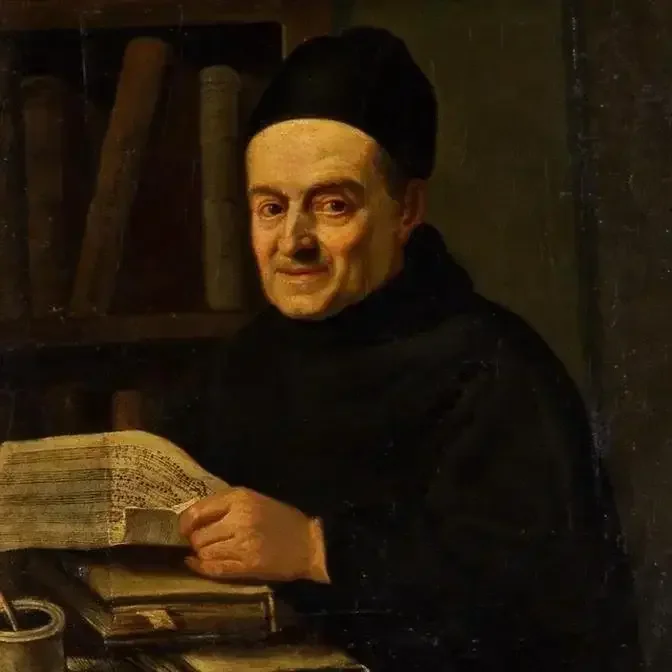
★ Follow music ► https://www.instagram.com/reciclassicat/
Composer: François d'Agincourt (1684-1758)
Work: Missa in assumptione beata Mariae Virginis
Performers: Jean-Patrice Brosse (orgue); Choeur Gregorien Antiphona
Missa in assumptione beata Mariae Virginis
1. Kyrie 1er ton 0:00
2. Gloria 5ème ton 5:53
3. Alleluia 16:41
4. Sequentia 18:35
5. Credo 21:11
6. Offertorium 24:23
7. Sanctus 6ème ton 25:56
8. Agnus Dei 30:02
9. Ite Missa est 33:19
Painting: Daniël de Blieck (1610-1673) - Vue idéalisée de l’intérieur de l’église Saint-Sulpice pendant sa construction (1661)
Image in high resolution: https://flic.kr/p/2nhim76
Map: Romain De Hooge (1645-1708) - Carte Maritime des Environs de Dieppe depuis Pont Asselane jusques au Havre de Grace (1693)
Image in high resolution: https://flic.kr/p/2ng52KR
Further info: https://www.amazon.es/Dagincourt-Missa-Assumptio-Jean-Patrice-Brosse/dp/B00002403V
Listen free: https://open.spotify.com/album/3AENL0W5ZwB4WGUofcpJgF
---
François Dagincourt [d’Agincourt]
(Rouen, 1684 - Rouen, 30 April 1758)
French organist and composer. After his apprenticeship at Rouen he continued his training in Paris, probably with Lebègue. From 1701 to 1706 he was organist of Ste Madeleine-en-la-Cité, Paris; he then succeeded Jacques Boyvin at Rouen Cathedral, a post he was to occupy, together with that of organist of St Herbland and of the abbey of St Ouen, until his death. In 1714 he was also appointed one of the four organists of the royal chapel and in 1726 organist of St Jean, Rouen. His Premier livre de clavecin, which contains 43 pieces, is the most remarkable of his works. It is similar to works by François Couperin, whom Dagincourt admired, particularly regarding its organization into ordres (d, F, D and E), its formal structures, the use of ornamentation and the presence of character-pieces, including personal or even dual portraits (e.g. Les deux cousines, La villerey ou les deux soeurs), genre scenes (Le colin maillard) and nature tableaux (Le val joyeux, Le moulin à vent, Les violettes fleuries). Notable pieces include La Couperin, an allemande in homage to Couperin, La sincopée, an attractive exploration of rhythm, and La moderne, which Dagincourt judged to be ‘of a very different taste from the others’; it includes indications for changes of manual, and was written to meet the demand for novelty from amateurs. His organ pieces, which consist of short versets for ecclesiastical use, are classified according to the first six church modes (excluding mode 3). Their style, more advanced than that of similar works by Couperin, suggests a late date of composition; they exhibit galant characteristics and make frequent use of the diminished 7th chord. The first three suites (on modes 1, 2 and 4) each consist of three short versets with an introductory Plein jeu of no more than 20 bars and a short final dialogue. The remaining pieces, however, are rather more developed and make satisfying use of techniques already employed experimentally by Boyvin, as in the Concerts pour les flûtes with their florid lines and graceful triplets. He makes sensitive use of the basse de cromorne and the récit de nasard (usually in 6/8 or 3/8), and in the suite on mode 5 Dagincourt is particularly ambitious, in his setting of the second Plein jeu in the manner of a highly ornamental recitative and in his treatment of the ensuing Fugue and Cornet. #ClassicalMusic