
Queen Victoria's Daughters, Part 1
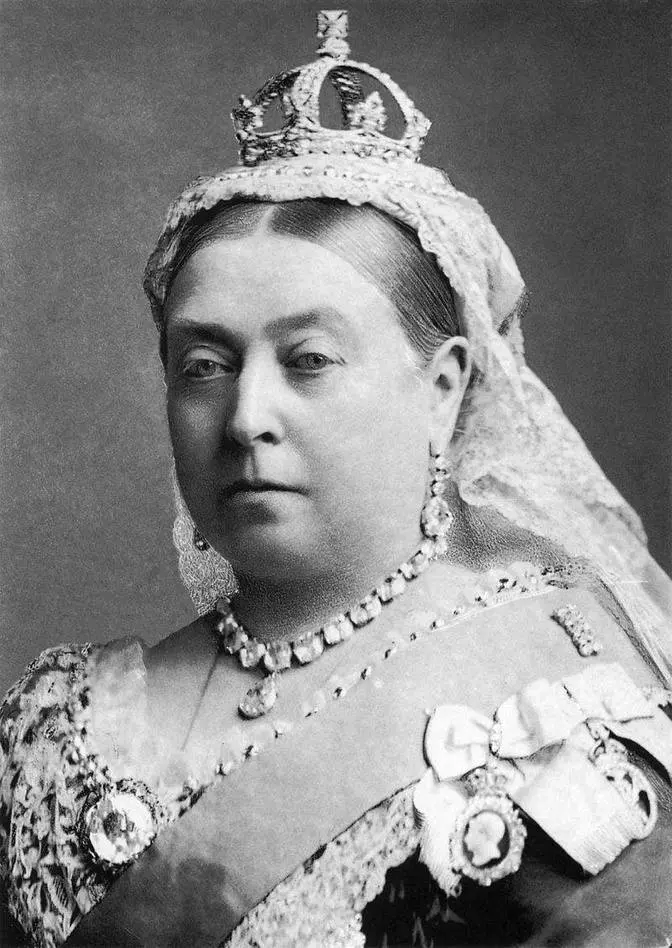
14 Video Views·Dec 12, 2022
Queen Victoria's Nine Children
The Daughters
Queen Victoria gave birth to nine children in 17 years,
but she wasn't exactly the world's greatest mother.
She despised pregnancy and didn't like babies, calling them frog-like.
The Queen had had a cold and difficult relationship with her own overbearing mother
and in turn tried to control her daughters and held them up to impossible standards.
Victoria recognized that her traditionally female education
had ill-prepared her for the demands of government affairs.
So the royal couple decided that all of their offspring,
male and female, would receive a well-rounded education.
Victoria's older daughters were married to important future monarchs
and scaled the peaks of European politics.
But when her beloved husband Albert died at 42,
Victoria fell into an intense depression and used her younger daughters as an emotional crutch,
selfishly stunting their lives and freedom.
Nonetheless, they all lived compelling lives.
An outspoken advocate for progress,
a dedicated nurse,
a promoter of public good,
a sculptor and suffragette,
and a devoted daughter.
Here are the stories of Queen Victoria's five fascinating daughters.
Victoria
Upon the birth of her first child, the Queen remarked,
Never mind, next time it will be a prince.
The Queen had a loving but slightly icy relationship with her namesake.
Vicky idolized her father who inspired her liberal views.
He in turn doted on his precocious eldest child.
Vicky was always hungry for knowledge and learned several languages, science and literature.
In 1851, the Queen invited her cousin Prince Wilhelm of Prussia
and his family to London for the Great Exhibition.
11-year-old Vicky was encouraged to escort the prince's son Frederick around the exhibition.
Frederick was impressed with Vicky's perfect German compared to his few words of English,
as well as the close family life of the British royals compared to his own strict and formal family.
Four years later, the prince visited the British royals at Balmoral Castle
and he and Vicky hit it off again.
Frederick asked Albert and Victoria for permission to marry their daughter
and they enthusiastically agreed.
The match was not popular in either's home country
as Prussia was allied with Russia, Britain's arch-rival.
When Vicky was 17, she wed Frederick in London and then moved to Berlin.
She found life there difficult and the Prussian court rigidly formal.
She was required to attend constant tedious duties and receptions.
Her correspondence home was no consolation
as her mother was demanding and critical of her every move.
Vicky gave birth to her first child, Wilhelm,
in a difficult delivery that nearly cost the lives of both mother and child
and left Wilhelm with a damaged arm.
In 1861, Prince Albert died suddenly of typhoid fever and Vicky was grief-stricken.
Shortly afterward, Frederick's father, now King Wilhelm II,
dissolved parliament and appointed Otto von Bismarck as prime minister.
Liberal Vicky and Frederick objected to the new conservative regime
so Bismarck turned the king and the people against them.
He accused Vicky of conspiring with the British government against Prussia.
When Prussia went to war with Denmark,
Vicky's position was further damaged as her brother Edward
had just married Alexandra of Denmark.
Vicky supported Prussian troops and promoted their medical care a la Florence Nightingale
but these efforts were ignored by the press
who preferred to paint her as the enemy of the people.
The couple's fourth son, Sigismund, died of meningitis
just short of his second birthday and Vicky was heartbroken.
Queen Victoria, famous for her decades of mourning for Prince Albert,
offered no sympathy, telling her daughter that the death of a child
was much less severe than the loss of a husband.
Vicky had four more babies, totaling eight,
and while the older children had been raised by governesses,
she raised the younger ones herself.
In 1871, the princes of the many German states
proclaimed Wilhelm I emperor of a united Germany.
The crown prince and princess continued to speak out about their liberal beliefs.
They opposed increasing anti-Semitism in Germany and made public appearances in synagogues.
Vicky also worked to promote education for women.
The couple's eldest son, raised under the influence of a puritanical tutor,
grew to despise his parents
and emulate the conservative beliefs of his grandfather and namesake.
In 1887, the 90-year-old king's health began to fail
and Vicky and Frederick thought they might finally get a chance
to bring Germany into a more enlightened age
but Frederick was struck with laryngeal cancer and lost the power of speech.
Wilhelm I died and Frederick and Victoria were emperor and empress,
but Frederick, gravely ill, had time only to make a few symbolic political changes
before succumbing to cancer after just 99 days on the throne.
Their son, now Wilhelm II, had his parents' rooms searched for incriminating documents
and fired his father's advisors.
He kicked his mother out of her home in Berlin and wanted her to leave the country
but instead she built a castle named Friedrichshof in honor of her late husband,
where she lived with her younger daughters.
As her daughters moved away for their own royal marriages
and Wilhelm II continued to block his mother from political and social life,
Vicky became increasingly isolated.
She died of breast cancer at the age of 60,
just a few months after the death of her mother.
On the birth of Victoria's second daughter,
the Privy Council sent messages of congratulations and condolence.
Obviously, another son was hoped for.
From an early age, Alice showed an interest in the lives of common people.
She often escaped her governess to visit families living on the estate
and to sit in the public pews at chapel.
During the Crimean War,
11-year-old Alice visited wounded soldiers with her mother and was deeply moved.
She was the most sensitive and compassionate of her siblings.
She formed close bonds with her brothers and sisters, particularly Vicky and Edward.
Teenage Alice was the family caregiver and nursed her ailing grandmother,
Victoria, Duchess of Kent, through her final months of life,
then turned around and lent emotional support to her grieving mother.
Prince Albert wrote of her,
Dear good Alice was full of intense tenderness and affection.
At 17, a search began for an eligible husband.
The Queen expressed a desire that her children marry for love,
but only to a short list of candidates of which she approved.
Prince Louis of Hesse, a minor German royal, was suggested by Vicky
and the prince was invited to London to watch the Ascot races.
He and Alice got on well and upon departing,
he asked if he could take a picture of her with him.
The couple were engaged the following May.
In December, Prince Albert died of typhoid fever and Alice was by his side at the end.
She was a rock to her devastated mother.
As the Queen fell into a deep depression and shut herself away,
Alice acted as her unofficial secretary
and was the representative of the monarchy in all royal business for six months.
Alice was keen to go ahead with the marriage to Louis,
though her mother was morose at the thought of losing her favorite child and emotional crutch.
A sparse and dreary wedding went ahead in the dining room of Osborne House.
Alice wore a simple white dress and a wreath of orange blossoms and myrtle,
but her mother required her to change back into black immediately following the ceremony.
The Queen wept through the service and remarked that it was more like a funeral than a wedding.
Despite the mother of the bride's dramatics,
Alice and Louis were elated to be together and in their own home,
but tried not to act too happy when the Queen came to visit.
After the honeymoon, Alice traveled with her new husband to his home in Darmstadt.
There she was greeted by cheering crowds.
The couple moved into a modest house in town,
and Queen Victoria was shocked that a princess of Great Britain was not granted a grand palace.
But Alice was very happy there.
In 1863, she traveled home for the wedding of her brother, the Prince of Wales.
While staying with her mother, she gave birth to her first child, Victoria Alberta.
Alice decided to breastfeed, which disgusted the Queen, who called her daughter a cow.
Alice further outraged her conservative mother by her friendship with theologian
David Friedrich Strauss, with whom she shared atheistic views.
He even dedicated a book to her.
In 1866, Hess sided with Austria,
putting Alice on the opposing side of her sister Vicky in the Austro-Prussian War.
Alice, heavily pregnant, sent her two daughters to her mother in England for safekeeping,
and kissed her husband goodbye as he went off to war.
She dedicated herself to nursing the troops and spent tireless hours in hospitals.
She was advised on the benefits of cleanliness in medicine by her good friend, Florence Nightingale.
At the war's conclusion, Hess surrendered to Prussia and was forced to pay a heavy indemnity.
Alice wrote to Vicky, pleading for the welfare of her adopted country.
But she was unable to help on this count,
though she was able to convince her father-in-law to allow Alice's uncle
to keep his throne as Grand Duke of Hess.
Tragedy struck Alice when her youngest son, Friedrich, called Fritie,
died after falling from a window.
He survived the fall, but he suffered from hemophilia and died later from internal bleeding.
She wrote to her mother of her deep sorrow, but the Queen, as usual, was dismissive.
In 1877, both Louis' father and uncle died,
making him and Alice Grand Duke and Duchess of Hess.
Alice found her new royal duties to be overwhelming and strenuous.
The following year, the family fell ill with diphtheria,
and the youngest child, four-year-old Maria, died.
A month later, the family was recovering when Alice,
who had nursed them all without showing symptoms, suddenly became seriously ill.
On the anniversary of her father's death, she died.
Her last words were,
She was 35 and the first of Queen Victoria's children to die.
Helena was born after the Queen's most difficult delivery.
Prince Albert wrote that his third daughter came into the world quite blue,
but she was quite well now.
The family called her by the German nickname Helenchen, later shortened to Linchen.
She was a lively and outspoken child.
When teased by an older brother, she punched him in the nose.
She excelled at drawing and piano and shared her father's interest in science and technology.
At 15, she developed a romantic attachment to her father's German librarian, Karl Ruhland.
The pair kept their affair a secret and exchanged many romantic letters,
though it is not clear how far their relationship went physically.
When her beloved father died, Helena was nearly as distraught as her mother.
She could not go long without bursting into tears.
When Alice left her mourning mother to be married,
Victoria and Helena became partners in grief and misery.
Victoria was loath to lose another daughter and companion to marriage,
so she refused to speak of arrangements for Helena.
When Victoria discovered Helena's relationship with Karl Ruhland,
she banished him back to Germany and felt that she had no choice
but to arrange nuptials with a suitable bachelor.
The Queen insisted that Helena's groom be willing to live in Britain
so that she could remain close.
Prince Christian of Schleswig-Holstein was eventually settled on.
As a younger son of a duke, he had no foreign commitments and could remain in England.
He was 15 years older than Helena and when he was invited to Britain,
he thought that it was so the widowed Queen
could inspect him as a possible second husband for herself.
As Schleswig and Holstein were territories fought over between Russia and Denmark,
Victoria's older children were enraged by the match.
Alice accused her mother of sacrificing Helena's happiness for her own convenience.
Alexandra, Princess of Wales, in particular shunned Christian, angering the Queen.
Despite the family rift, Helena liked Christian very much and was determined to marry him.
The couple were devoted to each other and led a happy, quiet life.
Christian enjoyed improving the mini parklands owned by the royal family
and was named Ranger of Windsor Park.
They had six children, though their fifth son died at eight days old and their sixth was stillborn.
The Queen commissioned this statue to honor her five grandchildren who died in childhood.
Helena's health was never robust and she was a hypochondriac to boot.
She was a heavy user of opium and laudanum.
But she maintained a busy schedule of royal engagements
and was founding president of the Royal School of Needlework.
Like her older sister, she was deeply interested in nursing
and was a founder of the British Red Cross.
In 1900, Helena's oldest son was killed in action during the Boer Wars in South Africa.
The following year, her mother died.
King Edward's wife, now Queen Alexandra, was not a fan of her sister's in-law,
Helena in particular, and cut her out of most royal affairs.
In 1916, Helena and Christian celebrated their golden wedding anniversary
and he died the following year.
Helena lived another six years, dying in 1923 at the age of 77.
In the next episode, we'll meet Victoria's two youngest daughters,
Louise, the rebel of the family who studied sculpture and was a suffragette,
and Beatrice, who was utterly devoted to her mother and also became a young widow.
A very special thank you goes to my patron, Kendra Holiday.
Thank you so much for supporting my work.
If you enjoyed this video, please consider supporting me on Patreon
and help me make more fascinating videos.
A link to my Patreon is in the description.
Thank you for watching.