
Chickens Molting? ~ 5 tips to get your flock through molt
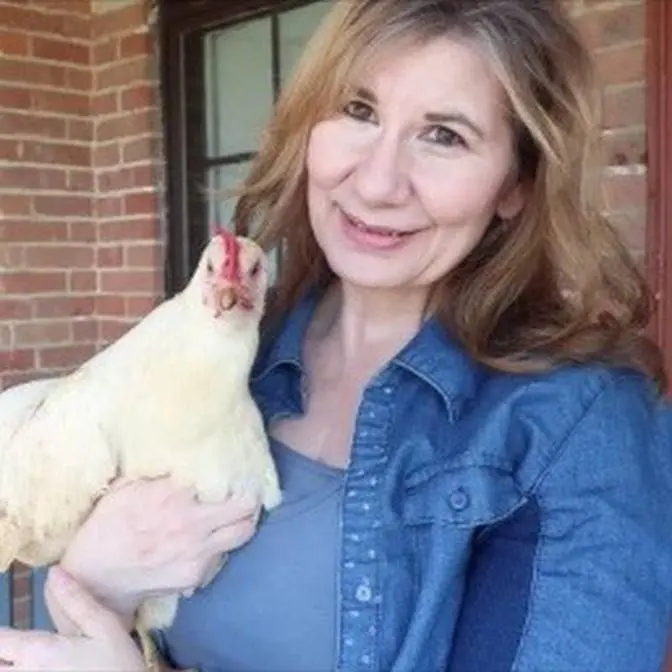
Have you found a flurry of feathers in your chicken coop or run? Are some of your chickens running around half naked? This could be a molting situation! Join me and the ladies in the run as we share some facts about molting and 5 great tips to get your flock through the molt safely and comfortably. #farmhouse #homestead #gardening #farmhouse #homestead #gardening
Before we start the main body of the video, this video is about molting and chickens losing their
feathers. So I want to point out to you some of that happening. Now here on Emma, right above her
wing you can see, and I'll try to point it out for you, that she has had some feathers missing
and they're coming back. And you can see her general feathers are pretty ruffled. Now some
of the girls her age and the younger girls are not molting. Chickens will all molt at their own pace,
their own time. There is a soft molt which is just kind of a few feathers and then there is a hard
molt where they lose a majority of feathers. Now here is Daisy. You can see she's lost all of them
on her head and they're starting to come back but progressively down her back and her bum she's lost
a lot of feathers. And here is Ruthie and she hasn't. Lily too is molting and you can see that
her feathers are out of place and she's lost a lot of feathers on her back. Now poor Oprah looks
like somebody left their feather boa out in the rain and her feathers are just going everywhere
willy-nilly. She looks like she barely escaped the plucker. Poor girl. I just feel so sorry for her.
Now here is Elizabeth and she too just has a few and you can see her downing.
Hello Home and Garden. Thanks so much for stopping back by the channel. Today we are back in the
chicken run and we are going to discuss another seasonal chicken topic. Have you ever walked into
your chicken run or your chicken coop and seen a flurry of feathers everywhere and immediately
panicked to worry about what had just happened to your chickens? Did you have a predator attack?
What's going on? Is there a bully situation? It's most likely a molting situation especially if it
happens in the late fall. Now sure you want to be careful and examine all areas. You want to make
sure you did not have a predator attack and of course you want to check your chickens for
parasites. You want to check their legs and their wings and your coop for lights or mice because
those too could cause some feather loss. But once you've examined all those issues and you still
don't have an answer it is most likely a molt. Today I'm going to share with you some great tips
and some great facts for the molting season. Let's get on with some facts and then I'm going to
share the five tips with you that's going to help get your flock through the season safer and more
comfortable. The facts are that it is an annual process and it will happen after your chicken is
about 18 months old. It can happen a little earlier it can happen a little later on average about 18
months old. It happens to both boys and girls so if your roo is looking pretty rough he's probably
molting as well. It is a long process it can last 8 to 12 weeks that's two to three months and that
can be most of the winter season. So there's going to be a lot of work involved to keep your chickens
comfortable. You're going to notice that your chicken is moody. They may be picking at each
other they may be pecking more at each other and fighting more and of course you may have to make
plans now to isolate if you need to. If someone's being picked on you may definitely need to isolate
them. Now speaking of that when their skin is showing sometimes chickens will peck at that.
When their feathers come in there they might be a little sore a little tender and they might be a
little pink and chickens will peck at that. One way to help if your chicken has a little blood on her
she's not dealing with the process well and other chickens are pecking at her
one thing that you can use is an item called blue coat. Now blue coat you see here
is a antiseptic and protective wound dressing. So if she's having a little bleeding a little
uncomfortable you can put this on but the bonus of using this is that it is a dye and it covers
up that red because chickens will peck at blood and they will not stop until they've done some
harm. So one thing you can do is use the blue coat. Now I advise you strongly to use a glove
because when you use blue coat this is what you get. It's a dark blue purple stain that's going
to cover your chicken's skin and it's going to prevent her wound from getting infected and it's
also going to prevent the other chickens from pecking at her too much. So it's a good product
to have on hand and you can use it often. Now I say use a glove use old clothes towels that you
don't want stained because it will stain. Now that's going to stay on your chicken for a length of time
a few weeks you can apply it as needed to treat her wounds or just to keep her spots covered.
Now chicken feathers are 85 to 90 percent protein and because they are so much protein she's going
to use all her energy to produce more feathers and so at this time because of that her egg production
will slow or stop. It is imperative that she use her energy not for egg production but for chicken
feather production. Because of that her immune system is going to drop as well. This is a good
time to keep extra visitors out of your coop and out of your run just because we don't know what
they could be bringing in on their shoes and this is how chicken disease gets transferred
and if their immune system is already low during this period you just want to prevent as much of
that as possible. I've already said the last tip egg production slows or stops and we're going to
talk a lot about that in just a minute. Now let me share with you the five tips that are really
going to help get your flock through this more comfortably. Number one it is a very stressful
situation for them. This time we recommend that you make no big changes to their coop
or their flock. This is not a good time to introduce flock mates again because their
immune system is low you don't want to be bringing in any kind of disease or sickness
and because they're already high stress and you don't want to make big changes to the coop or
their run you just want to keep things as even and calm as possible. Number two you really need
to increase their protein. As we talked about those feathers are just a high massive amount
of protein and where are they going to get that from? Well it's going to come from their diet. So
if you are already feeding a laying mesh chances are your mesh is going to have around 16% protein
that is good but we're aiming for 20 to 22% protein for feather production. So there are a lot
of retail brands of pet providers that often offer the feather fixer
feed to feed them during this time. It has roughly 18% protein. It's a little higher in price
and you're still going to need to go up in protein. Now how are you going to get that much protein?
Simply by supplementation in their diet. There are a variety of ways that you can supplement.
You can use cat food. Cat food is the cheapest and most plentiful means of upping protein in
your chicken. My chickens will run and beat up the cats and take their food so I know they like
cat food. I don't give it to them very often. I don't allow them to take it from the cats
but during this process I have a large flock so it would be pretty abundant to give them
cat food and I may do that. The other option is to scramble their eggs and feed them back to them.
Now I say this with caution because you must scramble their eggs if you have a lot of leftover
eggs. If you are counting on their egg production and you don't have a lot of eggs in storage
then this is probably not a good idea but it's very important that you do scramble those eggs
first because if you feed them to them raw while it's still a great source of protein
you're going to encourage a bad habit that you really don't want to encourage because
later on they're still going to want those raw eggs and they're just going to start eating them
and it is a terrible habit to break. If you want to hatch out in the spring or you want those eggs
for yourself or you have customers that you're supplying you really don't want them eating their
eggs so make sure you cook them first. You can also supplement with black sunflower seed. Now
black sunflower seed is an abundant amount of protein and they love them. It is a great treat
for them. Now I feed mine a scratch in the afternoon and it does have some black sunflower
but I buy more and I can either add it into their scratch or I can just hand feed it to them at will
and they love it so it is very good. Now the last item I have for you is mealworms and mealworms are
their favorite treat. Mealworms can be a little pricey if you have to order them online or I know
tractor supply does sometimes carry them. However with that being said if you are homesteading and
you have children this is a great project for your kids to start a mealworm farm. You can order some
live mealworm from Amazon and you can raise them up then you have an abundance of mealworms at a
much less expensive price and they're live so they will love them even more. Now I want to tell you
about when these feathers come in. The new feathers are coming in. It is a very painful process for
them. Think of it as having a hangnail. I don't know about you but when I have a hangnail I bump
that thing 3,429 times a day and I just want to scream. When I don't have a hangnail I never bump
my hand but when I do I do it often and it hurts a lot. That is how their pin feathers feel when
they're coming in so it's painful. That is probably one of the reasons they're more moody and they
don't want to be handled so you really want to limit that handling that you're doing with your
hens and your roo if he likes to be handled. I also want to point out that while those saddles
and those jackets and those little crocheted sweaters are so adorable this is the least
favorite time that they should be placed on your chicken. We all know that yarn is a catchy fabric
and can you imagine pulling just as if it was irritating a paper cut or a hangnail? It is
advised that you do not use these jackets especially if your chickens free-range. These can
get hooked up on branches and trees and stuck on limbs and it's just not safe for them and I just
advise during this time it's very painful so imagine walking around with that on you pulling
and tugging at those tender feathers. We shouldn't do it. Now that I've said that how are you going
to keep your chicken warm? Because that's the next tip. Keep her warm. Well there are many tips.
The first one starts with buttoning down your coop. Get in there and look for all the areas where
it can be cold. Now of course you need that cross ventilation at the top of your coop so that's
important but anywhere they're nesting and near the floor you want to make sure that you're keeping
them warm. You can put straw bales around the outside of your coop. I've put some plastic on
my windows and I'm going to share with you a winterization video of how many different things
I did do to keep my coop warm. You can put curtains up. You can put deeper bedding
on the floor. I know a lot of you use deep litter method and as it composts it produces more heat
in the coop. You can section off part of your coop as I have done and that is a smaller area that you
have to heat. So those are many things that you can do to help warm their coop and block those
drafts. Now there's something you could do to warm up your chickens. Feeding them scratch with a high
corn content helps them boost their internal body temperature. The digestion process of cracked corn
helps them break down in breaking that down it helps build up their body temperature and warms
them internally. So in the afternoon between 4 30 and 5 o'clock I come out and I throw some scratch
and that's just before their bedtime. So they're going into the coop. The coop gets shut up
and they are getting warmer. So it is a bonus if you are using scratch with sunflower seeds because
they're getting their corn to get warmed up and they're getting their sunflower seeds for
extra protein. So that is a bonus and my last tip. I'm very animate about this and I hope that
you'll understand when I explain it but no lights in the coop for increased egg production.
A lot of people just they don't know why but their chickens stop laying eggs and they want the eggs
so they go ahead and they add cute little rope lighting or big heat bulbs or whatever it is into
the coop to simulate daylight and longer hours and it's just not a good idea for your hens.
They need to follow the web and the flow of nature and this is their time for their rest. Their body
is already working so hard to produce new feathers they cannot possibly lay quality eggs. It is
harmful to their body and your chicken is born with the ability to lay all the eggs she's going
to lay. She has a certain number and that is it. You're not going to extend her egg laying by making
her lay in during her molt. She only has so many eggs available so she will run out of laying eggs
and she will age quickly and she will not be a healthy hen. So if you love your chicken just let
her have this rest. Now if you really need eggs in the wintertime I do have a tip that will help
you get more eggs in the wintertime. If you bought new chickens or hatched out new chickens this
spring you will still have eggs because she has not reached her year and a half age to start her
molt and she will continue to lay eggs. Now you can do that every year you can get a couple little
chickens in the spring and you can continue your egg production because based on their age
they are not going into their molt so you will still have eggs. That is a healthy way to make
sure that you're still having eggs. All right friends that is it for this video. I hope that
you've learned a lot about molting. Do check down in the description box. I will leave some links for
the things that we've talked about so you could check them out and get a better understanding of
what we talked about today. Please give a like if you enjoyed or learned a lot from this video
and please subscribe and ring the bell so you can carry on the journey with us.
Bless and be safe and I'll see you soon.