
Carl Friedrich Rudorff (1749-1796) - Kantate 'Lobet ihr Himmelden Herrn'
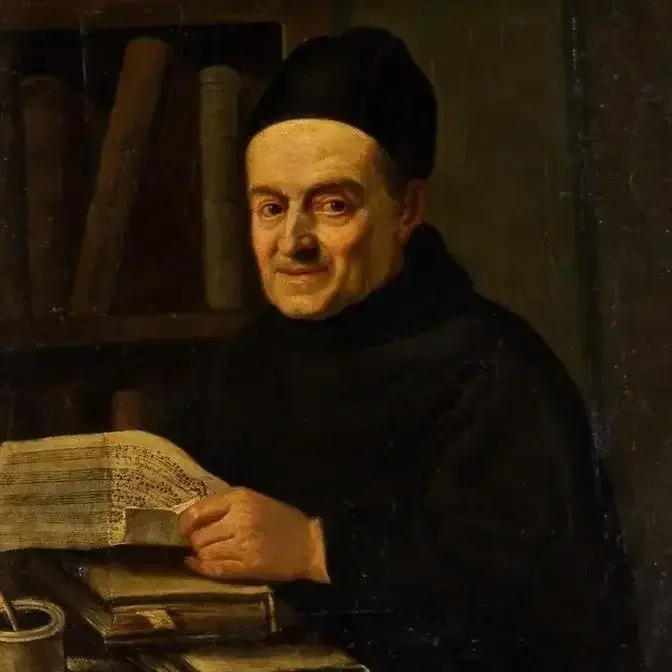
★ Follow music ► https://www.instagram.com/reciclassicat/
Composer: Carl Friedrich Rudorff (1749-1796)
Work: Kantate 'Lobet ihr Himmelden Herrn'
Performers: Hаnnа Zumsаndе (soprano); Nicοlе Piеpеr (alto); Jаcοb Lаwrеncе (tenor);
Hеnryk Böhm (bass); Gοttingеr Barockorchеster; Antοnius Adаmskе (conductor)
Lobet ihr Himmelden Herrn
1. Chor: Lobet ihr Himmel den Herrn! 0:00
2. Rezitativ: Auch euch schuf er, der alles schuf 3:22
3. Arie: Mein Glück von Gott mir hier beschieden 5:16
4. Chor: Lobet ihr Himmel den Herrn! 12:22
Painting: Corrado Giaquinto (1703-1766) - Allegory of Peace and Justice (c.1754)
HD image: https://flic.kr/p/2nxQmA5
Map: Matthäus Seutter (1678-1757) - Goettinga urbs munitissima et splendida electoratus Brunsvico-Luneburgici
HD image: https://flic.kr/p/2nwo9B4
Further info: https://www.prestomusic.com/classical/products/8651917--gottinger-stadtmusik-works-by-rudorff-bach-quantz
Listen free: No available
---
Carl Friedrich Ernst Rudorff [Ruhdorf, Rudorf]
(Cörbecke, January 1749 - Göttingen, 13 July 1796)
German organist and composer. Almost the whole biographic information about Rudorff's career is documented in his own application letter for the city cantor post in Göttingen. Rudorff grew up in a family of lawyers; his father Johann Friedrich Rudorff was bailiff of the nobles of Spiegel in Westphalia. The family lived in the office building of the village of Cörbecke (now Körbecke) near Warburg. During the Seven Years' War (1756-1763), Johann Friedrich Rudorff died in 1759, presumably as a result of the Cörbeck dysentery epidemic. Carl Friedrich Rudorff went to high school in Mühlhausen, Thuringia, where, according to his autobiography, he took over the position of cantor at the main church. Rudorff earned his living in Mühlhausen by giving musical lessons. The early musical activities suggest a basic musical education in Westphalia. Though it cannot be proven. On April 27, 1773, at the age of 24, Rudorff enrolled in theology at Helmstedt University, after which he worked as a private tutor in Rotenburg an der Fulda in Hesse. The Rotenburg period must have been Rudorff's most important compositional training period. Rudorff himself writes that he learned from “the patterns of our good composers”. Rudorff's re-matriculation as a student in Göttingen on October 16, 1778 is certainly documented. The professor August Ludwig von Schlözer describes Carl Friedrich Rudorff as an "uninterruptedly diligent listener." He hired Rudorff as a private tutor for his children even before he began his studies. On July 10, 1780, the city cantor of Göttingen, Johann Friedrich Schweinitz, died unexpectedly while on a spa trip in Bad Pyrmont. Rudorff immediately applied for the vacant position. In addition to Schlözer, the professors Christian Friedrich Georg Meister, Ernst Gottfried Baldinger and Christian Gottlob Heyne, the university president himself, wrote a recommendation. Rudorff had three competitors, including the experienced Hildesheim cantor Heinrich Ernst Jordan, who himself had studied with the late cantor Schweinitz. Rudorff won the post. His duties were teaching at the Latin school, specifically in Latin, theology and music, performing the cantor's duties at the main church of St. John's and, in a fixed liturgical sequence, the other four city churches of St. Jacobi, St. Marien, St. Albani and St. Nikolai as well as the overall supervision the Göttingen church music. Rudorff died on July 13, 1796 and was buried with an honorable burial in the Bartholomäusfriedhof. #ClassicalMusic