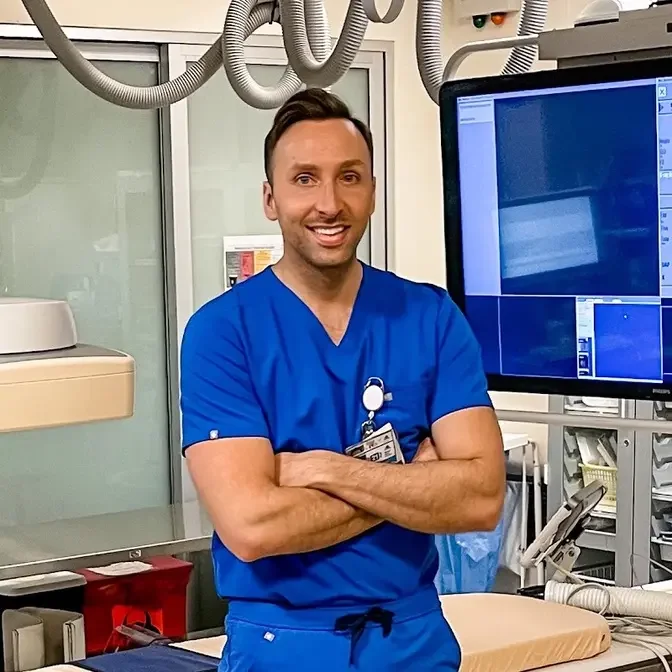
Ever wonder why America has so few Doctors?? Well, I have...and I happened to stumble upon an article recently explaining this phenomenon (linked below). In this video, I decided to break down the article and give my thoughts on the current medical training system in the United States and talk about just why there are so few Doctors in America.
*None of this is meant to be construed as investment advice, it's for entertainment purposes only. Links above include affiliate commission or referrals. I'm part of an affiliate network and I receive compensation from partnering websites. The video is accurate as of the posting date but may not be accurate in the future.
I'm going to look into that because I want to make an entire video on it.
And I almost want to like call some of these medical schools and ask them why
they're charging so much. Welcome back to the channel, everybody.
For those of you who are new around here, my name is Michael, AKA Dr. Cellini,
and I'm a board certified diagnostic and interventional radiologist in New
Jersey. Now on today's video, as you've probably seen by the title,
we're going to be talking about why there are so few doctors in America.
And the reason we're talking about this is because I happened to come across an
article from the Atlantic talking about why there are so few doctors in America.
And they had some pretty good points.
So I kind of wanted to go through the article,
give my take on the article and talk about it because it's a pretty important
topic. So let's get into it. As always,
I'll leave a link to this article in the description box below so you can check
it out and read it for yourself.
I found it through the Doximity app on my phone and I think I get access to this
article, but I'm not sure if everybody does. So it may be behind a paywall.
So if you can't get access to the article, just watch this video. Okay,
so let's get into the article.
They first start talking about this person named Elizabeth Erickson,
who is a freshman in college, who always wanted to be a doctor.
I'll go ahead and read the first paragraph because this is kind of how we start
off here. So by time Elizabeth Erickson was a freshman at Davidson college in
2002, she knew she always wanted to become a doctor because she understood that
the earliest health interventions are amongst the most important.
She set herself on the pediatrics track. After four years of pre-med classes,
she went straight to medical school at Wake Forest University,
which took another four years.
Then came three years of residency at Duke university shout out Durham,
North Carolina, where I used to live. And that took her another four years.
In 2014 she joined the faculty of Duke school of medicine.
And this last line is so crucial to this article and what we're going to talk
about today.
Her dream was finally realized at the steep price of 12 consecutive years of
learning and training plus about $400,000 in student debt.
That seems about common for what we've been talking on the channel so far.
So let's get into the rest of the article.
The next part of the article basically talks about how this story would be
exceptional in just about every other country in the world,
except for us because this is actually quite common in the U S the U S has the
longest and most expensive medical education system in the developed world.
And to top it off the lowest number of physicians per capita,
which doesn't make any sense when you say it like that,
as many of you may also know,
there is a huge scarcity of primary care physicians in many are operating in a
scarcity of framework with not enough resources.
So this is a good part of the article here.
We start talking about the nitty gritty of why there are so few doctors in
America. So let's start here.
Imagine you were planning a conspiracy to limit the number of doctors in
America.
Certainly you'd make sure to have a costly lengthy credentialing system like we
do.
You would also tell politicians that America has too many doctors already.
That way you could purposely constrain the number of medical school students.
You might freeze or slash funding for residencies and medical scholarships.
You'd also fight proposals to allow nurses to do the work of physicians.
And because none of this would stop foreign trained doctors from slipping into
the country and committing the crime of helping sick people get better.
You'd throw in some rules that makes it onerous for immigrant doctors,
especially from neighboring countries like Mexico and Canada. Okay.
So let's backtrack a little bit. This article states that in the late 20th century,
medical groups asserted that America had an oversupply of physicians.
In response to this medical schools restricted class sizes in these times from
1980 to 2005, the U S added about 60 million people,
but the number of medical school matriculants stayed the same.
17 years later, we are still trying to climb out of that hole.
So let's look at this graph that we show here. So as you can see here,
this shows the U S population and medical school matriculants indexed to 1980.
The blue line demonstrates MD graduates in the U S and the green line represents
the U S population. As you can see,
there's a steady progression of U S population with a matching number of
doctors until about 1980 when it kind of dipped a little bit and leveled off
until about 2005.
And now we're still trying to dig out of that hole and we're not exactly
matching the population right now.
I think this graph is perfect and it shows exactly what went wrong from 1980 to
2005. So let's talk about the American education system for physicians.
The U S is one of the only developed countries making aspiring doctors get a
four year bachelor's degree followed by a four year medical training degree.
Most European countries have a six year continuous program for their physicians.
So they are already two years ahead of us. Then comes residency, of course,
which can be anything from three to seven years, depending on your specialty.
And of course our favorite part about the U S medical system,
that lovely huge sum of student debt that you're burdened with when you
graduate. Now, I think I've beaten a dead horse on this topic,
but I've said it many times and many medical students finished with somewhere in
the neighborhood of 200 to even 400 plus thousand dollars in student debt,
which is insane to think about.
And every time I say that statistic gives me a little, well chills.
So the questions this article talks about and the questions I've had for a long
time now are what is the advantage of extra years of medical training for the U
S physicians?
The author makes a great point here comparing U S doctors to Swiss doctors.
And he says,
are American doctors 33% better than Swiss doctors since we have 33% longer
medical education system, which I think is pretty funny.
And a nice little aside on this topic is that Americans die earlier than their
European counterparts at virtually every age and every income level.
And I'll leave a link to that article as well in the description. Okay.
So let's look at this chart for medical education across multiple countries.
So as you can see down here,
the United States has a significantly longer track compared to their European
counterparts. It takes us four years of undergrad training,
plus four years of medical school before even going to residency.
And most of our European counterparts have six years total with the exception,
of course, for South Korea, Ireland,
and Australia having similar to the American system.
So what does this all equate to when we have medical students who have long
education paths and amass a massive amount of student debt,
they do what any doctor does and they subspecialize much like I did.
So why do we do that? Well,
the salaries are higher for subspecialists and the supply is limited,
which means you can actually pay off your loans.
We'll get to this chart in the article as well.
You'll see here how the United States has a very small percentage of general
practitioners or primary care physicians compared to the specialists.
In part due to the reasons I mentioned above. So as you can see here,
United States is way at the bottom and we have a small portion of general
practitioners compared to the massive amount of specialists.
And this is physicians per 10,000 people, by the way, versus say Norway,
who is over 50% general practitioners versus specialists.
I think a lot of it comes down to the student debt burden.
It's definitely not the lifestyle because the lifestyle of a primary care
physician is pretty good. It's the usual eight to five job.
I don't think a lot of them take call. Some may take call in the hospital,
but most of it is clinic based outpatient based and not that bad. Well,
I say that relatively because I know they're burdened with seeing an enormous
patient load, but all things considered, if the patient load was down,
you can practice how a primary care physician is supposed to practice.
It's a pretty good lifestyle.
Now this article goes on to talk more about how some doctors actually object to
more competition for the same reason that homeowners object to more local
construction.
Docs are afraid of competition because it ultimately cuts into their piece of
the pie. However, if you look at it a different way,
more docs in one region can actually make life better for that particular
doctor because they're not burdened with longer hours or seeing excessive
amounts of patients, which proves the quality of life and prevents burnout.
I love this line from the article here. It states,
doctor burnout and brutal 16 hour shifts for residents and MDs aren't necessary
tests of willpower.
They're just the inevitable results of not having enough people to do the work
that today's hospitals demand.
That basically hits the nail on the head in every possible way.
So it's kind of a rhetorical question, but why do we need more doctors? Well,
for one,
the pandemic has proven a significant burden to the healthcare system and most
importantly, healthcare workers. And regarding the census,
which states in the next 12 years,
we will have more senior citizens than children in America for the first time in
history, I think we're going to need more doctors.
Older patient population means sicker patients,
which means demand for hospitals and doctors. All right.
So what's the solution to this problem of so few doctors in America? Well,
I think it's obvious. We just create more doctors. It's that easy. Okay.
So it's obviously not that easy as this is clearly a deeper systemic issue.
In the article,
they posed this question to a healthcare policy analyst who stated the
following.
The first thing I would do is expand the residency system so that more doctors
can become residents after medical school.
This might be the key to the bottleneck medical schools say they can't easily
expand because there aren't enough residency slots to fill for their graduates,
which is very true.
And every year we have the problem where we have too many graduates for
residency spots and some medical graduates AKA doctors do not match into
residency, which leaves them residency lists.
Imagine having gone through eight years of training only to not be able to match
into a residency program because there aren't enough spots and ultimately they
may have to scramble into a residency that they don't want to do just so they can
start working.
The article goes on to talk about how there aren't enough residency slots
because Washington purposefully limited federal residency financing.
More funding equals more residents equals more growth of medical schools,
which means more doctors. Now, how do we obtain doctors? Well,
we did doctors two different ways through medical training or we import them.
We happen to not be good at either.
When NAFTA was originally negotiated Canadians and Mexicans didn't want to lose
their own doctors to the American market and the U S didn't want to threaten
their own U S doctors.
So they basically created a whole bunch of red tape for Mexican and Canadian
doctors to practice in the U S.
So how else would we increase the supply of U S doctors since we're bad at
training and we're also bad at importing them? Well,
we could add more nurse practitioners,
which could function as doctors in rural or underserved areas,
but we're not going to touch on that topic because it's a little too dicey right
now at the moment.
And I'm sure people in the comments would go a little crazy once we start talking
about that. So that's just something we're not going to touch on today.
So how else can we fix this problem? Well,
we could extend care to undisturbed areas via legal telemedicine.
But the problem is we have to get reimbursement from the government for the
physicians doing those telemedicine consults because during the pandemic it was
allowed, but it's not really 100% so far.
So there's more work to be done in the telemedicine slash reimbursement space.
Another good point,
this healthcare policy analyst stated is that we can't expand the number of
doctors unless we also expand the number of clinics and hospitals,
especially to the underserved parts of the country.
Basically we have to have more funding for hospital infrastructure.
So in conclusion, this all seems really simple, more doctors,
more healthcare infrastructures and more care equals better healthcare outcomes.
But as always, we have to crawl before we run.
The article makes a great point here and states that if we put an influx of
physicians into society, then we lower wages for physicians, which is okay.
But the problem we would face is that we'd have to ensure that the wage drop
occurs before student debt declines,
because then we would have a bigger issue altogether.
If wages drop before student debt drops,
then we have doctors making low wages with no way to pay off their massive
student debt burden. And then we have a whole other problem. Speaking of which,
why the heck are universities and medical schools charging so much for tuition?
I feel like if we just nip that in the bud,
we would solve a lot of these problems going forward.
But for some reason nobody's talking about the extreme costs of medical
education.
I'm going to look into that because I want to make an entire video on it and I
almost want to like call some of these medical schools and ask them why they're
charging so much. I'm curious to see their answers.
So let me know in the comments below if you think that's a good idea.
I'll probably be banned at a lot of medical schools,
but I'll do it for the video. Okay. So that officially concludes this video.
Hopefully you all enjoyed it and hopefully you understand why there are so few
doctors in America. If you have any questions, leave them in the comments below.
Make sure you smash the like, subscribe button,
follow me on Instagram and TikTok if you don't already. And as always,
I'll see you all on the next video. Bye.