

Frédéric Nicolas Duvernoy (1765-1838) - Concerto à clarinette principal
Joyeux anniversaire Frédéric Nicolas Duvernoy! 📯🍷
Composer: Frédéric Nicolas Duvernoy (1765-1838)
Work: Concerto (en si bémol Majeur) à clarinette principal
Performers: Rοn Samuеls (clarinet); Cοllabοrative Arts Chamber Orchestra;
Jamеs Mееna (conductor)
Concerto à clarinette principal
1. Allegro moderato 0:00
2. Romance 10:57
3. Polonaise 15:49
Drawing: Louis Le Coeur (fl. 1784-1825) - Promenade du Jardin du Palais Royal (1787)
HD image: https://flic.kr/p/2nTd4mc
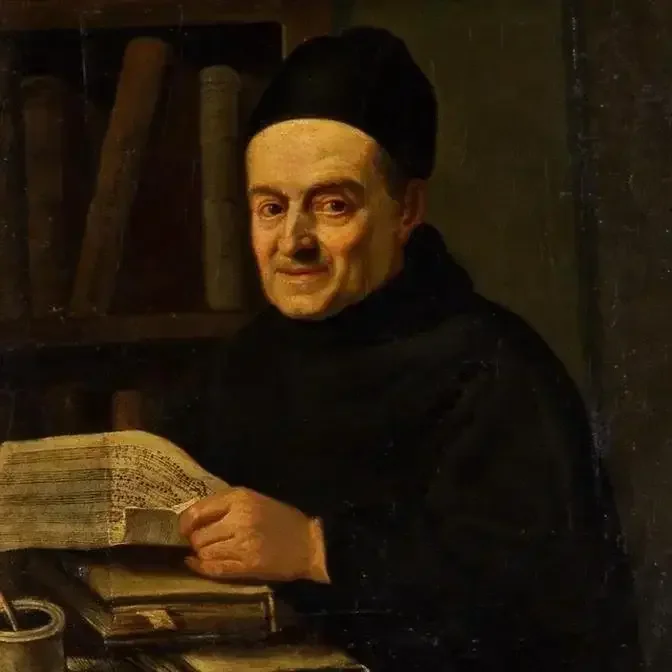
Painting: Jean-Baptiste Jacques Augustin (1759-1832) - Frédéric Duvernoy
HD image: https://flic.kr/p/2nTsKrc
Further info: https://www.amazon.com/-/es/Georges-Auric/dp/B000006KIR
Listen free: https://open.spotify.com/album/2V5jFhojX5w1QpfCkuxBNj
---
Frédéric Nicolas Duvernoy [Duvernois]
(Montbéliard, 16 October 1765 - Paris, 19 July 1838)
French horn player, teacher and composer. He was the first major figure of the native French school of horn playing; his playing and teaching marked the definitive break from the parent Austro-Bohemian tradition. He was self-taught and reportedly specialized in the so-called cor mixte, generally understood to be the horn’s middle range. While this elicited criticism from Fétis, he apparently achieved a remarkably high standard, and was considered by many to be the leading player of his day. In 1788 Duvernoy joined the orchestra of the Comédie-Italienne in Paris, and made his solo début on 18 March at the Concert Spirituel, playing a concerto by Punto. He appeared six more times before the series was suspended in 1790, and also played at the Concerts de la Rue de Cléry, which lasted until 1802. In 1790 he became a second horn player at the Opéra-Comique and joined the first organized band of the National Guard. Entering the Opéra orchestra in 1796 he became solo horn in 1801, which meant he was responsible only for playing exposed solos; beyond that he could choose what he played. He had quite a high profile, as evidenced from the bill announcing the première of Spontini’s La vestale in 1807: Duvernoy’s full name in larger capital letters appears above all others on the cast list, whereas Spontini’s name is nowhere to be found. Later in his career, he was often identified only by his first name. He was pensioned from the Opéra on 1 July 1817. Napoleon was a great admirer of Duvernoy’s playing, and during the Empire Duvernoy was appointed first horn of the imperial chapel, a post he retained until the 1830 revolution. He was made a Chevalier of the Légion d’Honneur in 1817. Duvernoy was on the original staff of the Paris Conservatoire, remaining there until his retirement on 1 January 1816. His 'Méthode pour le cor' (Paris, 1802/R; repr. with Eng. trans., Rock Hill, SC, 1987) has a simple, clear approach, making it a useful point of departure for learning hand-horn technique. In it, he makes no reference to cor mixte, advocating ‘first’ or ‘second’ designations. Instead, his method presents an approach that is clearly more advanced than its predecessors; for the first time, a three-octave chromatic range for the horn is presented, with indications for the degree of handstopping required for each note. Clearly, Duvernoy felt that players needed to master the entire range of the horn, in effect mixing the two species of ‘first’ and ‘second’ together. Duvernoy wrote several concertos, solos with piano, duets and trios, none of which brought him recognition as a composer. These are in the Bibliothèque Nationale and in the collection of Edmond Leloir. An anonymous contemporary portrait showing Duvernoy with a silver horn by L.J. Raoux is in the Opéra library. #ClassicalMusic