
Another Top 10 Most Beautiful Places in The World | Mother Nature
276 Video Views·Oct 5, 2022
Want more incredible content from Getty Images? Be sure to check out their page here: https://www.gettyimages.com/
Another Top 10 Most Beautiful Places in The World
Subscribe: http://goo.gl/Q2kKrD and also Ring the Bell to get notified // Have a Top 10 idea? Submit it to us here! http://watchmojo.com/suggest
To quote the vision in the Avenger Storm of Ultron,
something isn't beautiful because it lasts.
Sadly, some things are not meant to be, slowly yet surely consumed by time.
And not even locations are immune to this inevitability.
Places can disappear as well.
Just ask Atlantis.
Oh wait, you can't because it's gone.
These are amazing places you need to visit before they disappear.
Number 15 – Great Barrier Reef
The Great Barrier Reef off the coast of Queensland, Australia,
consists of over 2,900 individual reef systems and 900 tropical islands
stretching over 2,300 kilometers.
And it's fading fast.
Marine life in the Great Barrier Reef is slowly disappearing.
You can swim, snorkel, dive, and sail this living masterpiece.
But with the temperature and acidity of oceans increasing because of climate change,
many ecosystems just can't keep up.
Corals are especially impacted,
with over half of the Great Barrier Reef disappearing in the past decade alone.
Part of the reason for this drastic change is chloral bleaching.
This occurs when coral polyps expel the algae that provide them with up to 90% of their energy.
Since 2016, the situation has been getting worse,
with over half of the Great Barrier Reef bleached to death.
The effects are similar to that of a forest after a devastating fire,
with much of the marine ecosystem becoming barren and skeletal with little hope of recovery.
One of the seven wonders of the natural world,
time is running out for the Great Barrier Reef.
A great shame considering it contains an abundance of marine life
and some of the most beautiful sun-soaked golden beaches in the world.
Like this video? Smash the subscribe button and click the notification bell right now
or this centipede will crawl on your face when you're sleeping.
Now it's time for the odd topic.
This remarkable island located in Honduras is unlike any other we have ever seen.
While like many tropical islands, it is beautiful to look at,
as you can see from this photo, it is the underneath where the real unique beauty of this place lays.
It's crazy to think that the island naturally looks like this, but here it is.
But not for long.
While the island may be shaped like a dinosaur's head,
it sadly doesn't have the strength of a dinosaur.
From what we've heard, the land is incredibly fragile.
Experts fear it won't be long before the little island goes the way of Atlantis,
crumbling into the waters.
And that's a real shame.
Remember to comment down below with the hashtag odd topic
and let us know your opinion in relation to what we just showed on screen.
And now to the next topic.
Number 14, Havana.
Known as the key to the new world,
the island that once served as a crossroads for explorers, buccaneers, colonial powers,
indigenous people, entertainers, and exiles is at risk of disappearing.
Founded by Spain in the 16th century,
Havana soon became a popular stopping point for treasure-laden Spanish galleons returning to Spain.
It attracts over a million tourists each year.
But if you're planning to be one of them, you better make it quick.
From the outside, look it in.
Havana has barely changed since the 1950s.
But Miami's success is threatening residents' traditional lifestyles.
And there is an increasing appetite for property close to the downtown core.
The growing value of land, demolition of historic buildings,
and the displacement of poorer residents are endangering the area's cultural richness.
Experts who have been studying the shifting neighborhood warn Havana residents and
stakeholders that if changes aren't made soon, the city they once knew will be no longer.
They've been told there needs to be a better balance between development and residents' needs.
Plans unveiled last year promise economic vitality and affordable housing,
reinvestment on infrastructure, and methods to strengthen the city's character, protecting its
history. But is it too little too late for this popular tourist mecca? We hope not.
Number 13 – The Taj Mahal
The Taj Mahal was commissioned by the Mughal Empire Shah Jahan in 1632
to house the tomb of his favorite wife, Mumtaz Mahal. He is also buried there.
An ivory-white marble mausoleum, it sits on the south bank of the Yamuna River in the Indian
city of Agra. The tomb itself is the centerpiece of a magnificent 42-acre complex that includes
a mosque and a guest house. Today, the Taj Mahal is described as the jewel of Muslim art in India,
attracting up to 8 million visitors every year. Although its architecture and rich history
are greatly admired, air pollution and wear and tear are turning it yellow.
The discoloration of its predominantly marble structure is due to oxidization,
but the monument has also begun to degenerate, leading it to chip and crack. Experts say that
pollution too has hastened the process. A garbage-strewn river flanks the monument,
and dust and smog belch from the smokestacks surrounding it and the vehicles driving by.
With the government keen to preserve the incredible structure, strict regulations
regarding pollution have been put in place in Agra. These regulations and the occasional mud
pack treatment are aimed at curbing the process of yellowing. Let's hope it's enough.
Number 12, Bordeaux. Bordeaux is the hub of the famed wine-growing region of southern France.
Steeped in long-standing excellence and traditional farming techniques,
the iconic Bordeaux red blends have been around for over 80 years. But they may have met their
match in climate change, which looks to be derailing winemakers in the region.
The issue is a temperate one, literally. Two-thirds of the red vines planted in Bordeaux
are Merlot. And for centuries, these vines have relied on the local climate to reach
peak ripeness. Today, the same vines are being scrutinized as potential future victims of rising
temperatures. These unusually high temperatures may lead many of Bordeaux's vintners to source
more climate-hardy grapes. But will the wines still be both fine and French? Bordeaux certainly
hopes so as they pull out all the stops to keep their brand on the shelves, taking action to adapt
to the growing impacts of climate change. Winemakers have approved new grape varieties
of interest as part of their plans, including some nearly forgotten that will make a comeback.
Late-ripening experimental grapes may also be added to the mix. These are less likely to rot
in the hotter weather. Climate change represents multiple challenges for the agricultural industry,
and when a premier wine-growing region begins to reassess ingrained traditional practices,
people pay attention, particularly the wine lovers among us.
Number 11, the Everglades. As one of the largest tropical wetlands in the world,
amassing 1.5 million acres, Florida's Everglades are made up of coastal mangroves,
sawgrass marshes, and pine flatwoods that are home to many animal species.
Often compared to a grassy, slow-moving river, the Everglades are located on the southern tip
of the United States state of Florida. Popular with day-tripping visitors, the largest subtropical
wilderness in the U.S. is slowly succumbing to human activities, like many wonders of the world.
Water flow, invasive species, and climate change are all threatening the Everglades' ecosystem
as both the state and federal government work together to create legislation to save them.
Despite the ongoing challenges directly linked to climate change, the national park still
attracts overseas visitors in the hundreds of thousands each year. And with the recent return
of the wading birds, many remain optimistic about the wetlands' future. But where the water used to
be clear, it's now dark and murky, a clear sign that all is not well in one of the largest and
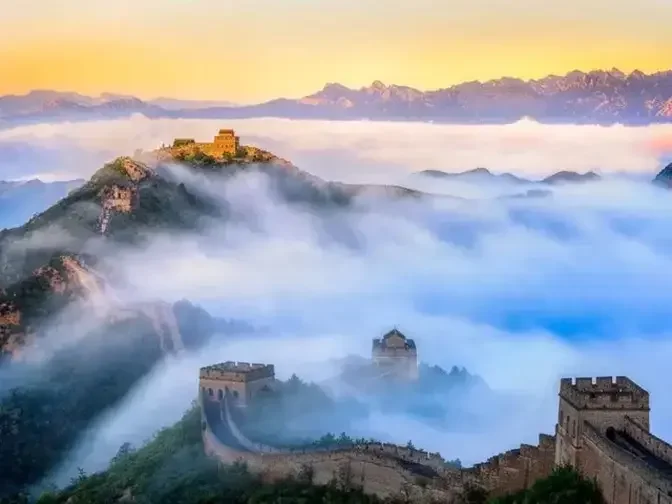
perhaps best-known wetlands in the world. Number 10, the Great Wall of China.
Parts of this Great Wall that stretches from Shanghai Guan on the east coast to Jiayuguan
on the edge of the Gobi Desert on the west were built as early as the 7th century BC.
The most well-known sections were built by the Ming Dynasty between 1368 and 1644,
including the much-visited sections north of Beijing. Unsurprisingly, given its age,
the wall is now quite dilapidated in places, and what was once believed to be a 21,000-kilometer
structure is now closer to 9,000 kilometers if the missing sections are not included.
The main contributor to this erosion, however, is not natural, but man-made.
Being one of China's greatest tourist attractions, many have been known to break
pieces off it to keep as a souvenir. Others have been known to steal sections of brick
to build houses or sell on. Now that's over the top. As well as a willful act of vandalism,
it is causing tremendous damage, with the 2,000-year-old structure now 30% destroyed.
Sadly, if this behavior continues, the Great Wall of China that stretches for thousands of miles
will be gone for good very soon. It is recognized as one of the most impressive architectural feats
in history, but how long it'll stay that way is anyone's guess.
Number 9 – Dead Sea
A salt lake bordered by Jordan to the east and Israel and the West Bank to the west,
the Dead Sea is easily one of the best-known bodies of water on Earth.
This hyper-saline lake has no outlet, with the water simply evaporating into thin air,
leaving just salt behind. The average salt content of the Dead Sea is approximately 28%,
approximately 9.6 times as salty as the ocean. Its surface and shores are 430.5 meters below
sea level, and it has a density of 1.24 kilograms per liter, which makes swimming similar to
floating. The sea level fell below the elevation of an east-west ridge around 1967, leading to
the division of the Dead Sea into two parts – a deep northern basin and a much shallower
southern basin. The sea levels of both have been decreasing ever since. In fact, if it wasn't for
water being pumped into the southern basin, it would have dried up by now. The water level is
decreasing at an alarming rate, dropping from around 389 meters below mean sea level in 1970
to 426 meters below in 2012. Over the last 30 years, it has lost a third of its surface area,
resulting in a wide range of negative effects, including the decline of estuarine ecosystems,
endemic species, the groundwater table, and tourism. If something doesn't change soon,
this stretch of water may very well live up to its name after all.
8. Venice
The capital of northern Italy's Vento region, Venice is a world heritage site,
known throughout the world for its beautiful lagoons and architecture.
Lined with Renaissance and Gothic palaces, Venice was built on wood piles, and now,
due to climate change, it faces the serious threat of disappearing. In the last century,
the city has sunk 9 inches, and is expected to sink a further 24 by the end of this century.
When Venice was first founded, sea levels sat 6 feet below what they are today. Since then,
flooding has increased year on year, with 10 in 1900 to 100 today, and the rising sea level has
caused untold damage. Hundreds of buildings and monuments in Venice have been damaged,
and the marble and mosaics of multiple basilicas destroyed. And if you think that the tourism
industry would try to preserve the city as much as possible given the money it earns them,
you'd be wrong. In fact, they've done quite the opposite by promoting Venice as a city that
may not be around for much longer. Worse still, it looks like their unusual method of promotion
has worked, with the number of visits between 1990 and 2001 increasing from 0.2 to 1.8 million
per year. 7. Ancient Petra
Petra is a historical and archaeological city in southern Jordan. It lies around Jabal al-Madbah
in a basin surrounded by mountains, and is home to some of the world's most famous and intriguing
rock-cut architecture. Access to the city is through a 1.2 kilometer gorge called The Sick.
Also known as the Rose City because of the color of the stone from which it is carved,
Petra has been a UNESCO World Heritage Site since 1985, when they described it as one of the most
precious cultural properties of man's cultural heritage. But the colorful sandstone walls that
made this ancient city famous have deteriorated at an alarming rate, with tourists, the climate,
sunlight, and its composition all to blame. Research found that when 35 people occupied
the interior of al-Qasna, one of the most elaborate temples in Petra, for more than
five minutes, the humidity levels rose enough to cause severe deterioration of the tomb's
internal structure. Because of this, the decision was made to close its interior to tourists in the
summer of 2001. A shame for those who haven't seen it yet, but the alternative was much worse,
don't you think? 6. Glacier National Park
Situated in Montana's Rocky Mountains, with its glacier-carved peaks and valleys running
to the Canadian border, is the picturesque Glacier National Park.
Encompassing 1,583 square miles and with more than 700 miles of hiking trails,
it's popular with hikers, cyclists, and anyone who enjoys the outdoors. Home to a diverse range of
wildlife, from mountain goats to grizzly bears, Glacier National Park boasts pristine forests,
alpine meadows, rugged mountains, and spectacular lakes. It's also struggling due to climate change.
In January this year, signs warning that its signature glaciers would disappear by 2020
were taken down, but that doesn't mean they won't. Where the park was once home to an estimated 150
glaciers, it now has just 25, with scientists predicting that if current climate patterns
persist, they will be gone by 2030. This may only be a prediction based on the best available
scientific evidence, but if the past is anything to go by, Glacier National Park and its tourists
may no longer enjoy the beauty of active glaciers. But I guess we'll have to see, won't we?
5. Alaska Yet another victim of climate change,
the landscape in Alaska is vastly different from the one seen in picture books and movies.
As the world warms, Alaska's glaciers are losing ice, and it's getting worse,
with the remote village of Kivalina literally melting away. Located 80 miles north of the
Arctic Circle and 1,000 miles northwest of Anchorage, the remote Alaskan village has
been disappearing underwater over the last decade. The warming ocean has caused sea levels to rise
and powerful storm surges to eat away at the beach, with the U.S. Army Corps of Engineers
stating that in 10 years, Kivalina will no longer be habitable. President Obama recommended a budget
of $400 million to relocate villages affected by climate change in 2016. However, Congress
declined the recommendation, and the future for residents is now uncertain. Research shows that
Alaska is losing about 75 billion tons of ice each year, much faster than any other glaciered region
on Earth. Glacier-fed ecosystems are a delicate balance, and with changes accelerating all the
time, the future looks bleak for Alaska. In fact, their glaciers are expected to lose between 30
and 50 percent of their mass by the end of this century. 4. The Amazon Rainforest
The Amazon Rainforest includes much of northwestern Brazil, extending into Colombia,
Peru, and other South American countries. It is the world's largest tropical rainforest,
covering more than 3 million square miles, but it has been under threat from humans for decades.
Deforestation and exploitation of the rainforest has been detrimental to its health and longevity,
with its ecosystem in danger of being lost forever. Once the Amazon Rainforest passes
the point of no return, it could be gone in decades, with scientists predicting it could
reach that tipping point and disappear within 50 years. Right now, around 10 million species
live in the rainforest, a forest that absorbs around 2 billion tons of CO2 each year.
This makes it a vital component in the fight against climate change. The speed of collapse
makes it even more important to address the problems as quickly as possible,
or risk losing one of the world's most magnificent rainforests for good.
3. The Maldives
The Maldives are a nation of over 1,190 coral islands that span across the equator and deep
into the vast Indian Ocean. A captivating group of islands nearly two meters above sea level,
the Maldives are the world's lowest country in elevation. The islands stretch across 90,000
square kilometers and are believed to have been formed from underwater volcanic eruptions over
2,500 years old. Whilst the temperature is constantly hot and often humid, the Maldives
makes an excellent scenic paradise and the perfect getaway for vacationers and honeymooners.
Around 80 of the islands are major tourist attractions, with a single resort operating
each tourist island. But if you have the Maldives as a must-do on your bucket list,
it might pay to get there soon. In 2004, a tsunami swallowed two-thirds of the country,
with 20 islands completely erased. And climate change is doing untold damage to the islands,
damage that can't be reversed. If the rising sea levels from melting glaciers and icebergs don't
slow down or stop completely, the Maldives will be completely submerged in 30 years.
With that in mind, it might pay to start planning your exotic island getaway sooner
rather than later, don't you think? 2. Mount Kilimanjaro
The tallest mountain in Africa, with its three volcanic cones, Mount Kilimanjaro is slowly
changing. What was once a distinctive feature of one of the world's great mountains is gradually
disappearing as the weather becomes warmer. The snow cap that sits on top of Mount Kilimanjaro,
a dormant volcano in Tanzania, is melting and may be completely gone by the end of this century.
Global warming is being blamed and if the trend continues, the summit's glaciers will have
vanished within a few decades. Studies show that human activities may also have had an impact,
with many scientists divided on why the snow is disappearing. Some believe deforestation
may be partly responsible, with the clearing of trees for farmland leading to changes in
temperatures and rainfall patterns. Whatever the reason, the ice is melting quickly, with 80%
lost between 1912 and 2007, with a whopping 26% of that lost between 2000 and 2007, according to
scientists. That's not good news for Tanzania, with the mountain attracting 30,000 to 40,000 tourists
a year. When the glaciers vanish, will they still make the trip? Who knows?
Number 1 – Machu Picchu, Peru Machu Picchu is a 15th century Incan citadel
set high in the Andes Mountains in Peru. Archaeologists believe it was constructed
as an estate for the Inca Emperor Pachacuti in the 1400s. It is renowned for its sophisticated
dry stone walls, intriguing buildings, and panoramic views over the Urubamba River Valley,
and is a tourist mecca, with 2,500 visitors every day. The citadel was abandoned in the early 16th
century and lost to the dense Amazon jungle for five centuries. It was rediscovered by Hiram
Bingham in 1911 and declared a UNESCO World Heritage Site in 1983, with tourist numbers
strictly limited. Lying on a fault line and with the risk of erosion, landslides,
and uncontrolled urban development, Machu Picchu is at constant risk of collapse.
One of the world's most famous attractions, access to the lost city has been made easier
with the addition of a train service to its remote location. But the site is still at risk,
and a buffer needs to be created around it to protect it from further urban encroachment.
Whether that will happen in enough time to save it, no one knows. We can only hope so.
The world is a crazy place at the moment, with many of us confined to our homes or immediate
surroundings. So what better time than now to start planning the trip of a lifetime?
And how about including some of these fabulous locations before climate change,
natural disasters, or for that matter, technology, makes them disappear for good?
Also, check out our other cool stuff showing up on screen right now. See you next time!