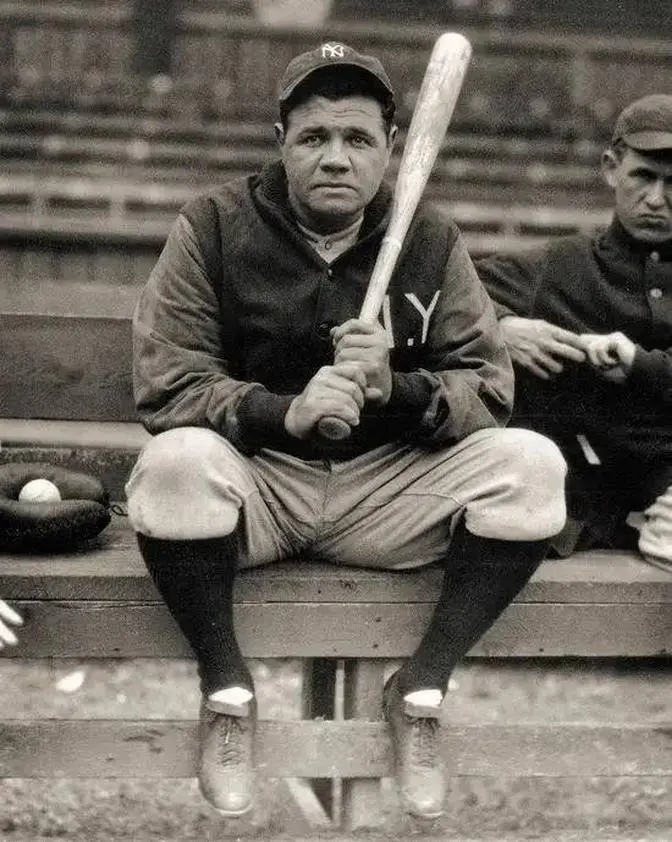
Have you ever wondered how every MLB team got its name? Well I did too! I decided to take an unreasonably long time to research each team and create this video. Hopefully you learn a thing or two, too! Each team is listed in the order that they were founded or became a part of the MLB. And since location plays a huge role in the team name (like 50%) I also hit every move as a part of this video!
Here's how every MLB team got its name. First on our list is the Atlanta Braves.
The team stakes a strong claim on the title of the longest continuously playing American
professional sports team. Founded in 1871, the team came into existence after the first fully
professional team, the Cincinnati Red Stockings, dissolved in 1870. Then, player, manager,
and three others moved to Boston to help start a new team as the Boston Red Stockings,
borrowing the uniforms and the name from the Cincinnati-based team. This new team was a
founding member of the National Association of Professional Baseball Players, or simply the
National Association. In fact, the Braves remain one of two teams still in existence from that
was a mouthful. In 1876, the National League, which would become one of the two halves of
Major League Baseball, replaced the National Association. At this point, our team was
referred to as the Boston Red Caps because of another already existing team in the National
League named the Cincinnati Red Stockings taking the original name from that original Cincinnati
team. Another nickname they picked up along the way in 1883 was the Boston Bean Eaters,
probably paying tribute to those delicious pork and molasses Boston baked beans. In 1901,
the Boston Americans, we'll get to them later, set up shop across town and started a decade-long
drought of poor seasons for our red-capped Red Stocking Bean Eaters. In 1907, the owner ditched
Red Stockings literally and all of the other nicknames and renamed the team the Boston Doves.
However, still struggling on the field, the team tried out another nickname,
the Boston Rustlers, in 1911 before finally settling on the Boston Braves in 1912.
Braves was chosen after the owner, James Gaffney, who was a member of a political organization
called Tammany Hall. Tammany Hall was named after a leader of the Lenape people,
Tammanend, and members of the organization were called Braves. The term Braves is in reference
to Native Americans and comes from the long history of violent conflicts starting with
European settlement and continuing through the 19th century with U.S. expansion further west.
The Native American warriors were often referred to as Braves. In order to fully understand the
depth, history, atrocities, complex feelings, and everything that comes with using Native
Americans as mascots in sports is definitely beyond the scope of this video and not something
I would ever claim to be an expert in, but this is how the name came about so do with
that information what you will. P.S. This won't be the last time that this comes up.
After a failed attempt to avoid money problems by signing Babe Ruth for the 1935 season,
new ownership changed the team name from the Braves to the Boston Bees, and another ownership
change in 1941 prompted the name change back to the Boston Braves, but this did little to
change their fortunes. In 1953, the team relocated to Milwaukee, becoming the Milwaukee Braves.
In Milwaukee, the Braves had success both on the field and financially. Their success actually
inspired three other teams on our list to relocate as well. In fact, this team was so
successful that their entire time in Milwaukee, they never had a losing season. Unfortunately,
all good things must come to an end. The team was sold in 1962, and the new owner immediately
wanted to move the team to a bigger TV market. Finally, in 1966, and much to the dismay of the
city of Milwaukee, the Braves moved to Atlanta, becoming the Atlanta Braves that we know today.
The Chicago Cubs started life as an experimental team with only a handful of contests to test the
appetite for baseball in Chicago, and they were called the Chicago White Stockings.
White Stockings was chosen as the team name originally because of the white uniforms that
the players wore. With most teams of this time period, the nicknames weren't really official,
and generally they were picked by the sports journalists that were covering the game.
The most popular names stuck. After a successful test in 1870, the White Stockings became a fully
professional team, joining the National Association for their inaugural season in 1871. Despite
starting in the National Association at the same time as the Atlanta Braves, the Chicago Cubs
comes in at number 2 on our list because they did not play for two years after the 1871 Chicago
Fire. In the early days, the most prominent player for the White Stockings was Cap Anson.
He played for 21 seasons with Chicago, 18 of which he was also the team's manager. Because of his
propensity for trading away star players for younger, stronger players, by 1890 the team
became the Chicago Colts. Now when Anson left the club, the sad sports franchise felt abandoned
and was left with a roster full of a bunch of young players nobody had ever heard of. The most
popular names during this time period were the Chicago Remnants and the Chicago Orphans. And
while both of those nicknames were popularly used, they slowly fell out of favor as a new nickname
emerged, the Chicago Cubs. Cubs was a more playful and hopeful outlook on a young team that would set
the foundation for one of the most recognizable American sports franchises. Much better choice
than the Orphans. After losing his baseball team the Cincinnati Red Stockings in 1871, and seeing
them essentially become the Boston Braves, the city of Cincinnati again lost a second team that
was also called the Cincinnati Red Stockings in 1880. Now a third iteration of the Cincinnati
Red Stockings began playing in the American Association in 1882. In 1890 the Red Stockings
moved permanently to the National League, and it was at this time that the team dropped their
stockings, metaphorically, and became known as the Cincinnati Reds. And that would be the end of this
section if it wasn't for just one slight detour. You see, this is where we get sidetracked from a
great baseball name. It's a few years after World War II and people are freaking out about communism.
Well, one person in particular is freaking out about communism. The eventually disgraced and
officially censured Wisconsin Senator Joe McCarthy. McCarthyism, also known as the Red Scare,
was a period of time in American history where we collectively lost our minds and started
attacking our fellow citizens, calling them communists and socialists, and trying to use
those attacks to score political points. I'm so thankful that it's not like that today.
So because of this Red Scare, the Cincinnati Reds changed their names in 1954 to the Cincinnati Red
Legs. Thankfully for all of us, the name change never caught on, and in 1959, the team returned
to being the Cincinnati Reds. In 1882, the Pittsburgh Pirates were founded in the neighboring
city of Allegheny as the Allegheny Baseball Club of Pittsburgh. Since that's a really long name,
they were often referred to simply as the Alleghenies, leading them to eventually be called
the Pittsburgh Alleghenies. Now, going into the 1891 season, the Alleghenies were looking at
signing a new second baseman. Now, to retain a player on your roster at this time, you had to at
least include them on a list of reserved players. The Philadelphia Athletics failed to do that with
a player named Lou Bierbauer, who the Alleghenies promptly signed. The Philadelphia Athletics filed
an official complaint calling the actions of Allegheny paradical, which is a great word,
essentially accusing the team of plundering players from other teams like a bunch of
swashbuckling pirates. Perhaps enjoying this infamy and the insult, the Alleghenies renamed
themselves to the Pittsburgh Pirates in 1891. Fun fact, Allegheny was eventually annexed in 1907,
making 1908 the first season the Pittsburgh Pirates would actually play in Pittsburgh.
The history of the St. Louis Cardinals begins with a team called the St. Louis Brown Stockings.
This team was named after the color of their socks, because that's what you did back then.
Now, the Brown Stockings began playing professionally in 1875, but they were actually
thrown out of the league for fixing games. Now bankrupt, a semi-pro version of the team
continued to play games through 1881. They would travel city to city playing exhibition matches.
Finally, ahead of the 1882 season, the team was purchased by a new owner and became a founding
member of the American Association. This marks the beginning of the St. Louis Cardinals as the
professional franchise that we recognize today. Though at the time they retained the name of the
previous team, they were still the St. Louis Brown Stockings. Because of a uniform change,
meaning they got different socks, after only one season the team dropped Stockings from their name,
becoming the St. Louis Browns. In 1891, the team transitioned to the National League,
but they retained their name. New ownership came in 1899, and with it they brought new uniforms
with the signature cardinal red color as a trim on the uniform. Despite having this sweet color,
the team was renamed to the Perfectos. However, the color change proved to be much more popular
than the name change. Columnist Willie McHale overheard one woman call the new color
a lovely shade of cardinal, and he began referring to the team as the Cardinals.
The popularity of this nickname proved so strong that the very next season,
the team was officially renamed to the St. Louis Cardinals that we know today.
The Phillies began life in 1883 as an expansion team for the National League,
and they were named the Philadelphia Quakers. Quaker City is one of Philadelphia's famous
nicknames, along with the City of Brotherly Love, not to be confused with the mid-90s sitcom
Brotherly Love that starred the Lawrence Brothers, real brothers from Philadelphia,
playing brothers also from Philadelphia. In 1884, the team sought to change their name to the
Philadelphia Philadelphias, following the tradition of naming your team after the pluralizing of the
But since that is somewhat ridiculous and would have been difficult to print in the late 1800s,
newspapers continued to refer to them as the Quakers or decided to opt for the much shorter
Phillies. By 1890, the team was officially renamed the Philadelphia Phillies,
permanently adopting the abbreviation. In 1944, the team was sold after the owner
was banned for betting on his own team. The new ownership tried to change the name to the
Philadelphia Blue Jays. The name never really stuck though, and Johns Hopkins University,
whose team is also nicknamed the Blue Jays, objected to being associated with such a bad
team. Ouch. Blue Jays was actually so unpopular that it never even took over the name spot on
the front of their jerseys. Instead, the new mascot just appeared on the sleeve. In 1950,
the team officially dropped the Blue Jay name and returned as it should have been,
back to being the Philadelphia Phillies. The San Francisco Giants began life in New York City
as the New York Gothams in 1883. Gothams was chosen because of its popularity as a nickname
for New York. So popular, in fact, that it would later be used as the name of the fictional Gotham
City in Batman comics nearly 60 years later. As legend goes, after a particularly good victory
against those Phillies, in 1885, then-manager Jim Moutry praised the team, calling them
my big fellows, my Giants. Though this may be an apocryphal story, from that point on,
the team was known as the New York Giants. In 1958, the Giants became one of the two teams to
move, for the first time, to the west coast. Looking for a new stadium and having multiple
seasons of dwindling success, they first looked to Minnesota before being wooed by the mayor of
San Francisco, becoming the San Francisco Giants. This move, however, was only going to be allowed
if two teams moved to California together, expanding baseball out west. The Los Angeles
Dodgers began as the Brooklyn Grays in 1884. Named by reporters after their gray uniforms,
of course, they began playing in the American Association. And this is where things get
confusing. The legal name of the Brooklyn-based team was the Brooklyn Baseball Club. However,
they often went by multiple different nicknames. Oftentimes, these nicknames all overlapped,
and none were the official name of the team. In 1884, they went by the Brooklyn Atlantics.
Starting in 1888, they alternated between the Brooklyn Bridegrooms and the Brooklyn Grooms,
because apparently a lot of their players got married that year. In 1899, they became the
Brooklyn Superbaws, named after a popular circus act, the Hanlon's Superbaw. It was a traveling
vaudeville-style show, and I have no idea why they named their team after it.
For much of the early 1900s, the team was also called the Brooklyn Robins,
after manager Wilbert Robinson, who went on to lead the team to the pennant in 1916 and 1920.
However, amongst all of these nicknames, one was common throughout and popular amongst both
fans and the newspapers, the Brooklyn Trolley Dodgers. Note the question marks there. There
is some dispute as to when the name started. By one record in 1895, a newspaper reported that
the Trolley Dodgers is the new name which Easton baseball cranks have given the Brooklyn club.
Trolley Dodgers was given to the team as a name because locals believed the moving from the
horse-drawn buggies to trolleys posed a great danger for the people of Brooklyn. At some point,
the name was shortened to Dodgers, but it wasn't until 1916 that the team formally recognized
Dodgers as a nickname for the team, printing Dodgers on a World Series program. But even then,
the team continued using Robins as well, and it wasn't until 1932 that Dodgers officially appeared
on their jerseys. Now in 1958, much like the Giants, the Dodgers began looking for a new place
to build a baseball stadium. They eventually began talks with the city of Los Angeles and
agreed to move as long as their crosstown rivals, the New York Giants, also moved to California,
keeping their rivalry intact. That is how we got the Los Angeles Dodgers.
The Baltimore Orioles began as a minor league team playing in the Western League as the Milwaukee
Brewers. In 1900, the Western League became the American League and announced that it would be a
professional league directly in competition with the National League. A few years later,
the leagues would merge, becoming Major League Baseball. Playing in the American League's
inaugural season in 1901, Brewers was the nickname that had been used for baseball teams in Milwaukee
dating all the way back to the 1800s. This references Milwaukee's famous brewing industry,
founding multiple breweries, including Miller Brewing Company, which was founded in 1855,
all of this culminating in giving Milwaukee the city nickname of Brew City.
Unfortunately, this just wasn't the time for professional baseball in Milwaukee. After only
one season in 1902, the Brewers moved to St. Louis, becoming the St. Louis Browns.
If that sounds familiar, Browns was chosen because it was the former name of their now
cross-town rivals, the St. Louis Cardinals, who abandoned the name in 1898. After those
cross-town rival Cardinals were sold to new owners, the owner of the Browns realized that
he didn't have the finances to compete for the fandom of St. Louis residents, and the truth was
his Browns already lagged behind the Cardinals in terms of performance on the field. The team's
first attempt to move was back to Milwaukee in 1953, but the move was blocked by the American
League owners. The second option became Baltimore, but the league would only allow the move if then
owner Bill Wieck would sell his ownership in the team. Long story short, he was not well-liked for
his antics by the other owners in the American League. So in 1954, the team moved to Baltimore
and became the Baltimore Orioles. Orioles was chosen as a nickname because of a minor league
team that played in the city previously and was much beloved. They even had Babe Ruth before he
became a pro! The name also belonged to a different franchise that played in the city in the American
League for two seasons but had already moved, but more on that later. All of these teams were named
after a beloved symbol of Maryland, an Oriole, specifically the Baltimore Oriole. This bird
shares its coloring with the Calvert Seal section of the Maryland flag and became the state bird of
Maryland in 1947, just seven years before the Baltimore Oriole baseball team arrived.
Another team beginning in 1901 was the Boston Red Sox. They too were an original franchise of the
American League, this is going to be a trend in this video, and they set up shop as the
crosstown rivals of the Boston Bean Eaters, remember them? Though lacking an official
nickname, the team often went by the Boston Americans, or the Bostonians, or the American
Leaguers, or the Pilgrims. Anyway, remember when the Bean Eaters, formerly the Boston Red Stockings,
became the Doves in 1907 and stopped wearing red socks? When that happened, the Boston Americanian
Pilgrims jumped quickly to change their name to the Boston Red Sox, and they got the socks to
This move in 1908 began to cement them as the premier team in Boston, and the rest was history.
The Chicago White Sox began playing as a minor league team named the Sioux City Cornhuskers,
and they played in the Western League. When the Western League became the American League,
they played one final season as a minor league team. In a super sneaky move that totally wasn't
planned out before, the league moved the team from Sioux City to Chicago's south side and took
up the nickname White Stockings. After this final season as a minor league team, the AL announced
that they would become a major league team, and thus the Chicago White Stockings were born. In
1904, to keep up with sweet abbreviations, the team changed their name to the Chicago White Sox,
and have remained so ever since. Oh, and yes, it was about the color of their socks.
The Cleveland Indians also began as a minor league team playing in the Western League.
Originally playing in Grand Rapids, Michigan, in 1900, the Grand Rapids Rustlers moved to Cleveland
and became the Cleveland Lakeshores. This makes sense as a name because Cleveland is on the shore
of a great lake. When the American League became a major league in 1901, the team became the
Cleveland Bluebirds. The players immediately disliked the name. The team tried to shorten
it to the Cleveland Blues that very same season, but it still didn't work. The players tried to
rename the team themselves to the Cleveland Broncos the next season in 1902, but that name
too failed to catch on. The team was then renamed in 1903 to the Cleveland Knapps after the team
captain who was nicknamed Knapp. Knapp would go on to manage the team as well for a few years
until in 1915 he was traded. The now Knappless Knapps needed a new nickname. That new nickname
was the Cleveland Indians. Whew, we're back in this territory, aren't we? Alright, diving in.
The team is apparently named after a former player of the Cleveland Spiders team that played in the
late 1890s named Louis Sokalexis. Sokalexis was from the Penobscot tribe and had died a few years
prior to the team being renamed to the Indians. He is often credited as the first baseball player
of Native American descent. In an article from 2012 on clevescene.com, writer Peter Patakos
examines the origins of the club's logo, mascot, and name, and he notes that the club's official
stance on the name is that they are quote, proud to acknowledge and foster the legacy of Louis
Francis Sokalexis. But Patakos notes that this is a highly unlikely and progressive stance for the
team to evade in 1915. He writes, When the Cleveland Baseball Club was renamed to the
Indians from the Knapps in 1915, the Civil Rights Act was still 49 years from reality. Women could
not vote, and racism against all minorities raged across America. It hadn't yet been three full
decades since Custer's last stand, and the bloody Indian Wars continued in the American West into
the 1920s. In the same article, sports writer Joe Posnianski adds, Why exactly would people in
Cleveland, this in a time when Native Americans were generally viewed as a subhuman in America,
name their team after a relatively minor and certainly troubled outfielder? He goes on to say,
In all versions of the story, Sokalexis had to deal with horrendous racism, terrible taunts,
whoops from the crowd, and so on. Finally, the article continues with an NYU history professor
who posits that the franchise was renamed not in honor of Sokalexis, but the fun that the
crowd had at the time, which would seem was often at his expense. Now these videos that I make are
essentially glorified Wikipedia deep dives, so I don't usually link to every page that I read in
researching, but I will link this article. It's a good read in tackling important questions about
the origins of the Cleveland Indians nickname. So much more could and should be said, but for now,
we will leave it here with the Cleveland Indians. Again, we begin in the Western League. As a minor
league team, the Detroit Tigers were already named the Detroit Tigers. The nickname dates back to a
called the Detroit Light Guard that is part of the Michigan Army National Guard. The Detroit
Light Guard adopted the tiger as its symbol in 1882 and it remained the Detroit Tigers nickname
when the American League became a major league in 1901. The Minnesota Twins also began in the
Western League, moving from Kansas City to Washington DC for the inaugural season of the
American League in 1901. They chose the name Washington Senators because of a previous baseball
team that also played in Washington. The name Senators refers to Washington DC being the
location of the United States Capitol. Senators are elected by states and sent to represent that
state in the upper chamber of Congress. Now because of poor performance on the field, the team was
rebranded in 1905 to the Washington Nationals. Again, since Washington DC is the national
capital. Nats for short was used interchangeably with Senators and eventually in 1956, the team
was renamed back to the Washington Senators. Following the death of the owner in 1955,
the new ownership sought to move the team and in 1960, Minneapolis was granted an expansion team
to join the MLB. This would be an entirely new team, so jumping on this opportunity,
the Senators owner proposed that they move their franchise to Minneapolis and place this new
expansion team in Washington. The league agreed with this proposal and the Minnesota Twins were
born in 1961. Twins was chosen for the name because of the twin cities of Minneapolis,
the largest city in the state, and St. Paul, the state's capital. These twin cities share
a metro area and are built around and divided by the Mississippi, Minnesota, and St. Croix rivers.
When the Western League became the American League in 1901, they wanted to start with a
team in New York City. Unfortunately, they were blocked by the National League and the league
decided to start with a team in Baltimore, Maryland instead. This is where the other
previously mentioned Baltimore Orioles team comes into place. They were the beginnings of what would
become the New York Yankees. Now, if you're still unclear as to why the Orioles was chosen,
rewind a bit, take some notes, pop quiz in the morning. In 1903, the two competing leagues
reached an agreement that would allow the team to move to its desired location, New York City.
They became the New York Highlanders. Highlanders was chosen for a couple of reasons,
one to highlight the location of the ballpark, one of the highest points in North Manhattan,
and also because of a British military unit called Gordon's Highlanders. This only really
makes sense if you know that at the time, the team president was named Joseph Gordon,
so these baseball players were his Highlanders. Within a few years though, some sports writers
began referring to the new team as the Yankees. Perhaps a more fitting name than the Scottish
Highlander as Yankee dates back to the mid-1700s to refer to people living in America. By 1913,
the name had stuck and the team officially became the New York Yankees.
The Oakland Athletics, or A's for short, were also created as a part of the Western League
becoming the American League. Beginning in Philadelphia in 1901, the Philadelphia Athletics
were a direct competitor to the National League's Philadelphia Phillies. The name
Athletics was chosen after an amateur team from the 1860s named the Athletic Club of Philadelphia.
By the 1950s, the Philadelphia Phillies began to have significantly more success and overtook
the A's as the main Philadelphia-based team, creating a lot of financial troubles for the A's.
Facing potential bankruptcy in 1954, the team was sold to a new owner that moved the team ahead of
the 1955 season to Kansas City, keeping the nickname to become the Kansas City Athletics.
After a new owner bought out the minority owners to control the team in 1960,
he began shopping the team around and looking for a new city. Potential landing spots for the team
included Dallas-Fort Worth, then potentially Louisville. Potential names in Louisville
were the Kentucky Athletics, the Louisville Sluggers, and even the Kentucky Colonels,
which would have kept the KC logo on their jerseys and allowed for potentially lucrative
business ties to either baseball bats or fried chicken. An initial move to Oakland was also
tried the same year as Louisville, but all these were voted down by the other baseball owners.
Eventually, after a strange threat to move the team to Peculiar, Missouri,
yes that's a real place, and on the heels of an expiring lease with the current stadium,
in 1967 the league owners voted to allow the Athletics to move to Oakland ahead of the 1968
season, finally giving us the Oakland Athletics. There had been a desire in baseball to have a
major team on the west coast since at least the 1940s. An original plan was even disrupted by
the 1941 bombing of Pearl Harbor. Eventually, the Los Angeles Dodgers became the first team in LA
in 1958, moving from Brooklyn. In the late 1950s, the Continental League was a startup
trying to rival the MLB and was looking for places to start teams. In a successful attempt
to prevent this, the MLB announced a round of expansion with two teams joining both the
American League and the National League. Since the Dodgers owner owned the exclusive baseball
rights to Los Angeles, he was able to block a rival from purchasing the rights to that new
MLB team, and eventually Gene Autry, an actor slash singer famous for his cowboy roles was
allowed to purchase the team. Wanting to name it after a Pacific Coast League team,
the Angels, he had to purchase the naming rights from the Dodgers owner that owned the name as a
part of the Dodgers move to LA. Once the name was purchased, the Los Angeles Angels then joined the
league and began playing in 1961. Not only does Angels have a history as a name of previous
baseball teams in Los Angeles, but Los Angeles literally translates from Spanish to English
as The Angels, so quite the fitting name. Part of the original agreement that Autry made with
the Dodgers organization meant that the Angels played at Dodgers Stadium. They were also blocked
from building a competing stadium in Los Angeles. Eventually, the team struck a deal with the city
of Anaheim and built a stadium and moved the team. Because they were no longer technically in Los
Angeles, but still within the giant metro sprawl, team name was changed to the California Angels in
1965 ahead of their move for the start of the 1966 season. After three decades of heartbreak
for the Angels, Disney decided to take a particular interest in 1996. Perhaps this had to do something
with the 1994 Disney film Angels in the Outfield. Eventually acquiring a full controlling stake in
club in 1997, Disney's subsidiary called Anaheim Sports, which also owned the Mighty Ducks of
Anaheim at the time, sought to renovate the Anaheim Stadium. Part of the new agreement with the city of
Anaheim meant that they had to have Anaheim in the team name. So in 1997, the team was renamed to the
Anaheim Angels. By 2005, however, the team was now under new ownership that wanted to add Los Angeles
back into the team name. So the team at that time was redubbed to the Los Angeles Angels of Anaheim.
Needless to say, this did not go over well with fans or residents of either Los Angeles or Anaheim,
and this especially did not go over well with the cities of Los Angeles or Anaheim. After a
somewhat lengthy court battle with the city of Anaheim, the lawsuit was dropped and the Angels
were allowed to keep their lengthy name. However, and probably because of all this confusion and
fighting, in 2013, the team officially dropped of Anaheim from the team name after negotiating a
new lease with the city, giving us once again the Los Angeles Angels. After their original team
named the Washington Senators moved to Minnesota and became the Twins in 1961, Washington received
an expansion team as a part of the deal. Keeping the name of the team that moved to Minnesota,
the Texas Rangers began as the Washington Senators in 1961. However, the team struggled
financially and on the field, and the owners sought to either move or sell the team in 1970.
The mayor of Arlington, Texas was particularly interested after trying to previously lure
the then Kansas City Athletics to Dallas-Fort Worth. In 1971, the owners voted in favor of
the move with the team beginning to play in Arlington in 1972. Upon relocating, a new name
was chosen and the Texas Rangers were officially playing baseball in Texas. Rangers was chosen
after the statewide law enforcement agency, the Texas Rangers. As a part of another round of
expansion for the 1962 season, Houston was chosen as one of the two expansion sites.
The name that was chosen from a contest was the Houston Colt .45s. The Colt .45 was a gun that
was popular in the west in the mid to late 1800s. It even garnered the nickname of the
gun that won the west. However, the name was short lived and in 1965 the team was renamed
to the Houston Astros. This name was chosen to honor Houston's role in NASA's space program
and it coincided with their move into the Astrodome where they would play on their
new artificial field called AstroTurf. They really weren't afraid to go all in on the branding.
After the Dodgers and Giants moved to California in 1957, the MLB wanted to add another franchise
back to New York City. In 1962, the league expanded and added the New York Mets. Mets was
chosen for the name and is a shortened version of the legal name of the franchise, the New York
Metropolitan Baseball Club. Metropolitan was a natural fit as it was the name of a New York
based baseball team that played in the American Association back in the 1880s.
In 1969, the league looked to expand again this time by adding four more teams. One of those
teams was the Kansas City Royals which began playing just two years after the Kansas City
Athletics left for Oakland. The name Royals was chosen in honor of the American Royal,
a livestock show, rodeo, and barbecue competition that's been held annually in Kansas City since
1899. Their name also slides in perfectly around other Kansas City nicknames, the Royals,
the Chiefs, briefly the Kings, and also we can't forget the Monarchs of the Negro Baseball League.
The Milwaukee Brewers began life in the MLB as an expansion team called the Seattle Pilots
in 1969. Pilots was chosen because the owner was a part-time pilot and because of the city's role
in the aviation industry being the founding location of companies like Boeing. There were
a couple of issues however. The teams that joined in 1969 were originally supposed to start in 1971.
The timeline was moved up so that all four teams could join at the same time while shortening the
gap that Kansas City would be without a team, having just lost their team to Oakland two years
prior. On top of that, part of the agreement required the Pilots to pay 1 million dollars
to the Pacific Coast League that would be losing its Seattle franchise as a part of the expansion
of the MLB. On top of all of that, the team faced major renovations to the stadium that was built
for the minor league team and with poor attendance the team was almost out of money entirely after its
first season. The team tried to find a new location, but a local petition slowed the progress
and it became obvious to everyone that due to the finances of the team, new ownership was the only
option to keep the franchise from going under. The original owner agreed to sell the team to Bud
Seelig. Yes, that Bud Seelig that would go on to become the Commissioner of Baseball in 1998.
Seelig then planned to move the team to Milwaukee. The city of Seattle filed an injunction to stop
the deal and to keep the team in Seattle. This was on March 17th after spring training had already
begun. The players and coaches showed up to spring training not sure where their team was located
or what their team name even was. The former owner filed for bankruptcy and through the bankruptcy
proceedings the sale was allowed to go through just 6 days before the opening of the 1970 season.
The team's equipment was literally sitting on a truck in Provo, Utah waiting for word on whether
to drive west to Seattle or east to Milwaukee. When the team finally arrived in Milwaukee,
the name Brewers was chosen for all of the reasons that we discussed during the Baltimore
Orioles part of the video. Finally giving Milwaukee its team, the Milwaukee Brewers in 1970.
The San Diego Padres also joined the MLB as one of those 4 expansion franchises in 1969.
Playing their entire time in San Diego, the name Padres comes from a Pacific Coast League
team of the same name. Padres translates as Fathers from Spanish to English and refers
to the Spanish Franciscan Friars that founded San Diego in 1769, 200 years before the inaugural
season of the Padres. The Washington Nationals began as the final of the four 1969 expansion
teams as the Montreal Expos. They were the first major league team to be located in Canada
and were named after the Expo 67 World's Fair which took place in Montreal to great success
2 years prior. Following a sale of the team to new owners in 1999, the team failed to secure
a new baseball stadium and also could not reach an agreement on TV and radio broadcast deals.
So in 2001, there was a proposal for MLB contraction that would reduce the league
by 2 teams. Those teams were to be the Expos and the Twins and it mainly focused on their
inability to secure a new and up-to-date stadium. This plan was ultimately postponed,
but the writing was on the wall that the Expos had to move. Proposed locations included Oklahoma
City, San Juan Puerto Rico, Monterey Mexico, Portland, Oregon, Las Vegas, and Charlotte,
but it was eventually decided that Washington DC would be the best place for the franchise.
Upon relocation in 2005, there was some desire to return to the name Senators, however the team
opted to use the name Washington Nationals, which was used until 1956 by the franchise that
eventually became the Minnesota Twins. The reason Senators wasn't chosen is because ironically,
Washington D.C. does not have any Senators and has no voting representation in Congress.
This makes Washington D.C. the only place an American can live in the U.S. where they can vote
for president but have no representation otherwise. Write your congressperson, support D.C.
statehood. Anyway, relocating to D.C. gave us the Washington Nationals and finally returned
America's pastime back to the nation's capital. The Seattle Mariners were founded as part of an
ongoing lawsuit after the previous franchise, the Pilots, moved to Milwaukee in 1970. After losing
their team, the city of Seattle and the state of Washington sued the American League for breach of
contract. In 1976, the American League agreed to give the city an expansion team if the city agreed
to drop the lawsuit. This began the expansion process and Seattle officially joined the MLB
again in 1977. The name Mariners was chosen by the team after a contest was held in which fans
submitted names for the team. Mariners was the winner because of how well it fit the city of
Seattle and its marine-based culture and industry. The Toronto Blue Jays were also a part of the same
round of 1977 expansion. Their name, Too, was chosen by fan suggestion. The Blue J was a popular
choice and ultimately won. It refers to the bird of the same name and the color blue fits with the
colors of other Toronto-based sports franchises. Well, mostly. In 1993, the MLB again decided to
expand by two more teams. One location that was chosen was Denver. Denver had long wanted a team
in the majors after successfully fielding minor league teams. They even built Mile High Stadium
for their Denver Bears minor league team with the intention of being able to expand it in the future
for a major league team. Once Denver was chosen, they quickly settled on a name, the Colorado Rockies.
Rockies was chosen because of Denver's proximity to the Rocky Mountains and because the name was
used formerly with an NHL franchise that was based in Denver, also called the Rockies. The other team
included in this expansion was the Miami Marlins. Before they were named the Marlins, they considered
names like the Florida Flamingos. Hey, it's got alliteration going for it, but that might be all
that it's got going for it. They eventually settled on the Marlins, which had been used by a former
minor league team also named the Miami Marlins. However, they decided to ditch the alliteration
altogether and started as the Florida Marlins in 1993. In 2012, the Marlins moved to a new stadium
and as a part of an agreement with Miami-Dade County where the stadium is located, they agreed
to change their name to the Miami Marlins, restoring alliteration and peace to the universe.
The final round of expansion, at least so far, happened in 1998. One of the franchises was
awarded to Phoenix which had grown from the 99th largest city in the U.S. in 1940 to the 9th largest
by 1990. Phoenix also made sense because of the presence and the success of spring training
baseball happening all over Phoenix every spring. Now, the name chosen for this expansion team was
the Arizona Diamondbacks, intentionally adopting the regional representation of Arizona over the
localized Phoenix Diamondbacks. Diamondback was chosen because of the prevalence of the Western
Diamondback rattlesnake and its distinctive diamond pattern on its scales. These are found
all over Arizona and can make for a bad day for hikers that aren't paying too close attention.
In only three years, the Diamondbacks would win the World Series, making them the fastest
franchise ever to do so and creating one of my favorite childhood sports memories.
Tampa Bay was the other location chosen for expansion in 1998. Choosing a team name became
a little problematic. Originally, they wanted to use the name Tampa Bay Stingrays, but they ran
into a naming rights issue as the name was already used by the Hawaii Winter Baseball team,
the Maui Stingrays. The team then opted instead for a local type of ray and began as the Tampa
Bay Devil Rays in 1998. In 2008, the team underwent a bit of a rebrand. After considering a few other
names and refreshing their uniforms, the team settled on Tampa Bay Rays. It must have proved
lucky because that very same year, the team made its first World Series appearance.
And there it is, how every MLB team got its name. If you enjoyed the video,
please like and subscribe so you don't miss future videos,
and in the meantime, check out the other videos on the channel.