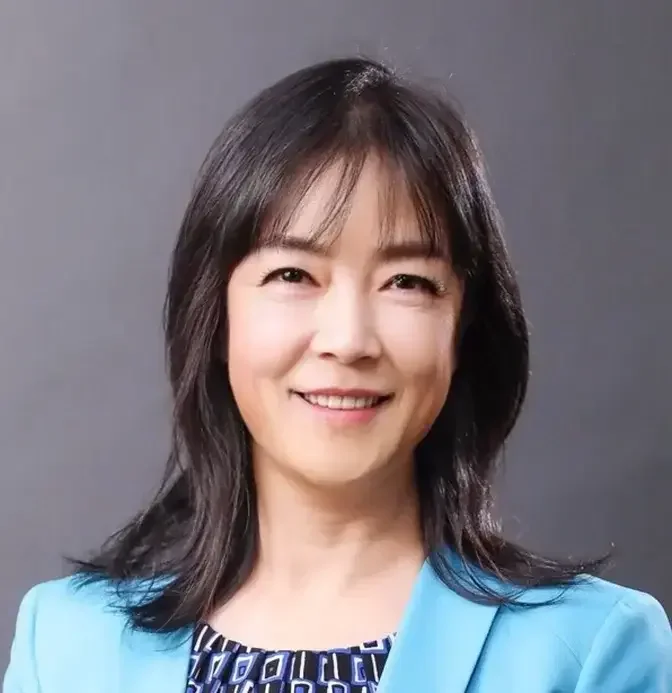
Hello everyone! Welcome to Inconvenient Truths. I am your host Jennifer Zeng. In the past few days, the Chinese internet has been abuzz with the news that six doctoral students
from a research group studying cancer mechanisms at
a renowned hospital in China were suddenly found to have fatal cancers.
While people are exploring the truth of this and why it happened,
they are also deeply worried about whether a huge
conspiracy is hidden behind this incident,
and whether the Chinese Communist Party is developing the next
terrifying genetic weapon. Today, let's talk about this matter.
On November 6th, shocking news erupted on the Chinese internet.
It was reported that at the Sun Yat-sen Memorial Hospital of Sun Yat-sen University,
specifically the Breast Surgery Department of the University's Second Affiliated Hospital in Guangzhou,
multiple students from the same team had been diagnosed with rare types of
breast cancer and pancreatic cancer,
most of which were already in advanced
stages. The leaked information indicates that this team specializes in tumor research,
focusing on the triggering mechanisms, that is,
researching what factors can lead to cancer in humans.
The team's supervising mentor is named Su Shicheng. He is an assistant
to the president of Sun Yat-sen Memorial Hospital, a professor, a chief
physician, a member of the CCP, and a recipient of China's Outstanding Young Science Fund. He
is 40 years old now. His boss
is Song Erwei, an academician of the Chinese Academy of Sciences and the president of
Sun Yat-sen Memorial Hospital. He conducted postdoctoral research in 2002 at Harvard Medical School's
CBR Institute for Biomedical Research in the United States. The
initial whistle-blower of this news was a member of this research
team and one of the cancer patients herself.
Her name is Huang Min, and she is only 29 years old.
She initially went for a check-up due to
abdominal pain, and the results were shocking.
She was diagnosed with pancreatic
cancer, which had metastasized to her liver,
deteriorating to the highest degree, with her life expectancy
possibly only a few months. This is
a pathological report posted on social media by someone
who claims to be her sister. It has very detailed
descriptions, which I will not elaborate on here,
but I am showing it for experts who understand the field
to see. Strangely, after Huang Min
shared her cancer diagnosis in the team's WeChat group,
her mentor Su Shicheng, without any communication with her,
directly removed her from all WeChat
groups. Huang Min was shocked and, in a fit of anger, posted screenshots of the relevant WeChat messages on the Chinese social media platform
Weibo, ending with a phrase that said, "The devil
is in our world." Later, other members of the team and more insiders from the hospital began to reveal more information, stating that it wasn't
just one person in the same team who had contracted rare types of cancer, but
at least six. This incident
has attracted a great deal of attention and quickly became
a hot topic on the internet. "Breast Surgery Department at Sun Yat-sen
University's Second Hospital" and "Su Shicheng" both became
hot search terms on Weibo.
Then, yesterday ,
the hospital was forced to issue a "statement of the situation," acknowledging
that indeed three individuals who had worked and studied
at the hospital's Breast Tumor Center laboratory
had been diagnosed with cancer. Moreover, all three diagnoses were made
in 2023. However, those who know the inside story say that not only three people, but at least
six, have contracted cancer.
The authorities are withholding the confirmation reports of the others
in an attempt to keep the matter under wraps.
Even more outrageous is that not only did the authorities immediately delete Huang Min's
Weibo account, but on November 8th,
they urgently dismantled the laboratory
involved in the incident.
Furthermore, Huang Min's medical records at Sun Yat-sen Hospital,
as you can see, were issued on November 1st, and these records have also disappeared. The hospital
explained
this by saying it was "due to system maintenance, the system was shut down." Now,
let's summarize the information from all sides. The event seems to have unfolded
like this: Within Su Shicheng's team,
in the same laboratory, there were at least six doctoral or master's students
under the age of thirty who developed cancer, and these were relatively rare types of cancer.
Team mentor Su Shicheng, as the first author,
has published about 20 papers in various
cancer research fields. Many of these papers involve
strongly carcinogenic drugs or reagents.
One of these papers
was even co-authored with Huang Min. Now let's look at Huang Min's medical records again.
It says she was diagnosed with SMARCB1/INI1-deficient
pancreatic undifferentiated carcinoma.
carcinoma
Honestly, I don't understand this medical term, but according to experts,
this type of pancreatic cancer only accounts for about 2%
of all pancreatic cancers. Furthermore, the majority
of those who get this disease are elderly,
with over half being over 70 years old.
In the general population, only 5 out of every
100,000 people get this disease.
So,
some posts have been questioning, if the probability of this disease is so low,
how is it possible that at least three people in a research group of less than 20 people
were all diagnosed with it simultaneously and in the same year of 2023, and all three
of them are under
30 years old? How low would that probability be?
The only reasonable explanation is that their
cancer must be related to this laboratory. If it is related to the laboratory, there could be several
possible reasons: First,
there might have been a leak or misuse of
carcinogenic and highly toxic
biochemical reagents in the laboratory. A professional from Peking University stated
that all reagents produced in China
should be treated as highly toxic and carcinogenic because Chinese
reagents often do not list
potential toxic side effects, and there is a lack of regulation in this area,
which can easily lead to accidents. Second,
the laboratory building was constructed without a
proper hood exhaust system. The hospital focused on making tumor models but did not
provide basic SOP safety instructions to students
and researchers. Long-term non-compliance with safety procedures could
lead to the retention of highly
toxic reagents in the laboratory, resulting in poisoning of all
personnel involved in the experiments.
This is the speculation of a person who claims to still work in such a laboratory
and has since come overseas from China. Third,
it could be due to the use of a certain gene inhibitor.
According to Tang
Jingyuan, a commentator with a medical background,
this is the most worrisome aspect. The research direction of this team is the cancer-inducing
mechanism, that is, what factors might cause
cancer. This necessarily requires creating a strongly
carcinogenic environment
or laboratory condition. They would
apply carcinogenic substances to animals like mice to see if they indeed develop
cancer, how long they live afterward, and so on-these are
all subjects of their research and observation.
Su Shicheng had previously published a controversial paper
on cancer research. It was about an anti-cancer gene called
INI1, which has anti-cancer properties. Su Shicheng's research focused on
the consequences of suppressing this anti-cancer gene.
His paper mentioned that after this gene is inhibited,
there is a high incidence of
rhabdoid tumors of the kidney and
epithelioid sarcomas.
Looking further at Huang Min's medical records, her immunohistochemistry was exactly INI-1, meaning that this gene was
suppressed. Thus, it's possible that Su
Shicheng's lab used some kind of gene inhibitor,
and for some reason, this inhibitor contaminated the entire laboratory environment,
entered the human body, and caused many people
to develop cancer at the same time. Tang Jingyuan believes this is a reasonable explanation.
If this is the case, then the actions of this lab are somewhat
similar to those of Bat Woman Shi Zhengli's team at the
Wuhan Institute of Virology. Shi Zhengli was researching how to enhance the functionality
of viruses, while Su Shicheng was
studying how to suppress anti-cancer genes.
Why would someone want to increase the functionality of viruses or suppress
anti-cancer genes? Tang Jingyuan refers
to a book published in 2015
by the Military Medical Science Press of China,
titled "Unnatural Origin of SARS and New Species of Man-Made Viruses as Genetic Bioweapons."
This book first
proposed a novel concept
called pathogenic gene bioweapons, defined
as gene products that target specific genes or immune states of certain individuals,
using genetic modification or other technical means to cause
fatal diseases in specific targets or populations,
ultimately weaponizing them.
Chapter four of the book specifically mentions that the Chinese military
has been closely monitoring the development of
carcinogenic gene weapons because such
gene products can be introduced into the human body without
people
realizing it, induce specific cancers, and thus kill invisibly, with targeted precision, and are
difficult to detect. Tang Jingyuan says, although it's not known whether Su Shicheng's research is related
to the Chinese military, the reaction to the
incident suggests a potentially unspeakable conspiracy might be hidden. Firstly,
when Huang Min just mentioned in the group
chat that she had cancer, without accusing Su Shicheng or demanding any compensation, just simply
sharing the fact that she had cancer,
she was immediately removed
from all groups by Su Shicheng, preventing her from speaking further. Then, as soon
as the incident was exposed online on November 6th, and
just as it became a trending topic on November 7th,
the hospital immediately made Huang Min's medical records disappear
from the hospital's database under the pretext
of system maintenance, and on November 8th,
the hospital went as far as to dismantle
the problematic laboratory. This is very similar to the situation when the Wuhan virus
first came to light. The CCP's first reaction was to completely sanitize the
Wuhan Wet Market, erasing all evidence.
It also shut down a lab in Shanghai that published
the genetic sequences of the virus.
If it were just a matter of laboratory safety and protection issues,
at most it would be a medical compensation issue.
Is such an extreme reaction really necessary?
This is why, after the incident occurred, there was such a high level of concern
among Chinese netizens. Many are worried whether the CCP is again developing some sort of
biochemical weapon that could cause massive harm
to humanity. One netizen even
claimed that he or she had reported to
the U.S. Department of Health and Homeland Security
that Song Erwei was very likely to allow his son Song
Shijian to bring cancer-inducing biochemical weapons into the United States,
and had reported to the U.S. and Canadian immigration authorities
that Song Erwei
and Su Shicheng were deeply involved in the research of cancer-related
biochemical agents and had already entered the human
testing stage. This netizen appears to be a professional and posted a summary thread on Reddit
about this incident, compiling various pieces of
information. I think his or her concerns and reports are reasonable. After
all, with the lesson of COVID-19 before us, we have every reason
to be highly skeptical and cautious about the objectives and results of
the so-called scientific research that the CCP is
doing. Well, that's all for today. Please like, share, and comment on my videos. If you haven't already,
subscribe to my channel or check your subscription status.
Additionally, you can visit my website at jenniferzengblog.com for membership
or donations to support my work.
In these rapidly changing times, I believe independent voices like mine are crucial.
Thank you. See you next week!