
In this episode, oncologist and author Dr. Bill West explores the profound relationship between science and faith—two realms often seen in conflict. Drawing from his book Sacred Science, Dr. West shares how the complexity of human consciousness, the fine-tuning of the universe, and findings in modern physics suggest that science and belief in a higher power are not mutually exclusive. He reflects on how the early loss of his mother to cancer shaped his career in oncology—and how decades of scientific practice have led him to see a harmony between the scientific method and spiritual insight. Dr. West argues that both science and scripture offer pathways to understanding something greater—each revealing different aspects of the same truth. Join us for a thought-provoking conversation that challenges assumptions and explores the search for meaning at the intersection of life, physics, and belief.

In today’s episode, Dr. William H. West—a medical doctor and author of "Sacred Science"—offers a fresh perspective on the relationship between scientific discovery and spiritual belief. In his book, West explores how scientific evidence—from the fine-tuned structure of the universe to the complexity of DNA—can align with the notion of a higher intelligence. Drawing on decades of research and a personal journey through science and faith, he argues that modern science is not the enemy of spirituality but its unexpected partner. “When I looked closer at physics and biology, I saw not randomness—but design,” he explains. West also challenges the narratives about evolution, quantum theory, and the origins of life, inviting us to reexamine what we think we know—and what we may have overlooked. Join us for a thought-provoking conversation on meaning, mystery, and the possibility that the universe is not just scientifically ordered—but spiritually intentional.

In today’s episode, Yan Ma, a Chinese Canadian filmmaker and director of “The Unrestricted War,” discusses his powerful debut feature film inspired by the early days of the pandemic. The thriller, which follows a Chinese virologist who’s forced into making an impossible choice by the Chinese Communist Party, highlights censorship, manipulation, and the hidden battles of “unrestricted warfare.” While fictional, the story is grounded in extensive research and real whistleblowers who risked their lives to expose the truth. Ma shares the risks of making the film—family intimidation, actor withdrawals under pressure, and cyber attacks—but also the overwhelming support from Chinese communities who lived through the chaos. “For many, the reality was even worse than what we portrayed,” he said. Beyond the suspense, “The Unrestricted War” raises urgent questions: How far can authoritarian power reach into individuals’ lives? And what responsibility does the world have to confront it? Join us for a gripping conversation about truth, courage, and the hidden struggles behind one of the most daring films of recent years.

In today’s episode, Nora Lacey—former biotech CEO and founder of the Assyrian Arts Institute—shares her extraordinary journey from the cutting edge of cancer research to bringing ancient Mesopotamian culture to life on the opera stage. After selling her company in 2014, Nora shifted her focus to philanthropy and heritage preservation. “I did a gap analysis to see where I could help my people,” she explains. “I realized art could be our voice.” That realization led to the creation of an opera based on The Epic of Gilgamesh—the world’s oldest known story. The opera, premiering in 2026, is designed for a cultural revival featuring ancient Assyrian values, stories, and beauty into modern consciousness. “We’re a stateless nation,” she says. “Art makes us visible.” Nora also reflects on her biotech career, the challenges of being a female executive in a male-dominated industry, and how faith, legacy, and human connection continue to shape her work. “Whether in science or art, it’s always about the human spirit,” she shares. Join us for a powerful conversation about culture, creativity, and one woman’s mission to preserve identity through beauty.

In today’s episode, Kimberly Vernon, the reigning Miss California, shares her inspiring journey from high school color guard to the top of California’s most prestigious pageant stage. What began as a hesitant pageant entry at age 16 turned into a four-year pursuit shaped by growth, confidence, and perseverance. “I didn’t think I could win,” she recalls. “I just wanted to try something new.” Kimberly opens up about the real work behind the crown—from mastering interviews and talent routines to building lasting friendships and advocating for meaningful causes. She also discusses how pageantry led to an unexpected career path in marketing and how she now uses her platform to promote arts education in underserved communities. “Pageantry changed my life,” she says. “It helped me grow into who I am.” Join us for a heartfelt conversation about ambition, identity, and the power of saying yes to opportunities that scare you.

In today’s episode, Sami Steigmann—Holocaust survivor and international speaker—shares his extraordinary story of survival, resilience, and purpose. Deported at just 18 months old, Sami survived a Nazi labor camp and endured medical experimentation, thanks to the courage of a German woman who secretly fed him. “I don’t know her name,” he says, “but she risked everything to save me.” Today, he dedicates his life to educating youth about hatred, responsibility, and the power of choice. Steigmann speaks candidly about anti-Semitism, genocide, and modern conflict, from the persecution of Uyghurs and Hindus to the war in Ukraine and the ongoing crisis in Gaza. “Everything starts with the Jews—but it never ends there,” he said, highlighting how indifference and lack of consequences fuel hatred. He also reflects on the lasting impact of education, recounting stories of students whose lives were changed by his message. “You want to be respected? Learn to respect yourself,” he says. “You cannot give what you don’t have.” Join us for a moving conversation on memory, moral courage, and why Steigmann believes we must teach both the mind and the heart to build a more compassionate world.

In this episode, we speak with Oana Gheorghiu, the cofounder of Give Life, a grassroots movement that led over 350,000 Romanians to help build the country’s first pediatric oncology hospital entirely through private donations. What began as a fight for one child’s treatment turned into a national campaign—fueled by frustration with a broken health care system and a desire to prove that civil society could succeed where the state had failed. From overcoming political roadblocks to constructing a 9-story, state-of-the-art public hospital, Oana shares how empathy, perseverance, and community turned an impossible dream into a symbol of hope for post-communist Romania.

In today’s episode, Cynthia Sun—senior researcher at the Falun Dafa Information Center and Miss NTD 2023—shares how her work bridges human rights advocacy, national security research, and traditional values. Raised in Texas and initially skeptical of beauty pageants, Cynthia entered Miss NTD after discovering its focus on inner virtue and cultural tradition. “It wasn’t about height or looks—it was about who you are,” she says. Her experience led to personal transformation and, ultimately, the crown. Offstage, Cynthia investigates transnational repression, tracking bomb threats and harassment campaigns allegedly linked to the Chinese Communist Party. She details disturbing findings—ranging from interference with Shen Yun performances to academic intimidation of Falun Gong practitioners in U.S. universities. “We’ve seen threats traced back to IPs in Huawei’s research institute,” she reveals, explaining how the CCP exploits democratic systems to silence critics abroad. From personal stories of loss to the emotional weight of trying to rescue persecuted families in China, Cynthia opens up about what motivates her—and why she believes her generation can’t wait to act. Join us for a powerful conversation about courage, culture, and confronting global injustice.

Landmines remain a silent killer in more than 60 countries, maiming or killing thousands each year, many of them children. In today’s episode, we sit down with Heidi Kühn, Nobel Peace Prize nominee and founder of Roots of Peace, whose mission is to turn mines into vines—replacing landmines with vineyards, orchards, and opportunity. She shares the personal turning point that led to the creation of her global nonprofit, the dangerous and hopeful work she leads in places such as Afghanistan and Ukraine, and why she believes peace must be planted, quite literally, from the ground up. “Peace is not just a word. It’s a seed we must sow,” she said. Join us for an inspiring conversation about resilience, renewal, and one woman’s quest to cultivate peace where war once ruled.

In today’s episode, author, speaker, and survivor Gillian Thorp shares her deeply personal journey—from growing up under apartheid in South Africa to becoming a voice for healing and resilience. Born into a world marked by violence and abandonment, Thorp experienced trauma early in life: She was raised in an abusive household and sent to a reform school at the age of 12. Her memoir, “The Colour of the Sun,” recounts these painful beginnings, but also the strength she drew from them. “I didn’t know I had a voice until someone listened,” she says. Later in life, she faced another devastating blow—the sudden death of her husband. Thorp opens up about grief, single motherhood, and the hard-won process of healing from loss while carrying a generational burden. “The past doesn’t disappear, but it doesn’t have to define you,” she explains. Today, Gillian helps others navigate their own pain by speaking publicly and writing about hope, trauma, and reclaiming one's story. Join us for an emotional and inspiring conversation about survival, faith, and finding meaning after unimaginable hardship.

Jason Jones, a filmmaker, veteran, and human rights advocate, opens up about the moment that changed the course of his life: a forced abortion that ignited his lifelong mission to defend the vulnerable. In this powerful conversation, Jones shares how his tragedy and a haunting experience in rural Thailand led him from the battlefield to war-torn regions such as Afghanistan, Sudan, and Gaza. As the founder of the Vulnerable People Project, Jones has rescued persecuted communities, protected Afghan allies abandoned during the U.S. withdrawal, and delivered millions of meals and tons of coal to families in crisis. He also discusses how storytelling and filmmaking—such as his award-winning movie Bella—can amplify justice and solidarity in ways that no policy ever could. “I don’t think vulnerable people are weak,” he says. “They’re often heartbreakingly strong. Our job is to stand with them, even if it makes us vulnerable, too.” This is a story of relentless mission, deep loss, and a 40-year plan to create a more humane world, one life at a time.

In this episode, actor Dennis Hall reflects on his journey, from growing up in New Jersey to appearing in major films like "Green Book." Hall looks back on memorable experiences while working in the entertainment industry, including encounters with Don Rickles and Danny DeVito, and how driving a limo offered surprising insight into Hollywood. He discusses the impact that independent films had on his career and personal life, including meeting his wife through a short film project. More recently, Hall has turned to painting, exploring oil work as a new creative outlet. “Art allows me to express things that words can’t,” he explains. Join us for a thoughtful conversation about career shifts, creativity, and how unexpected paths can lead to lasting meaning.

In today’s episode, Dalia Rawson, executive and artistic director of the New Ballet in San Jose, California, shares her remarkable journey from principal dancer to company founder—navigating cancer, bankruptcy, and reinvention through passion, recovery, and innovation. Rawson reflects on her time performing with the San Jose Cleveland Ballet and the life-altering diagnosis that abruptly ended her dancing career. “One week I was dancing the lead in The Nutcracker, and the next week, my career was over,” she says. However, her love for ballet remained strong. She went on to choreograph and teach with Ballet San Jose, which went bankrupt in 2016. Out of that closure, she founded the New Ballet—a company rooted in classical tradition but built for the future. “We’re a classical ballet school—but in a new way,” she explains, emphasizing dancers' health, diversity, and the enduring power of live performance in a digital age. Join us for a powerful conversation about rebuilding from loss, reshaping tradition, and why ballet still matters in today’s culture.

In today’s episode, famed legal scholar and defense attorney Alan Dershowitz joins us for a wide-ranging conversation on justice, national security, and the moral complexity of defending the unpopular. Dershowitz discusses his book The Preventive State and the growing tension between liberty and safety in the face of modern threats like terrorism, pandemics, and political extremism. “The hardest questions are not about guilt or innocence,” he says, “but about prevention versus freedom.” He also speaks candidly about the fallout at Harvard over free speech and antisemitism, reflecting on how the university where he taught for 50 years has changed—and what it means for academic freedom. Drawing from his decades of experience, Dershowitz revisits some of his most famous and controversial cases, including O.J. Simpson, Mike Tyson, and Anatoly Sharansky, and explains why defending the guilty is sometimes necessary to protect the innocent. This episode is a rare look into the legal, ethical, and cultural battles shaping America’s future—from one of the most enduring voices in constitutional law.

In today’s episode, we sit down with legendary singer-songwriter Lee Greenwood for an intimate conversation about the origins of his iconic anthem, his musical journey, and the deeper meaning behind “God Bless the USA.” Greenwood reflects on growing up with humble beginnings, working nightclubs at age 15, and eventually building a remarkable career spanning decades. “Music was my foundation, but it wasn’t until my 20s that I found my voice,” he shares. He opens up about writing “God Bless the USA,” the conscious decision to put faith and country at the heart of the lyrics, and how the song became a rallying cry for generations during moments of national crisis. “Putting God first was never a question,” he says. Beyond the music, Greenwood discusses faith, family, his collaboration with Drew Jacobs that took the anthem to the rock charts, and his role with the Kennedy Center and the National Council on the Arts. He also shares stories from recent performances, including the 2024 GOP convention, and his creation of the “God Bless the USA Bible.” Join us for a heartfelt and inspiring conversation with one of America’s most enduring voices—one that reminds us what patriotism, perseverance, and purpose truly mean. Chapters: 00:00 — Introduction 02:30 — Musical Roots and Early Career 06:10 — Writing “God Bless the USA” 11:30 — Faith and Personal Journey 15:35 — Overcoming Adversity 17:20 — Reimagining the Anthem with Drew Jacobs 22:50 — Patriotism and Public Appearances 29:25 — National Arts and the Kennedy Center 34:40 — The “God Bless the USA” Bible

In today’s interview, we sit down with actress Kristin Carey, whose decades-long career spans a range of genres from stage musicals to TV dramas such as "Diagnosis Murder" with Dick Van Dyke, to comedies such as "Hall Pass" (2011) with Owen Wilson, and the 2022 docudrama "The Greatest Beer Run Ever" with Zac Efron. “I was kicked out of nursery school for dancing on the tables,” Kristin laughs, tracing her love for acting back to childhood in Santa Rosa and her USC film school days. She discusses the challenges of staying relevant in a constantly evolving industry, the importance of resilience, and how she found strength in reinvention. “Acting is not just about talent; it’s about persistence and knowing who you are. … Some days I’m the flavor they want, some days I’m not.” Kristin opens up about the pressures of Hollywood, finding confidence, and a surprising reunion with a long-lost sister—plus behind-the-scenes tales and karaoke with the Farrelly brothers. Watch this episode for an inspiring look at a character actress thriving through passion, grit, and a little improvisation. Chapters: 0:00 Intro: A Performer’s Spirit 2:20 Santa Rosa to USC 3:56 Favorite Roles: Cougars & Cops 8:20 The Greatest Beer Run Tales 18:34 Sprint Ad Beatbox Breakthrough 28:34 Nonprofit for Kids’ Dignity 32:25 Advice for Aspiring Actors

Labor #unions were formed to address unsafe working conditions and the lack of protections for #workers. However, according to our Bay Area Innovator #EbieLynch, they have become overly politicized and less tolerant of members who hold different views. "They never asked the people what they wanted. They made the decision for us. And that's not democracy," said Ms. Lynch, a former member of #SEIU1000, the largest public sector union in California and one of the largest in the country (according to the SEIU 1000 website). Ms. Lynch explains the genesis of labor unions in the #UnitedStates. "When [unions] are done right, [they] are a great thing for society. That's what we need in all facets of union life," she says. However, Ms. Lynch believes the unions have evolved over the years, and some of the old setups are no longer working for the current demographics. When unions were formed, the literacy rate was a lot lower than it is today, so there was actually a need to help the employees read and understand the regulations, which is not the case today, according to Ms. Lynch. "We used to say, well, the corporations are doing this against us, the corporations are doing this against us. And yet, that's exactly what most unions have become—the corporations that go against the members," said Ms. Lynch. Today, Ms. Lynch also talks to Steve about why she left the union and what changes are needed to bring unions back on track to better represent their members.

Hello and welcome to Bay Area Innovators. This program is featuring people who have played a part, be it big or small of shaping the Bay Area into what it is today and what will become in the future. Some of them you may know as they are well known celebrities, others you may not. Through our conversations, you will get to know them better, get to know their views, insights and opinions as well as their lifelong experience with the common goal of constantly striving to make things better. #bayareainnovators

You might be surprised by how many #bills proposed in recent years that are designed to take away children from parents in the name of protecting kids in #California. Our guest today is Tara Thornton, who is a mother and parental rights advocate. She will talk about why she joined the fight against some of the radical bills in California and what are the impacts on #parents and #children.
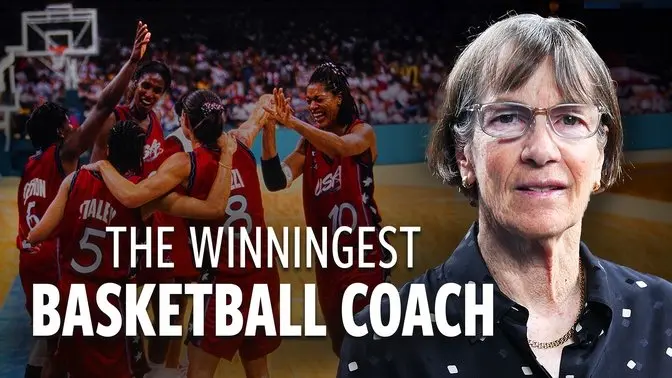
Tara VanDerveer, one of the most successful coaches in basketball history, reflects on her legendary career, leadership philosophy, and the evolution of women’s sports in today’s episode. She shares how she transformed Stanford’s struggling basketball program into a powerhouse, winning multiple national championships and inspiring generations of athletes. “We built a culture of excellence—hard work, teamwork, and believing in the dream,” she explains. VanDerveer also opens up about coaching Team USA to Olympic gold in 1996, the impact of Title IX on women’s sports, and the lessons she’s learned from decades of coaching at the highest level. “I never felt like coaching was a job—it was my passion,” she says, highlighting the importance of doing what you love and mentoring young athletes. Join us for an inspiring conversation about leadership, resilience, and the enduring impact of women’s basketball. Chapters: 0:00 Introduction 3:36 Coaching Philosophy Unveiled 8:23 Stanford’s Triumphs and Trials 14:10 Olympic Gold Rush 23:23 Life Lessons from the Court 30:45 Piano, Comebacks, and Closing Tales
 Technology for HumanityGan Jing World is dedicated to promote kindness, respect, and trust among people. Our non-addictive content prioritizes meaningful information, while upholding freedom of speech and user privacy.
SUBSCRIBESign In