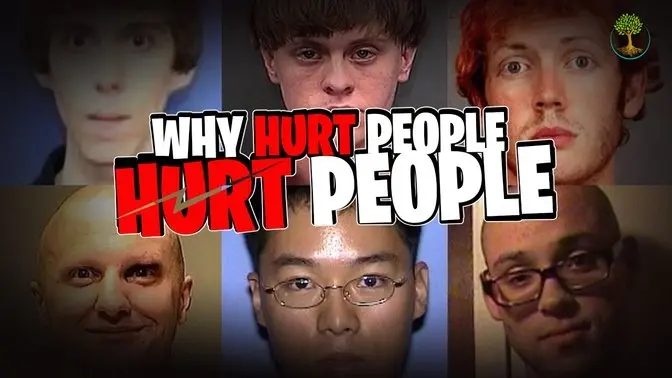
The Devastating Impact of a Broken Society | Why Hurt People Hurt People, narrated by Chris Hedges, takes a powerful look at how systemic disconnection and social breakdown lead to cycles of pain and destruction. In this compelling video, Hedges examines the root causes of trauma, revealing how societal neglect fosters despair, violence, and self-destruction. Through poignant insights, he uncovers how the loss of meaningful work, community, and dignity drives individuals to harm themselves and others. Hedges explores how deindustrialization and the erosion of social infrastructure have devastated working-class communities, leaving millions alienated and disconnected. He paints a vivid picture of a society that denies people avenues to self-actualize, stripping them of the dignity needed to thrive. In the vacuum left behind, addiction, violence, and hate take root—symptoms of a deeper societal rupture that prioritizes profit and control over human well-being. Through examples such as the opioid epidemic, broken urban centers, and the collapse of unions, Hedges highlights how these structural failings perpetuate trauma and create a vicious cycle. Those who inflict harm are often responding to their own unacknowledged pain, acting out of a profound sense of loss and self-destruction. This powerful narrative challenges us to confront the systemic roots of harm rather than treating its symptoms. The Devastating Impact of a Broken Society is both a critique of systemic inequality and a call to action. Chris Hedges emphasizes the urgent need to reinvest in people and rebuild the social bonds that nurture humanity. This video is essential viewing for those seeking to understand the deeper causes of societal dysfunction and explore pathways toward healing and transformation.

In "The Truth Behind 'All Men Are Created Equal'," Mark Charles offers a compelling critique of America's foundational documents, highlighting their inherent exclusions and biases. Through an insightful analysis of the Declaration of Independence and the Constitution, Charles reveals the narrow definition of "all men" held by the founding fathers. He underscores how the Declaration of Independence's phrase "all men are created equal" coexists with the description of Native Americans as "merciless Indian savages," exposing the stark contradiction between the ideal of equality and the reality of exclusion. Charles further examines the Constitution, emphasizing how it systematically excluded women, Native Americans, and African Americans. He explains that the Constitution was designed to protect the interests of white landowning men, a fact reflected in its provisions and the historical context of its creation. This systemic exclusion has lasting repercussions, influencing contemporary issues such as gender pay gaps, mass incarceration, and corporate influence in politics. By tracing these injustices back to the nation's founding, Charles challenges viewers to reconsider the true intent and legacy of these historic documents. The video also addresses the profound need for a national dialogue on race, gender, and class. Drawing on the wisdom of Aboriginal leader George Erasmus, Charles advocates for creating a common memory as a foundation for building real community. He argues that America’s divided historical narratives—one of discovery and exceptionalism for the white majority, and one of oppression and dispossession for communities of color—prevent genuine unity. Acknowledging and reconciling these divergent memories is essential for moving towards a more inclusive and equitable society. Ultimately, "The Truth Behind 'All Men Are Created Equal'" calls for a profound re-examination of America's values and history. It urges viewers to recognize and address the deeply rooted racism, sexism, and colonialism embedded in the nation’s foundations. By doing so, there is hope for a future where "We the People" truly means all the people, creating a legacy of justice and equality for generations to come.
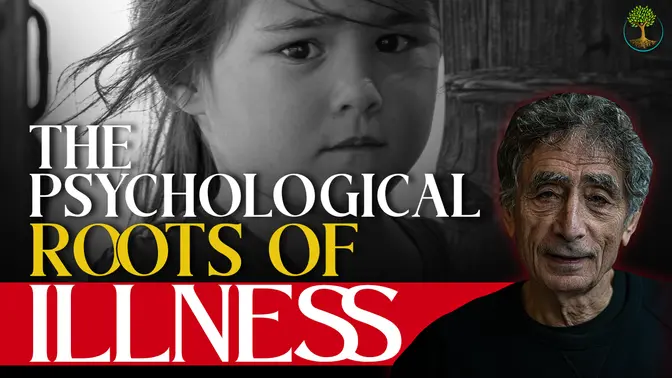
In this enlightening video, Dr. Gabor Maté, with decades of experience in family practice and palliative care, explores the profound connection between emotional experiences and physical health. He emphasizes the critical role childhood trauma plays in shaping our long-term health outcomes, challenging the conventional separation of mind and body that pervades Western medicine. Through compelling evidence and personal insights, Dr. Maté reveals how our early environments influence our stress responses, which in turn can lead to chronic physical and mental health issues. Dr. Maté discusses how Western medicine's focus on physical symptoms and genetic predispositions fails to account for the significant impact of socio-emotional factors on health. He critiques the medical ideology that overlooks the integrated nature of human beings, pointing out that diseases are not confined to specific organs but are influenced by the entire ecosystem of the body influenced by both internal and external environments. The video sheds light on how emotional states can instantly alter physiological responses, illustrating the constant interplay between our psychological states and physical health. Highlighting the importance of recognizing the emotional roots of diseases, Dr. Maté advocates for a medical approach that considers the psychological and social environments as integral to diagnosing and treating illnesses. He argues for a shift from treating symptoms to understanding the underlying emotional triggers, promoting a holistic approach to health that fosters healing, growth, and a deeper understanding of oneself. This transformative perspective invites viewers to rethink health and illness through the lens of personal development and emotional awareness, offering a path to more effective healing practices that address the root causes of illness rather than merely managing symptoms.

"The Great Agricultural Takeover" is a compelling short video that examines the profound transformation in agriculture from traditional farming to industrial practices post-World War II. This six-minute presentation highlights how technologies developed for warfare were repurposed to dramatically alter agricultural methods. It narrates the historical decisions led by groups like the Committee for Economic Development, which pushed for a reduction in the rural populace to foster a transition towards an industrial workforce, fundamentally changing the farming landscape. The video explores the significant consequences of substituting mechanical and chemical technologies for human labor. It portrays how farms evolved into factory-like entities, emphasizing efficiency and automation over ecological and social sustainability. This shift not only redefined the relationship between humans and the land but also escalated a silent conflict against the natural world, where the drive for industrial efficiency often overshadows the well-being of ecosystems and rural communities. Through compelling visuals and insightful narration, "The Great Agricultural Takeover" challenges viewers to reflect on the true cost of industrial agriculture. It calls for a critical reevaluation of current practices and advocates for a return to more sustainable and conscientious farming methods. This narrative urges viewers to consider alternative agricultural models that prioritize land stewardship, sustainability, and community well-being, ensuring a viable future for global food systems.

"The Great Agricultural Takeover" is a compelling short video that examines the profound transformation in agriculture from traditional farming to industrial practices post-World War II. This six-minute presentation highlights how technologies developed for warfare were repurposed to dramatically alter agricultural methods. It narrates the historical decisions led by groups like the Committee for Economic Development, which pushed for a reduction in the rural populace to foster a transition towards an industrial workforce, fundamentally changing the farming landscape. The video explores the significant consequences of substituting mechanical and chemical technologies for human labor. It portrays how farms evolved into factory-like entities, emphasizing efficiency and automation over ecological and social sustainability. This shift not only redefined the relationship between humans and the land but also escalated a silent conflict against the natural world, where the drive for industrial efficiency often overshadows the well-being of ecosystems and rural communities. Through compelling visuals and insightful narration, "The Great Agricultural Takeover" challenges viewers to reflect on the true cost of industrial agriculture. It calls for a critical reevaluation of current practices and advocates for a return to more sustainable and conscientious farming methods. This narrative urges viewers to consider alternative agricultural models that prioritize land stewardship, sustainability, and community well-being, ensuring a viable future for global food systems.
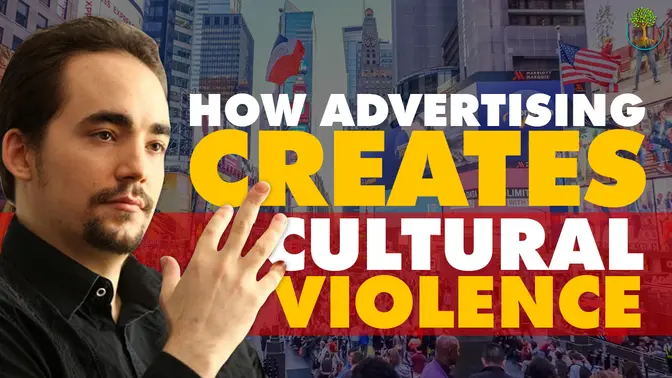
Support our work on Patreon: https://www.patreon.com/sustainablehuman In the thought-provoking video "How Advertising Creates Cultural Violence," Peter Joseph explores the pervasive influence of advertising in shaping a consumption-centric society and its detrimental effects on human psychology and the environment. Joseph articulates how advertising, as a fundamental arm of a consumption-based economy, skillfully manipulates humanity's deep-seated need for social inclusion, leading to an irrational pursuit of material possessions. He critically examines the transition from an economy that initially met genuine human needs during the agrarian era to a highly efficient and productive modern system that necessitates the creation of artificial demand to sustain itself. Joseph further discusses the inherent flaws in capitalist market economics, where the notion of progress is inextricably linked with consumption levels. This paradigm not only engenders environmental destruction but also erodes human well-being by fostering an insatiable culture of materialism. He elucidates how the promotion of materialistic values cultivates a form of "cultural violence," where self-identity is anchored in one's ability to consume. This societal model not only marginalizes those who cannot afford certain luxuries but also amplifies social inequalities, contributing to a culture where status and self-worth are dictated by material wealth. The video invites viewers to contemplate the profound implications of a world devoid of advertising—a world where markets and marketing do not dictate human values and aspirations. Joseph suggests that such a world would be markedly more peaceful, sustainable, and humane, contrasting sharply with the current reality where cultural violence is perpetuated by the incessant drive for more. By challenging the conventional understanding of progress and highlighting the deep-seated issues within our consumption-driven society, "How Advertising Creates Cultural Violence" offers a critical perspective on the need for a paradigm shift towards more sustainable and equitable societal values.
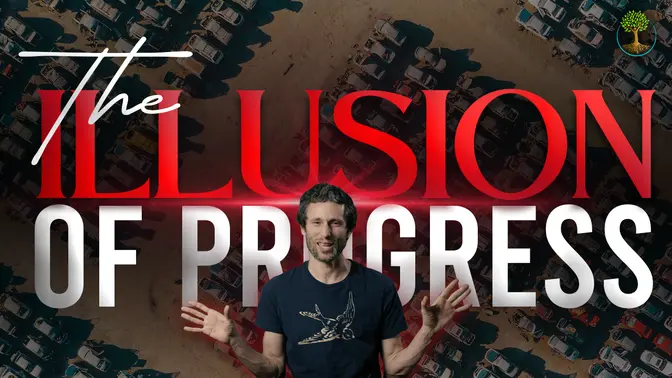
"The Illusion of Progress" serves as a powerful entry point into a critical examination of modern society's definition of advancement. This thought-provoking video, narrated by Charles Eisenstein, challenges the conventional metrics of success and prosperity, such as GDP growth, technological advancements, and material wealth. It delves into the paradox of a society that, despite being richer in measurable assets, feels impoverished in aspects that truly contribute to human fulfillment and happiness. Eisenstein invites viewers to question the prevailing narrative that equates progress with quantitative increases in consumption and wealth. He argues that this narrow focus has led to a significant loss in the quality of our relationships, the depth of our connections, and the richness of our experiences. The video explores how the relentless pursuit of measurable gains has resulted in a world filled with less flavor, less intimacy, and more isolation, despite the veneer of connectivity offered by digital technologies. By contrasting the tangible metrics of progress with the intangible qualities that make life meaningful, such as joy, beauty, and authentic human connections, "The Illusion of Progress" sheds light on the hunger that persists in the hearts of individuals living in a materially abundant world. Eisenstein suggests that this hunger drives the endless cycle of consumption, leaving individuals feeling perpetually unsatisfied and disconnected. The video ultimately calls for a reevaluation of what constitutes true progress, urging a shift towards values that foster a deeper sense of belonging, purpose, and connection to the natural world. It is a clarion call to rediscover the immeasurable aspects of life that truly enrich the human experience and to recognize that the path to healing ourselves and our society lies in understanding and embracing what we truly yearn for.
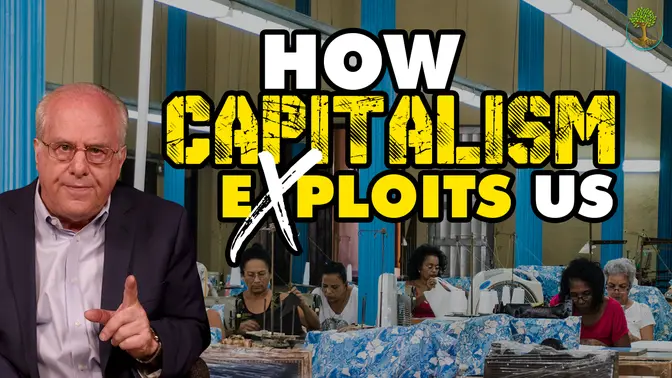
In "How Capitalism Exploits Us," Richard Wolff offers a critical examination of capitalism, challenging common misconceptions about markets and the nature of economic systems. Wolff elucidates that markets have existed across various economic systems, including slavery and feudalism, and are not exclusive to capitalism. The essence of capitalism, as Wolff argues, lies in the unique employer-employee relationship, which inherently involves a conflict due to the extraction of surplus value from workers by employers. Wolff delves into the inherent tension within capitalism, where workers produce more value than they receive in wages, leading to systemic inequality and exploitation. This exploitation is not a result of individual malice but is embedded in the structure of the capitalist system itself. Wolff advocates for a transformative solution: the establishment of worker cooperatives where the traditional divide between employers and employees is dissolved. In such a system, workers collectively make decisions about production, distribution, and the utilization of surplus, leading to more equitable and democratic workplaces. The video also addresses the implications of technological advancements within a capitalist framework, highlighting how innovations often lead to job losses and increased profits for a select few, rather than improved working conditions or reduced labor for all. Wolff presents an alternative vision where technology serves the collective good, suggesting a reduction in work hours and an increase in leisure time for personal and community development. "How Capitalism Exploits Us" is a compelling call to rethink the foundational structures of our economic system and to consider the potential of cooperative, worker-led models for creating a more just and sustainable society. Through a blend of historical insight and forward-thinking proposals, Wolff challenges viewers to question the status quo and imagine a future where wealth and power are shared rather than concentrated.

In the thought-provoking video "Conventional Economics Is A Form of Brain Damage," narrated by renowned environmentalist David Suzuki, the critical flaws of conventional economic thinking are laid bare. Suzuki challenges the fundamental principles of modern economics, highlighting its disconnection from the real world and its destructive impact on the environment. The video begins with a powerful critique of the way conventional economics values short-term profit over long-term sustainability, exemplified by practices like clear-cutting forests for immediate financial gain, regardless of the environmental cost. Suzuki argues that conventional economics is not a science but a system of values cloaked in mathematical equations, failing to account for essential elements such as the ozone layer, underground aquifers, topsoil, and biodiversity. He points out the absurdity of labeling these critical components of our planet as "externalities," showing how this approach is fundamentally disconnected from the realities of our world. The video emphasizes that nature provides invaluable services – from water filtration and soil creation to plant fertilization – services that are ignored or undervalued in economic calculations. Concluding with a powerful message, Suzuki urges a reevaluation of what constitutes the true "bottom line." He envisions a future where humanity recognizes the real value of the natural world, understanding that economic systems should serve not just short-term human needs but the long-term health of the planet. This video serves as a wake-up call, challenging viewers to reconsider our current economic paradigms and to envision a world where the economy exists in harmony with nature's intricate and vital systems.
 Technology for HumanityGan Jing World is dedicated to promote kindness, respect, and trust among people. Our non-addictive content prioritizes meaningful information, while upholding freedom of speech and user privacy.
SUBSCRIBESign In