
The head of the traditional household is the father. As studies and real-life examples show, society, like a family, is weakened when a strong fatherly presence is missing. In honor of Father’s Day, an article in The Epoch Times describes the holiday’s history and mentions great fathers throughout history. The author also includes words of tributes from his friends and family about their fathers. Another article in the Life and Tradition section describes the father figures in Charles Dickens's novel "David Copperfield." Epoch Times contributing writer Tiffany Brannan expands this analysis of literary paternal characters to discuss great father figures in old movies and television. She talks about the man responsible for these inspiring family units in classic films, Joseph I. Breen, and explains why he could be considered the father of the Golden Era of Hollywood. Epoch insights aims to bridge the gap between digital and traditional media, highlighting the importance of investigative journalism and show the value of print media in a digital world. We create multiple videos per week focusing on the Epoch Times weekly paper’s various articles, major stories, and useful tips. #mentalhealth #mind #bodyhealth #health #healthcare #bodyhealthy #wellbeing #wellness #childeducation #fatherhood #traditional #childhood #healthbenefits #digital #media

A farm school in Wisconsin is helping underprivileged boys receive a better education while also building their bodies and souls in a wholesome environment. Started by devout Christian Jeff Bird, Hope Farm School is a Christian education system which currently houses eighteen boys on weekdays. These boys are being formed into hard-working, godly young men through the chores, lessons, and love the school provides. After describing the purpose and history of this school, Tiffany Brannan talks about how Hope Farm School’s story reminds her of a movie. “Boys Town” (1938) is an Academy Award-winning film based on the true story of how Father Edward J. Flanagan started his school for boys. The film shows how the simple priest started with just five boys and a $90 loan but within a few years built it into a huge community run by and for boys on a farm on the outskirts of Omaha, Nebraska. Epoch insights aims to bridge the gap between digital and traditional media, highlighting the importance of investigative journalism and show the value of print media in a digital world. We create multiple videos per week focusing on the Epoch Times weekly paper’s various articles, major stories, and useful tips. #mentalhealth #mind #bodyhealth #health #healthcare #healthandwellness #bodyhealthy #wellbeing #wellness #show #talkshow #traditional #american #america #healthbenefits

As America approached its bicentennial, writer and illustrator Eric Sloane was approached about writing a commentary on the state of the nation after 200 years. His commentary was compiled into an inspiring volume which talks about the history of the United States of America, the values on which it was based, and the way these have faltered over the years. People think of loyalty to American values as patriotism, but Sloane described it instead as respect. While patriotism is often connected to war, the spirit of respect makes people cherish the finest points of Americanism. The values of faith, family, hard work, the dignity of self, and the dignity of others are inseparable from America’s core principle of liberty. #historyandculture #american #america #history #historyfacts

You don’t have to be a celebrity to be remembered after your mortal span on earth has ended. Each of us touches the lives of the countless people whom we encounter, whether family, close friends, casual acquaintances, or random strangers. Your legacy is comprised of the stories which people tell about you. You make that legacy through how you carry yourself through life. Authenticity is to be prized over the pursuit of perfectionism. The best way you can be authentic is to courageously embrace who you are. Part of authenticity is being unafraid to take the risk of committing to something. It could be something scary. It could be something big. It could be something important. You don’t have to do something crazy, but if you never commit to doing something big, you’re doomed to a life of being stuck. Making the commitment to do one big thing is all you need to generate the confidence and energy to break free.

During the past few months, egg prices have risen to all-time highs. The bird flu, which has spurred widespread culling of US egg-laying hens, has caused egg shortages as well as shockingly high prices. Because of this, some people are looking for more affordable, readily available alternatives to the increasingly precious egg. This search is nothing new. Two major disasters in the early 20th century, the Great Depression and World War II, forced American and British cooks to find creative alternatives as they faced high prices, shortages, and rationing of foodstuffs. When the Great Depression caused widespread poverty in America, many families couldn’t afford eggs. Thus, housewives came up with creative substitutes, especially in baking, resulting in recipes like Crazy Cake and Water Pie. During World War II, Americans had to limit or do without many of their favorite ingredients, like sugar, coffee, beef, and processed goods, because of shipping restrictions or because the war effort took priority. Luckily, eggs remained a convenient source of protein and nutrition, since they weren’t heavily rationed in America. However, the shortage of grain led to so many hens’ death that British citizens were left with just one fresh egg per week. Besides that, they had to turn to substitutes, like potatoes, or use dried eggs in tins from the US.

Fourteen years ago, Hilary Kearney didn’t have a honey business. She didn’t have a single beehive. She didn’t even have a bee suit! What she did have was a growing curiosity and affinity for the strange and intriguing world of the little pollinators. Her journey started with a book on beekeeping she bought for her future husband, but she ended up falling in love with the world of apiary (the study of bees). Her first step was posting a Craigslist ad about collecting any unwanted hives, which was quickly answered. She didn’t even have a real suit during that first adventure, but she immediately knew that she wanted more! Today, Hilary Kearney is the owner of Girl Next Door Honey, a San Diego-based bee business. Despite the name, Hilary’s main goal isn’t focus isn’t selling honey. In fact, she only sells the pure, raw honey locally to people who attend her events. Instead, she focuses on rescuing bees who have built hives in inconvenient places and educating others about the joys and challenges of beekeeping. She didn’t get into the business for the honey but for her fascination with bees’ lives and work, so she mentors others who share a similar passion, helping them establish their own successful bee colonies. Through her blog, in-person events, virtual workshops, and many books, she’s spreading the word about bees one hive at a time!

“The Man in the Arena” is the common title given to one of the most powerful presidential speeches ever made. That name is an excerpt from the two sentences from this speech which are frequently quoted and reprinted. However, this brief yet striking excerpt is but a fraction of the stirring, inspiring 9000-word speech which President Theodore Roosevelt gave at the French Sorbonne University on April 23, 1910. Its full title is “Citizenship in a Republic.” Teddy Roosevelt believed in three important characteristics for any human being to be a good citizen: soundness of body, soundness of mind, and, above all, soundness of character. He defined this aforementioned sound character as being comprised of the everyday common virtues which are so often overlooked. Courage, honesty, self-control, and self-restraint are just a few of these all too rare virtues. They contribute to the attributes which a nation’s people need to survive, namely the ability to work, fight, and perpetuate its population through strong families. His wise words are an important lesson to us all.

Palm trees swaying in the breeze on a warm, sunny day is a picture which represents Southern California perfectly. The year-round temperate climate, beautiful beaches, and popular tourist attractions make SoCal seem like a paradise to visitors from other states and countries. A big part of this exotic appeal is the palm trees themselves. However, not all palm trees which are spread throughout California are native to the state. In fact, just one palm tree, the California fan palm, is naturally found in California’s desert areas. Other varieties of palm were first brought to California over two hundred years ago by Spanish missionaries. They brought Mexican palm trees to California for use in religious services, particularly around Palm Sunday. After the Gold Rush, developers wanted to entice homesteaders from back east to move to California. To do so, they advertised California as a lush, fertile paradise, and palm trees were used to convey this image. Today, experts debate whether palm trees are still a good option for Californian landscaping.

On November 14, 1940, Coventry, England was severely damaged by bombs from a German air raid. On February 13, 1945, Dresden, Germany was attacked by a firestorm. Both cities were mid-sized urban areas with no particular significance to military strategy, so historians continue to wonder as to why these cities were chosen for such destruction. Thousands died in both cities as entire neighborhoods disappeared, including historic churches. Coventry’s St. Michael’s Cathedral was left in ruins, and Dresden’s Frauenkirche was reduced to rubble. In the subsequent decades, the two churches have been rebuilt, yet the ruins, rubble, and charred remnants of the original structures have not been removed. Instead, they have been enshrined as precious reminders of the power of forgiveness. Although enemies during the war, Coventry and Dresden have been bound together as sister cities in reconciliation, representing the power of hope and healing.

The wool boater hat which First Lady Melania Trump wore at her husband’s presidential inauguration on January 20 quickly went viral on the internet. Everyone had something to say about Mrs. Trump’s hat. Millinery for men and women alike has fallen out of fashion in recent decades, so it’s noteworthy when any person of interest chooses a hat more formal than a baseball hat for an important occasion. However, Mrs. Trump’s hat garnered attention not just because no First Lady has worn a hat at an inauguration since Bill Clinton was sworn in for his first term. The hat itself caused quite a stir. With its heavy texture and wide brim, it cast a shadow over the upper half of Melania’s face, obscuring her eyes from view in most pictures and making a kiss with President Trump awkward. In a recent interview with The Epoch Times, Eric Javits, the celebrity milliner who designed the hat, defended his creation and responded to the common criticism. Meanwhile, as his own business has skyrocketed from the publicity, he theorizes that this could revive the tradition of ladies’ hats.

How many first ladies can you name besides those who have been in the White House in recent memory? There’s Jackie Kennedy. There’s Mary Lincoln. Oh, yes, Eleanor Roosevelt! We can’t forget Martha Washington. And… Nancy Reagan? All too many Americans can only name a handful of our 47 presidents and even fewer of the 55 first ladies. Nevertheless, many of them had fascinating stories and meaningful legacies which deserve to be remembered. Among these is Frances Cleveland. Grover Cleveland is not among the most popular or well-remember presidents in US history, but his name has come up a lot since the most recent presidential election because he holds a distinct record. Before Donald Trump became the 47th as well as the 45th president, Cleveland was the only president to serve two non-consecutive terms as Commander-in-Chief. Besides being the only first lady with two non-consecutive terms, his wife, Frances, holds many distinctions. Considered the first modern first lady, Frances Cleveland was a fine example of feminine virtue, setting the mold for all her successors.
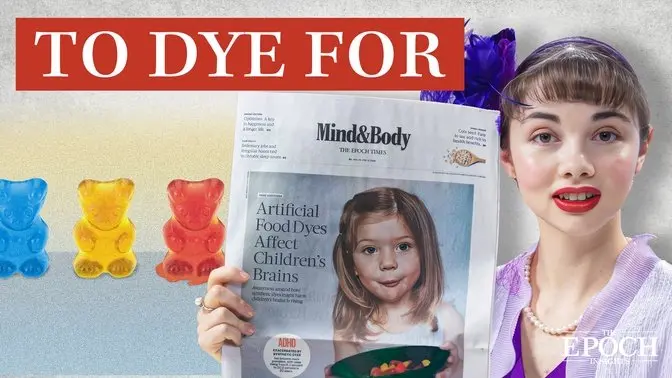
Children are very visual, so most food products made for children are very colorful. Unfortunately, these colors are almost always achieved through artificial food dyes rather than natural coloring agents. Over the past few decades, there have been several studies linking FDA-approved artificial food dyes with health problems, particularly behavioral and neurodevelopmental issues in children. With the recent FDA ban of Red No. 3 because of correlations with cancer, the dye debate has gained the public’s attention. Dyes from natural sources have been used since ancient times, before the first artificial dye, mauveine, was discovered by 18-year-old chemical student William Henry Perkin. After the new mauve dye gained popularity for coloring fabric, artificial dyes began being used in food. In their 100+ years of use, dyes have been controversial, as many vibrant options have been found to be dangerous. Tiffany Brannan analyzes early dye bans, growing health concerns, and resources for avoiding dye.

"An hour of sleep before midnight is worth two after.” This common saying is an old English proverb. It’s often cited as proof of the good sense behind going to sleep early, much like the similar motto, “Early to bed and early to rise makes a man healthy, wealthy, and wise.” Is there anything to these sayings? Are they myths, old wives’ tales, or sage advice on wellbeing handed down from antiquity? Tiffany Brannan analyzes this subject from the standpoint of a recent article in The Epoch Times, “How Light Can Improve Your Sleep Quality.” To understand what factors contribute to our ease of falling asleep and quality of rest, one must consider circadian rhythms. She talks about the history of this term, the pioneers of biological cycles, and their practical application. #sleepbetter #SleepQualityImprovement #Benefitsof EarlySleep #circadianrhythm #SleepAnalysis #sleepquality #light #Lightand SleepQuality #BiologicalSleepCycles #healthandwellnesstips #sleepmyths #sunlightbenefits
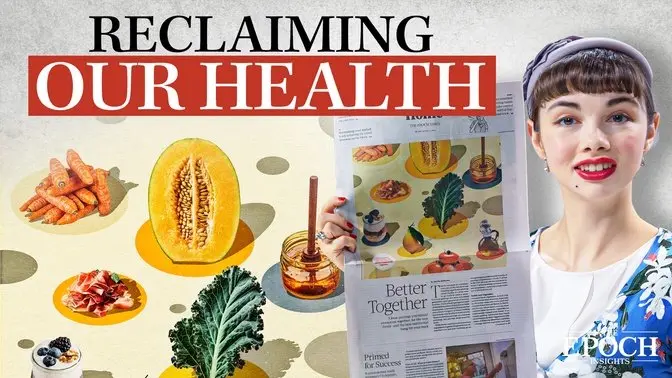
The health of American citizens is being politicized, like every other aspect of our lives these days, it seems. As the presidential election looms, former independent candidate Robert F. Kennedy Jr. has unleashed a new movement, Make America Healthy Again. Whether or not you agree with his political stance, past or present, it’s an undeniable fact that chronic illness has become an epidemic in this country. The battlefield of this deadly epidemic is the American dinner table. Each family or individual can make dietary choices every day to ensure proper nutrition for a healthy life, healing or preventing illness. Healthful food doesn’t have to be bland or unappetizing, though. Since ancient times, wise cultures from around the world have used delicious meals to nourish their minds and bodies. Pairing these foods effectively can help you maximize the nutritional value of your meals. #TheEpochInsights #makeamericahealthyagain #healthylifestyle #healthmovement #Robert F. Kennedy Jr. health movement #chronicallyill #Healthydietary #healthdiet #healthful #nutritionalhealth #Nutritionalvaluepairing #Ancientfoodwisdom #Americanlifestyle #nutrition #Nutritionandchronicdiseaseprevention

The Doctrine of Signatures is the theory that a plant’s appearance indicates a useful medical treatment which it provides. This could be in the form of resembling the body part it nourishes or mimicking the symptoms or ailment it heals. This theory was mentioned by ancient physician Dioscorides and was widely held throughout the Middle Ages, when Christians believed that plants would bear identifying marks from a Divine hand. Some traditional healing practices, such as Traditional Chinese Medicine and Ayurveda, still attribute validity to this method of determining useful herbs. However, there have been skeptics and detractors of the Doctrine of Signatures for centuries. An article in the Mind and Body section of The Epoch Times supports the Doctrine of Signatures with modern medicine. It lists ten well-known plants, which are commonly used for food, and describes well-proven benefits they impart to body parts which they resemble. From walnuts for the brain to celery for the bones, this is no medieval superstition but proven nutritional benefit with scientific studies to back it up!

Chicken soup is a beloved remedy which our mothers, grandmothers, and great-grandmothers consistently recommended for colds and other ailments. In recent years, modern citizens have scoffed at this homey remedy as an old wives’ tale, preferring prescription drugs for the common sniffles instead. However, people are now turning back to the diets and healing remedies of their ancestors, looking for a more natural, food-based plan for wellness. In this process, the myriad health benefits of bone broth are being rediscovered. Bone broth is different from the common beef or chicken stock you see on the grocery story shelves because of the bones from which it is derived. The slow cooking of meaty joints renders a rich broth full of protein, collagen, and savory flavor. An article in the home section of The Epoch Times provides instructions on how to make a delicious, nutritious bone broth from different types of meat. It also offers advice on store-bought alternatives which offer the most nutritional value. By adding herbs, spices, and healing foods like mushrooms and aromatic vegetables to your broth, you can make it even more powerful as a medicine and more exciting as a dietary staple.

Tiffany Brannan takes a look at what can happen to a person who trades the real world for a digital one. Recent statistics show that Americans spend a startling amount of time staring at screens, absorbing media, and otherwise lost in a virtual world. Rather than making people more connected to each other, it has led to loneliness, isolation, and depression. This is all because the latest technology is a replacement for the pleasures of real life. Two articles in the Mind & Body section of The Epoch Times talk about the impact digital media consumption can have on health and general wellbeing. One talks about the negative effects of noise-cancelling, wireless headphones, and the other describes how the greatest means of bonding with other human beings is lost when we replace eye contact with staring at a screen. Both these problems stem from blocking out reality with a virtual world. Tiffany Brannan offers some suggestions of how to join the "tech resistance" movement for a more meaningful life.

There’s a cure in nature for everything, but it takes wisdom, discernment, and careful analysis of the patient to find the right treatment. Herbalist David Winston, a founding member of the American Herbalists Guild and founder of the David Winston Center for Herbal Studies, has loved herbs since a Boy Scouts camp counselor introduced him to sheep’s sorrel as a boy. For fifty-five years, he has delighted in studying plants, their healing properties, and how they are utilized by different traditional healing methods. Plants can be used as food, medicine, or poison. Food herbs often have healing properties, but they are less potent, so they can be used safely without extensive herbal knowledge. For instance, ginger has powerful soothing and healing properties for the digestive system, as well as treating sore throats and coughs and boosting the immune system. For those seeking to treat more serious conditions with herbs, Winston recommends looking at root causes. Great herbalists treat people, not diseases, so it’s important to consider the whole person before prescribing an herbal remedy.

Regenerative farming sits at the crossroads of the liberal “green” movement and the conservative “based” movement. Many people might associate words like “organic” and “regenerative” as environmental propaganda, but Joel Salatin proves otherwise. Self-described as a “Christian Libertarian environmentalist capitalist lunatic farmer,” this 64-year-old independent thinker is considered the leading authority in regenerative farming. He owns the 700-acre Polyface Farms in Virginia’s Shenandoah Valley. His father, an accountant who was passionate about regenerative farming, purchased the land when Joel was an infant. In 1982, Joel left his newspaper job to work full-time on the family farm, which now is worked by four generations of the family, Joel Salatin is a passionate advocate for farming which works with nature instead of against it. He also believes that consumers should be able to purchase food directly from farmers without a bureaucrat getting in the equation. His unconventional but extremely traditional farming practices have gotten him dubbed a “lunatic” by neighbors, but he embraced the label by naming his blog “The Lunatic Farmer.” He inspires others to follow in his footsteps through his blog, several books, lectures, and tours on his farms. Polyface Farms is a pilgrimage for aspiring homesteaders and an inspiration for what could be the future of farming. #farming #farm #nature #natural #organicfarming #organic #health #healthcare #healthandwellness
 Technology for HumanityGan Jing World is dedicated to promote kindness, respect, and trust among people. Our non-addictive content prioritizes meaningful information, while upholding freedom of speech and user privacy.
SUBSCRIBESign In