
【Classical music and nature 古典音樂小站】Christmas Carol: O Come, All Ye Faithful. This beautiful piece was played by harrysadlermusic. It is a royalty free music provided through pond5.com. O Come, ye Faithful, also known as 'Adeste Fideles', is a Christmas carol attributed to various authors, including John Francis Wade, 1711 - 1786, John Reading, 1645 - 1692, King John IV of Portugal, 1604 - 1656, and anonymous Cistercian monk. The earliest printed version is in a book published by Wade. A manuscript of Wade's work, dating from 1751, is held by Stonyhurst College in Lancashire. There are many translations in the English-speaking world. Frederick Oakeley's version of O Come All Ye Faithful, first published in Murray's Hymnal in 1852, is particularly popular. Song Lyrics O Come all ye faithful Joyful and triumphant O come ye, O come ye to Bethlehem Come and behold Him Born the King of Angels O come, let us adore Him O come, let us adore Him O come, let us adore Him Christ the Lord! O Sing, choirs of angels Sing in exultation Sing all that hear in heaven God's holy word Give to our Father glory in the Highest O come, let us adore Him O come, let us adore Him O come, let us adore Him Christ the Lord! All Hail! Lord, we greet Thee Born this happy morning O Jesus! for evermore be Thy name adored Word of the Father, now in flesh appearing O come, let us adore Him O come, let us adore Him O come, let us adore Him Christ the Lord! Source: christmassongsandcarols.com The video was shot by Simone Schlegel in Ibergeregg, Switzerland and was edited by Wenjing Ma. #classicalmusic, #Music, #古典音樂, #klassischemusik, #GJWexclusive, #Switzerland, #Schweiz, #Natur, #Nature, #KlassischeMusikundNatur, #ClassicalMusicAndNature, #古典音樂小站, #WinterBeautyS2
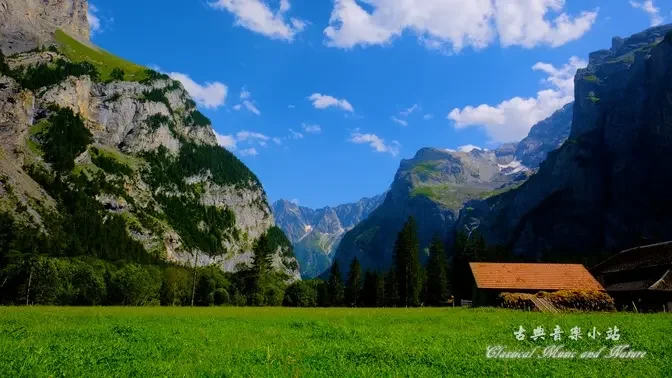
【Classical music and nature 古典音樂小站】Ludwig van Beethoven: Piano Sonata no. 27 in E minor , Op. 90 - Complete Performance. This beautiful piece was played by Randolph Hokanson. It has Creative Commons license (CC BY-SA 3.0 Attribution-ShareAlike 3.0 Unported, https://creativecommons.org/licenses/by-sa/3.0/) and is provided through www.musopen.org. Ludwig van Beethoven's Piano Sonata No. 27 in E minor, Op. 90 was written in the summer of 1814 - Beethoven's late middle period - and dedicated to Prince Moritz von Lichnowsky, a friend and benefactor who was also the dedicatee of the Eroica Variations. Beethoven's letter to Prince Moritz von Lichnowsky, written in September 1814, explains the dedication: "I had a delightful walk yesterday with a friend in the Brühl, and in the course of our friendly chat you were particularly mentioned, and lo! and behold! on my return I found your kind letter. I see you are resolved to continue to load me with benefits. As I am unwilling you should suppose that a step I have already taken is prompted by your recent favors, or by any motive of the sort, I must tell you that a sonata of mine is about to appear, dedicated to you. I wished to give you a surprise, as this dedication has been long designed for you, but your letter of yesterday induces me to name the fact. I required no new motive thus publicly to testify my sense of your friendship and kindness." This beautiful view is located in the untouched Gasterntal valley in front of the Berghotel Waldhaus in Switzerland. You can get there by car (only in summer), but you'll have to pay a small fee and be prepared for some very narrow roads. The road is only a little more than a car's width, so it is only passable for 20 minutes in each direction. Then there is a ban on driving in both directions for a while, so that those arriving later can still get there safely. After that, you can drive in the other direction for 20 minutes. If you miss the 20 minutes, you have to wait 40 minutes. The road goes through two tunnels and is partly carved out of the rock, so it is partly a gallery and very narrow. After that, the road is about 6 km long and leads from Waldhaus via Selden to Heimritz at 1635 metres above sea level. But the high plateau is well worth the adventure. gasterntal.ch The view was captured by Simone Schlegel during a lovely meal with her husband at the Berghotel Waldhaus. The video was edited by Wenjing Ma. #classicalmusic, #Music, #古典音樂, #klassischemusik, #GJWexclusive, #Switzerland, #Schweiz, #Natur, #Nature, #KlassischeMusikundNatur, #ClassicalMusicAndNature, #古典音樂小站,

【Classical music and nature 古典音樂小站】Wolfgang Amadeus Mozart: Divertimento in E-flat major, K.113. This beautiful piece was played by Das Orchester Tsumugi. It has Creative Commons license (CC BY 3.0 DEED Attribution 3.0 Unported) and is provided through www.musopen.org. "The Divertimento in E-flat major, K. 113, was given the double title 'Concerto or Divertimento' by Mozart. It exists in two different versions: the original, written in Milan in November 1771, for strings, two clarinets, and two horns and the Salzburg transcription, made in approximately 1773 which substitutes pairs of oboes, English horns, and bassoons for the clarinets and horns. The alternate title 'Concerto' reveals one of Mozart's focal concepts in his occasional music involving strings. The concertante element is either explicit - the wind concertante in the 'Posthorn' serenade and the violin concerti in the orchestral 'Final-Musiken' - or implied, as is the case here and in the great works for strings with two horns. Though the legacy of the concerto grosso is obvious, performance with multiple strings is not inevitable. (It is clear, for example, that Bach's Fifth Brandenburg Concerto was performed by single players.) In orchestral performances, a continuo harpsichord would be entirely appropriate. The concertante wind writing is the salient feature of K. 113. Increasing independence of the wind parts from the supporting strings as the work progresses points to the many subsequent works for winds alone. The musical ideas are characteristic of Mozart's Italian period - catchy and terse. (Compare the symphonies from the same period, the quartet divertimenti K. 136-8, and the four-hand piano sonata in D, K. 123a/381.) Unlike most of the occasional music, K. 113 has but one minuet, making it identical in form to a symphony, if lighter in content." - Robert D. Levin The view near Interlaken, Switzerland was captured by Simone Schlegel and the video was edited by Wenjing Ma. #classicalmusic, #Music, #古典音樂, #klassischemusik, #GJWexclusive, #Switzerland, #Schweiz, #Natur, #Nature, #KlassischeMusikundNatur, #ClassicalMusicAndNature, #古典音樂小站,

【Classical music and nature 古典音樂小站】Johann Sebastian Bach: Die Himmel erzählen die Ehre Gottes (The heavens declare the glory of God), BWV 76 - Part 1. This beautiful piece was played by The German Bach Soloists. It has Creative Commons license (CC BY 3.0 DEED Attribution 3.0 Unported) and is provided through www.musopen.org. The heavens declare the glory of God is the cantata for the second sunday after Trinity. Johann Sebastian Bach composed the church cantata Die Himmel erzählen die Ehre Gottes, BWV 76 in Leipzig for the second Sunday after Trinity in the liturgical year and premiered it on 6 June 1723. Bach composed the cantata at a crucial turning point in his career. On 30 May 1723, the first Sunday after Trinity, he moved from his church and court appointments to the city of Leipzig, where he began the project of composing a new cantata for every occasion in the liturgical year. His first annual cycle began with the ambitious The Elderly Should Eat, BWV 75, in an unusual arrangement of 14 movements in two symmetric parts, one before and one after the homily. Die Himmel erzählen die Ehre Gottes, performed a week later, has the same structure. Lyrics: Part One 1. Chorus The heavens declare the glory of God, and the firmament shows his handiwork. There is no speech or language, since one does not hear their voices. 2. Recitative T Thus God does not leave himself unwitnessed! Nature and grace speak to all mankind: God has indeed done all this, so that the heavens move and spirits and bodies stir themselves. God himself has leaned down to you and calls to you through countless messengers: rise up, come to my feast of love! 3. Aria S Hear, you people, God's voice, hasten to his throne of grace! The source and end of every thing is his only begotten Son: so that all might turn to him. 4. Recitative B Yet who listens, when the greatest crowds turn to other gods? The willful desires of the oldest idols rule the hearts of mankind. The wise are hatching foolishness, and Belial sits right in God's house, since even Christians themselves run from Christ. 5. Aria B Away, idolatrous guild! Although the world be perverted, yet I will honor Christ, he is the light of reason. 6. Recitative A You have, Lord, from all paths called us to you as we sat in heathen darkness, and, as light enlivens and refreshes the air, we are also enlightened and enlivened, indeed with you yourself fed and quenched and given your spirit, which continually hovers in our souls. So may this prayer be humbly delivered to you: 7. Chorale May God be gracious to us and grant us his blessing; may his countenance, with bright radiance, shine upon us for eternal life, that we may recognize his work, and what is dear to him on earth, and that Jesus Christ's blessing and strength be known to the heathens and convert them to God! The video was filmed by Simone Schlegel and edited by Wenjing Ma. #classicalmusic, #Music, #古典音樂, #klassischemusik, #GJWexclusive, #Switzerland, #Schweiz, #Natur, #Nature, #KlassischeMusikundNatur, #ClassicalMusicAndNature, #古典音樂小站,

【Classical music and nature 古典音樂小站】Johann Sebastian Bach: Concerto for 2 Harpsichords in C major, BWV 1061 - Complete Performance. This beautiful piece was played by Sylvia Marlowe. It has Creative Commons license (CC BY 3.0 DEED Attribution 3.0 Unported) and is provided through www.musopen.org. This concerto, scored for two harpsichords, two violins, viola and continuo, is probably the only harpsichord concerto by Bach that originated as a harpsichord work. The first version was for two unaccompanied instruments (BWV. 1061a, in the manner of the Italian Concerto, BWV. 971) and the addition of the orchestral parts may not have been by Bach himself. In fact, the strings seem to be there only to reinforce the cadences. It was only after reading this description that I realised that the violins, which so often play the leading role, are in fact so modestly arranged to serve the harpsichords. Because Johann Sebastian Bach is one of my absolute favourite composers and what he can do with his creativity is just out of this world. So when I talk about the sound of the harpsichord, I am not talking about the arrangement, just the unique sound of the instrument. I have had the pleasure of playing a harpsichord, albeit a few times (with my very limited knowledge of piano playing), and I will never forget the uniqueness of the playing or the sound. Your playing is obviously lacking the fullness of a grand piano (which I adore), but have a crispness non of the pianos will never acheieve. What do you think? Do you like the sound of harpsichords? The video was captured by Christian Schlegel and edited by Wenjing Ma. #classicalmusic, #Music, #古典音樂, #klassischemusik, #GJWexclusive, #Switzerland, #Schweiz, #Natur, #Nature, #KlassischeMusikundNatur, #ClassicalMusicAndNature, #古典音樂小站,

【Classical music and nature 古典音樂小站】Johann Sebastian Bach: Also hat Gott die Welt geliebt (God So Loved the World), BWV 68 - Complete Performance. This beautiful piece was played by The German Bach Soloists. It has Creative Commons license (CC BY 3.0 DEED Attribution 3.0 Unported) and is provided through www.musopen.org. Also hat Gott die Welt geliebt (BWV 68) is a church cantata by Johann Sebastian Bach. Like most of the libretti by the Leipzig poet Mariana von Ziegler set to music by Bach, the choral cantata composed for the 2nd day of Pentecost in 1725 is particularly colourfully orchestrated. In this variety of sound and the swinging and dance-like style of several movements, the diversity of Pentecostal tongues can be heard alongside the joy befitting the feast. The elegiac siciliano of the opening chorus, which speaks of Christ's sacrifice, as well as the harsh world of judgement in the final movement, which separates the faithful from the rejected, are coloured by the archaic, priestly aura of the cornetts and trombones. (Source: bachipedia.org) Lyrics: 1 So God loved the world, That he gave us his Son, Whoever surrenders to him in faith, Shall live with him there for ever. Whoever believes that Jesus was born to him, He shall abide eternally without lost. And there is no sorrow that grieves him, Whom God and his Jesus loves. 2 Now am I also a member of the world And believe firmly and without doubt, That my God holds me in his heart And protects me against all devils. That I, taken up to life, Have now escaped condemnation. And there is no sorrow to grieve me, Because my God and Jesus love me. 3 Satan has so seduced me, That I have fallen into sin, That God's wrath has stirred me up And the fires of hell are raging against me: I can constantly hope, God's heaven is open to me. And there is no sorrow to grieve me, Because my God and Jesus love me. 4 Though I am guilty of death To lie in the jaws of hell, But my God has patience with me And will save me a sinner. Will not destroy my soul, I shall inherit his paradise. And there is no sorrow that grieves me, Because my God and Jesus love me. 5 comes sorrow, misery, cross and distress And want to suffocate me with power: I will not fear the worst death, God wants to refresh me everywhere. The greatest suffering cannot separate me Cannot separate me from his heaven. And there is no suffering that grieves me, Because my God and Jesus love me. 6 Though fire, water, earth and air Are against me with their lamentations, Each calls God to vengeance And are minded to afflict me. But none can harmfully kill me, God also helps me out of their troubles. And there is no sorrow that grieves me, Because my God and Jesus love me. 7 The judgement too terrifies me, Before which I cannot prevail, Because my conscience itself speaks: I shall go to the damned. But my Jesus will not judge me, His blood will atone for my sin And there is no sorrow to grieve me, Because my God and Jesus love me. 8 If at last the heavens fall And the earth will not bear me up, God will be my heaven And not deny me my place. To stay with him for eternity, No enemy will drive me from him. And there is no sorrow that shall grieve me, Because my God and Jesus love me. 9 So now I remain completely unharmed, Because God's love covers me, Even if death and the devil set upon me And the mouth of hell terrifies me. What is cruel must disappear, But I still find heaven. And there is no suffering that grieves me, Because my God and Jesus love me. The mountain river was filmed by Simone Schlegel, the video was edited by Wenjing Ma. #classicalmusic, #Music, #古典音樂, #klassischemusik, #GJWexclusive, #Switzerland, #Schweiz, #Natur, #Nature, #KlassischeMusikundNatur, #ClassicalMusicAndNature, #古典音樂小站,

【Classical music and nature 古典音樂小站】Johann Sebastian Bach: Triple Concerto in D Minor for flute, oboe, violin & strings BWV 1064 - Complete Performance. This beautiful piece was played by The German Bach Soloists. It has Creative Commons license (CC BY 3.0 DEED Attribution 3.0 Unported) and is provided through www.musopen.org. It is said, Johann Sebastian Bach performed the 14 harpsichord concertos from 1730 onwards and finally produced a manuscript collection beginning with the first six solo works as a set with his introductory inscription "J. J." (Jesu Juva, Jesus help) and ending with "Finis. S. D. G (End, Soli Deo gloria). Bach obviously relished the opportunity to rework concertos for one instrument into another version for a different instrument, much like putting new wine in old bottles or old wine in new bottles. Bach's genius lay in the original melody and harmony, which seemed idiomatic for that particular instrument, but which could be adapted to a new context with changes only in interpretive factors such as phrasing, ornamentation and dynamic adjustments. Although there are virtually no early autograph versions, it is clear that over the next twenty years (1725-45) Bach was constantly engaged in a process of re-examining the music in order to place it in a new light or environment. The video was captured by SImone Schlegel an edited by Wenjing Ma. #classicalmusic, #Music, #古典音樂, #klassischemusik, #GJWexclusive, #Switzerland, #Schweiz, #Natur, #Nature, #KlassischeMusikundNatur, #ClassicalMusicAndNature, #古典音樂小站,

【Classical music and nature 古典音樂小站】Johann Sebastian Bach: Schwingt freudig euch empor, BWV 36 - Complete Performance. This beautiful piece was played by The German Bach Soloists. It has Creative Commons license (CC BY 3.0 DEED Attribution 3.0 Unported) and is provided through www.musopen.org. Bach's well-known church cantata "Schwingt freudig euch empor" BWV 36, which was first heard in its final version on 1 Advent 1731 in Leipzig's Nikolaikirche, goes back to a secular birthday cantata from 1725. The text has now been adapted to the events of Advent; the jubilation of the opening chorus, the loving reverence and the warm welcome of the three solo arias now apply to the Messiah, who, as once in Jerusalem, is now to enter the hearts of the faithful. However, the cantata derives its unmistakable Advent character from the fact that Bach juxtaposes the four "festive" movements with three verses of Luther's Advent chorale "Nun komm, der Heiden Heiland", thus giving voice to the mystery of God's incarnation. (Source: carus-verlag.com) First Part 1 Chorus [S, A, T, B] Oboe d'amore I/II all' unisono, Violino I/II, Viola, Continuo Soar in your joy up to the lofty stars, you tongues, which are now joyful in Sion! But stay! The sound need not spread so far, for he himself draws near to you, the Lord of glory. 2 Chorale (Duet) [Soprano, Alto] Oboe d'amore I col Soprano, Oboe d'amore II coll'Alto, Continuo Come now, saviour of the Gentiles known as the child of a virgin all the world is amazed that God ordained such a birth for him. 3 Aria [Tenor] Oboe d'amore solo, Continuo Love draws with gentle steps his true beloved gradually. Just as a bride feels delight when she sees her bridegroom, so too a heart follows Jesus. 4 Chorale [S, A, T, B] Oboe d'amore I, Violino I col Soprano, Oboe d'amore II, Violino II coll'Alto, Viola col Tenore, Continuo Strike the strings in Cythera and let the sweet music ring out all rich in joy, so that with my dear Jesus, my wondrously beautiful bridegroom, I may always overflow with love! Sing, spring. rejoice, triumph, thank the Lord! Great is the King of Heaven. Second Part 5 Aria [Bass] Violino I/II, Viola, Continuo Welcome, precious treasure! love and faith make room for you in my pure heart, Come into me! 6 Chorale [Tenor] Oboe d'amore I/II, Continuo You who are equal to the father, lead forth victory in the flesh, so that your eternal divine strength may support in us our sick flesh. 7 Aria [Soprano] Violino solo con sordino, Continuo Even with subdued, weak voices Gods majesty is honoured. for if only the spirit resounds, there is such a cry to him that he himself hears it in heaven. 8 Chorale [A, A, T, B] Oboe d'amore I e Violino I col Soprano, Oboe d'amore II e Violino II coll'Alto, Viola col Tenore, Continuo Praise be given to God, the Father, praise be to God ,his only Son, praise be to God, the Holy Spirit, forever and in eternity! The video was filmed by Christian Schlegel and edited by Wenjing Ma. #classicalmusic, #Music, #古典音樂, #klassischemusik, #GJWexclusive, #Switzerland, #Schweiz, #Natur, #Nature, #KlassischeMusikundNatur, #ClassicalMusicAndNature, #古典音樂小站,

【Classical music and nature 古典音樂小站】Johann Sebastian Bach: Himmelskönig, sei willkommen (King of heaven, welcome), BWV 182 - Complete Performance. This beautiful piece was played by The German Bach Soloists. It has Creative Commons license (CC BY 3.0 DEED Attribution 3.0 Unported) and is provided through www.musopen.org. The cantata BWV 182 "Himmelskönig, sei willkommen" was composed for Palm Sunday 1714 as the first composition after Johann Sebastian Bach's appointment as concertmaster at the Weimar court. "It was therefore only appropriate for him to present himself as composer, concertmaster and solo violinist at the same time in the performance of his first cantata under new conditions. The leading role of the concertante violin in the first movement [...] is unmistakable from the very first bar; the same applies to the first aria (No. 4)" - Christoph Wolff: Johann Sebastian Bach. 2nd edition. 2007 Lyrics: Chorus [S, A, T, B] Flauto, Violino, Viola I/II, Violoncello, Continuo King of heaven, welcome, let us also be your Zion ! Come within, You have taken our hearts from us. 3 Recitative [Bass] Continuo e Violoncello See , I come, in the book it is written of me: your will , my God, I do gladly. 4 Aria [Bass] Violino, Viola I/II, Continuo Mighty love by which you, great Son of God, from the throne of your glory were driven so that for the salvation of the world you presented yourself as a sacrifice and with blood you signed away yourself. 5 Aria [Alto] Flauto solo, Continuo Put yourselves beneath the Saviour, you hearts, who are Christian! Wear an unspotted robe of your faith to meet him, Body and life and possessions now dedicate to the king. 6 Aria [Tenor] Continuo e Violoncello Jesus, through weal and woe let me go with you! If the world cries only "Crucify ", do not let me flee Lord, from the banner of your cross; I find crown and palms here. 7 Chorale [S, A, T, B] Flauto, Violino, Viola I/II, Violoncello, Continuo Jesus, your passion is for me pure joy, your wounds, crown and shame are my heart's pasture; My soul walks on roses if I think on this, in heaven a place for this reason grant to us. 8 Chorus [S, A, T, B] Flauto, Violino, Viola I/II, Violoncello, Continuo So let us go in the Salem of joy, accompany the king in love and in sorrows he goes before and opens the way. The video was captured by Simone Schlegel and edited by Wenjing Ma. #classicalmusic, #Music, #古典音樂, #klassischemusik, #GJWexclusive, #Switzerland, #Schweiz, #Natur, #Nature, #KlassischeMusikundNatur, #ClassicalMusicAndNature, #古典音樂小站,

【Classical music and nature 古典音樂小站】Joachim Raff: Sinfonietta, Op. 188. This beautiful piece was played by Concerto Musica de Camara Escuela Superior de Musica Reina. It has Creative Commons license (CC BY 3.0 DEED, https://creativecommons.org/licenses/by/3.0/) and is provided through www.musopen.org. No changes to the music were made. Joachim Raff, a Swiss-German composer of the 19th century, is a figure whose music encapsulates the transition from the Romantic era to the burgeoning dynamism of early modernism, yet he has often been overshadowed by his contemporaries. The story of Raff is one of perseverance, immense talent, and eventual recognition, set against a backdrop of a life filled with both adversity and triumph. Born in 1822 in Lachen, Switzerland, Raff's early life was marked by modest means. His father, a schoolmaster and music teacher, provided him with initial musical training, but financial limitations hindered his access to formal education. Despite these challenges, Raff's profound dedication to music propelled him into the realm of professional composition and performance at a relatively young age. His journey from a self-taught musician to an influential composer and educator is a testament to his resilience and passion for music. Raff's career trajectory was significantly influenced by his encounter with Franz Liszt, a pivotal moment that came about through a mixture of serendipity and sheer determination. After a grueling journey to see Liszt perform, Raff was not only able to attend the concert but also gained Liszt’s personal support. This encounter led to his position as Liszt’s secretary in Weimar, a role that, while lacking in glory, provided Raff with invaluable experience and exposure to the core of European musical innovation. During his tenure in Weimar, Raff's own compositional style began to flourish. His symphony "Im Walde" and the opera "King Alfred" marked his rise to prominence, showcasing his ability to blend intricate orchestral textures with rich melodic content. However, his relationship with Liszt eventually cooled, prompting Raff to seek new opportunities in Stuttgart and later in Wiesbaden, where he produced some of his most significant works. Raff's music, particularly the Sinfonietta in F major written in 1873, exemplifies his unique style that incorporates the classical forms with romantic expressiveness. The addition of two flutes to the traditional wind octet in this composition reflects his innovative approach to orchestration, aiming to enhance the brightness and airiness of the ensemble. The Sinfonietta, with its jubilant mood and pastoral key, epitomizes what Raff's contemporary admirer described as "true spring music." Despite the recognition that came with his later works and his influential role as the first director of the Hoch Conservatory in Frankfurt, Raff remained somewhat in the shadows during his lifetime, particularly compared to giants like Liszt and Mendelssohn. However, recent years have seen a resurgence of interest in his work, a kind of "Raff renaissance," as today's musicians and scholars revisit and revalue his contributions to the music world. Raff's legacy is a complex tapestry of innovation, adaptation, and underappreciation. His journey from a humble musician to a celebrated composer and educator reflects both the challenges and rewards of a life dedicated to the art of music. His compositions, characterized by their lyrical beauty and structural sophistication, continue to enchant audiences and inspire musicians, ensuring that his place in the annals of music history, though hard-won, is ultimately secured. The beautiful scenaries were filmed at Burgseeli, Kiental, and other locations in Switzerland by Christian and Simone Schlegel, and were edited by Wenjing Ma. 【古典音樂小站】 #classicalmusic, #Music, #古典音樂, #klassischemusik, #GJWexclusive, #Switzerland, #Schweiz, #Natur, #Nature, #KlassischeMusikundNatur, #ClassicalMusicAndNature, #古典音樂小站,

【Classical music and nature 古典音樂小站】Henry Eccles: Violin Sonata in G minor. This beautiful piece was played by Thrax. It has Creative Commons license (CC BY 3.0 DEED, https://creativecommons.org/licenses/by/3.0/) and is provided through www.musopen.org. No changes to the music were made. Henry Eccles, an English Baroque composer, is best known for his Violin Sonata in G Minor, published in 1720. This piece, part of a collection of twelve sonatas, has sparked interest due to its complex origins, notably involving significant material borrowed from other composers like Giuseppe Valentini and Francesco Antonio Bonporti. The practice of borrowing from other composers was common during the Baroque era, akin to how modern jazz musicians might adapt standards today. This was particularly evident in Eccles’s adaptations, where he incorporated Valentini’s work from Op. 8 and Bonporti’s Op. 10, especially noted in the Courante of the G minor Sonata. Eccles's own contributions often involved crafting the faster movements to complement the slower ones derived from these composers. Eccles, initially less celebrated in England, moved to Paris, becoming a member of the French king's chapel. It was here that he published his significant works, which cleverly blended his own ideas with those of his Italian contemporaries. The Sonata in G Minor is especially revered, showcasing Eccles’s ability to meld borrowed themes with his original compositions, reflecting the rich cultural and artistic exchange between England and Italy during his time. Overall, the Sonata in G Minor illustrates the era's artistic practices and Eccles's unique approach to composition, marking it as a lasting piece in the violin repertoire. The footage were was filmed near Kiental, Burgseeli, at Goldswil near Ringgenberg, and other locations in Switzerland, by Simone or Christian Schlegel. The video was edited by Wenjing Ma. #classicalmusic, #Music, #古典音樂, #klassischemusik, #GJWexclusive, #Switzerland, #Schweiz, #Natur, #Nature, #KlassischeMusikundNatur, #ClassicalMusicAndNature, #古典音樂小站,

【Classical music and nature 古典音樂小站】Georg Philipp Telemann: Partita in B-flat major (1~7). This beautiful piece was played by Telemann Trio. It has Creative Commons license (PDM 1.0 DEED, Public Domain Mark 1.0 Universal) and is provided through www.musopen.org. Georg Philipp Telemann, one of the most prolific and revered composers of the Baroque era, crafted the exquisite "Partita in B-flat Major," a suite that enchants with its seven diverse movements. Each partita, with its distinct character and expression, unfolds like a chapter in a captivating novel, offering a rich tapestry of musical textures and themes. From the elegant allemande to the spirited gigue, Telemann's composition is a masterful blend of technical precision and emotional depth, showcasing his genius in translating the complex language of music into something profoundly moving and universally appreciated. This piece serves as a delightful journey through the heights of Baroque musical artistry. Georg Phillip Telemann engraved some of his own compositions by hand on pewter plates and then had them printed by a copperplate printer. Many of his pieces were published in this way. The beautiful footage were taken by Simone and Christian Schlegel in Aeschiried, Spiezberg, Geissholz, and other locations in Switzerland. The video was edited by Wenjing Ma. #classicalmusic, #Music, #古典音樂, #klassischemusik, #GJWexclusive, #Switzerland, #Schweiz, #Natur, #Nature, #KlassischeMusikundNatur, #ClassicalMusicAndNature, #古典音樂小站,

【Classical music and nature 古典音樂小站】Georg Philipp Telemann: Sonata in A minor (1~4). These beautiful pieces were played by Telemann Trio: Paul Arden-Taylor (descant recorder), Keith Lewis (cello), Carol Holt (harpsichord). c. 1990. It has Creative Commons license (PDM 1.0 DEED, Public Domain Mark 1.0 Universal) and is provided through www.musopen.org. "Georg Philipp Telemann confessed in 1739 that Calvoer had shown him the relationship between mathematics and music. Here he learnt that a recognised scholar could think differently about music than his mother's advisors. Music was no longer a matter for jugglers and beer fiddlers; it could be divine revelation." .... According to the music view of classical antiquity, the organising principles of creation are revealed in music. (Source: Die Musik in Geschichte und Gegenwart, Volume I, Kassel and Basel 1949-1951, Volume 13, Section 178) The footage was taken by Christian and Simone Schlegel in Switzerland and Germany. The video edited by Wenjing Ma. #classicalmusic, #Music, #古典音樂, #klassischemusik, #GJWexclusive, #Switzerland, #Schweiz, #Natur, #Nature, #KlassischeMusikundNatur, #ClassicalMusicAndNature, #古典音樂小站,

【Classical music and nature 古典音樂小站】Felix Mendelssohn: Symphony no. 4 in A 'Italian', Op. 90. This beautiful piece was preserved by European Archive. It has Creative Commons license (PDM 1.0 DEED, Public Domain Mark 1.0 Universal) and is provided through www.musopen.org. Felix Mendelssohn’s Symphony No. 4 in A major, Op. 90, famously known as the "Italian" Symphony, encapsulates the jubilant spirit and picturesque beauty of Italy, a country that deeply inspired Mendelssohn during his extensive European tour from 1829 to 1831. His experiences in Italy profoundly influenced his compositional style, infusing his music with the vibrant colors and dynamic atmosphere of the Italian landscape. The "Italian" Symphony, with its vivid orchestration and thematic richness, stands as a musical reflection of his Italian journey, capturing the essence of the country’s cultural and scenic splendors. The symphony’s creation was sparked by Mendelssohn’s own words to his father, expressing the overwhelming joy and artistic stimulation he felt while traveling in Italy. His excitement about the Italian environment is evident in the correspondence with his family, where he described the symphony as "the jolliest piece I have ever done," particularly highlighting the vivacious final movement that he planned to complete in Naples. This sense of exhilaration permeates the entire symphony, making it one of the most cheerful and lively works in his repertoire. **First Movement: Allegro Vivace** The symphony opens with the Allegro Vivace, which immediately sets a joyful and energetic tone. This movement features a bright, lively theme introduced by the strings and masterfully passed around different sections of the orchestra. The thematic development is both playful and sophisticated, embodying the spirit of Italian vitality and charm. The movement concludes with a triumphant recapitulation of the initial theme, underscoring a sense of exuberance and delight. **Second Movement: Andante con moto** In contrast, the Andante con moto draws its inspiration from the solemn religious processions Mendelssohn witnessed in Naples. The movement is characterized by a somber, chant-like melody in a minor key, supported by a steady walking bassline. This creates a reflective and meditative atmosphere, providing a contemplative counterpoint to the symphony's otherwise upbeat character. The processional theme gently fades, echoing the visual of a procession disappearing into the distance. **Third Movement: Con moto moderato** Following the classical tradition of a minuet and trio, the third movement, Con moto moderato, blends this form with the lyrical qualities of early Romanticism. Mendelssohn's use of legato in the strings and woodwinds, along with a subtle brass presence, adds a graceful and flowing dimension to the movement. The 3/4 meter provides a gentle forward momentum, evoking the elegance and refined sophistication of an Italian courtly dance. **Fourth Movement: Presto** The final movement is a vibrant Presto that integrates elements of two popular Italian folk dances: the Roman saltarello and the Neapolitan tarantella. Both dances are known for their brisk tempos and lively rhythms, which Mendelssohn captures with rapid triplet figures and a vigorous orchestral texture. This movement races towards a spirited and exhilarating finale, perfectly encapsulating the festive and dynamic spirit of Italian folk culture. Mendelssohn’s "Italian" Symphony not only reflects his personal impressions and emotional responses to Italy but also demonstrates his profound ability to translate these experiences into a cohesive musical narrative. Through this symphony, Mendelssohn offers listeners a sonic journey through Italy, characterized by its scenic landscapes, cultural richness, and the vivacious spirit of its people, making it a beloved staple of the classical music repertoire. These beautiful sceneries were filmed by Simone Schlegel in Einigen, Aeschiried, Schallenberg Pass and other locations in Switzerland. The video was edited by Wenjing Ma. #classicalmusic, #Music, #古典音樂, #klassischemusik, #GJWexclusive, #Switzerland, #Schweiz, #Natur, #Nature, #KlassischeMusikundNatur, #ClassicalMusicAndNature, #古典音樂小站,

【Classical music and nature 古典音樂小站】Felix Mendelssohn: String Quartet No. 6 in F minor, Op. 80. This beautiful piece was played by Musopen String Quartet. It has Creative Commons license (PDM 1.0 DEED, Public Domain Mark 1.0 Universal) and is provided through www.musopen.org. Felix Mendelssohn's String Quartet No. 6 in F Minor, Op. 80, stands as a profound testament to the depth of human emotion and the composer's own personal grief. Composed in 1847, this work is often regarded as Mendelssohn’s response to the devastating loss of his beloved sister, Fanny, which deeply affected him. The quartet is imbued with a raw, intense energy, contrasting significantly with the lightness and clarity typically associated with his earlier works. The piece unfolds over four movements, each marked by its dramatic intensity and lyrical expressiveness. From the turbulent first movement, Allegro vivace assai, to the anguished dissonance of the finale, Allegro molto, Mendelssohn channels his sorrow into a powerful musical narrative. This quartet not only showcases his virtuosic command of string ensemble writing but also serves as a poignant farewell; Mendelssohn himself would pass away just two months after completing this work. Mendelssohn’s String Quartet No. 6 is a masterpiece of the Romantic era, encapsulating the tumult of human emotions through its compelling melodies and intricate harmonies. It remains a significant and deeply moving work, inviting listeners into a profound experience of musical mourning and remembrance. The beautiful scenes were captured by Simone and Christian Schlegel and edited by Wenjing Ma. #classicalmusic, #Music, #古典音樂, #klassischemusik, #GJWexclusive, #Switzerland, #Schweiz, #Natur, #Nature, #KlassischeMusikundNatur, #ClassicalMusicAndNature, #古典音樂小站,

【Classical music and nature 古典音樂小站】Felix Mendelssohn: Symphony No. 3 'Scottish', Op. 56. This beautiful piece was played by Musopen Symphony. It has Creative Commons license (PDM 1.0 DEED, Public Domain Mark 1.0 Universal) and is provided through www.musopen.org. Felix Mendelssohn's journey to Scotland in 1829 marked a pivotal moment in his creative life, deeply influencing his compositional style and thematic focus. This visit not only inspired some of his most memorable works but also demonstrated the profound impact that landscape and history can have on musical expression. Mendelssohn's experience in Scotland, particularly at historic sites like Holyrood Palace, stirred a rich tapestry of emotional and visual stimuli that translated into the music he composed, notably his Symphony No. 3 in A minor, commonly known as the "Scottish Symphony." Upon visiting the ruined Holyrood Chapel, a place steeped in the dramatic and tumultuous history of Mary, Queen of Scots, Mendelssohn was moved by the romantic and gothic elements of the scenery—the broken altar, the overgrown ivy, and the clear sky peering through what remained of a once grand structure. These elements conjured in him not just visual impressions but profound emotional responses, which he noted could be the "beginning of my Scottish Symphony." This moment of inspiration is crucial, capturing the essence of how physical and historical context can evoke specific musical ideas and atmospheres. Mendelssohn's ability to transform these visual and emotional experiences into music is exemplified in the Andante introduction of the "Scottish Symphony." The somber and contemplative mood of the piece mirrors the serene yet melancholic setting of Holyrood. The symphony, while taking thirteen years to complete, reflects a deep maturation of these initial impressions into a cohesive musical narrative. It explores themes of history, nature, and the emotional landscape of Scotland, which had so deeply impacted him. This symphony, dedicated to Queen Victoria, signifies Mendelssohn’s reverence for the cultural ties between Scotland and England, as well as his desire to honor the country that had inspired one of his major works. The dedication also reflects his astute awareness of the social and political narratives intertwined with musical compositions and their performances. Moreover, Mendelssohn's travels and experiences in Scotland illustrate the broader Romantic era's fascination with nature, history, and the sublime. Composers of this period often sought inspiration in the natural world and historical contexts, weaving these elements into their music to evoke specific nationalistic sentiments and personal reflections. Mendelssohn's "Scottish Symphony" stands as a testament to this practice, capturing not only the physical landscapes that inspired it but also encapsulating the emotional resonance of Scotland’s storied past. In summary, Felix Mendelssohn’s "Scottish Symphony" is more than just a musical composition; it is a narrative of cultural and historical dialogue, inspired by the composer’s travels and profound interactions with the landscapes and legacies of Scotland. This work not only highlights his exceptional ability to translate diverse stimuli into symphonic form but also underscores the significant impact of place and history on artistic creation. The video was filmed by Simone and Christian Schlegel in Switzerland. The video was edited by Wenjing Ma. #classicalmusic, #Music, #古典音樂, #klassischemusik, #GJWexclusive, #Switzerland, #Schweiz, #Natur, #Nature, #KlassischeMusikundNatur, #ClassicalMusicAndNature, #古典音樂小站,

【Classical music and nature 古典音樂小站】Felix Mendelssohn: Piano Quartet no. 2 in F minor, Op. 2. This beautiful piece was preserved by European Archive. It has Creative Commons license (PDM 1.0 DEED, Public Domain Mark 1.0 Universal) and is provided through www.musopen.org. Felix Mendelssohn's early musical education under Carl Friedrich Zelter provided a foundation that not only cultivated his extraordinary talents but also significantly shaped his musical style and ethos. Zelter, a figure often described as conservative and coarse, recognized the prodigious abilities of his young student and played a pivotal role in introducing Mendelssohn to the broader cultural and intellectual society of the time. Zelter's relationship with the esteemed German writer Johann Wolfgang von Goethe facilitated one of the most formative experiences in Mendelssohn's early career. At the tender age of twelve, Mendelssohn traveled with Zelter to Weimar, where he performed for Goethe. This performance, which included works by Bach, improvisations, and his own compositions, profoundly impressed Goethe and resulted in an extended stay of sixteen days. This was the beginning of a series of visits, during which Goethe's mentorship would further influence and refine Mendelssohn's artistic development. Zelter's initial decision to introduce Mendelssohn to Goethe was marked by a recognition of both Mendelssohn's Jewish heritage and his exceptional talent—a combination that Zelter found rare yet highly noteworthy in the professional music world of the time. This aspect of Mendelssohn's identity, and the way Zelter handled it, underscores a broader cultural context in which Jewish musicians often navigated complex social landscapes. The strong bond between Mendelssohn and Zelter was not only evident in their personal interactions but also in Mendelssohn's compositions. For instance, Mendelssohn dedicated his Piano Quartet No. 2 in F minor to Zelter, a gesture that reflects both affection and respect towards his mentor. This dedication symbolizes the profound impact Zelter had on shaping Mendelssohn's early musical expressions and his career trajectory. Moreover, Mendelssohn's personal reflections in his compositions, marked by annotations like "H.d.m. (Hilf du mir)" and "L.E.G.G. (Lass es gelingen Gott)," reveal his deep spiritual engagement with his work. These phrases, translating to "Help me" and "God, let it succeed," respectively, highlight his reliance on divine guidance in his creative process, adding a layer of personal and spiritual depth to his music. Felix Mendelssohn's early years, enriched by Zelter's mentorship and his own spiritual introspections, thus played a crucial role in the development of his musical genius. These experiences not only honed his compositional skills but also embedded in his works a rich interplay of intellectual rigor, emotional depth, and spiritual yearning. This blend of influences and inspirations contributed to the distinctive character and enduring appeal of Mendelssohn's music. The beautiful landscape was recorded by Christian and Simone Schlegel in Switzerland. The video was edited by Wenjing Ma. #classicalmusic, #Music, #古典音樂, #klassischemusik, #GJWexclusive, #Switzerland, #Schweiz, #Natur, #Nature, #KlassischeMusikundNatur, #ClassicalMusicAndNature, #古典音樂小站,

【Classical music and nature 古典音樂小站】Muzio Clementi: Sonata in G Minor No.3, Op 50, 'Didone Abbandonata'. This beautiful piece was played by Nathan Eckel. It has Creative Commons license and is provided through www.musopen.org. Muzio Clementi's contributions to the world of classical music, particularly his significant advancements in piano technique and composition, render him a pivotal figure in the development of the pianoforte. Born in Rome in 1752, Clementi's prodigious talent was evident from an early age, nurtured under the guidance of his father and several local maestros. His early exposure to rigorous musical training shaped his future as a cornerstone in the evolution of piano playing. At the tender age of 14, Clementi's abilities attracted the attention of an Englishman named Beckford, who brought him to England. This move was transformative. Residing in Dorsetshire under Beckford's patronage, Clementi devoted himself to his studies in seclusion, emerging as a virtuoso whose skills would soon captivate audiences across Europe. His public debut in London marked the beginning of a stellar career that saw him achieve unprecedented success as both a performer and a composer. In 1781, an event of particular note in Clementi’s career was his musical duel with Wolfgang Amadeus Mozart at the court of Emperor Joseph II in Vienna, a contest that Mozart described with mixed feelings. Despite Mozart's critical view of him as "a mere mechanic," this encounter spurred Clementi to refine his style further, striving to infuse his technically impeccable performances with greater beauty and expressiveness. This evolution in his playing and compositional style highlights Clementi's responsiveness to artistic critique and his relentless pursuit of musical excellence. Clementi's role in shaping modern piano technique cannot be overstated. He was instrumental in the development of the sonata form and significantly expanded the technical possibilities of the piano through his compositions and his own playing. His influence extended beyond performance to his work as a teacher and through his innovative contributions to piano manufacturing, further solidifying his legacy as a key figure in the history of the instrument. Parallel to Clementi’s story, the narrative surrounding the symbolism of the lime tree in the language of flowers offers a fascinating glimpse into the cultural significance of plants in historical and allegorical contexts. The lime tree, representing marital love, was celebrated for its beauty, utility, and the sweet scents of its blossoms, which provided not only aesthetic pleasure but also practical benefits. This allegory, rooted in the myths of antiquity, emphasizes the lime tree’s association with traits traditionally valued in a spouse—beauty, charm, and utility, echoing the virtues of Baucis, a symbol of devoted conjugal love. Both Clementi’s musical journey and the allegorical significance of the lime tree underscore themes of transformation and enduring legacy—Clementi through his profound impact on the art of piano playing and the lime tree through its cultural and symbolic resonances. These narratives, though distinct in their contexts, weave together tales of growth, influence, and the lasting impressions left on both cultural and individual scales. The beautiful landscape was filmed by Simone and Christian Schlegel in Swiss Alps. the video was edited by Wenjing Ma.

【Classical music and nature 古典音樂小站】Antonín Dvořák: String Quartet no. 12 in F major 'American', Op. 96. This beautiful piece was preserved by European Archive. It has Creative Commons license (PDM 1.0 DEED) and is provided through www.musopen.org. Dvorák composed his twelfth string quartet in F major op. 96, known as the "American" quartet, in just twelve days during his summer holidays in Spillville, Iowa, in June 1893. This immensely uplifting quartet has become one of the composer's most popular works because of its immediate musical appeal. The work was published by the Simrock publishing house in Berlin in 1894; Johannes Brahms had read the corrections, but unfortunately the engraver's model has not survived. Dvorák himself was in America and was not involved in the preparation of the first edition. The editor therefore relies on the autograph as well as the score and parts of the first edition. The assessment of the different readings proved to be a particular challenge. Source: baerenreiter.de The views of the Stockhorn mountain range, rainbow in the Susten Pass region, lower Grimsel reservoir, and a location near Grimsel Pass, were filmed by Christian and Simone Schlegel in the summer of 2023. The video was edited by Wenjing Ma. #classicalmusic, #Music, #古典音樂, #klassischemusik, #GJWexclusive, #Switzerland, #Schweiz, #Natur, #Nature, #KlassischeMusikundNatur, #ClassicalMusicAndNature, #古典音樂小站,
 Technology for HumanityGan Jing World is dedicated to promote kindness, respect, and trust among people. Our non-addictive content prioritizes meaningful information, while upholding freedom of speech and user privacy.
SUBSCRIBESign In