
In this episode of Bay Area Innovators, Dr. Tiffanie Tate shares her remarkable journey from a tough neighborhood, navigating addiction and surviving a drive-by shooting as a teenager. Despite a lost career in medicine due to injury, her personal growth shines through as she channels her experiences into books for children. Her story is a testament to resilience and a vision for accessible healthcare.
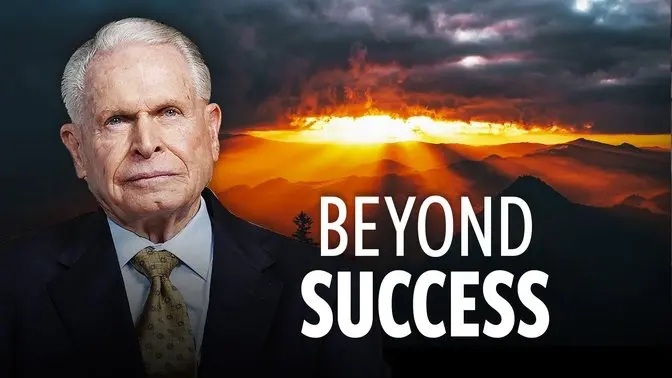
In this follow-up conversation, Silicon Valley pioneer Ray Zinn returns to expand on the leadership lessons, life experiences, and principles that guided his 37-year tenure as CEO at Micrel—the longest-serving CEO in Bay Area tech history. Zinn reflects more deeply on resilience, faith, and purpose, sharing how he navigated personal loss, business pressure, and the challenges of leading while legally blind. He explains why humility, trust, and long-term thinking mattered more than growth at any cost—and what today’s leaders often get wrong. We also explore succession, legacy, and the responsibility of passing wisdom to the next generation in an industry obsessed with speed and disruption. “Leadership isn’t about control—it’s about stewardship,” Zinn says. Watch the full conversation for thoughtful insights on endurance, character, and what it truly means to lead over a lifetime.

In today's episode, Ray Zinn joins us to share his extraordinary journey from ranch cowboy to becoming the longest-serving CEO in Silicon Valley history. For 37 years, Zinn led Micrel—a company he bootstrapped with very limited venture capital—and remained profitable every single year except one. After becoming legally blind, Zinn continued leading Micrel for another 20 years, proving that physical limitations don't define leadership capability. He shares how losing his vision actually made him a better, more empathetic CEO, and how his company culture was so strong that employees going through divorce found their marriages saved after joining the team. "You can only give as much love as you're willing to receive," Zinn says about the leadership lesson that came from accepting help after losing his sight. Zinn's philosophy is simple but powerful: do the tough things first, focus on making people better rather than making them wealthy, and never let excuses become acceptable. His company had half the turnover of the industry average, and so many employees returned after leaving that they called it the "boomerang philosophy." At 80 years old, Zinn continues writing books on leadership. His latest, "The Essential Leader," distills decades of wisdom into practical guidance for anyone leading a team, company, or family. Watch the full interview for an inspiring story of persistence, integrity, and what it really takes to lead for nearly four decades.

Nutrition and functional medicine expert Terri Ward joins us to unpack the hidden forces shaping modern health care, from pharmaceutical influence to the rise of ultra-processed foods. Drawing from her book “God’s Prescription,” she explains how corporate interests, outdated medical models, and lifestyle patterns may be driving today’s chronic disease crisis. In this conversation, Ward shares how stress and burnout during her career as an accountant led her to reclaim her own health through diet, functional medicine, and faith—ultimately changing her life’s direction. We dive into the history of modern medicine, the impact of the food system, and why so many Americans struggle with long-term health issues. “Health freedom is possible—you don’t have to accept sickness as normal,” Ward says. Watch the full conversation for a powerful discussion on personal responsibility, food as medicine, and how faith, mindset, and lifestyle work together to restore true well-being.#bayareainnovators

In today’s episode, Ahmed Banafa, artificial intelligence (AI) expert, author, and professor of engineering, returns to discuss the explosive AI landscape—from trillion-dollar investments in ‘Circular AI’ by OpenAI, Nvidia, AMD, and Broadcom to the fierce war for talent reshaping Big Tech. “AI is a train that left the station—now it’s about guiding the rails,” he says, exploring how OpenAI is challenging Google’s search dominance and the dark side of AI hallucinations that is leading to real-world harm. From California’s SB 53 regulation efforts to the future of physical AI and ethical concerns, Banafa shares his insights on augmentation over automation, and why we must verify AI outputs. Join us for a deep dive into AI’s rapid evolution and its societal impact.

In today’s episode, Jon Nakamatsu, celebrated pianist and 1997 Van Cliburn International Piano Competition gold medalist, shares his remarkable journey from a young musician in Sunnyvale, California, to a global classical music star. Nakamatsu reflects on the pivotal role his first piano teacher played in his career, guiding him from his earliest scale exercises to the prestigious Van Cliburn stage. “Winning the competition changed my life overnight,” he says, recounting the challenges of navigating fame, rejection, and the subjective nature of music competitions. He also opens up about the profound connection he feels while performing, describing moments of divine inspiration that transcend the notes on the page. From unforgettable tours with the Berlin Philharmonic’s wind quintet to serving on the jury at the Van Cliburn Competition, Nakamatsu offers insights into the artistry and resilience required in the world of classical music. Join us for an inspiring conversation on the power of music, the pursuit of passion, and why the arts matter for everyone.

In this episode, Jim Dukhovny, founder and CEO of Alef Aeronautics, unveils the science and vision behind the world’s first true flying car—a vehicle that could redefine how we travel. What began as a dream inspired by science fiction has evolved into a technological breakthrough, combining aerospace engineering, electric propulsion, and automotive design. Jim explains what makes his creation different from drones or electric helicopters, how his team overcame key engineering and safety challenges, and why 2015—the same year the Back to the Future DeLorean was set to arrive—was the perfect time for this innovation to take flight. He also addresses misconceptions about safety, air traffic, and AI control systems, and shares his vision for a future where “highways in the sky” could free us from traffic and give people back one of life’s most valuable resources—time.

In today’s episode, constitutional lawyer Daniel Sheehan revisits two of the most consequential cases of his career: the Pentagon Papers and the Karen Silkwood case. Sheehan recounts his work alongside famed attorney Floyd Abrams and others during the Pentagon Papers trial, defending The New York Times’ right to publish classified documents exposing the U.S. government’s actions in Vietnam. The case became a defining moment for press freedom in America. He also dives into the extraordinary story of Karen Silkwood, the whistleblower who uncovered nuclear safety violations at Kerr-McGee. Her mysterious death and evidence of missing plutonium raised alarming questions, such as whether nuclear material from an Oklahoma plant was being funneled to foreign governments. Together, these landmark cases shed light on the enduring battle between secrecy, accountability, and democracy. Join us for a riveting conversation that explores how two whistleblowers—one exposing a war, another a corporation—changed the way America thinks about truth and power.

In today’s episode, John Gertz, former chairman of the SETI Institute, shares his unique perspective on the search for extraterrestrial intelligence and the challenges of first contact. Gertz reflects on his decades with SETI—which stands for “search for extraterrestrial intelligence”—and why he believes alien civilizations are more likely to send robotic probes than distant radio signals. “If they’re out there, they wouldn’t waste energy shouting across the galaxy,” he explains. He also highlights the international race for discovery, noting China’s growing role in building the world’s largest radio telescope and the implications if they detect extraterrestrial life first. Beyond science, Gertz warns of the dangers of rushing to respond. “We don’t know who’s out there—or what their intentions might be,” he says, emphasizing the need for a cautious global approach. Join us for a thought-provoking discussion on SETI, the future of space exploration, and the questions humanity must answer before we make contact.

Joseph Tayefeh, secretary-general of Plastalliance and author of Plastic Bashing: Fake News?, takes us inside the controversy over plastics in today’s episode. Tayefeh explains why some studies about plastics may be biased, how certain NGO campaigns can be misleading, and why it’s important to separate data from advocacy. He highlights the real challenges in waste management and explores practical steps that could lead to meaningful change. Join us for an insightful conversation that challenges assumptions and looks at the plastic debate through a more balanced lens.

In this episode, Akli Adjaoute—AI entrepreneur and founder of multiple Silicon Valley tech companies—sounds the alarm on the unchecked power of artificial intelligence. Drawing from decades of experience in building advanced fraud detection systems, Adjaoute explores how AI is already shaping surveillance, social control, and financial systems in ways that threaten personal freedoms. “Technology should protect people, not manipulate or monitor them,” he warns. Raised in North Africa and France, and later thriving in the U.S. tech scene, Adjaoute brings a global perspective to one of the most urgent questions of our time: Are we building tools that serve humanity—or systems that will control it? Join us for a timely conversation about the hidden risks of AI, the ethical crossroads we face, and what it means to lead with both innovation and responsibility.

Jason Jones, a filmmaker, veteran, and human rights advocate, opens up about the moment that changed the course of his life: a forced abortion that ignited his lifelong mission to defend the vulnerable. In this powerful conversation, Jones shares how his tragedy and a haunting experience in rural Thailand led him from the battlefield to war-torn regions such as Afghanistan, Sudan, and Gaza. As the founder of the Vulnerable People Project, Jones has rescued persecuted communities, protected Afghan allies abandoned during the U.S. withdrawal, and delivered millions of meals and tons of coal to families in crisis. He also discusses how storytelling and filmmaking—such as his award-winning movie Bella—can amplify justice and solidarity in ways that no policy ever could. “I don’t think vulnerable people are weak,” he says. “They’re often heartbreakingly strong. Our job is to stand with them, even if it makes us vulnerable, too.” This is a story of relentless mission, deep loss, and a 40-year plan to create a more humane world, one life at a time.

In today’s episode, Nora Lacey—former biotech CEO and founder of the Assyrian Arts Institute—shares her extraordinary journey from the cutting edge of cancer research to bringing ancient Mesopotamian culture to life on the opera stage. After selling her company in 2014, Nora shifted her focus to philanthropy and heritage preservation. “I did a gap analysis to see where I could help my people,” she explains. “I realized art could be our voice.” That realization led to the creation of an opera based on The Epic of Gilgamesh—the world’s oldest known story. The opera, premiering in 2026, is designed for a cultural revival featuring ancient Assyrian values, stories, and beauty into modern consciousness. “We’re a stateless nation,” she says. “Art makes us visible.” Nora also reflects on her biotech career, the challenges of being a female executive in a male-dominated industry, and how faith, legacy, and human connection continue to shape her work. “Whether in science or art, it’s always about the human spirit,” she shares. Join us for a powerful conversation about culture, creativity, and one woman’s mission to preserve identity through beauty.

In today’s episode, Cynthia Sun—senior researcher at the Falun Dafa Information Center and Miss NTD 2023—shares how her work bridges human rights advocacy, national security research, and traditional values. Raised in Texas and initially skeptical of beauty pageants, Cynthia entered Miss NTD after discovering its focus on inner virtue and cultural tradition. “It wasn’t about height or looks—it was about who you are,” she says. Her experience led to personal transformation and, ultimately, the crown. Offstage, Cynthia investigates transnational repression, tracking bomb threats and harassment campaigns allegedly linked to the Chinese Communist Party. She details disturbing findings—ranging from interference with Shen Yun performances to academic intimidation of Falun Gong practitioners in U.S. universities. “We’ve seen threats traced back to IPs in Huawei’s research institute,” she reveals, explaining how the CCP exploits democratic systems to silence critics abroad. From personal stories of loss to the emotional weight of trying to rescue persecuted families in China, Cynthia opens up about what motivates her—and why she believes her generation can’t wait to act. Join us for a powerful conversation about courage, culture, and confronting global injustice.

In this episode, we speak with Oana Gheorghiu, the cofounder of Give Life, a grassroots movement that led over 350,000 Romanians to help build the country’s first pediatric oncology hospital entirely through private donations. What began as a fight for one child’s treatment turned into a national campaign—fueled by frustration with a broken health care system and a desire to prove that civil society could succeed where the state had failed. From overcoming political roadblocks to constructing a 9-story, state-of-the-art public hospital, Oana shares how empathy, perseverance, and community turned an impossible dream into a symbol of hope for post-communist Romania.

In today’s episode, famed legal scholar and defense attorney Alan Dershowitz joins us for a wide-ranging conversation on justice, national security, and the moral complexity of defending the unpopular. Dershowitz discusses his book The Preventive State and the growing tension between liberty and safety in the face of modern threats like terrorism, pandemics, and political extremism. “The hardest questions are not about guilt or innocence,” he says, “but about prevention versus freedom.” He also speaks candidly about the fallout at Harvard over free speech and antisemitism, reflecting on how the university where he taught for 50 years has changed—and what it means for academic freedom. Drawing from his decades of experience, Dershowitz revisits some of his most famous and controversial cases, including O.J. Simpson, Mike Tyson, and Anatoly Sharansky, and explains why defending the guilty is sometimes necessary to protect the innocent. This episode is a rare look into the legal, ethical, and cultural battles shaping America’s future—from one of the most enduring voices in constitutional law.

In today’s episode, Bonner Cohen, CFACT Sr. Policy Analyst, discusses the shifting landscape of green energy in America. Cohen explores how the rapid push toward renewable energy—while rooted in good intentions—may be creating new vulnerabilities, including rising costs and a less stable power grid. “That is exactly what we recently saw happen in Spain, when all of a sudden ... the electricity went out ... it was a wake-up call, because that was a preview of coming attractions,” he says. He also examines the global supply chain behind green technology, with a focus on China’s dominant role in producing solar panels and rare earth materials. For Cohen, this raises important questions about long-term U.S. energy independence and national security. Join us for a compelling conversation that challenges conventional wisdom on energy, the environment, and the future of policy.

In today’s episode, Dalia Rawson, executive and artistic director of the New Ballet in San Jose, California, shares her remarkable journey from principal dancer to company founder—navigating cancer, bankruptcy, and reinvention through passion, recovery, and innovation. Rawson reflects on her time performing with the San Jose Cleveland Ballet and the life-altering diagnosis that abruptly ended her dancing career. “One week I was dancing the lead in The Nutcracker, and the next week, my career was over,” she says. However, her love for ballet remained strong. She went on to choreograph and teach with Ballet San Jose, which went bankrupt in 2016. Out of that closure, she founded the New Ballet—a company rooted in classical tradition but built for the future. “We’re a classical ballet school—but in a new way,” she explains, emphasizing dancers' health, diversity, and the enduring power of live performance in a digital age. Join us for a powerful conversation about rebuilding from loss, reshaping tradition, and why ballet still matters in today’s culture.
 Technology for HumanityGan Jing World is dedicated to promote kindness, respect, and trust among people. Our non-addictive content prioritizes meaningful information, while upholding freedom of speech and user privacy.
SUBSCRIBESign In