
The Tao Te Ching is a Chinese classic text attributed to the sage Laozi that was written around 400 BC. Together with the Zhuangzi, the Tao Te Ching is a foundational text for both philosophical and religious Taoism. It also had a strong influence on other schools of Chinese philosophy and religion, such as Legalism, Confucianism, and Chinese Buddhism, which was initially interpreted largely through the use of Taoist words and concepts. Many artists, including poets, painters, calligraphers, and gardeners, have drawn inspiration from the Tao Te Ching. Its influence has spread widely, and it is one of the most translated works of literature in the world. The Tao Te Ching is a text with approximately 5,000 Chinese characters divided into 81 brief chapters or sections. The writing style is laconic, with few grammatical particles that encourage a wide range of contradictory interpretations. The ideas are unique, and the style is poetic. Short, declarative statements are combined with intentional contradictions in the rhetorical style. The Chinese characters in the original versions were probably written in zhuànshū (seal script), while later versions were written in lìshū (clerical script) and kǎishū (regular script) styles. Timestamps 📽 10:04 - Entrusted with all things under heaven - Chapter 14 27:10 - Bring it to a conclusion 34:37 - Chapter 39 - from ancient times 41:04 - Set right everything under heaven - Chapter 46 57:13 - Overcome by difficulties - Chapter 64. Peace is easily maintained 59:26 - Lead all things back toward great harmony - Chapter 66 Cre: @AltrusianGraceMedia (Youtube)

Wú Wéi is a classic formulation of Taoism (or Daoism), a combination of religion and philosophy that originated in China about two thousand five hundred years ago. Wú Wéi can be translated as do nothing, take no action. The wu-wei paradox is that striving less—not trying harder to win at all costs—often results in more success. A wu-wei mindset entails letting go and not overthinking; this mental state promotes flow state experiences and a sense of effortlessness, which leads to peak performance. Water is used as a frequent example of wú wéi—it can happily be guided, transported and piped—yet it does as it will, evaporating from the earth’s surface, drifting anywhere and everywhere in great clouds, and then falling where it must. Thanks for watching! Subscribe to our channel to follow more interesting videos. Timestamps 📽 0:28 - The Daodejing 0:34 - Paradox of Wu Wei 2:29 - Tang Dynasty Cre: @theschooloflifetv (Youtube)

Laozi, (Chinese: “Master Lao” or “Old Master”) was the first philosopher of Chinese Daoism and the alleged author of the Daodejing, a primary Daoist writing. Laozi is venerated as a philosopher by Confucians and as a saint or god in popular religion and was worshiped as an imperial ancestor during the Tang dynasty (618–907). Laozi is traditionally regarded as the author of the Tao Te Ching, one of the most significant treatises in Chinese cosmogony. As with most other ancient Chinese philosophers, Laozi often explains his ideas by way of paradox, analogy, appropriation of ancient sayings, repetition, symmetry, rhyme, and rhythm. In fact, the whole book can be read as an analogy – the ruler is the awareness, or self, in meditation and the myriad creatures or empire is the experience of the body, senses and desires. The Tao Te Ching, often called simply Laozi after its reputed author, describes the Tao as the source and ideal of all existence: it is unseen, but not transcendent, immensely powerful yet supremely humble, being the root of all things. People have desires and free will (and thus are able to alter their own nature). Many act "unnaturally", upsetting the natural balance of the Tao. The Tao Te Ching intends to lead students to a "return" to their natural state, in harmony with Tao.Language and conventional wisdom are critically assessed. Taoism views them as inherently biased and artificial, widely using paradoxes to sharpen the point. Wu wei (無為), is a central concept of the Tao Te Ching. It is a concept used to explain ziran (自然), or harmony with the Tao. It includes the concepts that value distinctions are ideological and seeing ambition of all sorts as originating from the same source. Laozi used the term broadly with simplicity and humility as key virtues, often in contrast to selfish action. Timestamps 2:25 - Whole universe surrenders 3:33 - Let your mind become still 4:22 - I become what I might be Cre: @theschooloflifetv (Youtube)

Confucius (c. 551 - c. 479 BCE) was a Spring and Autumn period Chinese philosopher and politician who is regarded as the paragon of Chinese sages. Confucius' teachings and philosophy continue to influence Chinese and East Asian culture and society to this day. Philosophy Confucius presents himself as a "transmitter who invented nothing" in the Analects. He emphasizes the importance of study the most, and the text begins with the Chinese character for study. Rather than attempting to construct a systematic or formalist theory, he desired that his disciples master and internalize older classics, so that their deep thought and thorough study would allow them to relate current moral problems to past political events (as recorded in the Annals) or past expressions of commoners' feelings and noblemen's reflections (as in the poems of the Book of Odes). Ethics One of Confucius' most profound teachings may have been the superiority of personal exemplification over explicit rules of behavior. His moral teachings emphasized self-cultivation, imitating moral exemplars, and developing skilled judgment over rule knowledge. As a result, Confucian ethics can be classified as a type of virtue ethics. His teachings rarely rely on reasoned argument, and ethical ideals and methods are communicated in a roundabout way, via allusion, innuendo, and even tautology. His teachings must be examined and contextualized in order to be understood. Politics Confucius's political thought is based upon his ethical thought. He argued that the best government is one that rules through "rites" (lǐ) and people's natural morality, and not by using bribery and coercion. He explained that this is one of the most important analects: "If the people be led by laws, and uniformity sought to be given them by punishments, they will try to avoid the punishment, but have no sense of shame. If they are led by virtue, and uniformity sought to be given them by the rules of propriety, they will have the sense of shame, and moreover will become good." (Analects 2.3, tr. Legge). This "sense of shame" is an internalization of duty, where the punishment precedes the evil action, instead of following it in the form of laws as in Legalism. While Confucius supported the idea of government ruling by a virtuous king, his ideas contained a number of elements to limit the power of rulers. He argued for representing truth in language, and honesty was of paramount importance. Even in facial expression, truth must always be represented. Confucius believed that if a ruler is to lead correctly, by action, that orders would be unnecessary in that others will follow the proper actions of their ruler. In discussing the relationship between a king and his subject (or a father and his son), he underlined the need to give due respect to superiors. This demanded that the subordinates must advise their superiors if the superiors are considered to be taking a course of action that is wrong. Confucius believed in ruling by example, if you lead correctly, orders by force or punishment are not necessary. Timestamps 📽 0:28 - Confucius 2:41 - The Han Dynasty 5:37 - Confucius’s Father 10:06 - The Common Gentleman 11:43 - The Analects 23:58 - Three Confucian Sites 37:29 - Political Meritocracy 38:06 - The Family 48:25 - Confucius Academy 49:52 - Imperial Examination 55:11 - Han Dynasty Tombs 1:21:24 - The Grave Sweeping Festival of Ching Ming Cre: @ParableChannel (Youtube)

China was known in ancient times as the Divine Land or the home of the Gods. In the beginning, the Creator sent divine beings to earth to bring culture and morality to humans. Their ultimate goal is to teach humans how to cultivate their inner hearts, reconnect with their true selves, and return to heaven. Let's explore some of the divine beings that create heaven, earth, and humans according to Chinese legends. Beside, here is my favorite story - Pan Gu and the World's Egg: This origin story is based on Chinese culture. It was first written down about 1,760 years ago, between 220 and 265 CE, but it must have been told orally much earlier. In the beginning, there was chaos, a yin-yang mix of female-male, aggressive-passive, cold-hot, dark-light, and wet-dry. Pan Gu emerged from the egg as the giant who separated chaos into many opposites, including Earth and sky, from this yin and yang. Pan Gu stood in the center, his head touching the sky and his feet firmly planted on the ground. The heavens and the Earth began to grow at a rate of 10 feet a day, and Pan Gu grew along with them. After another 18,000 years the sky was higher and Earth was thicker. Pan Gu stood between them like a pillar 30,000 miles in height, so they would never again join. When Pan Gu died, his skull became the sky, his breath the wind and clouds, and his voice the rumbling thunder. One eye became the Sun, while the other became the Moon. His body and limbs transformed into five massive mountains, and his blood transformed into raging water. His veins transformed into roads, and his muscles into fertile land. The stars in the sky were created by his hair and beard, and flowers and trees by his skin. His marrow transformed into jade and pearls. His sweat feels like the good rain and sweet dew that nourish all life on Earth. Some believe that the fleas and lice on his body evolved into the ancestors of humanity. Thanks for watching! Subscribe to our channel to follow more interesting videos. Timestamps 0:00 - Intro 0:35 - The story of creation 3:25 - Outro We greatly appreciate the educational video-creation team, so please allow us to upload this video to this channel in order to share knowledge and spread good values to all. The original video's source is credited below. Thank you very much! Cre: @TheChenDynasty (YouTube)

Miyamoto Musashi (c. 1584 - 13 June 1645), also known as Shinmen Takez, Miyamoto Bennosuke, or by his Buddhist name, Niten Draku, was a Japanese swordsman, philosopher, strategist, writer, and rōnin who became famous for his unique double-bladed swordsmanship and undefeated record in 61 duels (the next is 33 by It Ittsai). Musashi, as he was often referred to, is regarded as a Kensei, or Japanese sword saint. He founded the Niten Ichi-ry, or Nito Ichi-ry, swordsmanship style. He wrote the Book of Five Rings in his later years. The Book of Five Rings deals primarily with the character of his Niten Ichi-ryū school in a concrete sense, i.e., his own practical martial art and its generic significance. It is one of the most insightful texts on Asian culture's subtle arts of confrontation and victory. The book analyzes the process of struggle and mastery over conflict that underpins every level of human interaction, and is written not only for martial artists but for anyone who wants to apply the timeless principles of this text to their life. Thanks for watching! Subscribe to our channel to follow more interesting videos. We greatly appreciate the educational video-creation team, so please allow us to upload this video to this channel in order to share knowledge and spread good values to all. The original video's source is credited below. Thank you very much! Cre: @TheShogunate (YouTube)

Cao Cao (155–220 AD) was a warlord and the Eastern Han dynasty's penultimate Chancellor who rose to great power in the dynasty's final years. Cao Cao, according to legend, made a careful plan before his death: in order to prevent looters from disturbing his peace after death, he had 72 coffins made, which were carried out to 72 separate burial sites on the day of his funeral. In the historical archives, the Tomb of Cao Cao was in Xigaoxue Village in Anyang, about 12 kilometers away from the capital of the Kingdom of Wei, Yecheng City. The excavation of two graves was conducted from 2008 to 2009. After excavation, the archaeologists confirmed that the owner of the tomb was Cao Cao. It was one of the most important archaeological discoveries that year. The archaeologists found that the tomb was robbed before the excavation, but still more than 250 pieces of cultural heritages were unearthed. Thanks for watching! Subscribe to our channel to follow more interesting videos. We greatly appreciate the educational video-creation team, so please allow us to upload this video to this channel in order to share knowledge and spread good values to all. The original video's source is credited below. Thank you very much! Cre: @TimelineChannel (YouTube)

China's 5,000-year history includes a large number of people whose knowledge has benefited society. Emperors of dynasties, extreme war strategists, and others are examples of these people. Five brilliant ancient Chinese people are mentioned in the video: Hua Tuo (c. 140-208), also known as Yuanhua, was a Chinese physician during the late Eastern Han dynasty. Hua Tuo is credited with being the first person in China to use anesthesia during surgery in the historical texts Records of the Three Kingdoms and Book of the Later Han. Hua Tuo was well-known for his skills in acupuncture, moxibustion, herbal medicine, and medical Daoyin exercises, in addition to his surgical and anesthesia expertise. He created the Wuqinxi (literally "Five Animals Exercise") after studying the movements of the tiger, deer, bear, ape, and crane. Jiang Ziya (fl. 12th century BC - fl. 11th century BC), also known by several other names, was a Chinese noble who assisted Zhou kings Wen and Wu in their overthrow of the Shang. Following their victory at Muye, he remained a Zhou minister. During the Three Guards Rebellion, he remained loyal to the regent Duke of Zhou; following the Duke's punitive raids against the restive Eastern Barbarians, or Dongyi, Jiang was enfeoffed with their territory as the marchland of Qi. He took up residence in Yingqiu (in modern Linzi). Guan Zhong was a Chinese philosopher and politician who lived around 720-645 BC. During the Spring and Autumn period of Chinese history, he served as chancellor and was a reformer of the State of Qi). Qi became the most powerful of the feudal states as a result of Guan Zhong's reforms and astute diplomacy, and Duke Huan became the first of the Five Hegemons. Zhang Liang was a Chinese military strategist and politician who lived during the early Western Han dynasty. He is also one of the "Three Heroes of the Early Han Dynasty," alongside Han Xin and Xiao He. Zhang Liang made significant contributions to the establishment of the Han dynasty. Emperor Qianshao bestowed the posthumous title "Marquis Wencheng" on him after his death. Zhuge Liang was a Chinese statesman and military strategist who lived from 181 to around September 234. During the Three Kingdoms period, he was chancellor and later regent of the state of Shu Han. He is widely regarded as the most accomplished strategist of his generation, and he has been compared to Sun Tzu, the author of The Art of War. Zhuge Liang is frequently depicted wearing a Taoist robe and holding a crane feather hand fan. Timestamps 📽 Intro 1:13 - Hua Tuo 2:35 - Jiang Ziya 4:33 - Guan Zhong 6:26 - Zhang Liang 8:50 - Zhuge Liang Thanks for watching! Subscribe to our channel to follow more interesting videos. We greatly appreciate the educational video-creation team, so please allow us to upload this video to this channel in order to share knowledge and spread good values to all. The original video's source is credited below. Thank you very much! Cre: @TheChenDynasty (YouTube)

In this video, we will discuss China's most brilliant military strategists. They were responsible for many battle victories, and some have even influenced our society today. Sun Tzu was a Chinese military general, strategist, philosopher, and writer who lived from 771 to 256 BCE during the Eastern Zhou period. Sun Tzu is widely regarded as the author of The Art of War, a seminal work of military strategy that influenced both Western and East Asian philosophy and military thought. Sun Tzu is regarded as a legendary historical and military figure in Chinese and East Asian cultures. Han Xin (231/230-196 BC) was a Chinese military general and politician who served Liu Bang during the Chu-Han conflict and helped establish the Han dynasty. Han Xin was one of the "Three Heroes of the Early Han Dynasty," alongside Zhang Liang and Xiao He. The Yang Family Generals - a military family from the early years of imperial China's Song Dynasty (960–1279). The stories recount the Yangs' unwavering loyalty and remarkable bravery in defending their country against foreign military powers, namely the Khitan-ruled Liao Dynasty (907-1125) and Tangut-ruled Western Xia (1038–1227). Yue Fei (1103 – 1142) was a Chinese military general of the Southern Song dynasty and a national hero of China, best known for leading Southern Song forces in the 12th century wars between the Southern Song and the Jurchen-ruled Jin dynasty in northern China. Because of his warlike stance, he was executed by the Southern Song government in 1142 on a fabricated charge, following a negotiated peace with the Jurchens. Yue Fei, widely regarded as a patriot and national folk hero in China, has evolved into a symbol of loyalty in Chinese culture since his death. Thanks for watching! Subscribe to our channel to follow more interesting videos. Timestamps 0:36 - Sun Tzu 2:25 - Han Xin 5:49 - The Yang Family Generals 7:34 - Yue Fei We greatly appreciate the educational video-creation team, so please allow us to upload this video to this channel in order to share knowledge and spread good values to all. The original video's source is credited below. Thank you very much! Cre: @TheChenDynasty (YouTube)

Over the centuries, China has had more than a thousand gods and deities. They are powerful beings and believed to have created the world that we live in today. Here are some of the most powerful gods and deities in Chinese mythology: 1. Yuhuang Shangdi, The Jade Emperor: referred to as the first god. He is also the supreme ruler of heaven and China's first emperor. As such, he was said to be in charge of the humans. In art, he is usually depicted with long hair, sitting on a throne in full imperial regalia and a hat with 13 pearl-strong tassels, holding an imperial ceremonial tablet. 2. Wangmu Niangniang, the Queen Mother of the West: She is believed to be the highest and most powerful goddess in Chinese mythology who has complete control over life, happiness, and immortality. She took on the role of the Jade Emperor’s wife and was responsible for controlling the female gods, tending to the Peaches of Immortality in their palace gardens, and for sending babies to couples. In early Chinese texts, the goddess carried a wild and ferocious outer appearance, often seen as a demonic figure who caused worldly catastrophes. But she eventually transformed into a goddess, taking the form of a middle-aged woman who has tiger’s teeth and a leopard’s tail, wearing a headdress that she uses to hide her wild, untamed hair. 3. Yan Wang, King of Death: He is the all powerful and feared god King of Hell, with the responsibilities of overseeing the entire world of the dead, ruling over the ten layers of Diyu and judging the fate of each soul. What makes this god extremely powerful is his manipulation skills, immunity to all earthly diseases, and superhuman strength and endurance. In addition, he can also control and alter the reality of the underworld while being widely known for his reserved nature. The god is often seen in a very fearsome appearance with big bulging eyes, deep red skin, a severe expression, and a long, black beard, wearing traditional Chinese robes and a judge’s cap. 4. The Dragon King, Long Wang: Long Wang is the god who rules over the sea, its creatures, and all dragons around the world, earning him the title "Dragon King." He and his brothers live in their own court beneath the sea. He is also in charge of the waters and the wind, and despite his fiery temper and ruthlessness, the sea god is regarded as a symbol of good fortune. Longwang is known to take two forms: a Chinese dragon with sharp horns and large claws, and a human persona dressed in royal robes and red skin, which reflects his fierce and aggressive pers. 5. Nezha: This powerful protection deity in Chinese mythology was born into life as a mortal to a warlord father and his wife during the Shang Dynasty, coming into the world as a burning red ball of fire rather than being born like a regular baby. Seeing this as a curse, the warlord decided to kill him and just when he was about to attack, Ne Zha came out of the fireball and revealed himself in his true form. Growing up, the young god’s powers started to reveal itself upon bathing in a nearby sea. He swished around his Cosmic Wheel, causing massive tremors and disruption in the palace of the Dragon King of the East, located below the sea. He even accidentally killed his son, Ao Bing, upon meeting and playing with him. 6. Empress Wa (Nuwa): The goddess that created all humanity and the one responsible for repairing the Pillars of Heaven that held the sky. She is believed to be the first being with the ability to procreate, thus creating all mortals on earth. According to mythology, after the world was created alongside her, she quickly became lonely because she had no one to keep her company. She then went over to the Yellow River's banks and began to make figures out of mud clay, shaping it to the bodies that humans have today. She is a popular deity to whom women turn for advice on marital affairs and fertility issues. She has been depicted as a supernatural creature with a human face and a long serpentine body finely dressed in traditional Chinese hanfu over the centuries. Timestamps 📽 0:46 - Quan Yin 2:05 - The Jade Emperor 3:19 - Queen Mother of The West 4:28 - Chinese King of Death 5:28 - The Dragon Kings 6:22 - Nezha 7:56 - Pangu 9:57 - Nuwa 11:02 - Monkey King Thanks for watching! Subscribe to our channel to follow more interesting videos. We greatly appreciate the educational video-creation team, so please allow us to upload this video to this channel in order to share knowledge and spread good values to all. The original video's source is credited below. Thank you very much! Cre: @TheChenDynasty (YouTube)

Wukong is apprehended by the Buddha, Tathgata, and imprisoned by five mountains with the promise of redemption one day. Guanyin and Hui'an depart to find the pilgrim summoned by Tathgata to seek knowledge, and Guanyin promises three monsters—and Wukong—chances for redemption. For Wukong, he must serve the pilgrim. The pilgrim, Xuanzang, is raised as an orphan by a monk. He learns the Way, and when he's 18, he discovers who his parents were and how bandits wronged them. He avenges his parents, and after his mother commits suicide, Xuanzang returns to monastic life. Emperor Tang Taizong is supposed to save the Dragon King from execution after the Dragon King destroys a fortune teller, but he fails because the Dragon King is killed while dreaming by the executioner and judge, Wei. Taizong dies of sadness and promises in the Underworld to send food and hold a mass for the trapped souls so they can be reborn—he is then returned to the world of the living because he still has 20 years to live. Taizong follows through on his promises. At a mass sanctioned by Taizong and led by Xuanzang, Guanyin shows up and announces the quest to the west; Xuanzang volunteers. Xuanzang, also called Tripitaka, is helped along his journey and in return, saves a man’s father’s spirit. When they are on a mountain, they hear Wukong cry out for his master, and the man agrees to guide him. Tripitaka releases Wukong; they are attacked, and Wukong kills the bandits. Wukong flees after being chastised by Tripitaka. Guanyin assists Tripitaka in controlling Wukong, who is now known as Pilgrim. Later, they seize control of the dragon that Guanyin promised to redeem when she transforms it into a horse, the slow-witted and clumsy Pigsy, and the fish spirit Sandy. Together they continue their journey to India and culminate in their attainment of the sacred scrolls. Thanks for watching! Subscribe to our channel to follow more interesting videos. We greatly appreciate the educational video-creation team, so please allow us to upload this video to this channel in order to share knowledge and spread good values to all. The original video's source is credited below. Thank you very much! Cre: @MythologyUnleashed (YouTube)

In the 16th-century Chinese novel Journey to the West, the Monkey King, also known as Sun Wukong in Mandarin Chinese, is a legendary mythical figure. Sun Wukong is a stone-born monkey who gains supernatural powers through Taoist practices in the novel. After rebelling against heaven, the Buddha imprisons him beneath a mountain. After 500 years, he joins the monk Tang Sanzang and two other disciples on a journey to retrieve Buddhist sutras from the West (India), where Buddha and his disciples reside. Sun Wukong possesses many abilities. He has amazing strength and is able to support the weight of two heaven mountains on his shoulders while running "with the speed of a meteor". He has the ability to travel 108,000 li (54,000 km, 34,000 mi) in one somersault. He has an incredible memory and can recall every monkey ever born. It is his duty as monkey king to keep track of and protect every monkey. Sun Wukong also gains the 72 Earthly Transformations, which grant him 72 unique abilities, including the ability to transform into various animals and objects. He is a skilled fighter, capable of defeating heaven's best warriors. His hair has magical properties, allowing him to duplicate himself or transform into various weapons, animals, and other things. He also has partial weather manipulation abilities and can use fixing magic to hold people in place. Thanks for watching! Subscribe to our channel to follow more interesting videos. We greatly appreciate the educational video-creation team, so please allow us to upload this video to this channel in order to share knowledge and spread good values to all. The original video's source is credited below. Thank you very much! Cre: @MythologyUnleashed (YouTube)
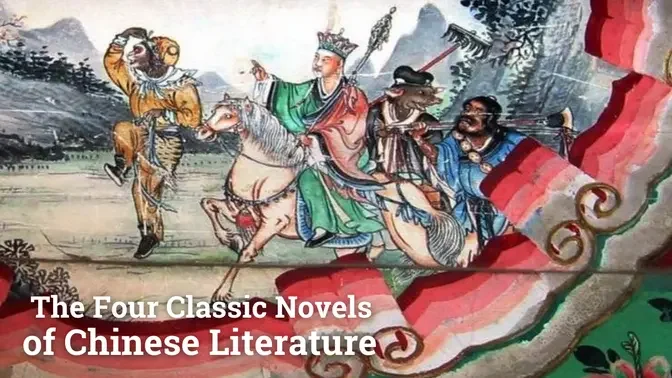
Outlaws of the Marsh, Romance of the Three Kingdoms, Journey to the West, and Dream of the Red Chamber are four classic novels from China. Outlaws of the Marsh is regarded as one of China's Four Great Classical Novels. The story, set in the Northern Song dynasty (around 1120), tells of 108 outlaws gathering at Mount Liang (or Liangshan Marsh) to rebel against the government. They are later granted amnesty and enlisted by the government to oppose the nomadic conquest of the Liao dynasty and other rebels. Romance of the Three Kingdoms is set in the turbulent years towards the end of the Han dynasty and the Three Kingdoms period in Chinese history, starting in 184 AD and ending with the reunification of the land in 280 by Western Jin. The novel focuses primarily on the three power blocs that emerged from the Han dynasty's remnants, eventually forming the three states of Cao Wei, Shu Han, and Eastern Wu. The novel deals with the plots, personal and military battles, intrigues, and struggles of these states to achieve dominance for nearly 100 years. Journey to the West published in the 16th century during the Ming dynasty. The novel is an extended account of the legendary pilgrimage of the Tang dynasty Buddhist monk Xuanzang, who traveled to the "Western Regions" (Central Asia and India) to obtain Buddhist sacred texts (sūtras) and returned after many trials and much suffering. Tang Sanzang is the monk's name in the novel. The novel follows the general outline of Xuanzang's own account, Great Tang Records on the Western Regions, but adds elements from folklore and the author's imagination: Buddha assigns this task to the monk and provides him with three protectors who agree to assist him in exchange for forgiveness of their sins. Sun Wukong, Zhu Bajie, and Sha Wujing are among these disciples, as is a dragon prince who serves as Tang Sanzang's steed, a white horse. The power and virtue of cooperation guide the pilgrims on their journey to enlightenment. Dream of the Red Chamber is a novel composed by Cao Xueqin in the middle of the 18th century. The intricate plot strands depict the rise and fall of a family similar to Cao's own and, by extension, of the dynasty itself. Cao depicts the father's power over the family, but the novel is meant to be a memorial to the women he knew as a child: friends, relatives, and servants. On a deeper level, the author explores religious and philosophical issues, and the writing style includes echoes of late Ming plays and novels, as well as poetry from earlier periods. Timestamps 📽 Intro Introduction: 0:14 - What is Ming 0:42 - Who Trap Water Margin 1:04 - Wusong 2:04 - Sango Yang II 3:35 - The Immortal Monkey 4:37 - Hollow Monk Thanks for watching! Subscribe to our channel to follow more interesting videos. We greatly appreciate the educational video-creation team, so please allow us to upload this video to this channel in order to share knowledge and spread good values to all. The original video's source is credited below. Thank you very much! Cre: @learnchinesenow (YouTube)

Watch how Japan rose from a poor nation to a modern industrial nation equal to the Western powers in 40 years. In the 1600s, Japan had cut off contact with the outside world. Foreigners were not permitted to visit Japan or conduct business there. With a small fleet of American vessels, an American commodore named Matthew C. Perry invaded Edo Bay on July 3, 1853. This exposed Japan to outside influences and ignited a fierce internal battle for executive power and reform. After Emperor Komei died, and his son was crowned Emperor Meiji, civil unrest continued, making it hard for the new ruler Tokugawa Yoshinobu to maintain his power, leading to his resignation in November 1867. In 1868, the Boshin War and the subsequent fall of Edo finally overthrew the Shogunate, marking the end of this Tokugawa military dictatorship and the beginning of the Meiji era. After taking the throne in January 1868, Emperor Meiji had implemented a comprehensive reform called “Meiji Restoration”, which was followed by an era of major political, economic, and social change in Japan, leading to its modernization and westernization. By 1871, the administrative reorganization successfully dismantled the old feudal system, abolished feudal class privileges and replaced feudal domains with a system of prefectures. During the Meiji period, Japan underwent a rapid transition towards an industrial economy. Besides significant changes in politics, education and economics, the modernization and enlargement of the Imperial Japanese Army played a key role in Japan's expansion abroad. It was now comparable to the Western powers in many aspects. Japan had created an up-to-date army and navy that had prevailed in two quick wars. It had triumphed over Russia in 1904–1905 and China in 1894–1895. It had effectively turned Korea into a colony. What is the decisive factor for the development of Japan in your opinion? Leave your thoughts in the comment section below. If you enjoy this video, subscribe to our channel for more interesting videos. Timestamps 📽 00:00 Introduction 04:20 The End of the Beginning 10:31 Japan Meets The World 18:00 Business Opportunities 20:33 Meat 24:57 Upgrading The Military 30:22 Rebellion 37:11 Big in the West 44:36 Climbing the Ladder 48:15 Tension with the West 52:58 The First Rank of Nations We greatly appreciate the educational video-creation team, so please allow us to upload this video to this channel in order to share knowledge and spread good values to all. The original video's source is credited below. Thank you very much! Cre: @VoicesofthePast (YouTube)

Watch the history of Manchu People whose dynasty would rule China for more than 250 years and serve as the country's last imperial dynasty. The Manchus are a Tungusic East Asian ethnic group from Northeast Asia's Manchuria. They are an officially recognized ethnic minority in China and are the source of the name Manchuria. The Manchus, who are descended from the Jurchen people who established the Jin dynasty (1115-1234) in northern China, established and ruled the Later Jin (1616-1636) and Qing (1636-1912) dynasties of China. Manchus are the largest branch of the Tungusic people and are spread throughout China, constituting the country's fourth largest ethnic group. They can be found in 31 different Chinese provinces. The largest is Liaoning, with over 100,000 Manchu residents in Hebei, Heilongjiang, Jilin, Inner Mongolia, and Beijing. Liaoning has half of the population and Hebei has one-fifth. There are over 300 Manchu towns and townships in China, including Xinbin, Xiuyan, Qinglong, Fengning, Yitong, Qingyuan, Weichang, Kuancheng, Benxi, Kuandian, Huanren, Fengcheng, Beizhen and over 300 Manchu autonomous counties. Manchus are China's largest minority group without their own autonomous region. This video presents the history of the Manchu people, from the appearance of the Sushens in the 6th century BCE to 2010. If you enjoy it, subscribe to our channel for more interesting videos. Timestamps 📽 0:17 - Sushen people 1:15 - Jin Empire 2:07 - Qing Empire We greatly appreciate the educational video-creation team, so please allow us to upload this video to this channel in order to share knowledge and spread good values to all. The original video's source is credited below. Thank you very much! Cre: @TheDragonHistorian (YouTube)

The Forbidden City (Chinese name: Gugong, 'Former Palace') was China's palatial heart. It is a Ming and Qing dynasty (1368-1912) imperial palace complex in Beijing, China. The grand halls and walls of one of the world's five most important palaces proudly display the essence and culmination of traditional Chinese architecture, fitting for the capital city of the world's largest nation. In this video, let’s explore the origins of the Forbidden City, the ruthless and unelected Ming Dynasty monarch. The Forbidden City will be 601 years old in 2021. It was constructed between 1406 and 1420 on the orders of Zhu Di — Ming Dynasty Emperor Yongle (reign 1402–24). The Forbidden City is approximately 72 hectares (180 acres) in size, with a total floor space of approximately 150,000 square meters (1,600,000 square feet). The defenses (moat and wall), the Outer Court, and the Inner Court comprise the Forbidden City. Emperor Yongle was the Ming Dynasty's third emperor. He usurped his nephew's throne. He decided to move the capital from Nanjing to Beijing, which was his fief, in order to consolidate his imperial power and protect his own security. As a result, Emperor Yongle commissioned Kuai Xiang to design the Forbidden City in Beijing. Because the Forbidden City was destroyed by three fires, the majority of the current palaces were built during the Qing Dynasty. During the Second Opium War (1856-1860), Anglo-French forces occupied the Forbidden City and held it until the end of the war. The last emperor, Puyi, lived in the Forbidden City until his expulsion in 1924. Following that, the Palace Museum in the Forbidden City was founded and opened to the public. This film transports us to the reign of Emperor Yongle in the 15th century, the Ming Dynasty's most cosmopolitan period. Yongle had to rely on his court eunuchs to administer the Empire after usurping the throne. Despite being stripped of their manhood, they rose to the highest positions. If you enjoy it, subscribe to our channel for more interesting videos. Timestamps 📽 Intro 3:42 - Survival 16:47 - Imperial Court 17:46 - The Architect 18:40 - The City 19:35 - Chinese Architecture 20:45 - Cicadas 21:42 - The Architects Hut 22:50 - The Palace Complex 24:16 - The Purple City 24:54 - Pain of Death 25:44 - Glaze 26:55 - Wooden Columns 27:41 - Cedar Wood 28:09 - Prefabricated Building System 28:42 - Building Materials 29:29 - Grand Canal 29:52 - Bricks 30:47 - Marble Terraces 33:12 - An Official Request 36:28 - Temple of Heaven 37:41 - Center of the World 39:26 - Ritual 45:31 - The Eunuch 48:30 - The Storm 49:47 - The Last Emperor We greatly appreciate the educational video-creation team, so please allow us to upload this video to this channel in order to share knowledge and spread good values to all. The original video's source is credited below. Thank you very much! Cre: @hazardsandcatastrophes (YouTube)

Dr. Michael Coe is well-known for his contributions to Mesoamerican ethnohistory, northeastern United States historical archaeology, and writing systems. He is also a member of the Royal Anthropological Institute, the National Academy of Sciences, and the Mexican Society of Anthropology. Coe is the author of several world-renowned Mesoamerican books, including Breaking the Maya Code (1992). This book provides an informed account of one of the most exciting adventures of our time: deciphering the inscribed remains of Mayan monuments. Dr. Coe reveals his thoughts of Transoceanic Contact between Asia and America: "I am convinced that... there is a connection. I think that this connection is on an intellectual level and that it took place sometime in the early centuries of our era. It would have involved such things as the transmission of bark paper books, the technology behind bark paper books that are folding screen books. It would have involved calendrical things such as permutation calendars. The Balinese permutation calendar is practically identical to what I’ve described of the Maya calendar. It’s incredible how close it is because when I talk to a Balinese calendar priest I can predict the next thing that he is going to say from what I know about the Maya. It’s really strange. There are color directions. The idea that the universe is associated with the four directions, which have colors and plants and specific birds and animals associated with them, had spread all over East Asia, Southeast Asia and Mesoamerica, and a little bit up into the southwest of the United States. Just thing after thing after thing always on an intellectual level. Of course there’s no horses, there’s no water buffalo, there’s no rice, there’s no wheat, etc. But I think the navigational skills of the peoples of East and Southeast Asia were tremendous. The people of Borneo in the first centuries of our era got all the way to Madagascar. The people in Madagascar speak a language that is from Borneo. That’s a long, long, long, long way. These people were master navigators. We know that. The Chinese were master navigators. The Southeast Asians were if you go to Borobudur and look at the great boats in Java there, these huge outrigger boats that are as big as European boats of the day. I think they could make it easily across and back. So I think there was contact, I really do." If you enjoy it, subscribe to our channel for more interesting videos. Timestamps 📽 Intro 8:53 - The Maya 10:20 - The Environment 11:08 - Tropical Forest Civilization 11:29 - Shifting Cultivation 17:28 - Temple of the Sun 22:51 - Political Geography of the Southern Maya Lowlands 26:58 - The Khmer Empire 32:04 - Geography of the Tropical Lowlands 36:00 - Rainy Season 42:48 - Cooling Hills 45:50 - Royal Foundations 46:08 - Temple Mountain 46:43 - Inscriptions 56:02 - Royal Palace 56:14 - Royal Temple 58:09 - What is Malaysia 58:28 - Provincial Capitals 1:06:19 - Parramatta Buddhism 1:21:43 - Balinese Permutation Calendar We greatly appreciate the educational video-creation team, so please allow us to upload this video to this channel in order to share knowledge and spread good values to all. The original video's source is credited below. Thank you very much! Cre: @BerkeleyGraduateDivisionVideos (YouTube)

Archaeologists working in China made an extraordinary discovery in the 1960s. They opened a twelve-hundred-year-old princess tomb. Its walls were covered in magnificent murals, providing an unprecedented glimpse into Tang dynasty life. The Tomb of Princess Yongtai, located between the Tomb of Prince Yide and the Tomb of Crown Prince Zhanghuai, is a satellite tomb of the Qianling Mausoleum, which is the final resting place of Tang Dynasty Emperor Gaozong and Empress Wu Zetian (618 – 907 AD). It is in Xianyang, about 88 kilometers (55 miles) from downtown Xi'an. Princess Yongtai, granddaughter of Empress Wu Zetian, Li Xianhui, is buried here. The tomb was built to the same specifications as an empress' tomb, and it was lavishly decorated with thousands of relics and fine mural paintings. Princess Yongtai (684–701) was the Tang Emperor Zhongzong's seventh daughter and the granddaughter of Emperor Gaozong and Empress Wu Zetian. She was so stunning that it was said that even the plum blossom faded in her presence. Her imperial father admired her beauty and wisdom, and she married Wu Yanji in 700. Her newlywed husband's father was an Empress Wu's nephew, but her family ties provided no protection from her autocratic grandmother. When Wu Zetian learned that Princess Yongtai, her husband, and her brother Li Chongrun discussed a personal relationship with him, he executed them in Luoyang in 701. After her father became Emperor in 705 and she died, she was posthumously recognized as Princess. The tomb is famous for the high quality of many of the items discovered inside, as well as the extremely fine wall paintings. Rainwater and silt flow down from grave robbers' holes, destroying a large number of elegant paintings, but what remains can still be considered Tang painting masterpieces. These images are wonderful depictions of the Tang court's glory days. Despite the intrigues and perils that surrounded the aristocracy, the court enjoyed wealth, culture, and an elegance that was a source of wonder. Let’s watch the documentary to know more about the great Empire that made those murals, of the Silk Road that connected it to the world, and of the rebellions and disasters that brought the dynasty crashing down. If you enjoy it, subscribe to our channel for more interesting videos. Timestamps 📽 Intro Intro 2:38 - Terracotta Army 3:25 - The Tang Dynasty 5:10 - The Tang Capital 6:21- The Tang Empire 9:18 - The Silk Road 13:41 - Silk Road 19:31 - Yong Tian 22:22 - Shang Brothers 22:57 - Tombs 25:43 - Looting 27:02 - Frescoes 29:39 - Women 31:21 - Tang Dynasty 33:08 - Civil War 35:10 - Aftermath 36:16 - Legacy 38:21 - More Secrets 40:05 - More Valuable Items 41:04 - The Murals We greatly appreciate the educational video-creation team, so please allow us to upload this video to this channel in order to share knowledge and spread good values to all. The original video's source is credited below. Thank you very much! Cre: @TRACKSTravelChannel (YouTube)

Despite being involved in one of the greatest archaeological discoveries of all time, the tomb of China's first emperor, Qin Shi Huang, remains largely sealed up and unexplored by archaeologists and historians. For thousands of years, the tomb's strange and deadly history was sealed within and buried beneath vegetation. The two decades following 218 BC saw the Mediterranean in turmoil as the Roman Republic went to war with the Carthaginians. In contrast, the Far East experienced relative stability during this period, as a unified China emerged from the chaos of the Warring States Period. Qin Shi Huang was the man who brought the seven warring states together to form China's first imperial dynasty. The first Chinese emperor was equally obsessed with life and the afterlife. Thousands of workers at that time were made to build one of the world’s biggest mortuary complexes. The mausoleum is a vast tomb complex which covers an area of 6.3 square kilometers or 3.9 square miles, and which is centered around a tumulus. The tomb was surrounded by an underground moat of poisonous mercury. Inside the tomb, archaeological research found three sizable underground chambers (known as "pits") containing broken pieces of terracotta warrior. If you enjoy this video, subscribe to our channel for more interesting videos. Timestamps 📽 Intro 0:48 - Drone Footage 2:17 - Tombs 4:53 - King of Qin 8:01 - The first Emperor 10:19 - Bronze Serving Vessels 11:08 - Floods 12:50 - Dam 13:59 - Dirt 17:01 - Rammed Earth 18:13 - Burial Chamber 19:27 - Terracotta Warriors 22:49 - Skeletons 24:12 - Laborers 25:42 - Broken Men 28:26 - Tomb Riddle 31:08 - Tomb Town 34:09 - Tomb City 36:27 - Grecian Tomb 40:31 - Tomb Robbers 43:11 - Tomb Uprising 45:05 - Barling 46:43 - Jiujiang Mountain We greatly appreciate the educational video-creation team, so please allow us to upload this video to this channel in order to share knowledge and spread good values to all. The original video's source is credited below. Thank you very much! Cre: @TimelineChannel (YouTube)

In the forests of modern-day Cambodia, a civilization dating back a thousand years ago flourished. Their crowning achievement was the enormous temple known as Angkor Wat. This documentary reveals more about the Angkor civilisation, which flourished in Cambodia between the ninth and fourteenth centuries. The film, produced by Philip Day for Discovery's Lost Worlds series, interviews archeologists and historians from the United States, France, and England about recent discoveries and their significance for understanding the place of Angkor in world history. We see how they have helped reconstruct a city around the size of present-day London, by far the largest city in the ancient world, using everything from the records of Chinese official Zhou Daguan to the most recent NASA images. The film also includes CGI reconstructions of the city and reenactments of Empire life, including the Divine King, court, and religious ceremonies, as well as interviews with relevant authorities. Timestamps 📽 Intro 2:18 - Angkor Wat 11:47 - China 15:21 - Archeology 17:53 - The Royal Palace 19:25 - The Golden Tower 21:13 - The Harem 24:39 - Bigger Surprise 30:50 - The Khmer 31:42 - Water 36:52 - Slavery 38:38 - Economy 40:42 - Cracks 41:37 - Khmer War 44:08 - Abandoned If you enjoy it, subscribe to our channel for more interesting videos. We greatly appreciate the educational video-creation team, so please allow us to upload this video to this channel in order to share knowledge and spread good values to all. The original video's source is credited below. Thank you very much! Cre: @TRACKSTravelChannel (YouTube)
 Technology for HumanityGan Jing World is dedicated to promote kindness, respect, and trust among people. Our non-addictive content prioritizes meaningful information, while upholding freedom of speech and user privacy.
SUBSCRIBESign In