
【Classical music and nature 古典音樂小站】Antonio Vivaldi: Concerto for Mandolin and Strings in D, RV425. This beautiful piece was played by The Milan Baroque Soloists. It has Creative Commons license (Public Domain Mark 1.0 Universal) and is provided through www.musopen.org. Antonio Vivaldi's Concerto for Mandolin and Strings in D, RV425 is a captivating musical masterpiece that showcases the virtuosity of the mandolin. Composed during the Baroque period, this lively and uplifting concerto is a testament to Vivaldi's genius for combining the delicate sound of the mandolin with the richness of the string orchestra. The concerto begins with a spirited and joyful Allegro movement, characterised by the fast and agile melodic lines of the mandolin, accompanied by the strings in a lively and rhythmic dance. The contrasting middle movement, entitled ‘Largo’, transports the listener into a calm and introspective atmosphere. Here, the mandolin interweaves delicate and expressive melodies with a gentle string accompaniment, creating a moment of profound beauty. The final movement, Allegro, renews the energetic and joyful spirit of the concerto. The mandolin cascades through rapid notes and dazzling arpeggios, intertwining with the strings in a lively and playful dialogue that culminates in a triumphant and exhilarating finale. Vivaldi's Concerto for Mandolin and Strings in D, RV425 is a shining example of his innovative and imaginative approach to orchestration and a delightful demonstration of the mandolin's unique and enchanting qualities. - Musopen The video was captured by Christian Schlegel and edited by Wenjing Ma. #classicalmusic, #Music, #古典音樂, #klassischemusik, #GJWexclusive, #Switzerland, #Schweiz, #Natur, #Nature, #KlassischeMusikundNatur, #ClassicalMusicAndNature, #古典音樂小站, #WinterBeautyS2

【Classical music and nature 古典音樂小站】Antonio Vivaldi: Concerto a 4 Madrigalesco in d, RV129. This beautiful piece was played by The Milan Baroque Soloists. It has Creative Commons license (Public Domain Mark 1.0 Universal) and is provided through www.musopen.org. Vivaldi, Antonio Lucio: Born on 4 March 1678 in Venice, Italy. Died on 27/28 July 1741 in Vienna. He was a priest, composer, violinist and impresario. Due to his poor health, he was originally intended for the priesthood, but he rarely practised it (he was even able to obtain an exemption from reading the mass from around 1712) and soon after his ordination (1703) embarked on a career in music. His training was probably provided by his father (violin) or musicians in his hometown (G. Legrenzi?) whose identity is not known. In 1703, Vivaldi became a music teacher at the Ospedale della Pietà, one of the conservatories in the city, but probably succeeded F. Gasparini as ‘maestro de’ concerti’ as early as 1707/08. Although Vivaldi made his first two works (trio sonatas and violin sonatas, published in Amsterdam from op. 3 onwards) and the concerts at the Pietà known far beyond the borders of Venice, he turned to opera from around 1713, which was his main focus almost until the end of his life, along with the concert. From 1711, Vivaldi was involved in the Impresa of the Teatro Sant'Angelo, but also wrote for other Venetian opera houses and numerous stages throughout Italy (Rome, Mantua, Florence, Verona, Livorno, Milan, etc.). Numerous prominent visitors are documented from 1709 (Gottfried Heinrich Stölzel, Johann Georg Pisendel, Frederick IV of Denmark and Norway, Daniel Gottlob Treu, etc.), and J. S. Bach arranged one of his concerts for organ. Around 1719/20, Vivaldi was employed for three years as the "Maestro di Cappella di S. A. il Sig. Principe Filippo Langravio d'Hassia-Darmestat‘. It is not known for certain what the nature of the relationship was between Vivaldi and Francis Stephen of Lorraine (Charles Francis I of Hungary), referred to in the libretto of the opera L'Adelaide of 1735 as his ’maestro di capella di S. A. il duca di Lorena". The journey ‘in Germany’ in 1729/30 probably led Vivaldi to Prague, where he met Anton Count Sporck, who had five Vivaldi operas performed in his theatre by A. Denzio's troupe between 1726 and 1732. In 1728, Vivaldi met with Charles VI, to whom he is said to have presented a copy of his op. 9 (La Cetra) dedicated to the emperor. Since the situation for Vivaldi in Venice deteriorated rapidly towards the end of the 1730s (problems with the management of the Pietà, changes in musical style, disagreements at the theatre), Vivaldi to have pinned his hopes on a position in the courtly sphere by travelling to Vienna in 1740, which (also due to the death of Charles VI and the resulting new situation at court) did not materialise. Vivaldi set new standards, especially with his concertos and sonatas, which were printed in such numbers as to be almost unbelievable at the time and were studied in detail by leading musicians of the time. He was one of the most internationally respected musical personalities of the first half of the 18th century. Nevertheless, his music was forgotten soon after his death and was rediscovered by chance (F. Kreisler played a baroque-style sonata he composed himself under the name of Vivaldi in 1906, which soon became a highly popular piece and attracted the interest of the later Vivaldi specialist Marc Pincherle). Vivaldis life is the subject of the “Baroque Opera” The Fifth Season (lyrics: Angelika Messner), composed by Ch. Kolonovits, which premiered at the Volksoper Vienna on 3 June 2017. source: musiklexikon.ac.at The landscape was filmed by Simone Schlegel and the video was edited by Wenjing Ma. #classicalmusic, #Music, #古典音樂, #klassischemusik, #GJWexclusive, #Switzerland, #Schweiz, #Natur, #Nature, #KlassischeMusikundNatur, #ClassicalMusicAndNature, #古典音樂小站,

【Classical music and nature 古典音樂小站】Antonio Vivaldi: Vivaldi Concerto for 2 Flutes in C major, RV 533 - I. Allegro molto. This beautiful piece was played by Orchestra Gli Armonici. It has Creative Commons license (PDM 1.0 DEED, Public Domain Mark 1.0 Universal) and is provided through www.musopen.org. It is thought that Vivaldi began his flute works in the late 1720s, after the tour of Johann Joachim Quantz. This concerto in particular makes use of the fast-slow-fast movement structure, uses the ritornello form and has a light-hearted temperament. Of the nearly 50 concertos he wrote for two soloists and orchestra, this is the only one for two flutes. The landscape is above Habkern, Switzerland, in a nature reserve. For a road toll, you can stop (only in designated car parks) and enjoy the beautiful natural surroundings. It seems to be far away from traffic, noise and civilisation, although you can be back at Lake Thun very quickly. The video was shot by Simone Schlegel in Switzerland and edited by Wenjing Ma. #classicalmusic, #Music, #古典音樂, #klassischemusik, #GJWexclusive, #Switzerland, #Schweiz, #Natur, #Nature, #KlassischeMusikundNatur, #ClassicalMusicAndNature, #古典音樂小站,

【Classical music and nature 古典音樂小站】Antonio Vivaldi: Concerto for 2 Flutes in C major, RV 533 - III. Allegro. This beautiful piece was played by Orchestra Gli Armonici. It has Creative Commons license (PDM 1.0 DEED, Public Domain Mark 1.0 Universal) and is provided through www.musopen.org. Vivaldi's health was problematic. One of his symptoms, strettezza di petto ("tightness of the chest"), has been interpreted as a form of asthma. This did not prevent him from learning to play the violin, composing or participating in musical activities, although it did prevent him from playing wind instruments. How do you think he felt about composing this concerto for 2 flutes when he could not play the flute himself? Please leave a comment. We are happy to read and answer them :-) The setting is above Habkern, Switzerland, in a nature reserve. For a road toll, you can stop (only in designated car parks) and enjoy the beautiful natural surroundings. It seems to be far away from traffic, noise and civilisation, although you can be back at Lake Thun very quickly. The video was shot in Switzerland by Christian Schlegel and edited by Wenjing Ma. #classicalmusic, #Music, #古典音樂, #klassischemusik, #GJWexclusive, #Switzerland, #Schweiz, #Natur, #Nature, #KlassischeMusikundNatur, #ClassicalMusicAndNature, #古典音樂小站,

【Classical music and nature 古典音樂小站】Antonio Vivaldi: Concerto for 2 Flutes in C major, RV 533 - II. Largo. This beautiful piece was played by Orchestra Gli Armonici. It has Creative Commons license (PDM 1.0 DEED, Public Domain Mark 1.0 Universal) and is provided through www.musopen.org. Antonio Lucio Vivaldi (4 March 1678 - 28 July 1741) was an Italian composer, virtuoso violinist and promoter of Baroque music. Along with Johann Sebastian Bach and George Frideric Handel, Vivaldi is considered one of the greatest composers of the Baroque era. During his lifetime, his influence was widespread throughout Europe, inspiring many imitators and admirers. He pioneered many developments in orchestration, violin technique and programmatic music. He consolidated the emerging form of the concerto into an idiom that was widely accepted and followed. The scenery is situated on the Lake of Brienz. We were looking for a great place to film for our channel when my beloved husband saw this rainbow. We stopped and filmed it. Rainbows are always a happy event to film. The video was shot by Christian Schlegel in Switzerland and edited by Wenjing Ma. #classicalmusic, #Music, #古典音樂, #klassischemusik, #GJWexclusive, #Switzerland, #Schweiz, #Natur, #Nature, #KlassischeMusikundNatur, #ClassicalMusicAndNature, #古典音樂小站,

【Classical music and nature 古典音樂小站】Antonio Vivaldi: Concerto in D Major, Op. 3/9 "L'estro armonico". This beautiful piece was played by Sylvia Marlowe. It has Creative Commons license (PDM 1.0 DEED, Public Domain Mark 1.0 Universal) and is provided through www.musopen.org. Perhaps best translated as 'harmonic fantasy' or 'whim', L'Estro armonico is the title of Vivaldi's first published collection of concertos. Published in Amsterdam, not Italy, by Estienne Roger in 1711, the collection of twelve concerti was dedicated to Ferdinand de Luna. It was dedicated to Ferdinando de' Medici of Florence. He was one of the most important patrons of the girls' orphanage in Venice, where Vivaldi taught music for much of his career. In fact, it is at the Ospedale della Pietà that the concertos would have been played for the first time by the girls and by Vivaldi himself. Roger's publication circulated widely in Europe and was reprinted twenty times over the next few decades. Other editions in London and Paris, as well as pirate copies, made Vivaldi's concertos some of the most influential music of the period, alongside that of Corelli. This beautiful river was captured on video near Jaun, Switzerland by Christian Schlegel and the video was edited by Wenjing Ma. #classicalmusic, #Music, #古典音樂, #klassischemusik, #GJWexclusive, #Switzerland, #Schweiz, #Natur, #Nature, #KlassischeMusikundNatur, #ClassicalMusicAndNature, #古典音樂小站,

【Classical music and nature 古典音樂小站】Antonio Vivaldi: Sonata 5. This beautiful piece was played by Telemann Trio. It has Creative Commons license (PDM 1.0 DEED, Public Domain Mark 1.0 Universal) and is provided through www.musopen.org. Antonio Vivaldi wrote a set of six sonatas for cello and continuo, written between 1720 and 1730, and published in Paris in 1740 by Leclerc and Boivin. These sonatas were published without an opus number; sometimes they are improperly called op. 14. In addition to this publication, Vivaldi wrote at least four other cello sonatas. The manuscripts of two of these are kept in the library of the conservatories of Naples, and another is kept in the castle of Wiesentheid. One sonata in D minor (RV 38) has been lost. Antonio Vivaldi, renowned as "Il Prete Rosso" (The Red Priest) due to his distinctive red hair, was an emblematic figure in the Baroque music era, whose life and career painted a vivid tableau of 18th-century Venetian musical culture. Born in 1678 during an earthquake, Vivaldi's life was marked by early exposure to music through his father, Giovanni Battista Vivaldi, a respected violinist at St. Mark's Cathedral. This early musical environment paved the way for Antonio to demonstrate prodigious talent, notably replacing his father in the cathedral orchestra during his youth. Vivaldi's formal engagement with music was intertwined with his clerical training; he was ordained a priest in 1703. However, his clerical duties were short-lived due to health problems described as "tightness of the chest," which led him to focus solely on his musical career. His appointment as a violin teacher at the Ospedale della Pietà, an orphanage for girls, was a pivotal role, expanding to teaching various instruments and composing. His works during this period, including over fifty operas and numerous instrumental compositions, underscored his prolific nature and influential style. The publication of his six cello sonatas between 1720 and 1730, which were later published in Paris without an opus number, represents a significant aspect of his instrumental work. These sonatas, rich in expressive content and technical mastery, contributed to his reputation as a major composer of the Baroque era. Despite being sometimes erroneously labeled as op. 14, their significance in Vivaldi's oeuvre remains undiminished, underscored by their preservation in prominent collections such as the conservatories of Naples. Vivaldi's career was not just confined to Venice; his talents took him across Europe, from Mantua, where he served the Prince of Hesse-Darmstadt, to Vienna, seeking patronage under Emperor Charles VI. However, the changing musical tastes of the time saw his popularity wane, leading to his death in relative obscurity in Vienna in 1741. Today, Vivaldi's legacy is celebrated, his music performed and revered, reflecting his enduring influence on the Baroque music tradition. His life journey from a priest to a pivotal musical figure highlights his significant contributions and the enduring allure of his compositions in the classical music repertoire. The beautiful scenes were captured by Simone and Christian Schlegel in Bernese Oberland and other places in Switzerland. The film was edited by Wenjing Ma.

【Classical music and nature 古典音樂小站】Antonio Vivaldi: The Four Seasons(Spring, Summer, Autumn, and Winter), Violin Concertos. This beautiful piece was played by the Modena Chamber Orchestra. It has Creative Commons license (PDM 1.0 DEED) and is provided through www.musopen.org The filming locations include the beautiful Tellenburg ruins overlooking Frutigen, Switzerland, Ruschain (Graubünden, Switzerland), Riederalp, the Furka mountain pass, and Beatenberg, Switzerland, by Simone and Christian Schlegel. The film was edited by Wenjing Ma. #classicalmusic, #Music, #古典音樂, #klassischemusik, #GJWexclusive, #Switzerland, #Schweiz, #Natur, #Nature, #KlassischeMusikundNatur, #ClassicalMusicAndNature, #古典音樂小站,
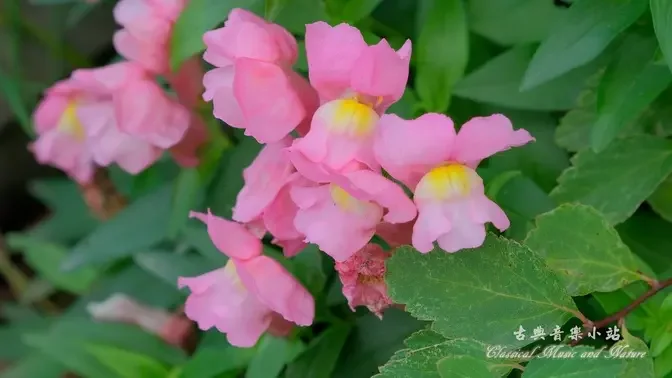
【Classical music and nature 古典音樂小站】Antonio Vivaldi: Sonata 5 - IV. Allegro. This beautiful piece was played by Telemann Trio. It has Creative Commons license (PDM 1.0 DEED, Public Domain Mark 1.0 Universal) and is provided through www.musopen.org. Antonio Vivaldi began composing operas while he was still working at the Ospedale della Pietà. Starting with Ottone in villa, first performed in Vicenza in 1713, over fifty operas were to follow by 1739. In addition to his position at the Ospedale della Pietà, Vivaldi increasingly took on the role of impresario at the Venetian Teatro Sant'Angelo. In 1716, on the occasion of the Venetian-Turkish war, Vivaldi composed a patriotic oratorio, Juditha triumphans, based on the Book of Judith. After disputes in Venice, he moved to Mantua in 1718, where he worked in the service of Prince Philip of Hesse-Darmstadt, mainly as artistic director and opera composer. After 1721 he travelled to Rome several times, performed twice for the Pope and received many commissions for opera and sacred music. In 1726 he returned to his native Venice as musical director of the Teatro Sant'Angelo. There he became a living legend, both as a composer and as a violin virtuoso, and a place of pilgrimage for many musicians from all over Europe. It was at this time that he met Anna Girò, then 16 years old, a singer of French origin (originally Giraud), who from then on accompanied him on his travels. Between 1729 and 1733, Vivaldi visited many northern Italian cities (Verona, Ancona, Reggio and Ferrara) and probably also Prague, where two of his operas were premiered. Around 1730, musical tastes began to change. Vivaldi's compositions were less and less appreciated by the Venetian public. This is probably why he moved to Vienna in 1740 to seek the support of Emperor Charles VI, who died in October 1740. Once the most famous musician in Europe, Vivaldi went unnoticed by the Viennese musical world. Vivaldi died ten months after his arrival in Vienna and was buried on 28 July 1741 in a simple grave in the Spitaller Gottsacker in front of the Kärntnertor, where the main building of the Vienna University of Technology (Karlsplatz 12) stands today. There is a commemorative plaque in his honour. Vivaldigasse in Vienna's Favoriten district was named after him in 1972. The flowers were filmed by Christian Schlegel, the video was edited by Wenjing Ma. 【古典音樂小站】安東尼奧·維瓦第:第五奏鳴曲 - 第四樂章 快板。這首美妙的作品由泰勒曼三重奏演奏。它擁有創意共用許可(PDM 1.0 DEED,公眾領域標誌 1.0 通用)並通過www.musopen.org提供。 安東尼奧·維瓦第在仍在皮耶塔孤兒院工作時開始創作歌劇。從1713年在維琴察首次上演的《奧托內在別墅》開始,到1739年共創作了五十多部歌劇。除了在皮耶塔孤兒院的職位外,維瓦第越來越多地扮演威尼斯聖安吉洛劇院的經紀人角色。1716年,為慶祝威尼斯-土耳其戰爭,維瓦爾第根據《朱迪特》一書創作了愛國劇《朱迪特凱旋》。 在與威尼斯發生爭執後,他於1718年搬到曼圖亞,在黑森-達姆施塔特的菲利普王子麾下工作,主要是藝術總監和歌劇作曲家。1721年後,他多次前往羅馬,兩次為教皇表演,並獲得許多歌劇和宗教音樂的委託。 1726年,他回到故鄉威尼斯,成為聖安吉洛劇院的音樂總監。在那裡,他成為了傳奇人物,無論是作為作曲家還是小提琴演奏家,都是許多來自歐洲各地的音樂家的朝聖之地。就在這個時候,他遇到了當時16歲的安娜·吉羅,她是法國裔的歌手(原名吉羅),從那時起陪伴他旅行。在1729年到1733年間,維瓦爾第訪問了許多意大利北部城市(維羅納、安科納、雷焦和費拉拉),可能還有布拉格,他的兩部歌劇在那裡首演。 大約在1730年左右,音樂品味開始改變。維瓦第的作品在威尼斯公眾中越來越不受青睞。這可能是他1740年搬到維也納尋求查理六世皇帝支持的原因,該皇帝於1740年10月去世。曾是歐洲最著名的音樂家的維瓦第,在維也納音樂界默默無聞。 維瓦第在抵達維也納十個月後去世,於1741年7月28日被埋葬在施皮塔勒戈茨阿克爾的一個簡單墓地中,該 地點今日為維也納科技大學(Karlsplatz 12)的主樓所在。那裡有一塊紀念他的銘牌。1972年,維也納法沃里滕區的維瓦第街(Vivaldigasse)以他的名字命名。 這些花由克里斯蒂安·舒萊格爾拍攝,影片由馬文璟剪輯。 #classicalmusic, #Music, #古典音樂, #klassischemusik, #GJWexclusive, #Switzerland, #Schweiz, #Natur, #Nature, #KlassischeMusikundNatur, #ClassicalMusicAndNature, #古典音樂小站,

【Classical music and nature 古典音樂小站】Vivaldi: Sonata 5 - III. Largo. This beautiful piece was played by Telemann Trio. It has Creative Commons license (PDM 1.0 DEED, Public Domain Mark 1.0 Universal) and is provided through www.musopen.org. At the age of 15, Antonio Vivaldi was tonsured and received his first lower ordination, which, according to the custom of the time, did not imply a decision in favour of the priesthood, but rather the goal of a higher social status. However, the decision to enter the clergy was made - more or less bindingly - when he received his first higher ordination as a subdeacon at the age of 18. He completed his priestly formation, which was less a theological study than a vocational training, in two nearby parishes. He was ordained a priest in 1703, only a year later than the earliest date allowed by canon law. He then became chaplain of the church of Santa Maria della Pietà and, at the request of Francesco Gasparini, violin teacher at the Ospedale della Pietà, an orphanage for girls attached to the church. He celebrated mass there for a year and a half. He then left the priesthood for good, citing health problems in a much later letter; he wrote of strettezza di petto, or "tightness of the chest", which could indicate angina pectoris or asthma. As can be seen from the pay slips of the Ospedale della Pietà, he was soon employed not only as a violin teacher, but also as a teacher of violoncello and viola all'inglese (viola da gamba). According to an anecdote, he also played the harpsichord. He was called Il Prete Rosso ("The Red Priest") because of the colour of his hair, inherited from his father Giambattista (known as Rossi or Rossetto). The video was captured by Christian in the Bernese Oberland, Switzerland, and was edited by Wenjing Ma. 【古典音樂小站】維瓦第:第五奏鳴曲 - 第三樂章 廣板。這首美麗的作品由泰勒曼三重奏演奏。它擁有創用CC授權(PDM 1.0 DEED,公眾領域標記1.0通用版)並通過www.musopen.org提供。 15歲時,安東尼奧·維瓦第接受剃髮儀式,並領受了他的首次初階聖職,根據當時的習俗,這並不意味著決定成為神職人員,而更多是追求更高的社會地位。然而,他在18歲時接受了作為副執事的首次高階聖職,或多或少地決定了他投身神職。他在兩個附近的教區完成了神職人員的培訓,這更像是職業培訓而非神學研究。 1703年,他被任命為神父,僅比教會法允許的最早日期晚一年。隨後,他成為聖瑪麗亞·德拉·皮耶塔教堂的牧師,應弗朗西斯科·加斯帕里尼的要求,成為了皮耶塔孤兒院(該教堂附設的女童孤兒院)的小提琴教師。他在那裡主持彌撒約一年半的時間。此後,他因健康問題永久離開了神職,他在後來的一封信中提到這一點;他寫到了胸部緊縮,這可能表明了心絞痛或哮喘。 從皮耶塔孤兒院的工資單上可以看出,他很快不僅成為了小提琴教師,還教授大提琴和英式中提琴(古提琴)。根據一則軼事,他還演奏過大鍵琴。 他因頭髮的顏色而被稱為“紅衣神父”(Il Prete Rosso),這是從他的父親喬凡尼·巴蒂斯塔(又名羅西或羅塞托)那裡遺傳來的。 這段影片由克里斯蒂安在瑞士伯恩高地拍攝,並由馬文璟剪輯。 #classicalmusic, #Music, #古典音樂, #klassischemusik, #GJWexclusive, #Switzerland, #Schweiz, #Natur, #Nature, #KlassischeMusikundNatur, #ClassicalMusicAndNature, #古典音樂小站, #WinterBeauty

【Classical music and nature 古典音樂小站】Vivaldi: Sonata 5 - II. Allegro. This beautiful piece was played by Telemann Trio. It has Creative Commons license (PDM 1.0 DEED, Public Domain Mark 1.0 Universal) and is provided through www.musopen.org. Antonio Vivaldi's father, Giovanni Battista Vivaldi, came to Venice from Brescia at the age of ten, where he worked as a barber like his father and later became a professional violinist. He married Camilla Calicchio, the daughter of a tailor, on 11 June 1676, and they had ten children. The second-born, his son Antonio (his eldest sister Gabriela Antonia had died in infancy), was said to have been born during an earthquake and baptised in an emergency (it is not known whether this was due to the disaster or whether his later health problems were already apparent at this time). In 1685 his father was employed as a violinist at St Mark's Cathedral; he enjoyed a good reputation as a musician, had many connections in Venetian musical life as a member of the Cäcilienverein, and was mentioned in a travel guide as a violin virtuoso worth listening to. Antonio was the only professional musician among his brothers and sisters. He showed musical talent on the violin at an early age and is said to have replaced his father in the orchestra in his youth! The flower was filmed by Simone Schlegel, and the video was edited by Wenjing Ma. 【古典音樂小站】維瓦第:第五奏鳴曲 - 第二樂章 快板。這首美麗的作品由泰勒曼三重奏演奏。它擁有創用CC授權(PDM 1.0 DEED,公眾領域標記1.0通用版)並通過www.musopen.org提供。 安東尼奧·維瓦第的父親,喬凡尼·巴蒂斯塔·維瓦第,十歲時從布雷西亞來到威尼斯,像他的父親一樣從事理髮師的工作,後來成為了專業小提琴手。1676年6月11日,他與裁縫之女卡米拉·卡利奇奧結婚,他們共育有十個孩子。次子安東尼奧(他的長姊加布里埃拉·安東尼婭在嬰兒時期就去世了),據說是在一場地震中出生的,並在緊急情況下受洗(尚不清楚這是否是因為災難,或他後來的健康問題在那時已經顯現)。 1685年,他的父親在聖馬可大教堂被聘為小提琴手;他作為一位音樂家享有良好的聲譽,作為西西里音樂協會的成員,在威尼斯音樂界有諸多聯繫,並在一本旅行指南中被提及為值得聆聽的小提琴演奏家。安東尼奧是他的兄弟姐妹中唯一的專業音樂家。他從小就在小提琴上展現出音樂才能,據說年輕時曾在管弦樂隊中替代他的父親! 這朵花由西蒙娜·舒萊格爾拍攝,影片由馬文璟剪輯。 #classicalmusic, #Music, #古典音樂, #klassischemusik, #GJWexclusive, #Switzerland, #Schweiz, #Natur, #Nature, #KlassischeMusikundNatur, #ClassicalMusicAndNature, #古典音樂小站,

【Classical music and nature 古典音樂小站】Antonio Vivaldi: Sonata 5 - I. Largo. This beautiful piece was played by Telemann Trio. It has Creative Commons license (PDM 1.0 DEED, Public Domain Mark 1.0 Universal) and is provided through www.musopen.org. Antonio Vivaldi wrote a set of six sonatas for cello and continuo, written between 1720 and 1730, and published in Paris in 1740 by Leclerc and Boivin. These sonatas were published without an opus number; sometimes they are improperly called op. 14. In addition to this publication, Vivaldi wrote at least four other cello sonatas. The manuscripts of two of these are kept in the library of the conservatories of Naples, and another is kept in the castle of Wiesentheid. One sonata in D minor (RV 38) has been lost. The video was captured by Simone Schlegel in Switzerland, the video was edited by Wenjing Ma. 【古典音樂小站】安東尼奧·維瓦第:第五奏鳴曲 - 第一樂章 慢板。這首美麗的作品由泰勒曼三重奏演奏。它擁有創用CC授權(PDM 1.0 DEED,公眾領域標記1.0通用版)並通過www.musopen.org提供。 安東尼奧·維瓦第在1720年至1730年間為大提琴和持續低音寫了一套六首奏鳴曲,並於1740年在巴黎由勒克萊爾和博萬出版。這些奏鳴曲在出版時沒有作品編號;有時它們被不正確地稱為作品14。除了這次出版,維瓦爾第至少又寫了四首大提琴奏鳴曲。其中兩部手稿保存在那不勒斯音樂院的圖書館,另一部保存在維森特海德城堡。一首D小調奏鳴曲(RV 38)已經遺失。 該視頻由西蒙娜·舒萊格爾在瑞士拍攝,視頻由馬文璟編輯。 #classicalmusic, #Music, #古典音樂, #klassischemusik, #GJWexclusive, #Switzerland, #Schweiz, #Natur, #Nature, #KlassischeMusikundNatur, #ClassicalMusicAndNature, #古典音樂小站,

【Classical Music and Nature 古典音樂小站】Antonio Vivaldi: Concerto in A Minor, Op. 3 No. 6 L'Estro Armonico. This beautiful piece was played by San Antonio Symphony Orchestra. It has Creative Commons license and is provided through www.musopen.org What is interesting about this performance is that it is not played as usual with the violin solos but with guitar solo. The piece has a freshness, lightness and is full of joy. The film was shot in January 2023 with a Fujifilm X-H2S. It was edited by Wenjing Ma. relaxing music, study music, studying music, music for studying, sleep music 【古典音樂小站】安東尼奧-韋瓦第:《A小調協奏曲》,作品3之6《L'Estro Armonico》。這首優美的作品由聖安東尼奧交響樂團演奏。它具有創作共用的許可,並通過www.musopen.org 提供。 這個表演的有趣之處在於,它沒有像往常那樣用小提琴獨奏,而是用吉他獨奏。這首曲子有一種清新、輕快的感覺,充滿了歡樂。 本片於2023年1月用富士X-H2S拍攝。它是由馬文璟編輯的。 放鬆音樂,學習音樂,睡眠音樂 #classicalmusic, #Music, #古典音樂, #klassischemusik, #GJWexclusive, #Switzerland, #Schweiz, #Natur, #Nature, #Vivaldi

【Classical Music and Nature 古典音樂小站】Vivaldi: Winter (The Four Seasons), Violin Concerto in F minor, RV 297 'Winter'. This beautiful piece was played by the Modena Chamber Orchestra. It has Creative Commons license and is provided through www.musopen.org This sunset was filmed near Beatenberg by Christian Schlegel in 2022. It was filmed with the Fujifilm X-H2S + Fujinon XF 16 mm F1.4 R WR lens. The film was edited by Wenjing Ma. relaxing music, study music, studying music, music for studying, sleep music 【古典音樂小站】維瓦爾第:《冬》(《四季》),F小調小提琴協奏曲,RV 297。這首優美的作品由摩德納室內樂團演奏。它具有知識共享許可,並通過www.musopen.org 提供。 這段日落是由克里斯蒂安-施萊格爾於2022年在瑞士比滕堡附近拍攝的。 它是用富士X-H2S+富士龍XF 16 mm F1.4 R WR鏡頭拍攝的。 該片由馬文璟剪輯。 放鬆音樂 學習音樂 睡眠音樂 #classicalmusic, #Music, #古典音樂, #klassischemusik, #GJWexclusive, #Switzerland, #Schweiz, #Natur, #Nature,#Vivaldi

【Classical Music and Nature 古典音樂小站】Vivaldi: Autumn (The Four Seasons), Violin Concerto in F major, RV 293 'Autumn'. This beautiful piece was played by the Modena Chamber Orchestra. It has Creative Commons license and is provided through www.musopen.org On the way home from Ruschain, Graubünden, Christian and Simone drove via the Furka mountain pass. There is a small private road there. You pay a small fee to support its upkeep and you are allowed to use it. The road leads even higher into the mountains than the pass road itself and provides the perfect base for wonderful shots. Some lichens that have overgrown large parts of the rock are bright yellow together with the white-turquoise coloured plants and the not so green grass gives the mountains a unique colour. These videos were taken in late autumn just before the onset of winter. The vegetation has retreated and the landscape looks as if it is preparing for hibernation. The cameras used were: Fujifilm X-H2S + Fujinon XF 16mm F1.4 R WR lens or Fujinon XF 60mm F2.4 R lens; Fujifilm X-H2S + Fujinon XF 18-120mm F4 LM PZ WR. Tascam DR-40, Rode Wireless Go 2 and Fujifilm MIC-ST1 were used for audio recording. The film was edited by Wenjing Ma. relaxing music, study music, studying music, music for studying, sleep music 【古典音樂小站】維瓦爾第:《秋》(《四季》),F大調小提琴協奏曲,RV 293。這首優美的作品由摩德納室內樂團演奏。它具有知識共享許可,並通過www.musopen.org 提供。 在從瑞士格勞賓登州的魯沙因回家的路上,克里斯蒂安和西蒙娜開車經過富爾卡山口。那裡有一條小的私人道路。你支付少量費用以支持其維護,並允許你使用它。這條路比山口路本身還要高,為拍攝精彩鏡頭提供了完美的基礎。一些地衣已經覆蓋了大部分的岩石,與白綠相間的植物一起呈現出明亮的黃色,不那麼綠的草也給山林帶來了獨特的色彩。這些視頻是在深秋時節拍攝的,正值冬季來臨之前。植被已經退去,景觀看起來就像在準備冬眠。 使用的相機是: 富士X-H2S + 富士龍XF 16mm F1.4 R WR鏡頭 或富士龍XF 60mm F2.4 R鏡頭。 富士X-H2S + 富士龍XF 18-120mm F4 LM PZ WR。 Tascam DR-40、Rode Wireless Go 2和Fujifilm MIC-ST1用於錄音。 本片由馬文璟剪輯。 放鬆音樂 學習音樂 睡眠音樂 #classicalmusic, #Music, #古典音樂, #klassischemusik, #GJWexclusive, #Switzerland, #Schweiz, #Natur, #Nature,#Vivaldi

【Classical Music and Nature 古典音樂小站】Vivaldi: Summer (The Four Seasons), Violin Concerto in G minor, RV 315 'Summer'. This beautiful piece was played by the Modena Chamber Orchestra. It has Creative Commons license and is provided through www.musopen.org The filming locations were: Ruschain (Graubünden, Switzerland) in the garden of friends, Riederalp, and in their own garden. The breathtaking landscape and cute flowers were filmed by Simone and Christian Schlegel in 2022. The cameras used were: Fujifilm X-H2S + Fujinon XF 16 mm F1.4 R WR lens; Fujifilm X-Pro3 + Fujinon XF 18-135mm F3.5-5.6 R OIS WR lens; Fujifilm X-T1 + Fujinon XF18-55mm F2.8-4 R LM OIS lens or XF 60mm F2.4 R lens. For recording audio they use Tascam DR-40, Rode Wireless Go 2 and Fujifilm MIC-ST1. The film was edited by Wenjing Ma. relaxing music, study music, studying music, music for studying, sleep music 【古典音樂小站】維瓦爾第:《夏天》(《四季》),G小調小提琴協奏曲,RV315。這首優美的作品由摩德納室內樂團演奏。它具有知識共享的許可,並通過www.musopen.org 提供。 拍攝地點是 Ruschain(瑞士格勞賓登州)在朋友的花園裡,Riederalp,以及他們自己的花園裡。 令人嘆為觀止的風景和可愛的花朵是由西蒙娜和克里斯蒂安-施萊格爾在2022年拍攝的。 使用的相機是: 富士X-H2S + 富士龍XF 16 mm F1.4 R WR鏡頭。 富士X-Pro3 + 富士龍XF 18-135mm F3.5-5.6 R OIS WR鏡頭。 富士X-T1 + 富士龍XF18-55mm F2.8-4 R LM OIS鏡頭或XF 60mm F2.4 R鏡頭。 對於錄音,他們使用Tascam DR-40,Rode Wireless Go 2和Fujifilm MIC-ST1。 該片由馬文璟剪輯。 放鬆音樂 學習音樂 睡眠音樂 #classicalmusic, #Music, #古典音樂, #klassischemusik, #GJWexclusive, #Switzerland, #Schweiz, #Natur, #Nature, #Vivaldi

【Classical Music and Nature 古典音樂小站】Vivaldi: Spring (The Four Seasons), Violin Concerto in E major, RV 269. This beautiful piece was played by the Modena Chamber Orchestra. It has Creative Commons license and is provided through www.musopen.org The filming location was near the beautiful Tellenburg ruins overlooking Frutigen, Switzerland. It was shot by Simone Schlegel in 2022. The cameras used were Fujifilm X-H2S + XF18-120mm F4 LM PZ WR and Fujifilm X-H2S + Fujinon XF 16 mm F1.4 R WR lens. And yes, before you ask, they (Simone and Christian) own two Fujifilm X-H2S cameras, because when the scenery and weather are really stunningly beautiful, you often don't know where to point the camera. So a second X-H2S was added to the small Fujifilm fleet. (2x Fujifilm X-H2S, Fujifilm X-Pro3, Fujifilm X-Pro1 and Fujifilm X-T1. The audio recorders use are Tascam DR-40, Rode Wireless Go 2 and Fujifilm MIC-ST1). The film was edited by Wenjing Ma. relaxing music, study music, studying music, music for studying, sleep music 【古典音樂小站】維瓦爾第:《春天》(《四季》),E大調小提琴協奏曲,RV269。這首優美的作品由摩德納室內樂團演奏。它具有知識共享許可,並通過www.musopen.org 提供。 拍攝地點在俯瞰瑞士弗魯蒂根的美麗泰倫堡遺址附近。該片由西蒙娜-施萊格爾在2022年拍攝。使用的相機是富士X-H2S + XF18-120mm F4 LM PZ WR和富士X-H2S + Fujinon XF 16 mm F1.4 R WR鏡頭。 是的,在你問之前,他們(Simone和Christian)擁有兩台富士X-H2S相機,因為當風景和天氣真的令人驚嘆的時候,你往往不知道該把相機指向哪裡。因此,第二台X-H2S被添加到富士膠片的小艦隊。 (2個Fujifilm X-H2S,Fujifilm X-Pro3,Fujifilm X-Pro1和Fujifilm X-T1。使用的錄音機是Tascam DR-40、Rode Wireless Go 2和Fujifilm MIC-ST1)。本片由馬文璟剪輯。 放鬆音樂 學習音樂 睡眠音樂 #classicalmusic, #Music, #古典音樂, #klassischemusik, #GJWexclusive, #Switzerland, #Schweiz, #Natur, #Nature, #Vivaldi
 Technology for HumanityGan Jing World is dedicated to promote kindness, respect, and trust among people. Our non-addictive content prioritizes meaningful information, while upholding freedom of speech and user privacy.
SUBSCRIBESign In