
✖ All music and images copyrights belong to original artists and distributors. La bohème (French pronunciation: [la bɔ.ɛm], Italian: [la boˈɛm]) is an opera in four acts, composed by Giacomo Puccini to an Italian libretto by Luigi Illica and Giuseppe Giacosa, based on Scènes de la vie de bohème by Henri Murger. The world premiere performance of La bohème was in Turin on 1 February 1896 at the Teatro Regio, conducted by the young Arturo Toscanini; its U.S. premiere took place the next year, 1897, in Los Angeles. Since then, La bohème has become part of the standard Italian opera repertory and is one of the most frequently performed operas worldwide. In 1946, fifty years after the opera's premiere, Toscanini conducted a performance of it on radio with the NBC Symphony Orchestra. This performance was eventually released on records and on compact disc. It is the only recording of a Puccini opera by its original conductor

✖ All music and images copyrights belong to original artists and distributors. La gazza ladra (Italian pronunciation: [la ˈɡaddza ˈlaːdra], The Thieving Magpie) is a melodramma or opera semiseria in two acts by Gioachino Rossini, with a libretto by Giovanni Gherardini based on La pie voleuse by Jean-Marie-Theodor Badouin d'Aubigny and Louis-Charles Caigniez. The composer Giaochino Rossini wrote quickly, and La gazza ladra was no exception. According to legend, before the first performance of the opera, the producer assured the composition of the overture by locking Rossini in a room, from the window of which the composer threw out the sheets of music to the copyists who then wrote the orchestral parts, to complete the composition of the opera. As such, The Thieving Magpie is best known for the overture, which is musically notable for its use of snare drums. The unique inspiration in the melodies is extreme, famously used to bizarre and dramatic effect in Stanley Kubrick's A Clockwork Orange. This memorable section in Rossini's overture invokes the image of the opera's main subject: a clever, devilishly thieving magpie.

✖ All music and images copyrights belong to original artists and distributors. Performed by Cecilia Bartoli "Ombra mai fu" is the opening aria from the 1738 opera Serse by George Frideric Handel. The opera was a commercial failure, lasting only five performances in London after its premiere. In the 19th century, however, this aria was rediscovered and became one of Handel's best-known pieces. Handel adapted the aria from the setting by Giovanni Bononcini who, in turn, adapted it from the setting by Francesco Cavalli. All three composers had produced settings of the same opera libretto by Nicolò Minato. Originally composed to be sung by a soprano castrato (and sung in modern performances of Serse by a countertenor, contralto or a mezzo-soprano), it has often been arranged for other voice types and instruments, including solo organ, solo piano, violin and piano, and string ensembles, often under the title "Largo from Xerxes", although the original tempo is marked larghetto.

✖ All music and images copyrights belong to original artists and distributors. The Marriage of Figaro (Italian: Le nozze di Figaro, pronounced [le ˈnɔttse di ˈfiːɡaro]), K. 492, is an opera buffa (comic opera) in four acts composed in 1786 by Wolfgang Amadeus Mozart, with an Italian libretto written by Lorenzo Da Ponte. It premiered at the Burgtheater in Vienna on 1 May 1786. The opera's libretto is based on a stage comedy by Pierre Beaumarchais, La folle journée, ou le Mariage de Figaro (first performed in 1784). The Marriage of Figaro is now regarded as a cornerstone of the standard operatic repertoire, and it appears among the top ten at the Operabase list of the most-performed operas worldwide.

Performed by Jaume Aragall ✖ All music and images copyrights belong to original artists and distributors. "Vesti la giubba" ("Put on the costume", sometimes translated as "On With the Motley") is a famous tenor aria from Ruggero Leoncavallo's 1892 opera Pagliacci. "Vesti la giubba" is sung at the conclusion of the first act, when Canio discovers his wife's infidelity, but must nevertheless prepare for his performance as Pagliaccio the clown because "the show must go on". The aria is often regarded as one of the most moving in the operatic repertoire of the time. The pain of Canio is portrayed in the aria and exemplifies the entire notion of the "tragic clown": smiling on the outside but crying on the inside. This is still displayed today, as the clown motif often features the painted-on tear running down the cheek of the performer. The 1902 recording of the aria, sung by Enrico Caruso, was the first million-selling record in history. This aria is often used in popular culture, and has been featured in many renditions, mentions, and spoofs.

✖ All music and images copyrights belong to original artists and distributors. "La donna è mobile" [la ˈdɔnna ɛ mˈmɔːbile] (The woman is fickle) is the Duke of Mantua's canzone from the beginning of act 3 of Giuseppe Verdi's opera Rigoletto (1851). The canzone is famous as a showcase for tenors. Raffaele Mirate's performance of the bravura aria at the opera's 1851 premiere was hailed as the highlight of the evening. Before the opera's first public performance (in Venice), the song was rehearsed under tight secrecy:[1] a necessary precaution, as "La donna è mobile" proved to be incredibly catchy, and soon after the song's first public performance, every gondolier in Venice was singing it. As the opera progresses, the reprise of the tune in the following scenes exemplifies a sense of confusion, as Rigoletto realizes that from the sound of the Duke's lively voice coming from within the tavern (offstage), the body in the sack over which he had grimly triumphed, was not that of the Duke after all: Rigoletto had paid Sparafucile, an assassin, to kill the Duke, but Sparafucile had deceived Rigoletto by indiscriminately killing Gilda, Rigoletto's beloved daughter, instead. The song is an irony, as no character in the opera presents traits associated with rationality; every character may be considered callous and mobile ("inconstant").

✖ All music and images copyrights belong to original artists and distributors. Carmen (French pronunciation: [kaʁmɛn]; Spanish: [ˈkarmen]) is an opera in four acts by the French composer Georges Bizet. The libretto was written by Henri Meilhac and Ludovic Halévy, based on a novella of the same title by Prosper Mérimée. The opera was first performed at the Opéra-Comique in Paris, on 3 March 1875, and was not well received, largely due to its breaking of convention and controversial main characters, which shocked and scandalized its first audiences. Bizet died suddenly after the 33rd performance, and therefore was unaware of its outstanding success in Vienna later that year, or that it would win enduring international acclaim within the next ten years. Carmen has since become one of the most popular and frequently-performed operas in the classical canon; the "Habanera" from act 1 and the "Toreador Song" from act 2 are among the best known of all operatic arias. The opera, written in the genre of opéra comique with musical numbers separated by dialogue, is set in southern Spain, and tells the story of the downfall of Don José, a naïve soldier who is seduced by the wiles of the fiery gypsy, Carmen. José abandons his childhood sweetheart and deserts from his military duties, yet loses Carmen's love to the glamorous toreador Escamillo, after which José kills her in a jealous rage. The depictions of proletarian life, immorality and lawlessness, and the tragic death of the main character on stage, broke new ground in French opera and were highly controversial. After the premiere, most reviews were critical, and the French public was generally indifferent. Carmen initially gained its reputation through a series of productions outside France, and was not revived in Paris until 1883; thereafter it rapidly acquired celebrity at home and abroad. Later commentators have asserted that Carmen forms the bridge between the tradition of opéra comique and the realism or verismo that characterised late 19th-century Italian opera. The music of Carmen has since been widely acclaimed for brilliance of melody, harmony, atmosphere and orchestration, and for the skill with which Bizet musically represented the emotions and suffering of his characters. After the composer's death the score was subject to significant amendment, including the introduction of recitative in place of the original dialogue; there is no standard edition of the opera, and different views exist as to what versions best express Bizet's intentions. The opera has been recorded many times since the first acoustical recording in 1908, and the story has been the subject of many screen and stage adaptations.

✖ All music and images copyrights belong to original artists and distributors. Performed by Sherill Milnes The Barber of Seville, or The Futile Precaution (Italian: Il barbiere di Siviglia, ossia L'inutile precauzione [il barˈbjɛːre di siˈviʎʎa osˈsiːa l iˈnuːtile prekautˈtsjoːne]) is an opera buffa in two acts by Gioachino Rossini with an Italian libretto by Cesare Sterbini. The libretto was based on Pierre Beaumarchais's French comedy Le Barbier de Séville (1775). The première of Rossini's opera (under the title Almaviva, o sia L'inutile precauzione) took place on 20 February 1816 at the Teatro Argentina, Rome. Rossini's Barber has proven to be one of the greatest masterpieces of comedy within music, and has been described as the opera buffa of all "opere buffe". Even after two hundred years, it remains a popular production. "Largo al factotum" (Make way for the factotum) is an aria from The Barber of Seville by Gioachino Rossini, sung at the first entrance of the title character; the repeated "Figaro"s before the final patter section are an icon in popular culture of operatic singing. The term "factotum" refers to a general servant and comes from the Latin where it literally means "do everything." Due to the constant singing of triplets in 6/8 meter at an allegro vivace tempo, the piece is often noted as one of the most difficult baritone arias to perform. This, along with the tongue-twisting nature of some of the lines, insisting on Italian superlatives (always ending in "-issimo"), have made it a pièce de résistance in which a skilled baritone has the chance to highlight all of his qualities. The opera's overture and this aria have been famously parodied in animated cartoons starring Woody Woodpecker (The Barber of Seville), Bugs Bunny (Rabbit of Seville and Long-Haired Hare), Porky Pig and Daffy Duck (You Ought to Be in Pictures), Sylvester (Back Alley Oproar), Tom and Jerry (The Cat Above and the Mouse Below), as well as in Tex Avery's Magical Maestro, Warner Bros' One Froggy Evening and 20th Century Fox's Mrs. Doubtfire.
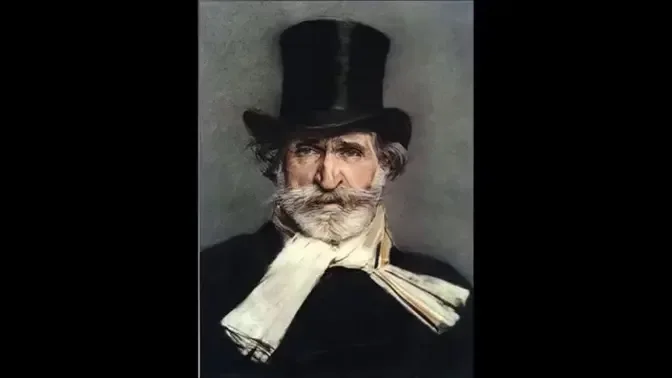
✖ All music and images copyrights belong to original artists and distributors. Performed by Placido Domingo "Libiamo ne' lieti calici" (Italian pronunciation: [liˈbjaːmo nɛ ˈljɛːti ˈkaːlitʃi]; "Let's drink from the joyful cups") is a famous duet with chorus from Verdi's La traviata, one of the best-known opera melodies and a popular performance choice (as is this opera itself) for many great tenors. The song is a brindisi, a lively song that encourages the drinking of wine or other alcoholic beverages.

All music and images copyrights belong to original artists and distributors. The William Tell Overture is the overture to the opera William Tell (original French title Guillaume Tell), whose music was composed by Gioachino Rossini. William Tell premiered in 1829 and was the last of Rossini's 39 operas, after which he went into semi-retirement, although he continued to compose cantatas, sacred music and secular vocal music. The overture is in four parts, each following without pause. There has been repeated use (and sometimes parody) of parts of this overture in both classical music and popular media, most famously as the theme music for The Lone Ranger in radio, television and film. It was also used as the theme music for the British television series The Adventures of William Tell. Franz Liszt prepared a piano transcription of the overture in 1838 (S.552) which became a staple of his concert repertoire. There are also transcriptions by other composers, including versions by Louis Gottschalk for two and four pianos and a duet for piano and violin.

Leo Delibes - The Flower Duet [HQ] | Best of Opera ✖ All music and images copyrights belong to original artists and distributors. Performed by Natalie Dessay (Soprano) & Delohine Haidan (Mezzo Soprano) The "Flower Duet" (French: Duo des fleurs / Sous le dôme épais) is a famous duet for sopranos from Léo Delibes' opera Lakmé, first performed in Paris in 1883. The duet takes place in act 1 of the three-act opera, between characters Lakmé, the daughter of a Brahmin priest, and her servant Mallika, as they go to gather flowers by a river. The duet is frequently used in advertisements and films and is popular as a concert piece. It was adapted for the theme "Aria on air" for the British Airways "face" advertisements of the 1980s by music composers Yanni and Malcolm McLaren. David Usher used a sample of the record in his 2001 song "Black Black Heart."

✖ All music and images copyrights belong to original artists and distributors. Performed by Jose Carreras "Nessun dorma" (Italian: [nesˈsun ˈdɔrma]; English: "None shall sleep") is an aria from the final act of Giacomo Puccini's frequently performed opera Turandot and is one of the best-known tenor arias in all opera. It is sung by Calaf, il principe ignoto (the unknown prince), who falls in love at first sight with the beautiful but cold Princess Turandot. However, any man who wishes to wed Turandot must first answer her three riddles; if he fails, he will be beheaded. In the aria, Calaf expresses his triumphant assurance that he will win the princess. Although "Nessun dorma" has long been a staple of operatic recitals, Luciano Pavarotti popularized the piece beyond the opera world in the 1990s following his performance of it for the 1990 World Cup. Both Pavarotti and Plácido Domingo released singles of the aria that charted in the United Kingdom, and it appeared on the best selling classical album of all time, The Three Tenors in Concert. Since that time, many crossover artists have performed and recorded it. The aria has been sung often in movies and on television. Unusually for a classical piece, it has become a part of popular culture. The Spirit of Orchestral Music
 Technology for HumanityGan Jing World is dedicated to promote kindness, respect, and trust among people. Our non-addictive content prioritizes meaningful information, while upholding freedom of speech and user privacy.
SUBSCRIBESign In