


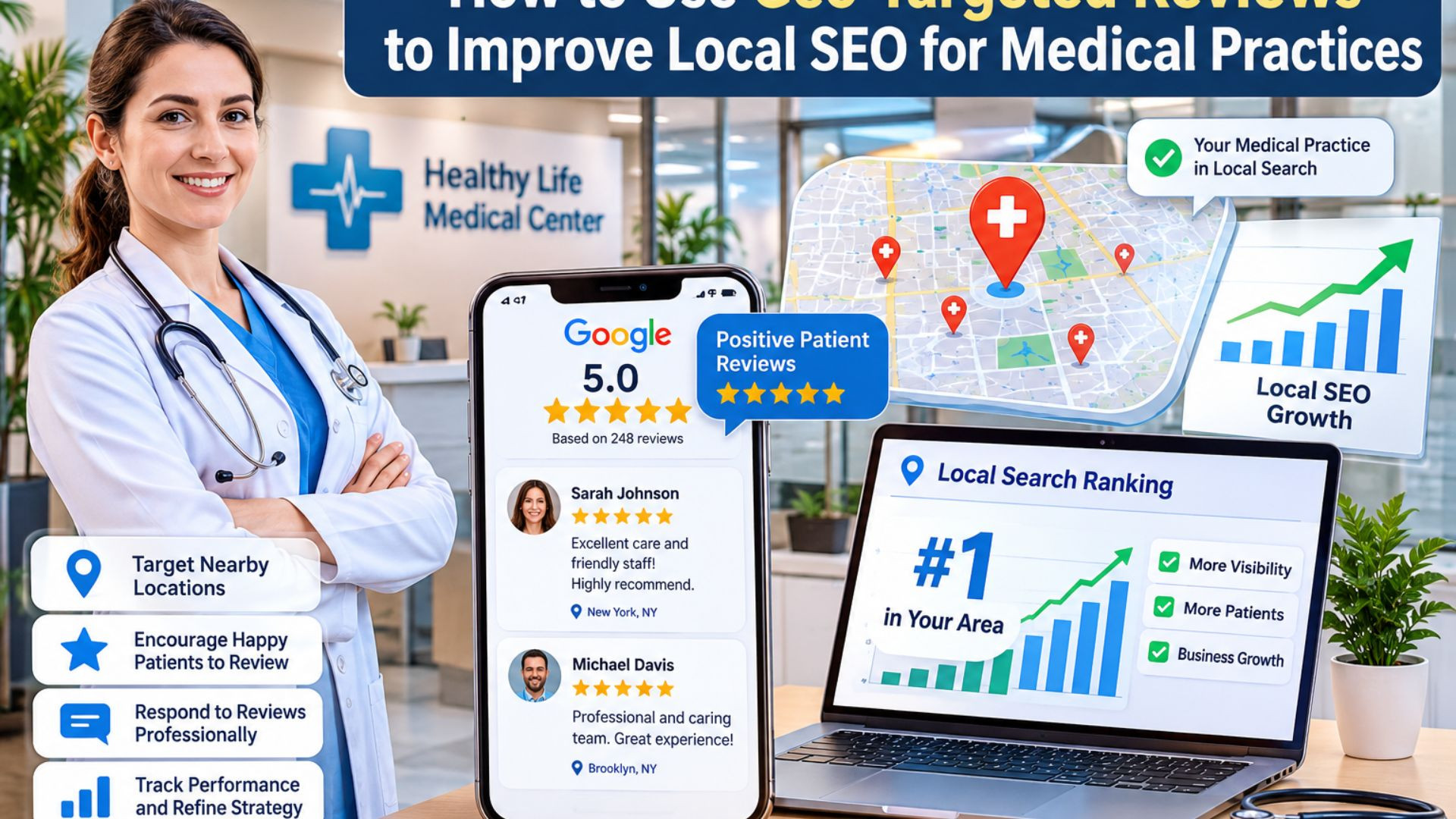
Have you ever wondered why some medical practices appear at the top of local search results while others struggle to attract nearby patients? The answer often lies in their local SEO strategy, particularly how they manage and leverage patient reviews. Geo-targeted reviews for medical practices strengthen their online presence, build patient trust, and improve visibility in location-based searches.
Geo-targeted reviews are patient testimonials that provide relevant location information, helping prospective patients identify healthcare providers serving their area. When managed ethically and consistently, these reviews can support local search visibility while influencing patients' decisions when choosing a doctor, clinic, or healthcare facility.
Let's explore how medical practices can use location-specific patient reviews to improve local SEO and attract more patients.
What Are Geo-Targeted Reviews for Medical Practices?
Geo-targeted reviews are online patient reviews associated with a particular geographical area, city, neighborhood, or healthcare service location. They help search engines and potential patients understand where a medical practice operates and which communities it serves.
For example, a review mentioning a dental clinic in Dallas or a dermatology practice in Austin provides location-related context that may help prospective patients evaluate nearby healthcare options.
These reviews can appear on platforms such as:
- Google Business Profile
- Healthcare directories
- Yelp
- Healthgrades
The key is to encourage genuine patient feedback without manipulating review content or asking patients to include specific keywords or locations.
Why Are Geo-Targeted Reviews Important for Local SEO?
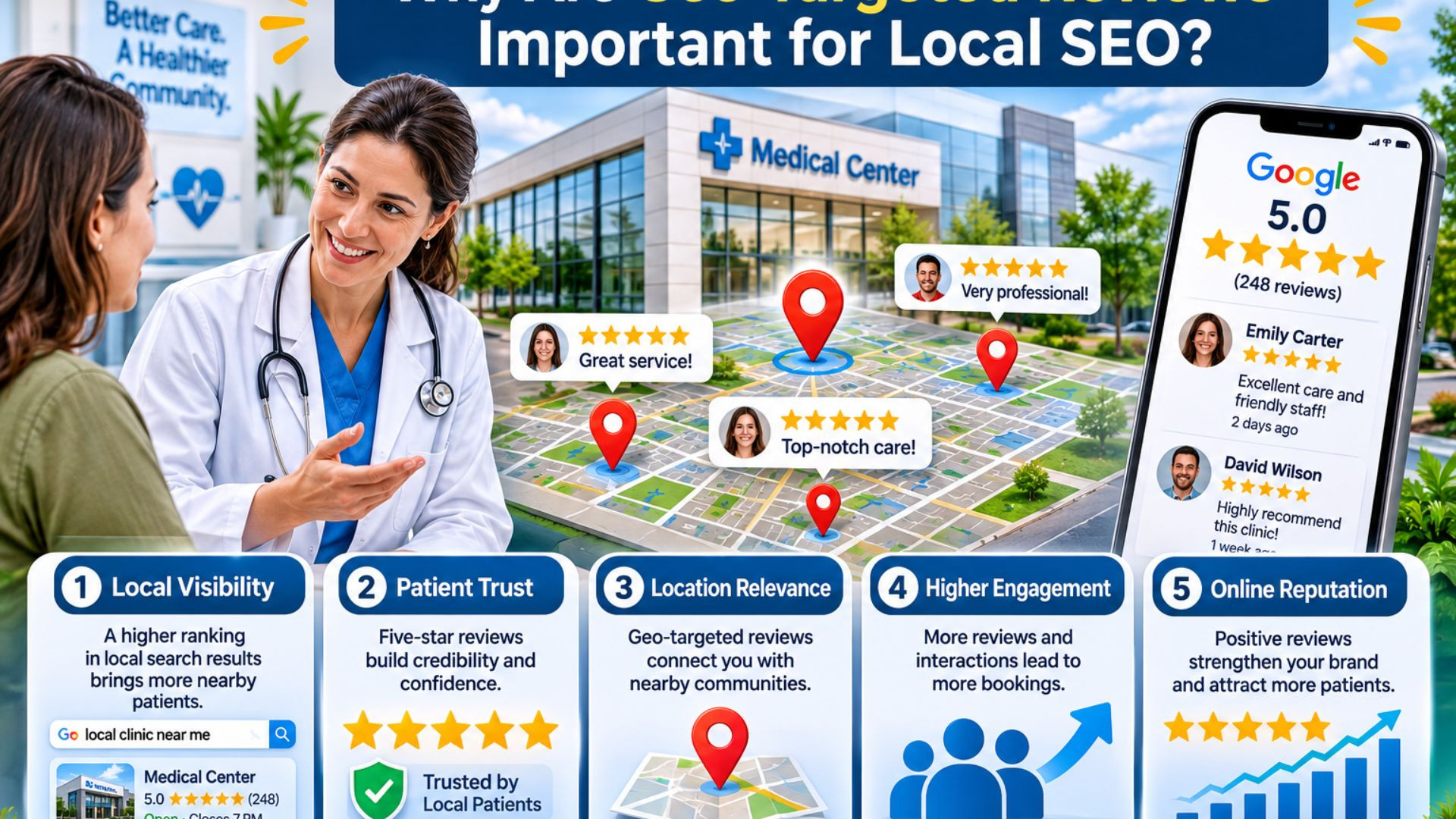
Local SEO helps medical practices become more visible when people search for healthcare services in their surrounding areas.
Geo-targeted reviews contribute to this strategy in several ways.
1. Improve Local Search Visibility
Google considers relevance, distance, and prominence when determining local search rankings. Reviews contribute to prominence by helping establish a business's reputation and credibility.
Consistent, authentic patient feedback can strengthen a medical practice's online presence and support its local SEO efforts.
2. Build Trust Among Local Patients
Patients often compare multiple healthcare providers before scheduling an appointment. Positive reviews describing genuine experiences can help them feel more confident about their choices.
Location-specific feedback also helps patients identify practices that serve their communities.
3. Strengthen Local Brand Reputation
A steady flow of authentic reviews demonstrates that a medical practice actively engages with its patients. Responding professionally to feedback further reinforces credibility and demonstrates a commitment to patient experience.
4. Support Location-Based Search Intent
People frequently search using phrases such as:
- Best dentist near me
- Family doctor in Chicago
- Dermatologist in Houston
- Pediatric clinic near downtown
Reviews containing naturally occurring location references can provide additional context about a practice's service area.
However, reviews alone cannot guarantee higher rankings. They should complement a broader local SEO strategy.
How to Use Geo-Targeted Reviews to Improve Local SEO for Medical Practices
Implementing an effective review strategy requires consistency, ethical practices, and attention to patient experience.
Here are some practical steps medical practices can follow.
1. Optimize Your Google Business Profile
Start by creating or updating your Google Business Profile with accurate information, including:
- Medical practice name
- Correct address and contact details
- Operating hours
- Healthcare categories
- Services offered
- Appointment booking information
Ensure that your business information remains consistent across relevant online directories.
2. Encourage Authentic Patient Reviews
Ask patients to share honest feedback after their appointments. You can send review invitations through email, SMS, or follow-up communications.
Make the process simple by providing a direct link to your review platform.
Remember:
- Never purchase fake reviews.
- Avoid offering incentives in exchange for positive feedback.
- Do not selectively request reviews only from satisfied patients.
- Never pressure patients to disclose sensitive medical information.
3. Respond to Patient Reviews Professionally
Responding to reviews demonstrates that your practice values patient feedback.
Thank patients for sharing their experiences and address general concerns professionally. Avoid confirming whether someone is a patient or discussing diagnoses, treatments, appointments, or other protected health information.
A thoughtful response can strengthen your reputation while demonstrating responsible patient communication.
4. Build Location-Specific Website Content
Create dedicated website pages for each legitimate clinic location.
For example, a healthcare organization operating in multiple cities can develop individual pages featuring:
- Location-specific contact information
- Available medical services
- Practitioner details
- Office hours
- Directions and accessibility information
- Relevant patient resources
This approach helps search engines understand where each practice operates.
Use genuine patient testimonials only with appropriate authorization and privacy safeguards. Do not create misleading location-specific review content.
5. Monitor and Analyze Review Performance
Track your online reputation regularly to understand how patients perceive your services.
Monitor important indicators such as:
- Review volume and recency
- Average ratings
- Common patient feedback themes
- Response rates
- Website visits from local searches
- Appointment inquiries and conversions
Use these insights to identify opportunities to improve patient experiences and strengthen your local marketing strategy.
Best Practices for Managing Geo-Targeted Reviews in Healthcare
Healthcare businesses must balance digital marketing goals with patient privacy and professional responsibilities.
Consider these best practices:
- Prioritize authenticity: Encourage honest feedback rather than scripted testimonials.
- Protect patient privacy: Follow applicable healthcare privacy regulations, including HIPAA where relevant.
- Maintain consistency: Keep business information accurate across platforms.
- Avoid keyword manipulation: Never ask patients to insert specific SEO phrases into their reviews.
- Respond with care: Use professional, respectful, and privacy-conscious language.
- Follow platform policies: Understand each review platform's guidelines before requesting or publishing testimonials.
An effective review management strategy should prioritize patient trust rather than simply increasing review counts.
How Can Geo-Targeted Reviews Help Medical Practices Grow?
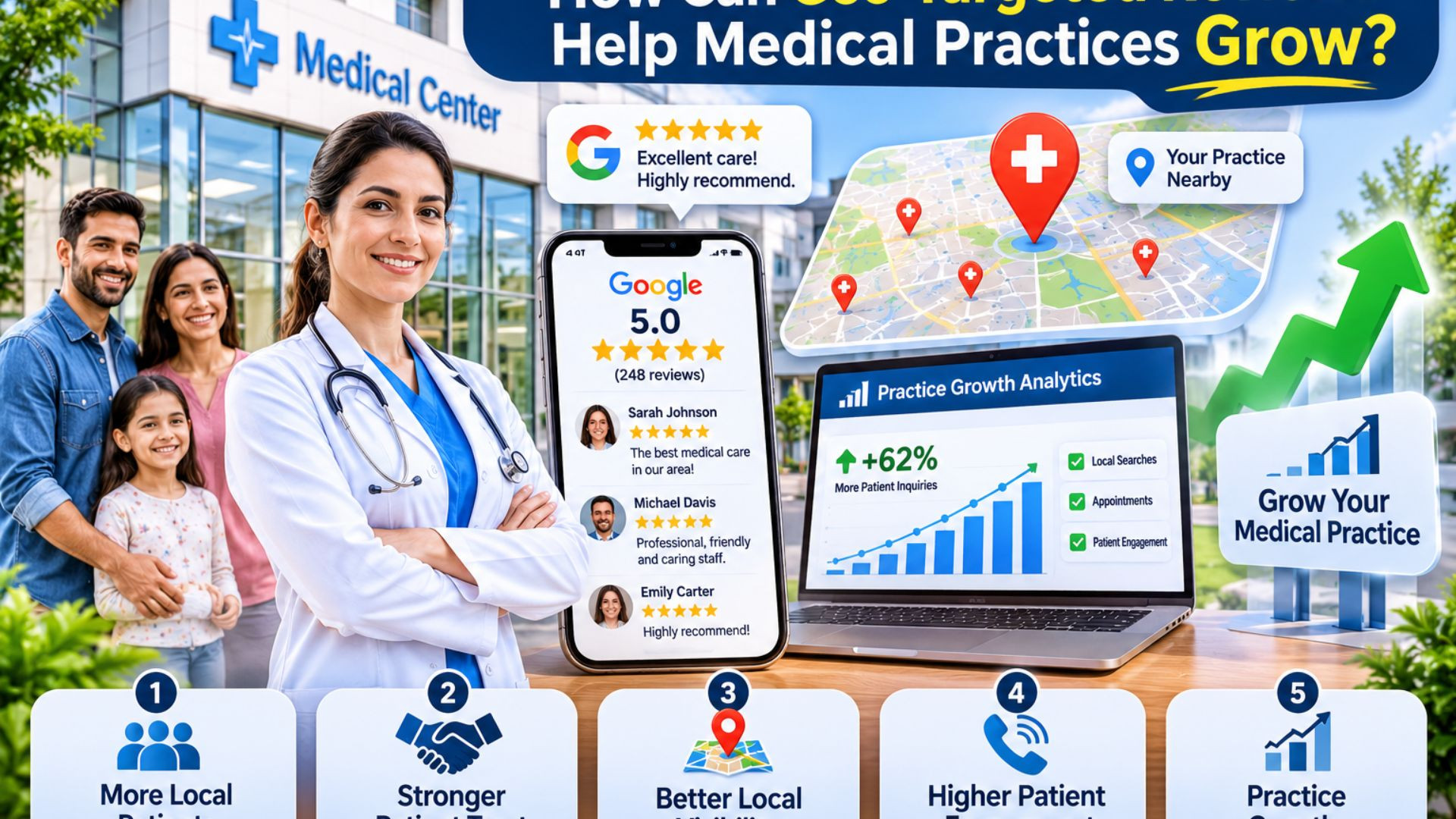
Geo-targeted reviews for medical practice growth by improving online reputation, strengthening local relevance, and helping prospective patients make informed decisions.
When combined with optimized website content, accurate business listings, and consistent patient communication, reviews become an important part of a comprehensive local SEO strategy.
Medical practices that actively manage their online reputation are better positioned to build trust and connect with people searching for healthcare services in their communities.
Frequently Asked Questions (FAQs)
What are geo-targeted reviews in healthcare?
Geo-targeted reviews are authentic patient testimonials associated with a particular geographical location. They help prospective patients understand a healthcare provider's local presence and reputation.
Do patient reviews improve local SEO rankings?
Reviews can contribute to local search prominence and influence patient engagement. However, Google also considers relevance and distance, so reviews alone do not guarantee higher rankings.
How can medical practices get more local reviews?
Practices can encourage honest feedback through post-appointment emails, SMS invitations, and convenient review links. Requests should be neutral and comply with applicable privacy and platform policies.
Which platforms are best for medical practice reviews?
Google Business Profile is an important platform for local visibility. Healthcare-specific directories such as Healthgrades and other relevant local review platforms can also support reputation management.
How often should medical practices monitor reviews?
Medical practices should monitor reviews regularly, ideally several times per week, and establish a consistent process for responding to feedback while protecting patient privacy.
Summary
Geo-targeted reviews can help medical practices strengthen their local SEO strategy, build patient confidence, and improve their online reputation. By encouraging authentic patient feedback, maintaining an optimized Google Business Profile, and responding professionally to reviews, healthcare providers can improve their visibility among nearby communities.
The most effective approach focuses on genuine patient experiences, consistent review management, and privacy-conscious communication. Rather than chasing review numbers, medical practices should prioritize trust, transparency, and better patient experiences to support sustainable local growth.
Comments