


A recurring childhood memory is of time spent sitting in front of the piano, half-heartedly tapping the keys, waiting for dinner to be served. My grandmother’s kitchen was small, cramped and crowded, the walls stained by smoke from the wok. Her speciality was stir-frying rice and noodles on high heat, despite the flames licking at her slim fingers.
My grandmother, Chen Suzhen, attended culinary school after she had retired in her 60s, but most of her cooking knowledge came from being the eldest of six siblings, struggling through World War II and the Chinese Civil War, as well as taking care of her extended family through the Cultural Revolution. She had been forced to cook because she had mouths to feed, but she has also been able to weave flavours into a protective shroud, surrounding and protecting the people she cares about.

Writer Tracy Wen Liu’s grandmother and parents, Zhu Jindong and Liu Zhongwei. Photo: Graeme Kennedy
Scallion oil noodles
I grew up with my grandparents in Jiangsu province, as both of my parents travelled a lot for work. My grandmother was an accountant for a large, state-owned enterprise, but she also took care of all the housework, and was sociable and well liked in our community, where everyone knew each other. While my grandfather could never remember where his clothes were when the seasons changed, my grandmother had committed everyone’s culinary preferences to memory and made sure there was always something tailored to each person in every meal. She never mentioned her own preferences.
One of our breakfast staples was Shanghai-style scallion oil noodles, a humble yet satisfying dish that was my father Liu Zhongwei’s favourite. The ingredients were cheap and easy to procure, the preparation was simple and beginner-friendly, but the final result would be loaded with strong flavours to wake up the taste buds at the beginning of a busy day.

Scallion oil noodles. Photo: Graeme Kennedy
The key flavour of the dish comes from heating oil in a wok over medium-low heat and infusing it with scallions cut into one- to two-inch-long strips. My grandmother would sauté the white parts of the scallions first, and add the green parts when the white parts had turned brown. When all of the scallions had goldened, she would remove them and set them aside, then deglaze the wok with a mixture of soy sauce, sugar and vinegar (4 tablespoons of dark soy sauce, 2 tablespoons of light soy sauce, 2 tablespoons of sugar and 1 tablespoon of vinegar) and let it simmer for two to three minutes. This sauce is quintessential to traditional Shanghainese cuisine, and I have used this recipe from my grandma to surprise friends from all over the world with complex yet harmonious flavours. To finish the dish, pour the sauce onto your cooked noodles, add scallions both cooked and fresh, and some sesame seeds. The sauce can also be used as a base to elevate the flavours of chicken, pork chops, fish and more.
Egg fried rice
If I were to choose a dish to represent my grandma, it would be egg fried rice. It’s a simple dish that most Chinese families love – each family has their own recipe – and it was this that she resorted to making during times of economic hardship and societal disruption. Frequently, my grandma’s egg fried rice contained whatever ingredients she was able to find, such as vegetables she had picked in the wild.
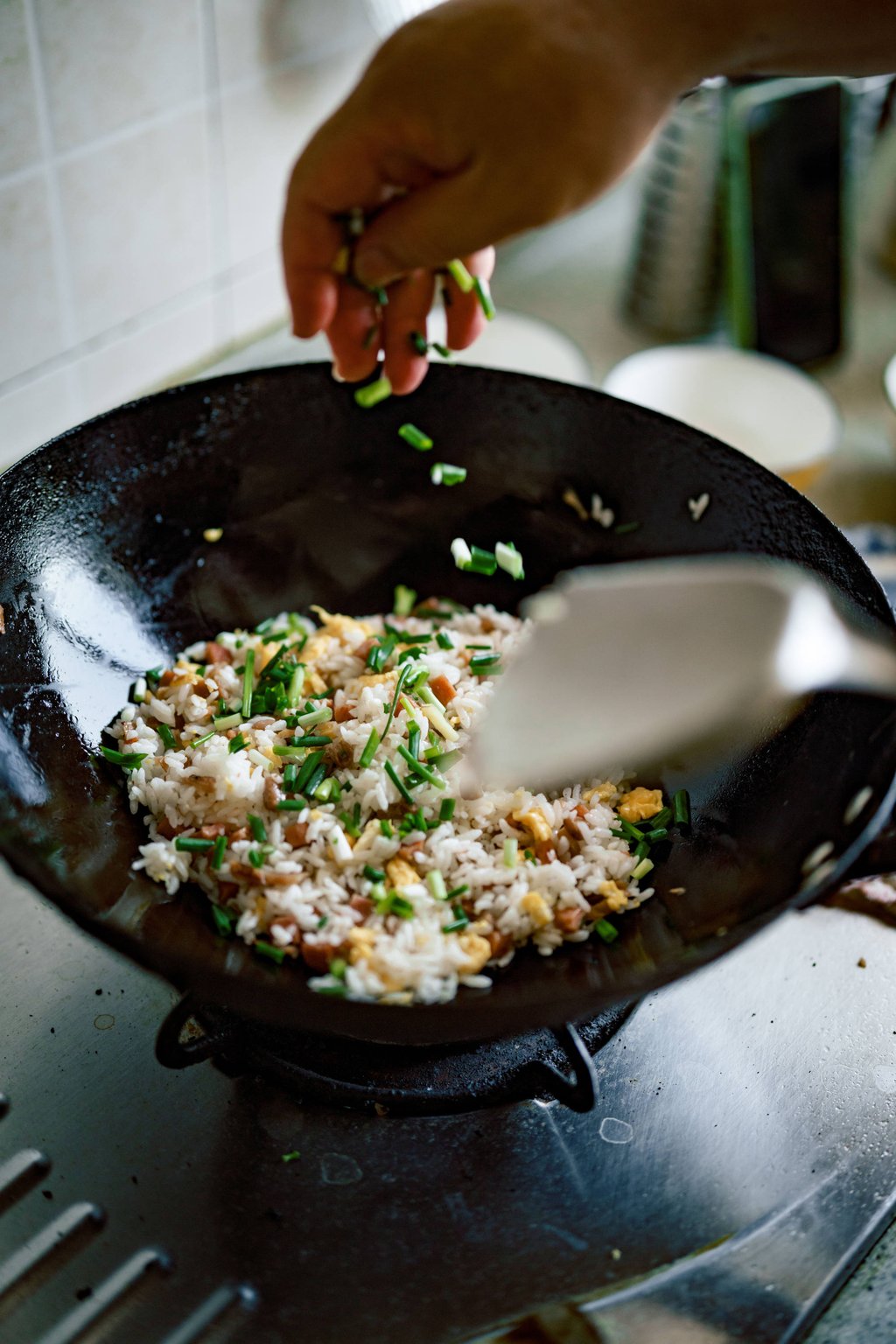
Grandma’s egg fried rice, made with leftover rice. Photo: Graeme Kennedy
My grandmother was born into a highly educated family and attended Catholic schools, where she and her siblings each learned a different musical instrument. She had sophisticated tastes, and was able to make delicate dishes such as Jinhua ham in chicken broth with dried tofu cut precisely into 16 slices, adding shiitake and bamboo shoots to bring in the umami. Her upbringing became her burden during the Cultural Revolution – her siblings were sent to the countryside for “re-education” – so she took care of not only my mother, Zhu Jindong, but also her siblings’ children. During a period of fear and loss, my grandma kept her passion for cooking, to provide everyone with a sense of belonging and security.
My own mother, a typical “tiger mum”, was strict about my piano practice. I was often required to play a piece flawlessly before I was allowed to eat, so I sometimes found myself sobbing over a plate of cold leftovers. Hearing my crying, my grandmother would heat up the wok and scramble two eggs until they were still a bit runny, and then set them aside. She would add minced garlic, diced onion and leftover rice, cooking the rice in hot oil until it softened and browned, then stir in the eggs and scallions, soy sauce, salt and white pepper. At this point, my mouth would be watering from the aroma of the wok. Once the fried rice arrived at the table, I couldn’t resist shoving it into my mouth as quickly as possible, despite wanting to wallow in my self-pity. My glasses quickly fogged up, so my grandmother would gently pull my hair aside and take them off. “Next time,” she’d whisper, “just apologise to your mum and beg her to let you eat.”
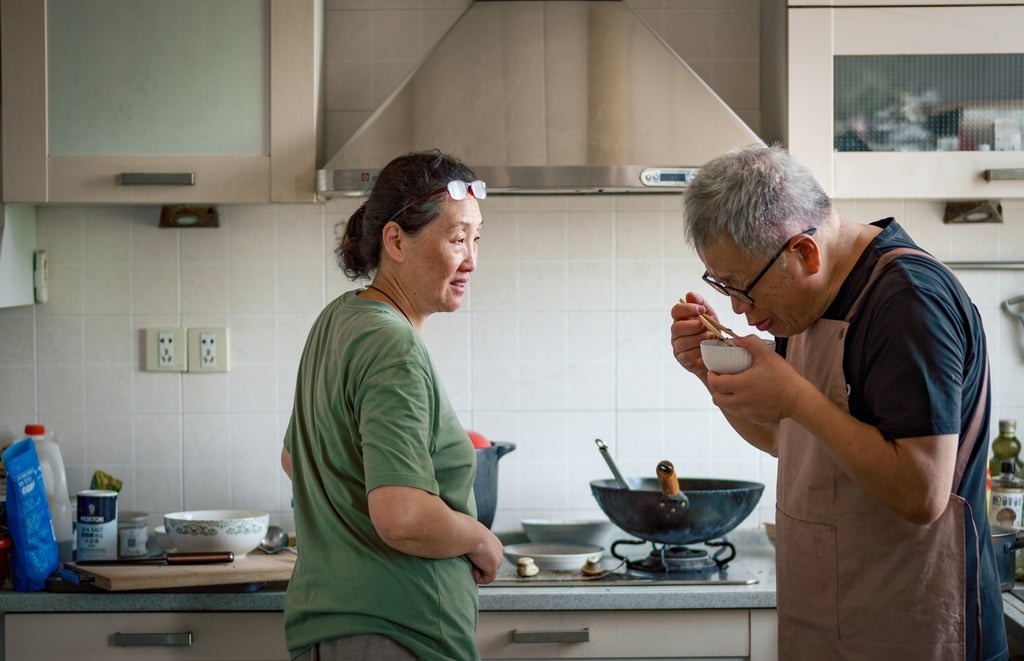
Tracy’s parents cooking in the kitchen. Photo: Graeme Kennedy
(A secret I learned from her was to use leftover rice, which is drier and less sticky, so the grains will separate better during stir-frying.)
Edamame bamboo shoot stir-fry
Growing up south of the Yangtze River, I was frequently told that “only after eating bamboo shoots can you know the taste of spring”. In China, we connect with nature by appreciating fresh ingredients the seasons have to offer, and soon after spring’s first thunderstorms, bamboo shoots poke their tips from the soil. Before my grandma underwent major surgery, in 2008, she would ride her bike for more than an hour into the countryside and dig up wild bamboo shoots.
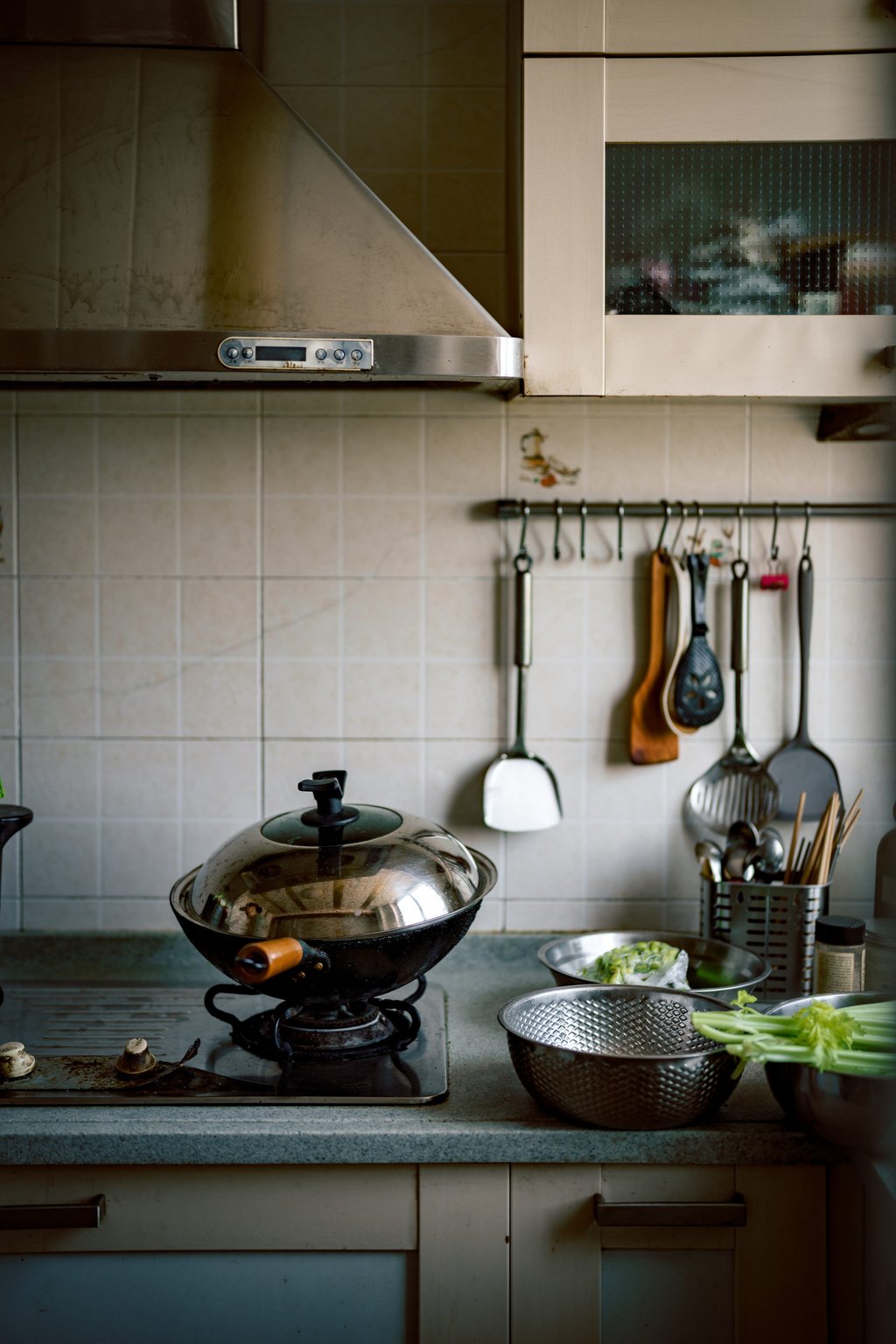
Grandma’s hard-working wok. Photo: Graeme Kennedy
Unlike those that grow in the winter, spring bamboo shoots are sweet and tender, and they can be stir-fried, braised in oil and sauce, or cooked in soup. No matter how you cook them, it’s going to be a delicious meal with an incomparable umami flavour. My grandma always described spring bamboo shoots using a local idiom, that they are “so delicious your eyebrows will fall off”.
To this day, I still haven’t figured out the correlation between the food and my eyebrows.
My grandma’s edamame bamboo shoot stir-fry usually consisted of her home-made pickled mustard greens for saltiness, sliced pork belly to add some fat, and garlic and bird’s-eye chillies to create a more complicated yet balanced profile.
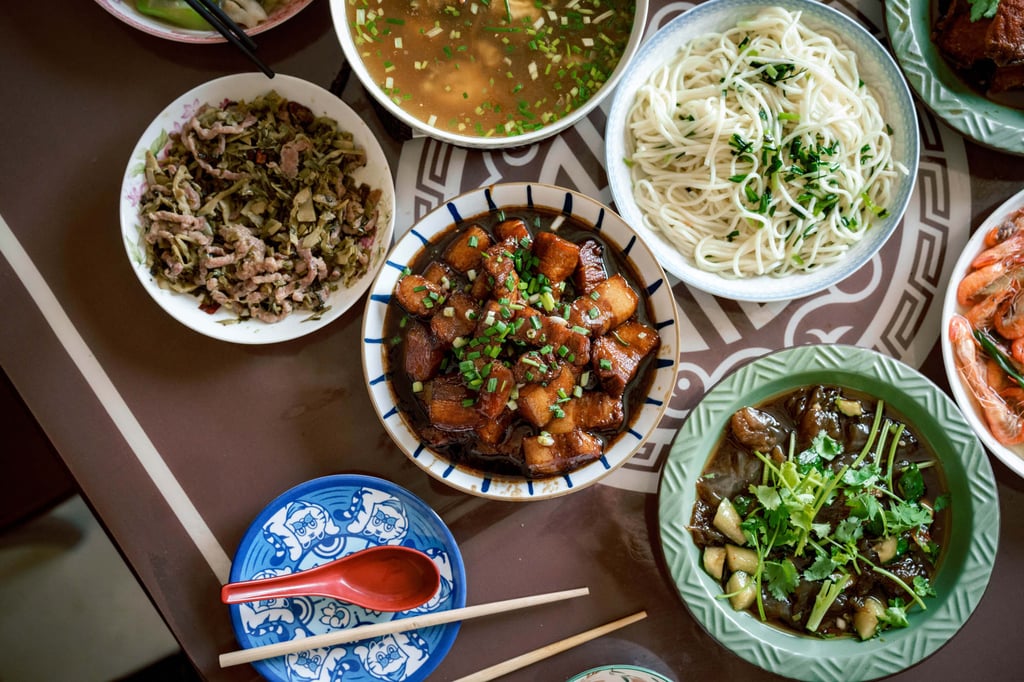
Dishes from grandma’s kitchen. Photo: Graeme Kennedy
She made her own pickled mustard greens during winter, piling the fresh greens into a large pot that has sat in the corner of her kitchen forever, and adding rice water, chillies, salt and vinegar. The greens would marinate at room temperature, and by the time bamboo shoots started to sprout in the spring, she’d know the mustard greens would be ready to eat.
We called her version of edamame bamboo shoot stir-fry the “rice thief”, as the combination of umami, saltiness and spice would increase our appetites, making everyone eat an extra bowl of rice.
When I left my hometown to go to college in Hong Kong, a metropolitan city known for its culinary scene, this dish was something I missed dearly, how it would go well with anything, no matter if it were white rice, dumplings or instant noodles, it would reset my palate and envelop me with a sense of home.
For the few years I was living in Hong Kong, I usually spent a week in February back home. On the morning of my flight back to Hong Kong, I would hear the oil popping in the wok as grandma waved her spatula and teased all the flavours into line.
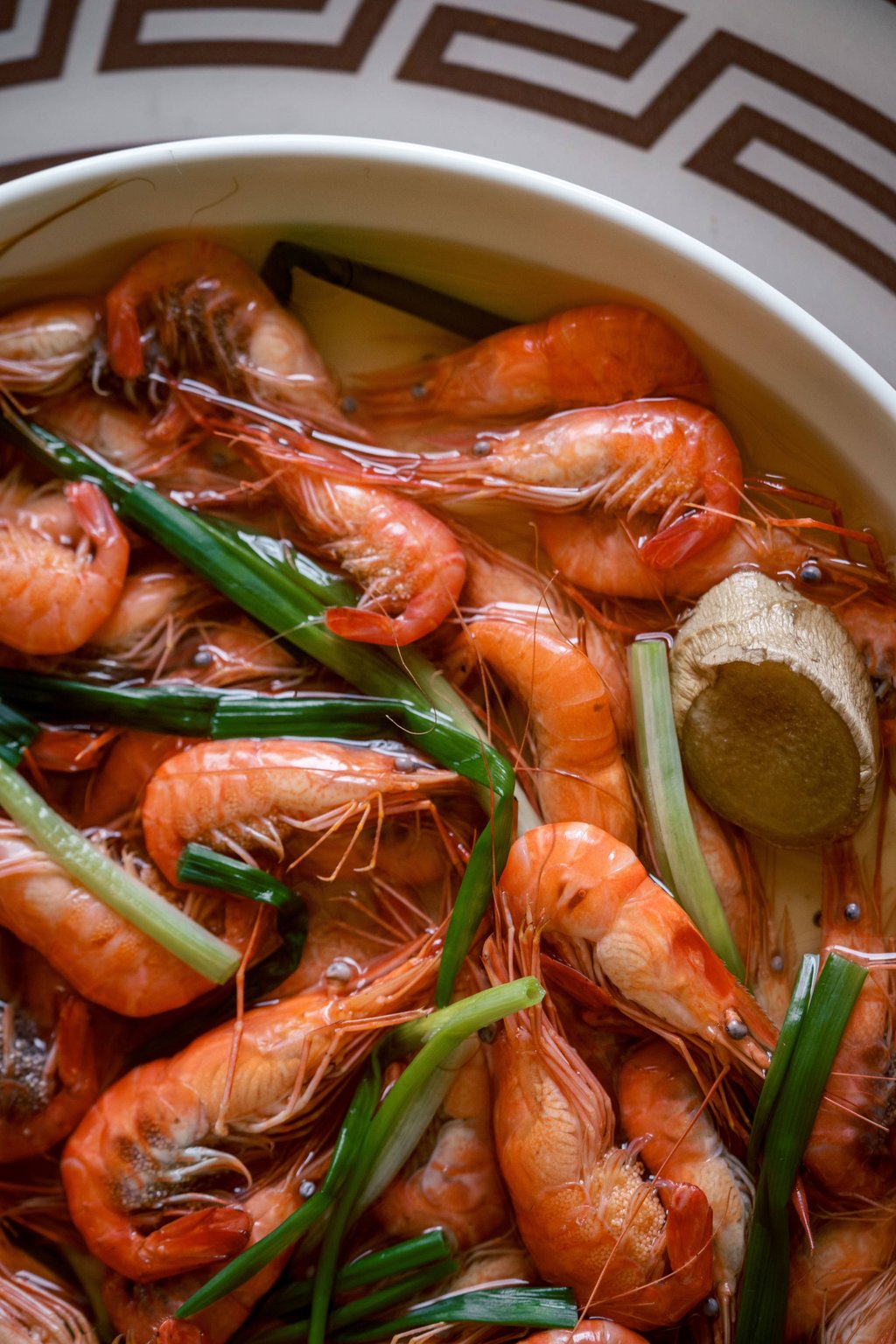
Poached river shrimp. Photo: Graeme Kennedy
She marinated sliced pork belly with soy sauce, cooking wine, cornstarch, half a tablespoon of oil and some white pepper, quickly stir-fried them until almost done and set them aside. She then infused the oil with minced garlic, sliced ginger, three to four bird’s-eye chillies and Lao Gan Ma, the spicy bean paste that was her secret weapon in the kitchen. She would scramble sliced bamboo shoots, edamame and pickled mustard greens with dark sauce, light sauce and oyster sauce, adding the pork belly towards the end. By the time I got out of bed, she and my mother would be packing the dish into a thermal lunchbox, adding ice bags next to it, and wrapping it with a bath towel. I’d put this precious lunchbox at the bottom of my check-in luggage, and take it all the way back to Hong Kong.
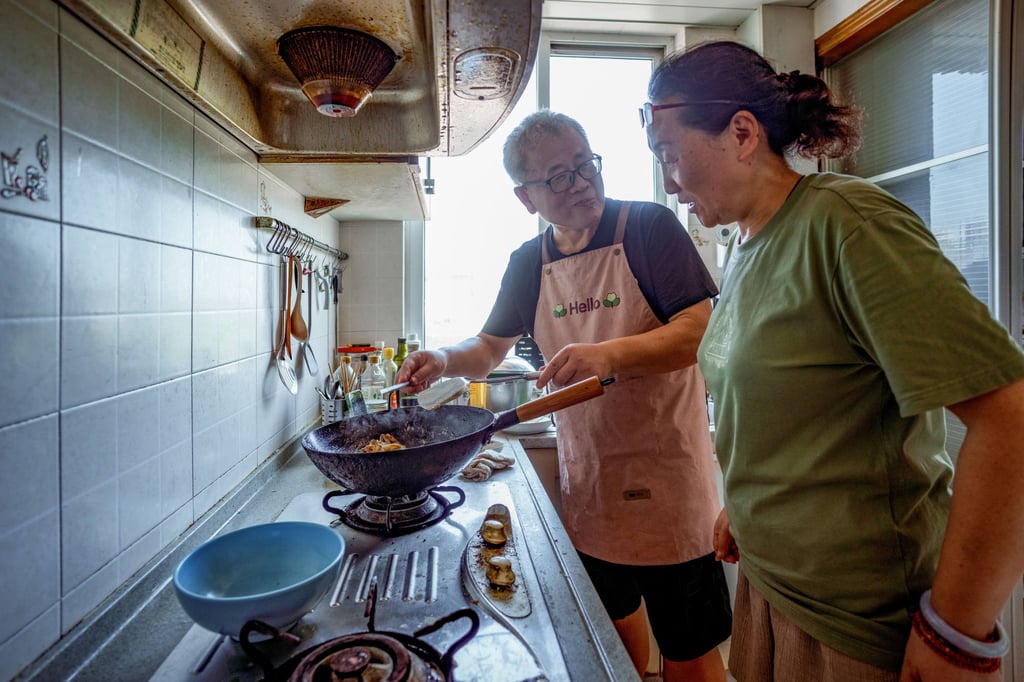
Tracy’s parents cooking in the kitchen. Photo: Graeme Kennedy
Most of my Chinese friends living abroad had the same experience of “smuggling” something from home; and to me, all the trouble of carrying this dish back to Hong Kong was worth it. When I arrived at my apartment, I’d quickly put the lunchbox in the freezer, allowing myself to savour it only when I felt emotionally exhausted, and couldn’t resist its home-grown energy any more.
Grandma’s pork belly
Although I have always enjoyed food and appreciated its cultural significance, for a long time I resisted cooking. Part of me didn’t want to live like my grandma, a stereotypically hard-working Chinese woman willing to sacrifice everything for her family. She never really talked about her life, despite my asking many times. Her personality was a blurred silhouette behind all the labels: a good daughter, a good elder sister, a good wife, a good mother, a good friend and a good grandma.
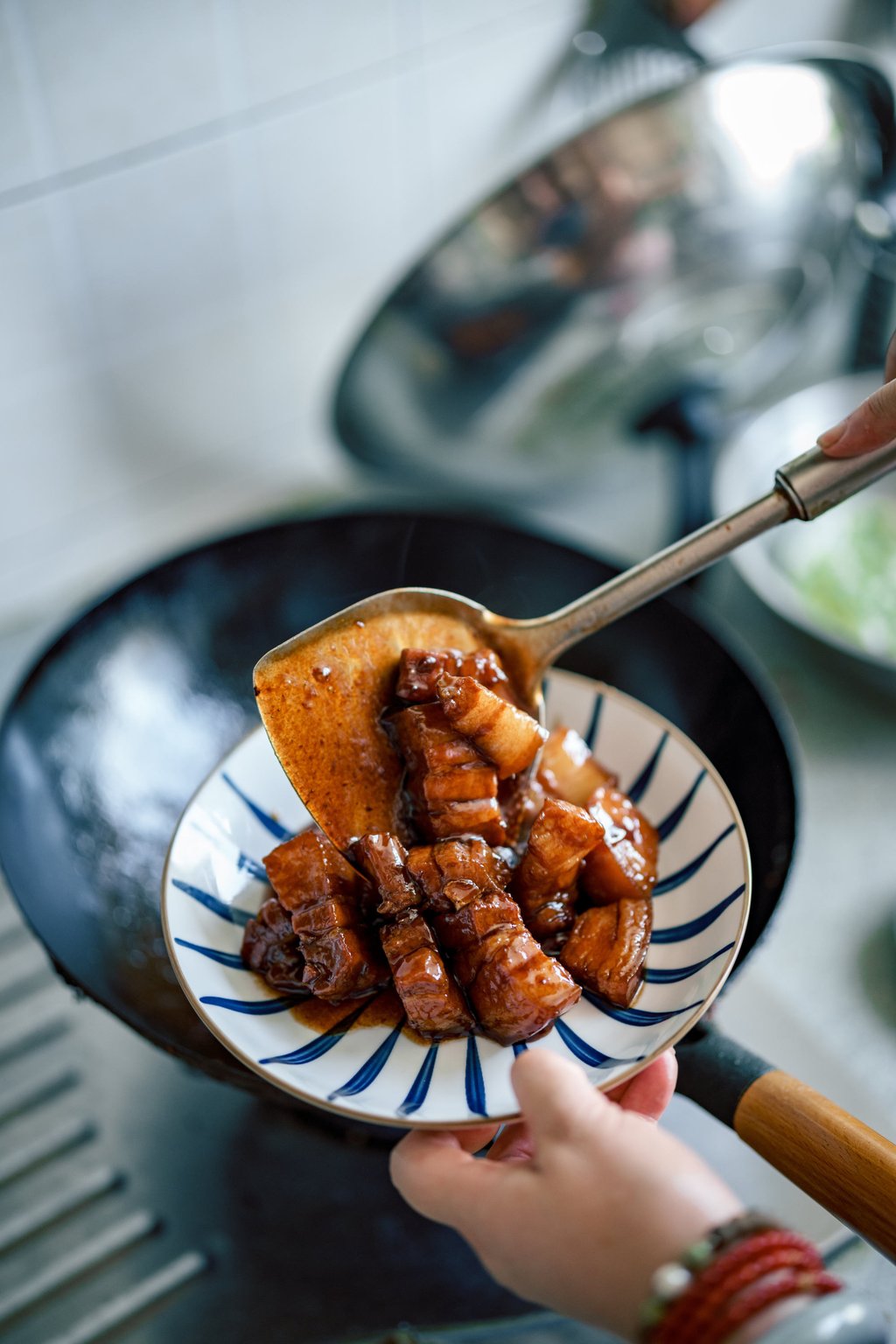
Grandma’s pork belly. Photo: Graeme Kennedy
I had left my hometown, a small city where everyone grew up together and knew each other, to pursue my career in Hong Kong, and then in the United States, all to break away from that stereotype. And I only started to embrace my desire to cook during the pandemic, when my husband and I stayed home 24/7 and needed to do something other than watch Netflix.
I started making hong shao rou, a Shanghai-style braised pork belly, known as grandma’s pork belly in Chinese restaurants in the US. My husband and I would spend hours cutting pork belly into thick, bite-sized cubes, blanching the meat while adding cooking wine, scallions and a few slices of ginger into the water.
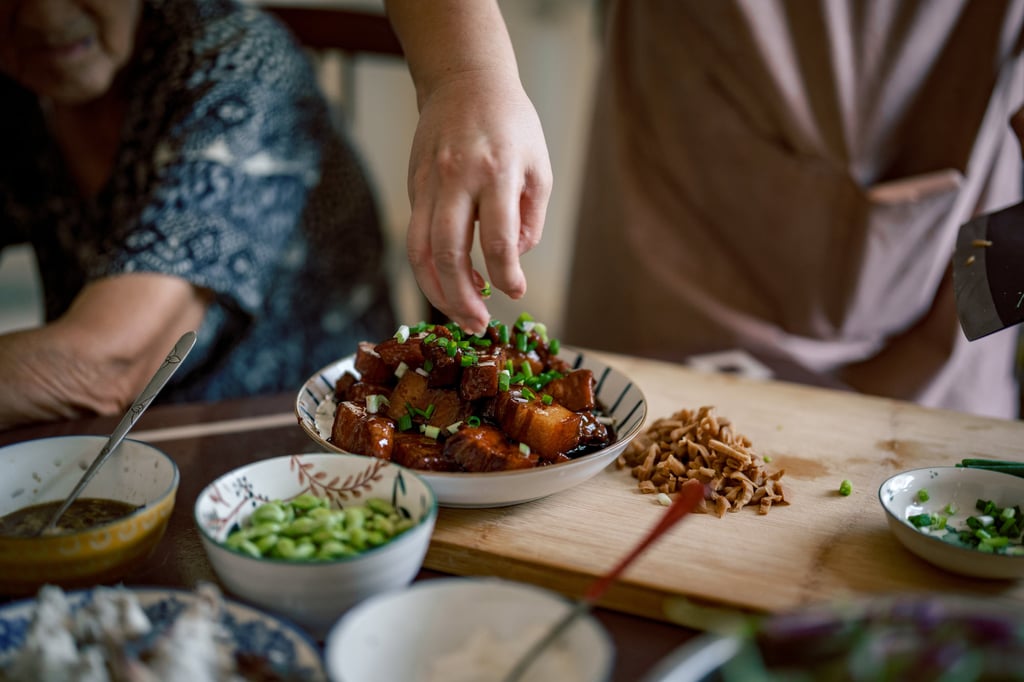
Grandma’s pork belly. Photo: Graeme Kennedy
First, we heat up some oil in a casserole dish and slowly melt two to three tablespoons of sugar to caramelise the pork belly until its skin turns brown. Then, we stir-fry the ingredients with sliced ginger, chopped scallions, star anise, bay leaves and a dried cinnamon stick. We later add Shaoxing cooking wine, dark soy sauce, light soy sauce and water to the casserole until all the meat is covered with liquid. Bringing it to the boil, we then cover the casserole and simmer it over low heat for around an hour, before thickening the sauce with cornstarch.
During the year we stayed at home, we decided not to follow our diet plan and to gorge on hong shao rou. I found myself cooking at midnight after a long, depressing day, and burying my face in a full bowl of sweet, succulent hong shao rou that melted in my mouth. This whole process felt ceremonial and therapeutic.
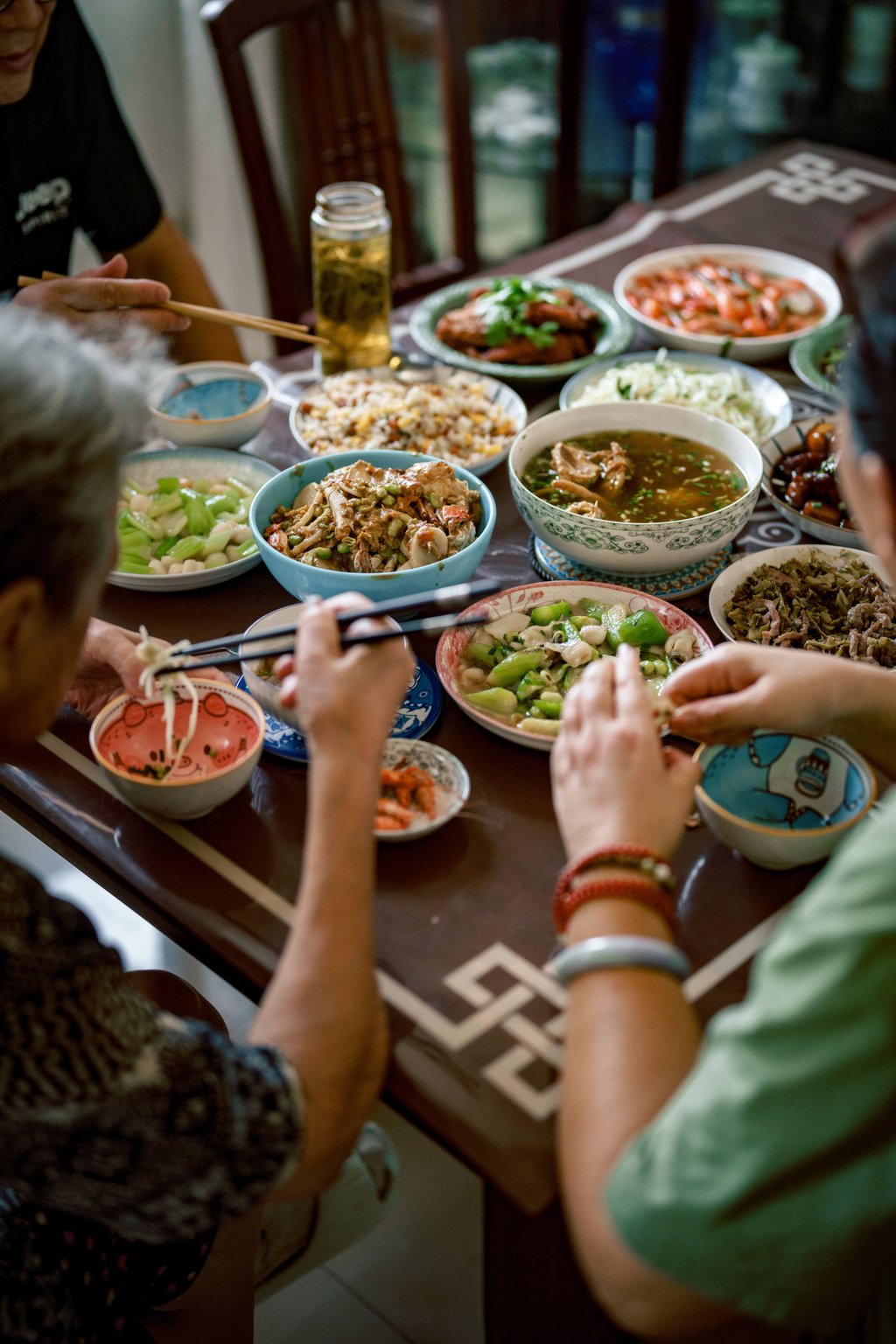
Dishes from Grandma’s kitchen. Photo: Graeme Kennedy
That was the moment I realised why my grandma often told me she enjoyed cooking, and she cooked for not only us family members, but also her neighbours and friends. I was also glad that I introduced my husband, an American, born in a small town in Michigan, to authentic Chinese cuisine. He has never studied Chinese history, art or literature, so Chinese cuisine was his first interaction with Chinese culture.
My grandma just celebrated her 94th birthday, and communicating with her has become more difficult as her hearing deteriorates, but we still talk frequently about cooking and the many variations and traditions of Chinese cuisine. And she still has many recipes to pass on.
Source: Tracy Wen Liu, "Why This Chinese Grandmother Makes the World’s Best Scallion Oil Noodles, Egg Fried Rice and Pork Belly," South China Morning Post, September 8, 2024.
Comments