

Beautiful? Check. Dramatic? Double-check. Dracula’s home? Buzzzzz. Transylvania is full of Dracula stories. The only problem is that they’re not true. So… should you go to Dracula’s Castle anyway?
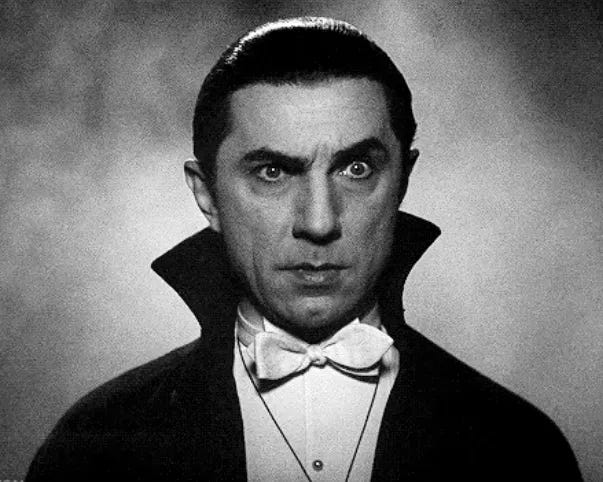
Spooky. Spooooky! Velcome to my castle. Bela Lugosi was Hollywood’s version of the iconic Dracula.
Before we begin, here’s the news: Your faithful correspondent this week won a Bronze Award in the 2026 Lowell Thomas Awards, the most prestigious competition in the world of travel journalism. Thanks to the judges at the School of Journalism at the University of Missouri (Go Tigers!) under the auspices of the Society of American Travel Writers. The story was about drinking grasshopper-infused rum on the Nature Island of Dominica. I guess there must have been a dearth of entries in the grasshopper-rum category this year.
But back to Dracula’s Castle on a Road Scholar trip. First, some background. Road Scholar, formerly known as Elderhostel, aims its international travel programs at active, inquisitive, older adults. On this itinerary, “Treasures of Romania: Enchanting Castles and Painted Monasteries,” our small group traveled through northern Romania, starting in Bucharest and ending in Cluj-Napoca, under the expert, friendly guidance of group leader Árpád Furu, a legend at Road Scholar, who has led more than 60 programs in Romania, Slovakia, and Hungary over 30 years. I’ve written about the Bucharest part of my tour elsewhere. (What a fascinating city with an unbelievable history, both ancient and modern. Wait until Árpád tells you about the 1989 Romanian Revolution. He was an eyewitness!) We toured the painted Byzantine monasteries of Bucovina, wandered the ornate hallways of Peleș Palace (often called the most beautiful palace in Europe), and roamed the picturesque streets of the Saxon market town of Braşov, among other highlights. The visit to Bran Castle (its formal name) was one of the lowlights. But it’s Dracula’s Castle! It’s a must-visit destination. Then you never have to do it again. And now, the story…
Transylvania brings to mind one thing above all others, and that thing, of course, is the peculiarities of Romania’s German Saxon residential architecture! The Saxons began immigrating to Romania in the—oh, wait, also Dracula. I almost forgot Dracula. Which is remarkable, since Dracula was literally the reason I was standing in a line of 400 people waiting to enter a castle that Dracula himself never actually entered.
Bran Castle, to use its formal name, was basically built as a customs house in the 1300s. Positioned at a narrow mountain gap, it was perfectly situated for military control of the region and to collect import duties from traders heading to the nearby market town of Brașov and beyond. With cannons on the parapets, the tax collector’s pitch was elegantly simple: “Pay up or get blown up.” That remains, to this day, a more honest approach to taxation than anything developed since.
The garrison manning the castle rarely exceeded twelve soldiers, only half of whom actually knew how to fire a cannon. (I made up that last bit, but I’m sorta confident that it’s historically accurate.)
Here’s the important thing, the thing the Romanian tourism board would prefer you not to know until after you’ve paid your admission fee: Bran was never Dracula’s castle. Not even a little bit. Dracula author Bram Stoker essentially fictionalized the vampire lair after seeing an etching of a castle in a book one afternoon, in what historians now recognize as the 19th-century equivalent of writing a whole novel based on a blurry JPEG.

((GULP!!)) The facade of Bran Castle was sufficiently imposing to make even the most parsimonious trader a willing taxpayer. Credit: Mark Orwoll.
“He wasn’t very good at researching history,” said our Road Scholar guide, Árpád Furu, with the serene understatement of a man who has delivered this news to confused tourists for many years.
So why didn’t the Romanians say something? Set the record straight? Put up a sign? (“Welcome to Bran Castle: Dracula Was Definitely NOT Here. Please Enjoy Our Gift Shop”?)
“The people of Romania,” said Furu, “weren’t really familiar with the story.”
Bloodthirsty Tourists
So Western tourists kept showing up, asking about the castle. The Romanian government simply made it an official attraction, demonstrating a pragmatism that Vlad the Impaler himself (the real-life Dracula’s other charming nickname) would have admired. The tourists were being duped—everyone quietly knew the tourists were being duped—and yet no Romanian official spoke up, because “Romanians are a very superstitious people,” said Furu. As in, it would be bad luck to stop accepting the tourists’ money. A Transylvanian curse carries a lot of weight. I wouldn’t risk it, either.
To visit the castle, you must purchase a timed-entry ticket. You will share your time slot with what appears to be every person currently alive in the Northern Hemisphere—most of them, somehow, under the age of eighteen. Before reaching the actual castle, you must first pass through a gauntlet of souvenir kiosks so extensive that it constitutes its own small municipality—a full village of commerce dedicated entirely to Dracula key chains, Vlad-branded coffee mugs, Count-motif tea towels, and, inexplicably, Christmas-themed knit sweaters for infants. At least, so it seemed to me.

Bran Castle, on the hilltop in the background, oversees a thriving business in keychains and T-shirts. Credit: Mark Orwoll.
Furu mentioned that homemade brandy was available at some of the kiosks, its legality being “somewhat dodgy.” Also cheese. “Romanian brandy and cheese,” he declared, “are the best things in Romanian culture.” Although he was joking, I noticed he didn’t include Bran Castle on this list, which, in retrospect, was telling.
The castle was substantially refurbished by Queen Mary (or Marie; apparently, even she wasn’t sure) of Romania over ten years, after she received it from the city of Brașov in 1920. She used it as a holiday destination for concerts and a glorious gossip corner for girlfriend getaways. It’s genuinely lovely from the outside—romantic, dramatic, extremely photogenic. The selfie potential alone might justify the trip, depending on the shallowness of your values.

The grounds of Bran Castle include a scenic duck pond. This particular spot is selfie central. Credit: Mark Orwoll.
It’s What’s Inside That Counts
Inside, however, you will discover that there isn’t a lotta Dracula going on. The castle’s history, by way of some explanatory panels, is largely about Queen Mary, Saxon architecture, and the customs era. Signage exists. Costumed docents do not. No one roams the halls with a flickering candle, breathlessly narrating bloody historical details while dressed as a frightened Carpathian shepherd. You are mostly on your own, crouching through doorways clearly designed for a population that averaged five feet, one inch tall, clinging to a weathered rope handhold on staircases that OSHA would classify as “aggressively hostile to human survival.” Don’t even bother asking about accessibility concerns.
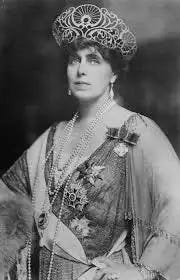
Queen Mary (or Marie, if you prefer) of Romania received Bran Castle as a gift in 1920 from the citizens of Brașov.
You’ve paid your $22. You might as well stroll around. Or crouch around, technically. Eventually, you will emerge, blinking, into the daylight, with a mild concussion from the low doorways and a powerful new appreciation for Romanian brandy.
The castle was nationalized by the communists in 1948 and eventually reclaimed by Queen Mary’s descendants in 1990. Their plan: convert it to a luxury hotel. The government said no, it must remain a tourist site. The Habsburg heirs, uncharmed, put it up for sale.
“So,” said Furu, “if you ever wanted to own a castle, this is your chance.”
(Footnote: While I was there, in May 2026, the parent company of Elvis Presley’s Graceland bought an 80 percent interest in Bran Castle’s operation. My personal vote, for what it’s worth, is for an Elvis-Meets-Dracula wax museum. “Thank you, thank you very much—I vant to suck your blue suede shoes.”)

Bran Castle’s interior courtyard is far more charming than the forbidding outer walls. Credit: Mark Orwoll.
One of my travel companions, a thoughtful man named Mike, quietly asked Furu if Road Scholar had ever considered removing Bran from its Romanian itinerary, given how touristy it was.
I was not present for this exchange. I was in the kiosk village, attempting to locate the illegal brandy.
You can read past columns for free at Mark Orwoll Is at It Again!
Original article
Comments