


1. Kentucky Has the Longest Known Cave System on Earth

Visitors make their way through Mammoth Cave National Park in south-central Kentucky. More than 400 miles of passages have been surveyed, making Mammoth Cave the longest known cave system on Earth.
Photo credit: National Park Service
Mammoth Cave isn’t merely the largest cave in Kentucky or even the United States — it is the longest known cave system on the planet. Explorers have surveyed and mapped more than 426 miles of underground passageways, and new passages are still being discovered. Geologists estimate that parts of the system began forming around 10 million years ago, meaning there may still be enormous sections beneath Kentucky that no human has ever entered. (National Park Service)
2. Giant Sharks Once Swam Over Kentucky

The fossilized lower jaw and teeth of the prehistoric shark Saivodus striatus remain embedded in the limestone of Mammoth Cave National Park. Scientists estimate the species may have reached up to 28 feet in length.
Long before there were horses, bourbon barrels or even dinosaurs, much of Kentucky sat beneath a warm prehistoric sea. Scientists exploring Mammoth Cave have discovered an extraordinary collection of ancient shark fossils embedded in its limestone. One species, Saivodus striatus, may have reached 15 to 28 feet long — potentially larger than a modern great white shark. Researchers have identified dozens of shark species in the cave system, including species previously unknown to science. (National Park Service)
3. Kentucky Has a Rainbow That Appears at Night

Under the light of a full moon, mist from Cumberland Falls can produce a rare lunar rainbow known as a moonbow. Kentucky State Parks says the phenomenon occurs regularly at the falls when weather conditions cooperate.
Cumberland Falls produces one of Kentucky’s strangest natural phenomena: a moonbow. Instead of sunlight creating a rainbow through mist, light from a nearly full moon creates the effect over the falls. Kentucky State Parks describes Cumberland Falls as one of the few places on Earth where a moonbow regularly occurs — and says it is the only place in the Western Hemisphere where the phenomenon appears predictably. (Kentucky State Parks)
4. Nearly Half of America’s Stored Treasury Gold Is Sitting in Kentucky

The United States Bullion Depository at Fort Knox holds approximately 147.3 million fine troy ounces of gold — about half of the U.S. Treasury’s stored gold reserves.
Photo credit: U.S. Mint
Behind the granite walls of the U.S. Bullion Depository at Fort Knox sits approximately 147.3 million troy ounces of gold. According to the U.S. Mint, that represents roughly half of the Treasury’s stored gold. Even more surprising: when Fort Knox began receiving gold in 1937, the first shipments literally arrived through the U.S. Mail. The depository remains closed to ordinary visitors. (United States Mint)
5. Kentucky Makes About 95 Percent of the World’s Bourbon

Rows of bourbon barrels age inside a Kentucky rickhouse. The Kentucky Distillers’ Association says roughly 95% of the world’s bourbon supply is produced in the Commonwealth.
Photo credit: KDA
Bourbon can legally be produced outside Kentucky, but the world overwhelmingly comes here for it. The Kentucky Distillers’ Association says roughly 95 percent of the world’s bourbon supply is produced in Kentucky. The state’s limestone-filtered water, corn-growing conditions and dramatic seasonal temperature swings have helped turn Kentucky bourbon into a global industry worth billions of dollars. (Kentucky Distillers’ Association)
6. There Have Been More Bourbon Barrels Than People in Kentucky

Barrels of Kentucky bourbon age inside Woodford Reserve Distillery. At various points in recent years, Kentucky has had more than twice as many aging bourbon barrels as residents.
At one point Kentucky had approximately 11.4 million barrels of bourbon aging in warehouses, with nearly 12 million barrels when other aging spirits were included. That worked out to roughly two and a half barrels for every person living in Kentucky. In other words, if every Kentuckian claimed two barrels for themselves, Kentucky would still have millions left over. (Kentucky Distillers’ Association)
7. The Kentucky Derby Has Survived Everything Since 1875

Jockey Oliver Lewis rides Aristides to victory in the first Kentucky Derby on May 17, 1875.
Wars, depressions, pandemics and enormous cultural changes have come and gone, but the Kentucky Derby has been run every single year since 1875. Churchill Downs describes it as the longest continually held major sporting event in the United States. The first Derby drew approximately 10,000 spectators and was won by Aristides, ridden by African-American jockey Oliver Lewis. (Kentucky Derby)
8. America’s Only Assassinated Governor Was a Kentuckian

William Goebel was shot outside Kentucky’s Old State Capitol in Frankfort on January 30, 1900. He was sworn in as governor while mortally wounded and died four days later.
Kentucky holds one particularly dark distinction. William Goebel is the only state governor in American history to have been assassinated while serving as governor. Goebel was shot outside Kentucky’s Old State Capitol in Frankfort on January 30, 1900, amid a bitterly disputed election. He was sworn in as governor while mortally wounded and died on February 3, only days after taking office. (Kentucky Historical Society)
9. Kentucky Has a Piece of Land That Is Cut Off From the Rest of Kentucky

Kentucky Bend sits inside a sweeping loop of the Mississippi River, physically separated from the rest of Kentucky and reachable by road only through Tennessee.
At Kentucky’s far western edge lies one of America’s strangest geographical oddities: the Kentucky Bend, an isolated pocket of Kentucky surrounded by Tennessee and the Mississippi River. Kentucky’s own historical timeline connects the region’s peculiar isolation with dramatic changes to the Mississippi during the massive 1811–1812 New Madrid earthquake sequence. Getting there by land requires traveling through Tennessee. (Kentucky Historical Society)
10. Some of the Largest Earthquakes in American History Rocked Kentucky

Reelfoot Lake bears the physical scars of the 1811–1812 New Madrid earthquake sequence. This historic photograph shows tree trunks killed when the land was submerged during the December 16, 1811 earthquake.
Kentucky is not usually associated with massive earthquakes, but western Kentucky sits beside the New Madrid Seismic Zone. Between December 1811 and February 1812, three earthquakes estimated at magnitude 7.0 or greater struck the region. The USGS says the area of strong shaking was about 10 times larger than the strongly shaken area of the 1906 San Francisco earthquake. Chimneys were knocked down as far away as Louisville. (USGS Publications)
11. Kentucky Has the Largest Elk Herd East of the Mississippi

Elk roam eastern Kentucky, where a restoration program begun in the late 1990s has grown into the largest elk population of any state east of the Mississippi River. Kentucky Fish & Wildlife estimates the herd at more than 10,000 animals.
Elk disappeared from Kentucky during the 1800s because of habitat loss and unregulated hunting. More than a century later, an ambitious reintroduction program brought them back. Today, the Kentucky Department of Fish and Wildlife says the Commonwealth has the largest elk herd east of the Mississippi River — an extraordinary comeback for an animal that had once completely vanished from the state. (Kentucky Fish and Wildlife)
12. The World’s Largest Baseball Bat Is in Downtown Louisville

The Big Bat outside Louisville Slugger Museum & Factory towers 120 feet above Main Street and weighs 68,000 pounds. The steel structure is an enlarged replica of Babe Ruth’s Louisville Slugger.
Photo credit: Kentucky Tourism
Standing outside the Louisville Slugger Museum is a baseball bat so large it looks like something dropped by a giant. The steel bat towers 120 feet high and weighs approximately 68,000 pounds. It is an enlarged replica of Babe Ruth’s 34-inch Louisville Slugger and is recognized by the museum as the world’s largest baseball bat. (Slugger Museum)
13. KFC’s Story Includes Nicholasville Before Corbin

Colonel Harland Sanders stands outside an early Kentucky Fried Chicken restaurant. Sanders built his reputation in Kentucky before franchising the concept nationwide.
Most Kentuckians know Colonel Harland Sanders built his reputation serving chicken in Corbin. Far fewer know that Nicholasville was part of the story too. KFC’s official history says Sanders operated service stations in Nicholasville and Corbin, eventually serving meals to travelers and developing the pressure-cooking method and blend of 11 herbs and spices that made him famous. And another twist: although Kentucky gave birth to the KFC story, the first Kentucky Fried Chicken franchise actually opened near Salt Lake City, Utah, in 1952. (KFC)
14. “Happy Birthday to You” Has Kentucky Roots
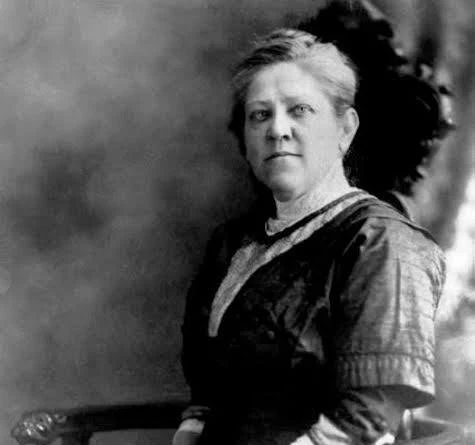
Mildred J. Hill of Louisville, who with her sister Patty wrote “Good Morning to All,” the melody later used for “Happy Birthday to You.”
One of the most recognizable songs on Earth traces its history to two Louisville sisters, Patty and Mildred Hill. The sisters, both educators, published a melody called “Good Morning to All” in 1893. That melody eventually became the tune used for “Happy Birthday to You,” a song now sung around the world millions of times every year. (Smithsonian Institution Archives)
15. Abraham Lincoln and Jefferson Davis Were Both Born in Kentucky

Abraham Lincoln and Jefferson Davis — the future presidents of the United States and the Confederacy — were both born in Kentucky, less than a year apart. Lincoln was born near Hodgenville in 1809, while Davis was born in Fairview in 1808.
One of the strangest coincidences of the Civil War is that the leaders of its opposing governments were both native Kentuckians. Abraham Lincoln, future president of the United States, was born near Hodgenville on February 12, 1809. Jefferson Davis, future president of the Confederacy, was born in Fairview, Kentucky, on June 3, 1808. Two Kentucky-born boys, born roughly eight months apart, eventually became the political leaders of opposite sides of America’s bloodiest war. (National Park Service)
16. Kentucky Tried to Stay Neutral During the Civil War

Camp Nelson in Jessamine County during the Civil War. Kentucky initially declared neutrality in May 1861, attempting to side with neither the Union nor the Confederacy before ultimately aligning with the Union later that year.
Source: National Archives and Records Administration via National Park Service.
When the Civil War erupted, Kentucky initially attempted something remarkable: it declared neutrality. The Commonwealth formally announced in May 1861 that it would align with neither the Union nor the Confederacy. That arrangement collapsed within months, and Kentucky declared allegiance to the United States in September. Meanwhile, Confederate sympathizers established a rival provisional Kentucky government in Bowling Green — leaving the state tangled between competing governments and loyalties. (Kentucky Historical Society)
17. One of the Last Major Battles of the American Revolution Happened in Kentucky
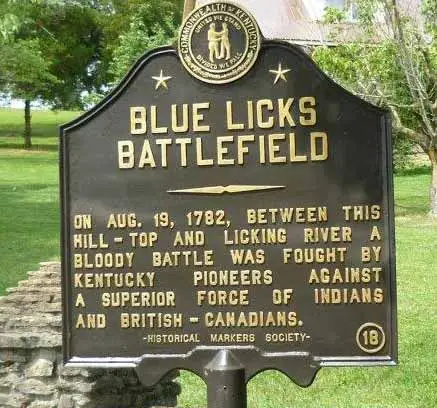
The monument at Blue Licks Battlefield marks the site of the August 19, 1782 battle, one of the final major engagements of the American Revolution.
Many people associate the American Revolution with Massachusetts, Virginia and the Atlantic Coast, but one of its final major battles unfolded in Kentucky. The Battle of Blue Licks was fought along the Licking River on August 19, 1782. American forces suffered a devastating defeat. Remarkably, the battle occurred nearly a year after the British surrender at Yorktown, illustrating how frontier warfare continued even after the war had effectively been decided elsewhere. (Kentucky Historical Society)
18. Louisville Helped Change Transplant Medicine Forever

Jewish Hospital in Louisville, where surgeons performed the world’s first hand transplant with prolonged success in January 1999. The 15-hour operation helped establish Louisville as an international center for hand and microsurgery.
In January 1999, surgeons at Louisville’s Jewish Hospital performed what the University of Louisville describes as the world’s first hand transplant with prolonged success. The operation lasted about 15 hours and became a milestone in transplant and microsurgery. Louisville went on to become internationally recognized for hand transplantation and other highly complex transplant procedures. (UofL News)
19. A 1937 Flood Put Most of Louisville Under Water

Floodwaters swallow Louisville streets during the catastrophic Ohio River flooding of the 1930s. The January 1937 flood ultimately inundated much of the city and forced tens of thousands of residents from their homes.
Source: Library of Congress / U.S. Resettlement Administration.
In January 1937, the Ohio River rose to levels that remain difficult to comprehend. The National Weather Service reports that approximately 70 percent of Louisville was submerged, forcing around 175,000 residents to flee. Historical Kentucky records give some contemporary estimates even higher. At Louisville, the river crested at 85.4 feet, and the 1937 crest remains about 10 feet higher than the city’s second-highest recorded crest. (National Weather Service)
20. Kentucky Was the First State Added West of the Appalachian Mountains

Constitution Square in Danville, where delegates met during the conventions that helped pave the way for Kentucky statehood. Kentucky entered the Union on June 1, 1792, as the 15th state.
When Kentucky officially entered the Union on June 1, 1792, it became America’s 15th state. But Kentucky also carried another distinction: according to the Kentucky Historical Society, it was the first state admitted to the Union west of the Appalachian Mountains. What had been a distant western frontier of Virginia had become a state of its own — and an early gateway for the enormous westward expansion that would follow. (Kentucky Historical Society)
Original article
Comments