

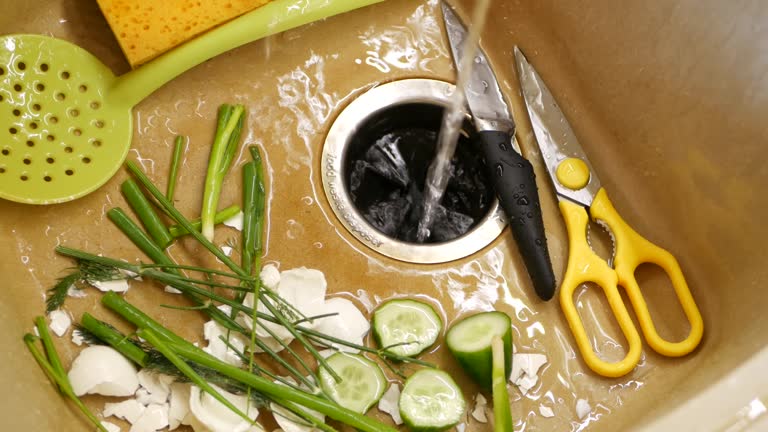
A garbage disposal is designed to break down food waste and help it move through the drain. When the disposal starts draining slowly, water may remain in the sink longer than usual. You may also notice food particles sitting in the disposal, unpleasant smells, or water moving through the drain at a reduced speed.
A slow-draining disposal should not be ignored. The problem can come from food buildup, grease, poor water flow, a clogged drain connection, or an issue inside the disposal itself. Finding the source early can help prevent a small drainage problem from becoming a larger plumbing or appliance issue.
Food Waste Buildup Inside the Disposal
Food waste is one of the most common sources of slow drainage. Small pieces of food can remain around the grinding area instead of moving completely through the drain. Over time, this buildup can reduce the space available for water and waste to pass through.
Foods that are sticky, fibrous, or difficult to break down can contribute to this problem. Vegetable peels, stringy vegetables, food scraps, and other materials may collect around the disposal opening or farther down the drain.
When food buildup continues, water may take longer to leave the sink. The disposal may still turn on normally, but the drainage will become slower.
Regular cleaning can help reduce food residue. Running cold water while using the disposal also helps move ground food through the drain instead of allowing it to settle inside the system.
Grease and Fat in the Drain
Grease, oil, and fat can create drainage problems when they enter the disposal. These substances may be liquid when they are poured into the sink, but they can stick to the inside of the drain as they cool.
As more grease collects, the opening through which water and food waste must pass becomes smaller. Food particles can then stick to the greasy surface, making the blockage worse.
A slow-draining disposal caused by grease may gradually become slower instead of stopping suddenly. You may notice that the sink drains normally at first but takes longer after repeated use.
Avoiding the disposal as a place to pour cooking oil and grease can help prevent this type of buildup. Food scraps should also be removed from dishes before they are rinsed into the sink.
A Partial Drain Clog
A disposal can operate normally while the drain connected to it has a partial clog. In this situation, the disposal may make its usual sound, but water cannot move through the drain quickly.
Partial clogs can develop when food particles collect farther down the drain. A small obstruction may allow some water to pass while slowing the overall flow.
This type of problem can be difficult to identify because the disposal itself may not appear damaged. The issue may be located in the drain line rather than in the grinding chamber.
If water continues to drain slowly after cleaning the disposal, the connected drain should be considered as a possible source.
Improper Use of the Disposal
The way a disposal is used can affect its drainage performance. A disposal is designed for suitable food waste, but some materials can create problems when they are placed inside.
Large food pieces can be difficult to break down. Fibrous materials may wrap around internal components or collect in the drain. Starchy foods can expand or become thick when mixed with water, which may contribute to buildup.
Putting too much food into the disposal at once can also reduce its ability to grind and move waste efficiently.
Using the disposal gradually and allowing water to flow during operation can support better drainage. Food waste should be added in small amounts rather than forcing large quantities into the unit.
A Blocked Disposal Opening
The opening where the disposal connects to the sink can become coated with food residue. This may restrict the movement of water into the disposal.
A buildup around the opening may not always be easy to see because parts of the area are located below the sink surface. However, restricted flow at this point can cause water to remain in the sink.
Cleaning the accessible parts of the disposal opening may help remove surface residue. If the drainage remains slow, the problem may be farther inside the disposal or drain line.
Problems With the Drain Connection
The disposal connects to the home's drain system through a drain pipe. If this connection becomes restricted, water may have difficulty leaving the disposal.
A drain connection can collect food particles, grease, and other residue. A poorly positioned or damaged pipe can also interfere with proper water movement.
If the disposal drains slowly while other parts of the sink system appear normal, the connection between the disposal and drain line should be checked.
Some drainage issues require more than basic cleaning. If the restriction is inside the plumbing connection, professional inspection may be needed.
A Disposal That Is Not Grinding Properly
A disposal that does not grind food waste effectively can contribute to slow drainage. If the internal components are not working as expected, larger food pieces may remain in the disposal and move into the drain.
A damaged or worn component may reduce grinding performance. The unit may still turn on, but the waste may not be broken down well enough for smooth drainage.
Unusual sounds can provide another clue. Grinding, rattling, humming, or repeated changes in the disposal's normal sound may indicate an internal issue.
When the disposal is running but food is not being processed properly, it is better to investigate the problem instead of repeatedly running the unit.
Too Little Water During Use
Water plays an important role in moving food waste through a disposal and drain. If the disposal is operated without enough water, ground food may not move away efficiently.
Dry food particles can collect inside the drain and combine with other residue. This can contribute to slow drainage over time.
Running cold water during disposal use helps carry ground waste through the system. After the food has been processed, allowing water to run briefly can help move remaining particles through the drain.
Water should not be used as a way to flush unsuitable materials through the disposal. Proper disposal habits are still needed to avoid buildup.
Hard Food Materials in the Disposal
Some food materials are more difficult to break down than others. Hard pieces can remain inside the disposal or move into the drain without being processed completely.
Small bones, fruit pits, shells, and other hard materials can place extra stress on the disposal. They may also become lodged in the grinding area or contribute to a restriction farther down the drain.
If a hard object becomes stuck, the disposal may make an unusual sound or stop working correctly. Continuing to operate the unit in this condition can make the problem worse.
The disposal should be turned off before attempting any inspection. Never place your hand inside the disposal to search for an object.
Fibrous Food Waste
Fibrous foods can create specific disposal problems because their strands may wrap around internal parts or collect together inside the drain.
Vegetable fibers can remain after the disposal has been used, especially when larger quantities are processed at once. These materials can combine with other food waste and restrict drainage.
If slow drainage occurs after disposing of fibrous food, the type of waste being processed may be part of the problem.
Reducing the amount of fibrous material placed into the disposal can help limit buildup. Larger pieces should be handled appropriately instead of forcing them through the disposal.
Starchy Food Buildup
Starchy foods can become thick when they absorb water. When these foods enter a disposal in large amounts, they may contribute to a heavy mixture that does not move easily through the drain.
Food such as pasta, rice, and similar items can expand after cooking. If they collect inside the drain, they may combine with other waste and create a slow-moving blockage.
If drainage becomes slower after certain foods are disposed of, consider whether those foods could be contributing to the buildup.
Signs That the Problem Is Getting Worse
A slow drain can develop into a complete blockage if the source is not addressed. Several signs may indicate that the drainage problem is becoming more serious.
Water may remain in the sink for longer periods. Food particles may float back into the sink after the disposal is used. Bad smells may also become stronger as waste collects in the drain.
Another warning sign is water backing up into the sink when the disposal is operating. This can suggest that the drain has a more significant restriction.
Repeatedly using the disposal when water is not draining properly may push more waste into an already restricted area. Addressing the cause early can help prevent additional problems.
When to Consider Professional Repair
Some slow-draining disposal problems can be related to simple food buildup, but not every issue can be solved with basic cleaning. A professional may be needed when the disposal has an internal problem or the blockage is located deeper in the drain system.
Professional appliance repair services oakland can help identify whether the problem is related to the disposal itself or another connected component. An inspection can also help determine whether the unit is grinding properly and whether the drain connection is allowing normal water flow.
If the disposal makes unusual noises, leaks, repeatedly stops, or fails to process food correctly, professional attention may be appropriate. Home appliance repair oakland can also help when the disposal continues to drain slowly after basic maintenance has been attempted.
A qualified technician can inspect the appliance and connected components to locate the source of the problem. This can be useful when the cause is not visible from the sink.
How to Reduce Future Slow-Draining Problems
Good disposal habits can help reduce the chance of drainage problems. Food should be added gradually instead of placing a large amount into the unit at once.
Cold water should be used while the disposal is operating. Grease, oil, and unsuitable food materials should be kept out of the disposal whenever possible.
It is also helpful to pay attention to changes in drainage speed. A disposal that becomes slower over time may be showing signs of buildup before a complete blockage develops.
Regular cleaning can help remove residue and odors. If cleaning does not improve drainage, the problem may be located in the drain connection or inside the disposal.
Final Thoughts
A slow-draining disposal can have several possible sources, including food buildup, grease, partial clogs, improper use, restricted drain connections, and poor grinding performance. Identifying the source can help determine the right way to address the problem.
When basic cleaning and proper use do not improve drainage, an appliance repair service oakland can inspect the disposal and related components. Getting the issue checked early can help prevent continued drainage problems and reduce the chance of additional appliance damage.
FAQs
Why is my disposal draining slowly?
A disposal may drain slowly because of food buildup, grease, a partial drain clog, or a restriction in the drain connection. The disposal may still operate normally even when the connected drain is partially blocked.
Can food buildup cause a slow-draining disposal?
Yes. Food particles can collect inside the disposal or drain and restrict water flow. Fibrous, starchy, or sticky food waste can contribute to buildup when too much is placed into the unit.
Should I keep using a disposal that drains slowly?
It is better to avoid repeated use when water is not draining properly. Continued operation can move more food waste into a restricted drain and may make the blockage more difficult to clear.
When does a slow disposal need professional attention?
Professional attention may be useful when cleaning does not improve drainage, the disposal makes unusual sounds, water backs up, or the unit does not grind food properly. These signs may indicate an internal or connected drain problem.
How can I help prevent disposal drainage problems?
Use cold water while operating the disposal, add food waste gradually, and avoid pouring grease or oil into the sink. Removing large or unsuitable food materials before they reach the disposal can also help maintain proper drainage.
Comments