


Produced by New Tang Dynasty Television in Canada, The Fall of Winnie is a political satire infused with dark humor, written and directed by Kevin Yang. Set in the fictional state of Rashka, the story revolves around four central figures: Winnie, the supreme leader; Madam Li, the “First Lady”; General Zhang, First Deputy Commander of the Tianwu Legion; and Qi Li, the Grand Director of Strategy. Together, they portray the shadowy power struggles within the ruling elite on the eve of a collapsing regime—and its ultimately absurd downfall.
Although the nations, characters, institutions, and titles depicted in the series are fictional, they all explicitly or implicitly correspond to real-world figures and political circumstances. It is precisely this ambiguous yet deliberate mapping that creates a distinctive viewing mechanism: on the surface, the narrative unfolds as drama, while at a deeper level, it engages the audience’s ability to recognize real-world parallels.

Absurd Realism: A Compendium of Memes
The most striking feature of The Fall of Winnie lies in its dialogue. Many key lines are drawn directly from reality and have already become internet memes. When reinserted into the dramatic context, their inherent absurdity is reactivated and amplified, leaving viewers unsure whether reality or fiction is more absurd.
This tight correspondence between dialogue and real-world references gives the series a unique texture, somewhere between fiction and documentary, resulting in a form of dark humor tinged with resignation.
Nearly all major “Winnie-related” memes from recent years appear in the series, making it effectively a “Winnie meme anthology.” For viewers familiar with contemporary Chinese affairs, the experience resembles an insider gathering. When characters deliver these lines, such viewers immediately recognize them, gaining a sense of cognitive satisfaction—an “I get it” moment—while recalling their original real-world context.
As a result, these lines function not merely as narrative devices but as triggers of collective memory, allowing viewers’ real-life experiences to merge seamlessly with the story.
On the other hand, for audiences less familiar with the political background, this design creates a barrier to appreciation. For example, in a kitchen scene, a supervisor asks, “Are the buns ready yet?” A chef jokingly replies, “Which buns do you mean?” Without knowing that “buns” is a nickname for Winnie, the double entendre is lost—it could refer either to actual food or to the leader’s condition.
In this sense, The Fall of Winnie operates almost like a litmus test of one’s understanding of contemporary Chinese politics. The more familiar viewers are with real-world figures and events, the easier it is for them to decode the correspondences and appreciate the humor embedded in these layered references.

Audiovisual Craft: Effects and Theme Song
Due to practical constraints, black satire productions of this kind can rarely be filmed on location in China, which in turn opens up creative space for digital effects. In The Fall of Winnie, CGI plays a crucial role in constructing urban environments, coordinating military movements, and creating digital doubles.
From mid- to long-range shots of traditional Beijing-style residences to overhead interior shots of government halls; from convoys speeding down Chang’an Avenue to martial law deployments in Tiananmen Square; from helicopters approaching official compounds to conversations during military parades—CGI enables the vivid realization of scenes that would otherwise be impossible to film.
If visual effects enhance the series, the theme song “Long Sigh” is nothing short of remarkable. Apart from its opening and closing lines, the lyrics are composed in rhymed verse—concise and accessible. The melody aligns closely with the lyrical mood, particularly through descending semitone phrases that evoke instability on the brink of a regime’s collapse while reinforcing a tone of lament.
The male and female vocalists deliver clear, rounded tones with a clean, penetrating quality. As the series progresses, many viewers find themselves humming along after just a few episodes. Among similar productions in recent years, this theme song stands out as especially memorable.
The song’s structural deployment within the series is equally sophisticated. The first half serves as the opening theme, accompanying the introduction of the four protagonists, followed by rapid sequences of gunfights, mass confrontations, and key fragmented scenes that quickly capture audience attention. As it reaches the line “A board of remnants—who will rule the realm?”, the music fades, leaving suspense and transitioning into the episode.
At the end of each episode, that same line reemerges gradually, leading into the second half of the song, and concluding with “Let future generations judge—The fall of Winnie,” thus closing the narrative loop. In this way, “Long Sigh” functions not only as a theme song but as a structural sonic motif that runs throughout the series.

Transitions and Resonance: Crafting the Aftertaste
The series maintains a brisk narrative pace, with particularly inventive scene transitions—especially through match cuts. For instance, in Episode 3, a visit by Qi Li seamlessly transitions into General Zhang drinking alone, and then again into Winnie’s bedroom, blurring the boundary between reality and dream while subtly revealing the interconnected nature of elite power structures.
Some transitions may initially appear abrupt or even comical, but this “alienation effect” is in fact integral to the series’ expressive strategy. For example, the sudden cuts from Winnie to the imperial kitchen in the early episodes—shifting from dark tones to bright colors and from slow pacing to lively rhythm—create stark contrasts. Upon closer inspection, however, these juxtapositions reveal an underlying logic, linking Winnie’s governance style and nicknames to culinary imagery in a deliberately humorous way.
By intentionally disrupting narrative immersion, the director prompts viewers to step back from the story and reflect on its real-world implications.
Structurally, aside from the final episode, each installment ends by freezing a live-action scene and gradually transforming it into a dark-toned watercolor image. This “historicization” effect creates distance, encouraging reflection.
The ending of Episode 3 is particularly notable: a cat appears from behind, symbolizing the public’s longing for freedom. When the cat turns to look directly at the camera, it breaks the fourth wall between fiction and reality. As it then looks down upon scenes of protest, it seems to observe on behalf of the audience, adding a layer of poetic resonance.
The series also features a cyclical structure. Episode 1 opens with Madam Li watching Farewell My Concubine, and the final episode closes with the same opera segment. However, this time, Winnie is dozing beside her. The repeated imagery of “sleeping fully clothed” creates a parallel between Winnie and Yu Xiang before his defeat, imbuing the notion of “the fall” with a sense of historical inevitability.

Conclusion
The Fall of Winnie does not rely on intricate plotting to succeed. Its greatest strength lies in transforming real-world rhetoric into absurd dialogue, combined with carefully crafted audiovisual expression. The result is a distinctive aesthetic—both a work of dark political satire and a cinematic snapshot of an era.
Thus the question arises:
When reality itself is already sufficiently absurd, is there still room for satire to operate creatively? Or is it left only to orchestrate absurdity?
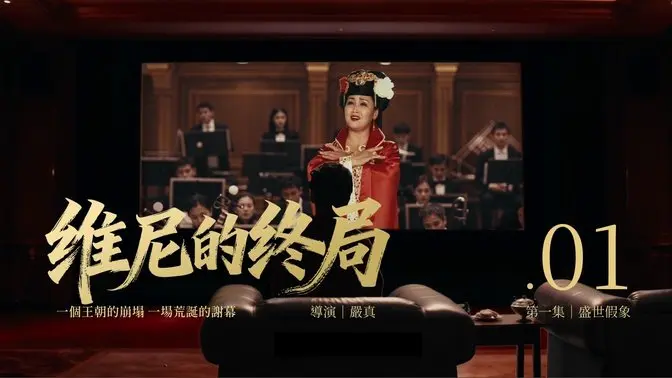
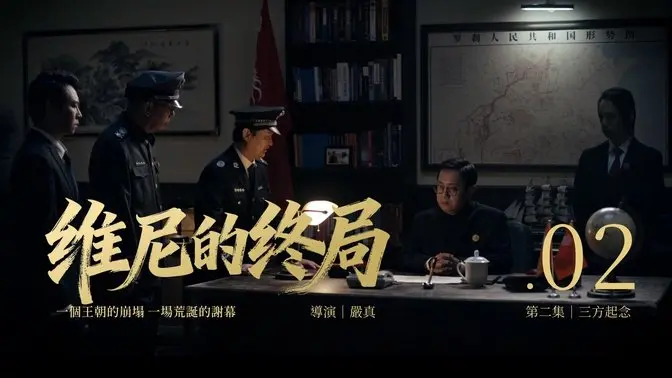
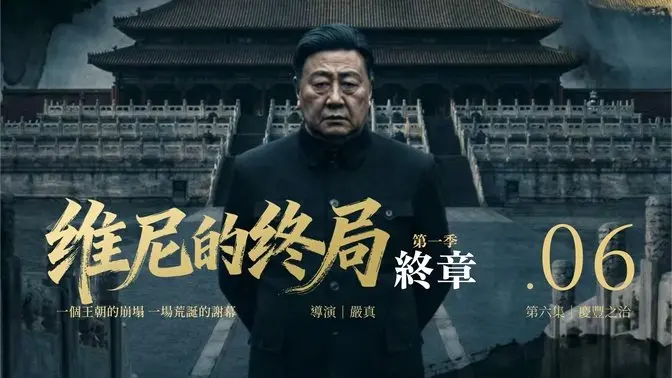
Season 1 consists of six episodes, each approximately 15–20 minutes:
Episode 1: Illusion of Prosperity

Episode 2: Three Sides Converge
Episode 3: Backdoor Mandate

Episode 4: Changing Faces, One Heart

Episode 5: Voices Against the Throne

Episode 6: An Era of Order
(Translated by Chat GPT. Chinese Version: 《維尼的終局》影評:當現實足夠荒誕)
Comments