

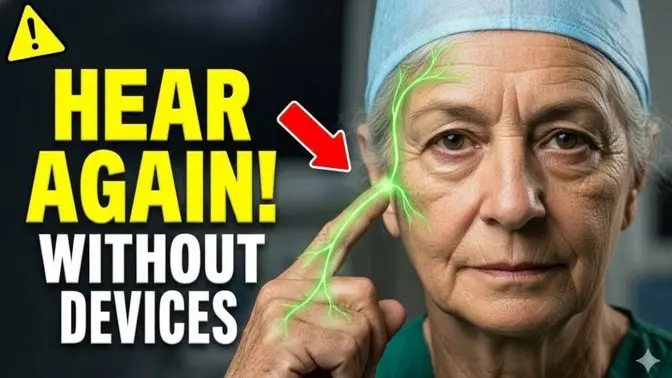
Imagine watching your loved ones laugh… but missing the words that made them laugh in the first place.
For millions of adults over 60, that moment is painfully familiar. Hearing becomes muffled, conversations feel exhausting, and many assume the only solution is a hearing aid. But here’s the surprising part: not all hearing difficulties start in the ear itself.
Sometimes, the issue is how efficiently your brain receives and processes sound.
And that opens the door to simple, practical strategies that may help.
The Common Misconception About Hearing Loss
Most people believe age-related hearing decline is purely mechanical — tiny structures in the ear wearing out like old parts.
There’s truth to that. Age-related hearing loss (presbycusis) often involves damage to delicate hair cells in the inner ear. But research also shows that circulation, nerve signaling, posture, and muscle tension influence how clearly sound is perceived.
In other words:
Hearing is not just about your ears. It’s about the entire ear-to-brain pathway.
When blood flow is reduced, muscles around the jaw and neck are tense, or the nervous system is overstressed, sound processing can feel dull or tiring — even if the ear itself still works reasonably well.
That’s why some people experience improvements from lifestyle changes, relaxation techniques, or physical therapy targeting the head and neck.
Why Conversations Feel So Exhausting
If you’ve ever felt mentally drained after a noisy dinner or group conversation, you’re not imagining it.
When sound signals are less clear, the brain works overtime to “fill in the blanks.” This increased cognitive effort is linked to:
- Listening fatigue
- Reduced concentration
- Social withdrawal
- Increased mental strain
Protecting hearing clarity isn’t just about sound — it’s about protecting brain energy and quality of life.
A Simple 3-Minute Routine That May Help
While no exercise can reverse permanent inner-ear damage, gentle stimulation around the ear and jaw may support circulation, relaxation, and sensory awareness.
Here’s a safe, easy routine you can try:
1️⃣ Posture Reset (30 seconds)
Sit upright with shoulders relaxed and chin level.
Take five slow breaths. Proper alignment helps blood flow to the head and neck.
2️⃣ Gentle Massage Behind the Earlobe (30 seconds)
Using two fingers, make small circular motions where the earlobe meets the jaw.
Use light pressure — you should feel warmth, not pain.
3️⃣ Massage Along the Bone Behind the Ear (30 seconds)
Move upward behind the ear along the skull (mastoid area) with slow strokes.
4️⃣ Slow Jaw Movement (20–30 seconds)
Open and close your mouth gently 10 times to release tension around the ear.
5️⃣ Humming Breaths (1 minute)
Inhale through your nose for 4 seconds.
Exhale slowly while humming softly.
Repeat 5 times.
(Humming has been shown to increase nitric oxide in the nasal passages, which supports blood vessel dilation.)
6️⃣ Light Tapping Around the Ear (20 seconds)
Use fingertips to gently tap around the outer ear to stimulate sensory nerves.
Total time: about 3 minutes.
Evidence-Based Habits That Support Hearing Health
Beyond exercises, science strongly supports these lifestyle factors:
- Stay hydrated — inner ear function depends on fluid balance.
- Walk regularly — aerobic activity improves circulation to the brain.
- Manage stress — chronic stress constricts blood vessels.
- Maintain good posture — forward head posture can strain neck structures.
- Engage with sound — music, conversation, and nature sounds stimulate the brain’s auditory pathways.
These habits benefit not only hearing but also memory, balance, and overall brain health.
Important: Know the Limits
Exercises and lifestyle changes can help comfort, clarity, and fatigue in some cases — but they are not a cure for:
- Moderate to severe age-related hearing loss
- Noise-induced damage
- Inner ear diseases
Hearing aids and medical care remain essential tools when structural damage is present.
Seek medical attention immediately if you experience:
- Sudden hearing loss
- One-sided hearing changes
- Vertigo or severe dizziness
- Ear pain or discharge
The Bigger Picture: Hearing Is Connection
People who maintain strong social engagement tend to experience better cognitive health and longevity.
And hearing plays a huge role in staying connected.
Even small improvements — less fatigue, clearer speech, more confidence — can make conversations enjoyable again.
Your First Step Starts Today
You don’t need expensive equipment to begin supporting your hearing health.
Start with three minutes.
Sit up straight. Breathe slowly. Gently stimulate the areas around your ears and jaw. Take a short walk. Drink some water.
Small actions, repeated daily, create powerful changes over time.
Try the routine today — and give yourself the chance to hear life a little more clearly.
Comments