

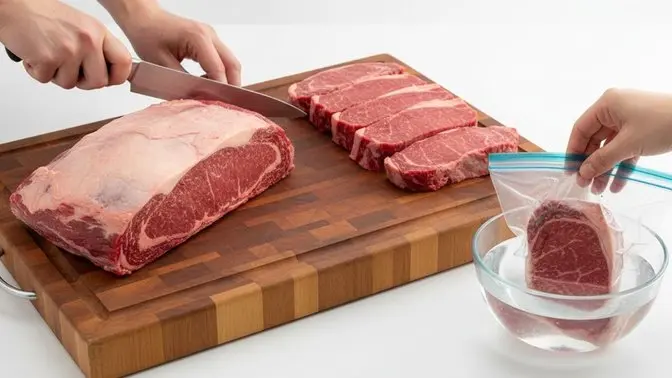
What if the secret to maintaining a high-protein, health-conscious diet wasn't finding a cheaper type of food, but simply changing how you buy it? Many people believe that eating premium cuts of beef like New York Strip or Ribeye is a luxury reserved for special occasions—or a habit that will quickly drain your bank account. However, there is a simple "insider" trick used by savvy carnivores and budget-conscious foodies that can save you $60 or more in a single grocery trip, all while improving the quality of your meals.
The misconception is that you are stuck with the prices displayed in the glass case. The reality? You’re often paying a "convenience tax" of $4 to $5 per pound just to have a butcher slice the meat for you. Here is how you can take control of your health and your finances by mastering the art of the subprimal cut.
1. The Power of the Subprimal
A "subprimal" is a large, wholesale-sized hunk of meat before it has been processed into individual steaks. To put the savings in perspective, a Prime-grade New York Strip subprimal is often priced around $15.99 a pound, whereas the pre-cut steaks sitting right next to it in the same display can cost $19.99 a pound.
By purchasing the larger cut—typically around 15 pounds of meat—you save roughly $60 instantly for the exact same quality. Whether you are following a strict carnivore protocol or simply increasing your protein intake for metabolic health, this switch makes high-quality nutrition significantly more accessible.
2. Don’t See It? Just Ask
One of the biggest hurdles for shoppers is that subprimals aren't always sitting out on the shelves. The secret is to speak directly to the butcher. Most major retailers like Costco, Sam’s Club, or local grocery stores keep these large "rolls" (such as chuck rolls, New York strips, or ribeyes) in the back. Butchers are usually happy to sell them to you whole because it saves them the labor of slicing, trimming, and individual packaging.
3. Preparation: The "Pro" Setup
Processing your own meat at home is surprisingly simple and requires only a few basic tools:
- A Large Cutting Board: You need a stable, spacious surface to accommodate a 15lb piece of beef safely.
- A Sharp Knife: Counter-intuitively, a dull knife is more dangerous because it requires more force and is prone to slipping. Sharpen your blade before you start to ensure it glides through the muscle fibers.
- The Freezer Trick: For the best results, place the meat in the freezer for about two hours before cutting. You don’t want it rock solid, but "semi-frozen" firmness prevents the meat from sliding around, allowing you to cut uniform, professional-looking steaks.
4. Customizing Your Nutrition
When you process your own meat, you move from being a passive consumer to an active curator of your nutrition:
- Optimal Thickness: Aim for about 1.5 to 2 inches thick (roughly two fingers wide). Thicker steaks are much more forgiving during the cooking process, making it easier to achieve a perfect medium-rare center without overcooking the exterior.
- The Fat Cap: Commercial butchers often trim away the fat to make the meat look "leaner" for marketing purposes. However, if you are focused on healthy fats for satiety, hormonal health, and sustained energy, you can choose to leave that fat on. This ensures better flavor and preserves fat-soluble nutrients.
5. The "Poor Man's Vacuum Seal"
Once your steaks are cut, proper storage is vital to prevent oxidation and freezer burn. You don't need an expensive vacuum-sealing machine; you can use the Water Submersion Method:
- Place an individual steak in a high-quality freezer bag and seal it 75% of the way.
- Slowly lower the bag into a bowl of water. The water pressure naturally pushes the air out of the bag through the small opening.
- Seal the final corner just before the opening hits the water line. This creates a near-perfect vacuum seal that keeps your meat fresh for months.
Take the First Step Toward Better Health
Improving your health doesn't have to be an expensive endeavor. By adopting these simple "butcher" skills, you can afford the high-quality protein your body needs to thrive while keeping your budget intact. High prices should never be a barrier to eating the best food possible.
Your challenge for this week: On your next grocery run, skip the pre-packaged steaks. Head to the butcher counter, ask for a subprimal, and take the first step toward a healthier, more sustainable way of eating. Your body—and your wallet—will thank you!
Comments