

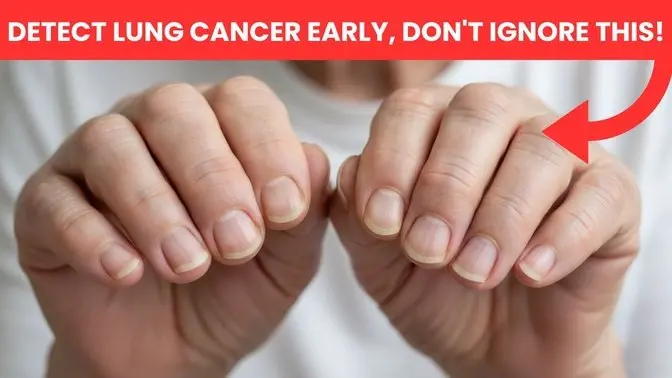
For many seniors, the first sign of a serious health issue is pain. We are conditioned to believe that if nothing hurts, nothing is wrong. However, in the case of lung cancer—one of the most "silent" diseases—waiting for physical discomfort can be a dangerous mistake.
The lungs possess very few pain receptors, meaning a tumor can grow for months without triggering an alarm. While the chest may remain quiet, the body often sends urgent messages to the periphery. Your fingernails, in particular, serve as sensitive messengers that can reveal internal struggle long before a cough or shortness of breath develops.
Why the Nails React First
The connection between your lungs and your fingertips is rooted in biology, not coincidence. Your nails are incredibly vascular and thin, making them the body's primary indicator of oxygen flow and internal chemistry.
When a tumor interferes with the lungs, it disrupts the oxygen exchange and alters blood flow. Even a subtle drop in oxygenation triggers a survival response: the small blood vessels near the nails widen to increase circulation. This compensatory effort physically reshapes the nail bed. Additionally, tumors can release chemicals that cause inflammation, which the fingertips sense and react to almost immediately.
8 Warning Signs Seniors Should Not Ignore
Seniors often mistake nail changes for simple aging, dryness, or the effects of gardening. However, if you notice the following shifts, your body may be signaling a deeper issue:
- Softening of the Base: The nail may feel "spongy" or loose when pressed.
- Rounding (Clubbing): The once-flat surface begins to curve outward, resembling the top of a spoon.
- Widening: The nail bed looks broader from side to side, and the surrounding skin may appear raised.
- Unusual Shine: The nails take on a glossy, glass-like appearance even without polish.
- Flattened Angle: The natural downward angle between the nail and the cuticle disappears, creating a smooth, blended line.
- Fingertip Swelling: Known as "drumstick swelling," the tips of the fingers appear puffier or more bulbous than usual.
- Accelerated Growth: A sudden increase in how fast your nails grow can indicate heightened blood vessel activity due to oxygen changes.
- Downward Tilting: The tip of the nail slopes forward, appearing to wrap around the end of the finger.
The Danger of "Feeling Fine"
The greatest deception of lung cancer is the absence of early symptoms. Many seniors delay medical consultations because they can still garden, cook, and exercise without pain. They attribute physical changes to external factors like soap or arthritis.
It is vital to shift your mindset: health does not always equal comfort. Early-stage lung disease lives in the shadows, and waiting for "clarifying" symptoms—like a persistent cough or fatigue—often means the disease has already advanced.
Taking Action: A Proactive Routine
Recognizing these signs is an opportunity for early intervention. If you detect changes, follow this protocol:
- Establish a Weekly Check: Once a week, examine your hands in natural morning light. Memory can be fallible, so consider taking a photo to track changes over time.
- Focus on the Index and Thumb: While you should check all fingers, these two often show changes first due to their robust blood flow.
- Apply the "Rule of Two": If you see a change once, monitor it. If it persists for a second week, it is no longer a coincidence—it is a signal.
- Consult a Professional: Schedule a medical evaluation. Be specific with your doctor about the changes you’ve seen. Initial tests typically involve a painless chest X-ray or a CT scan for a more detailed view.
Empowerment Through Awareness
Finding a change in your nails is not a cause for panic; it is an advantage. These signals appear early, giving you the time necessary to act and protect your health. When the underlying lung condition is addressed, the nails often restore themselves, regaining their normal shape and texture.
By learning to read the quiet whispers of your body, you move from a state of uncertainty to one of control. Your health is literally at your fingertips—don't ignore what they are trying to tell you.
Comments