

Early Life (1471–1490)
Family Background
Any discussion of Albrecht Dürer’s early life begins with his family background. Born on May 21, 1471, in Nuremberg, Germany, he was the third child of Albrecht Dürer the Elder, a successful goldsmith, and Barbara Holper. His father, originally from Hungary, had moved to Nuremberg in 1455 and became a prominent figure in the city's artisanal community. Dürer had numerous siblings, but only three survived to adulthood. The influence of his family, particularly within the crafts, would play a significant role in shaping his artistic sensibilities.
Childhood Influences
About Dürer’s formative years, it is crucial to recognize that his environment cultivated a space ripe for creativity. Growing up in a prosperous city known for its publishing and luxury trades, you would find yourself surrounded by artists and craftsmen, which greatly influenced Dürer. The artistic legacy of Nuremberg, combined with his father’s skills as a goldsmith, instilled in him an appreciation for the intricacy of design. The connections his family had to the arts, including his godfather Anton Koberger, one of Germany’s most successful publishers, enriched Dürer’s early exposure to both art and the bookmaking industry.

Portrait of Dürer’s Mother Barbara, née Holper, 1490, oil on fir wood, 47.2 × 35.7 cm, Germanisches Nationalmuseum Nuremberg (Gm 1160)
Considering Dürer’s upbringing, it becomes clear that his childhood was marked not only by familial connections but also by a community that valued artistic innovation. Nuremberg was a hub of cultural exchange and a center for publishing, allowing him access to varied artistic styles. As you reflect on this environment, it's evident that it played a vital role in sparking Dürer’s interest in both drawing and printmaking, some of which he engaged with even as a child.
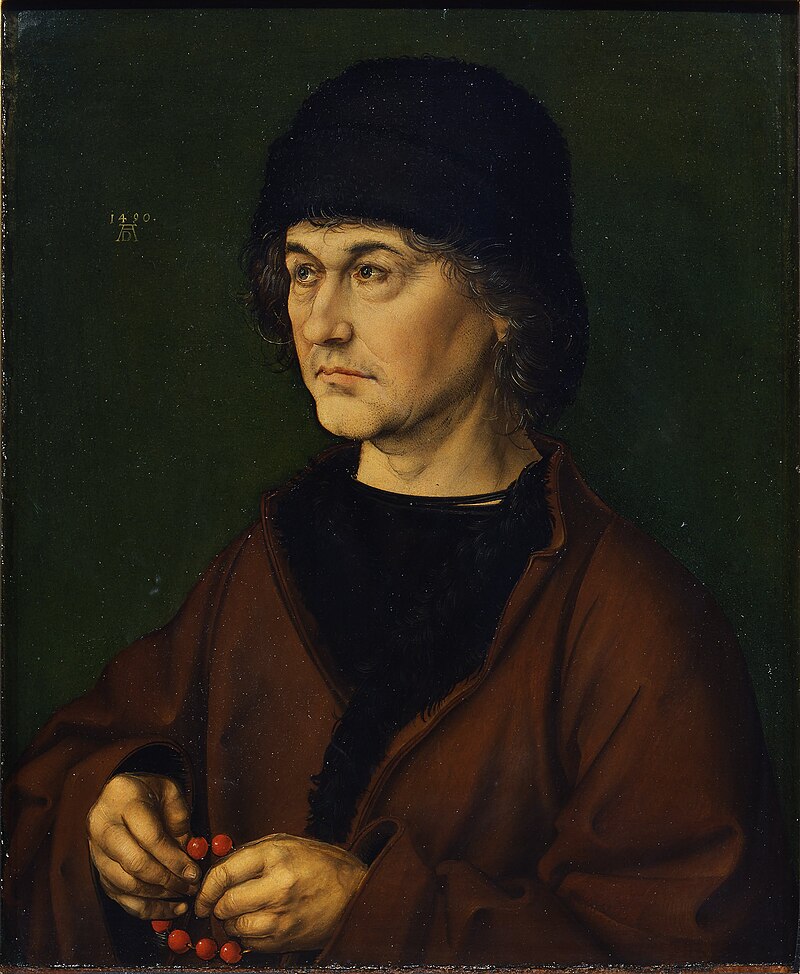
Albrecht Dürer the Elder with a Rosary, 1490, oil on panel, 47.5 × 39.5 cm, Uffizi, Florence
Early Artistic Training
Early in his artistic journey, Dürer began his formal training at the age of fifteen, apprenticing under Michael Wolgemut in Nuremberg. This experience would set the stage for his later successes as an artist and printmaker. Throughout his seven-year apprenticeship, he immersed himself in the technical skills of drawing, woodcutting, and printmaking, focusing on an Italian style that would later influence his own unique approach to art. Dürer's exposure to different techniques and materials provided a foundational understanding that you would later see reflected in his work.
Another significant aspect of Dürer’s early artistic training was his engagement with the vibrant artistic community found in Nuremberg. The city was home to numerous artists and craftsmen, fostering an environment where ideas and techniques flourished. This community connection is crucial to understanding how Dürer honed his craft amidst the artistic dialogues of his time. His willingness to learn from experienced masters and explore different styles during these formative years laid the groundwork for his future innovations in the European art scene.

The earliest painted Self-Portrait (1493) by Albrecht Dürer, oil, originally on vellum (Louvre, Paris)
Wanderjahre and Marriage (1490–1494)
Assuming you're curious about the formative years of Albrecht Dürer, it is crucial to explore his Wanderjahre—a tradition whereby apprentices travel to hone their skills with different masters. Dürer departed Nuremberg in 1490, setting off on a journey that would take him through various parts of Europe, including Colmar and Strasbourg. These travels were not just a means of seeking knowledge but were also pivotal in shaping his artistic style. During this period, he sought out Martín Schongauer, the preeminent engraver of Northern Europe, hoping to learn from him; however, Schongauer had passed away shortly before Dürer's arrival, which meant that he would have to forge his own path in the world of art.
Apprenticeships and Travels
Travels across regions provided you with invaluable exposure to different artistic styles and cultural influences. You'll find that Dürer learned from the art and intricacies of printing while working with Schongauer’s brothers, who welcomed him into their home. His time in cities like Strasbourg allowed him to experience various forms of sculpture and painting, enriching his understanding of the visual arts. This journey proved crucial, not only for the development of his technical skills but also for the expansion of his creative horizons. Dürer's experiences would later influence many of his most notable works, as he blended Northern artistic traditions with the burgeoning Italian Renaissance style.
Personal Growth and Artistic Development
Beside Dürer's travels, his personal development during these years played a significant role in defining the artist you know today. The exposure to different artistic environments and traditions contributed to his burgeoning confidence and creative exploration. He cultivated a keen eye for proportion and detail, influenced by observing the sophisticated techniques of Italian masters he encountered during his travels. This foundation would serve as the bedrock for his later innovations in printmaking and engraving, with Dürer notably becoming the first major Northern European artist to adopt classical motifs, thereby enriching the art scene of his time.
With these formative experiences, Dürer not only refined his technical abilities but also deepened his understanding of artistic theory, incorporating principles of mathematics and perspective into his work. This integration of Italian techniques with Northern Gothic styles ultimately paved the way for what would become hallmark features of the Northern Renaissance. The methodical exploration of the human form and nature became fundamental elements of his groundbreaking works, demonstrating an evolution that resonated well beyond his lifetime.
Marriage to Agnes Frey
Any discussion of Dürer’s life must also address his marriage to Agnes Frey, which took place shortly after his return to Nuremberg in 1494. This union was arranged during his absence and formed a significant part of his later life. Although the marriage offered a stable domesticity, it has often been characterized by tension and dissatisfaction. Dürer’s correspondence reflects a tumultuous dynamic between him and Agnes, particularly indicating a strain during a time when his devotion to his art often overshadowed his marital responsibilities.

Dürer's sketch of his wife Agnes Frey (1494)
In fact, the nature of Dürer’s marriage has sparked considerable discussion among scholars, as many speculate about the impact it had on his work and personal life. While it provided him with the legal framework to operate a workshop, the relationship was reportedly fraught with challenges. Agnes was described unflatteringly in letters, suggesting a lack of harmony in their partnership. This complexity within his personal life may have influenced the thematic exploration found in some of his art, revealing an artist who grappled with inner conflicts much like those that shaped his most enduring pieces.
First Journey to Italy (1494–1495)
Now, during Albrecht Dürer's first trip to Italy from 1494 to 1495, you witness a transformative period in his artistic development. This journey marks Dürer's initial exposure to the Italian Renaissance, a movement that would greatly influence his work and style. Shortly after marrying, and likely seeking to escape the plague raging through Nuremberg, Dürer ventured to Venice, a hub of artistic innovation. Here, he was captivated by the vibrant atmosphere and the advanced techniques that characterized Italian art. You can appreciate how this exposure enriched his understanding of perspective, composition, and the human form, profoundly altering the trajectory of his artistic career.
Exposure to Italian Renaissance
Above all, you should consider how Dürer found himself amidst the extraordinary artistic landscape of Italy, where masterful works by renowned artists defined the era. Although he had been trained in the Northern European tradition, the refined practices and classical motifs in Italian art sparked Dürer's imagination and ambition. The masterpieces he encountered challenged his views, prompting him to adapt and integrate these influences into his own artwork, ultimately laying the groundwork for his contributions to the Northern Renaissance.
Influential Figures Encountered
Behind the allure of the Venetian streets, Dürer also encountered several influential figures whose work left a lasting impression on him. Among them, Giovanni Bellini stood out as a significant inspiration, renowned for his exceptional use of color and light. You can sense the excitement Dürer felt in learning from the best, as he also studied the works of artists like Antonio del Pollaiuolo and Andrea Mantegna. These encounters expanded Dürer's artistic horizons, reinforcing his desire to push boundaries and explore new techniques.
Considering the impact of these interactions, it is evident that Dürer's journey provided him a unique opportunity to engage with the ideas of contemporary artists. His correspondence and observations from this period reveal a deep appreciation for their mastery and techniques. Dürer was not merely a passive observer; he actively absorbed their knowledge and perspectives, which would influence his future works and establish him as a pivotal figure in the art world.
Artistic Techniques and Inspirations
Above all, you can recognize how Dürer's experiences in Italy led him to refine his artistic techniques and seek inspiration from new sources. The influence of Italian art prompted him to explore new methods in printmaking, particularly in engraving and woodcut. His exposure to the intricate details and textures of Italian masterpieces deepened his understanding of shading and perspective. You can see how these newfound techniques started to manifest in his works upon his return to Germany, growing increasingly complex and sophisticated.
Encountered with different artistic styles and concepts, Dürer's engagement with the Italian Renaissance forever altered his approach to art. He learned to merge the precise techniques he honed as a Northern artist with the ideals of proportion and anatomy he absorbed from Italian painters. This combination not only broadened his artistic repertoire but also set him apart as a beacon of innovation during the Northern Renaissance, influencing countless artists who followed.
Return to Nuremberg (1495–1505)
Establishing an Artistic Practice
For many artists, the return to their hometown marks a significant turning point, and for Dürer, it was no different. After spending years honing his skills and absorbing Italian influences, he established his own workshop in Nuremberg in 1495, a move that allowed you to embrace his artistic ambitions. His marriage to Agnes Frey earlier that year was a step towards solidifying his position in the city, and as you investigate into his work from this period, you will see a remarkable convergence of Northern European and Italian stylistic elements. Dürer's ability to blend these influences ultimately set his work apart in the burgeoning art scene of Nuremberg.

Dürer's self-portrait at 28 (1500). Alte Pinakothek, Munich.
Key Works Created During This Period
At the heart of Dürer's artistic output during this period are several key works that showcase his skill and evolving style. His series of woodcuts and engravings, including "The Apocalypse," was pioneering in both technique and composition. You might find it fascinating that these works not only reflect his artistic prowess but also reveal his interest in religious themes, as well as secular narratives, like "The Men’s Bath." Each piece created during this time demonstrates an intricate understanding of form and perspective that would later influence generations of artists.

The Men's Bath, c. 1496, woodcut, 39.2 × 28.3 cm, (Art Institute of Chicago)
Nuremberg during this era became a backdrop for Dürer’s most ambitious projects. His engravings, such as "St. Michael Fighting the Dragon," exemplified his ability to convey deep narrative and emotional depth. The “Great Passion” series also emerged during these years, showcasing profound scenes from the life of Christ. These works were not just art; they were visual storytelling that allowed you to engage deeply with the religious sentiments of the time.
Social and Economic Context of Nuremberg
Practice in Nuremberg provided a vibrant social and economic landscape that greatly influenced Dürer's work. As you explore this period, you will note that Nuremberg was not merely an artist's sanctuary but a bustling center of trade and culture, with various craftsmen, merchants, and intellectuals converging in a city that fostered creativity. This dynamic environment facilitated Dürer's exchange of ideas and resources, enabling him to innovate while drawing on local traditions.
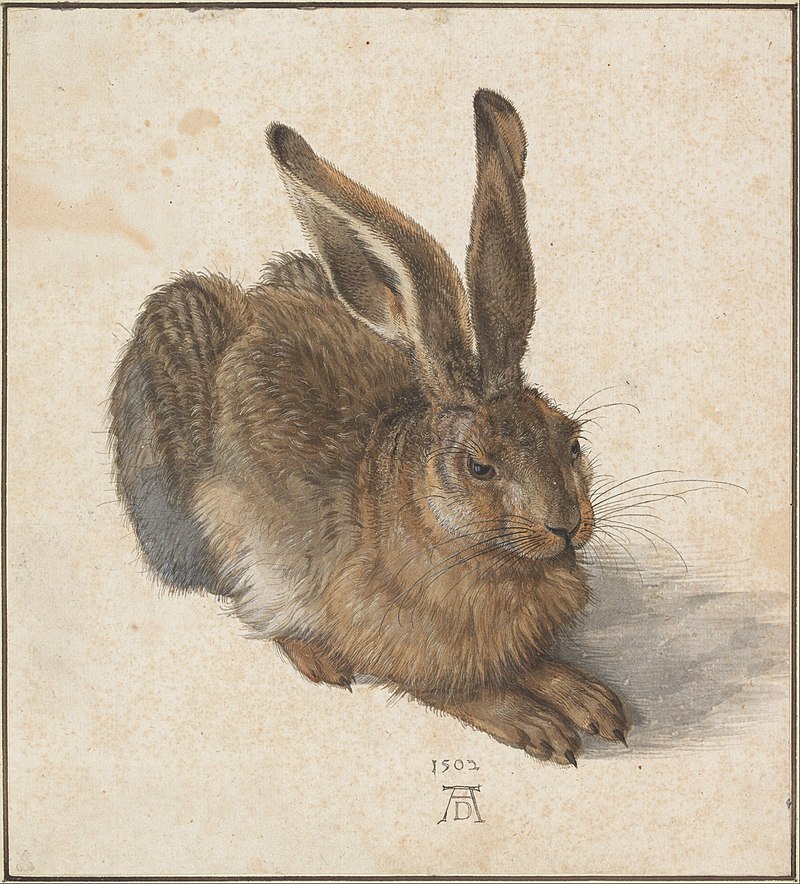
Young Hare, 1502, watercolour and gouache, 25 × 22.5 cm, Albertina, Vienna
Economic stability in Nuremberg allowed you to invest in art and culture, creating a supportive marketplace for artists. The presence of influential patrons, including Emperor Maximilian I, helped secure Dürer's reputation and emerged as a fundamental element in his artistic journey. This blend of trade, commerce, and intellectual inquiry ultimately created a fertile ground for Dürer's development and the flourishing of the Northern Renaissance.
Second Journey to Italy (1505–1507)
All eyes were on Albrecht Dürer as he launched on his second journey to Italy, a trip that would deepen his understanding of Renaissance art and further cement his stature as one of the leading figures of the Northern Renaissance. Your journey began in 1505, motivated by the desire to immerse yourself in the advanced artistic culture of Italy. This exploration allowed you to engage more profoundly with the techniques, themes, and broader ideas that were dominating the artistic discourse of the time. As a result, you would return to Nuremberg with a wealth of new ideas that would shape your artistic approach in the years to come.
Further Exploration of Renaissance Ideas
Renaissance ideals flourished during Dürer's time in Italy, where you were able to study works from renowned masters such as Giovanni Bellini and Leonardo da Vinci. Your exposure to these artists not only refined your technical skills but also enhanced your appreciation for classical motifs and the study of human anatomy. By observing their work, you began to incorporate elements of proportion and perspective into your own art, elevating it beyond the traditional Northern styles and creating a unique synthesis that would define your legacy.
Artistic Collaborations and Influences
Between your time spent in Venice and the brilliance of Florence, your artistic journey was marked by significant influences and potential collaborations. This period opened doors to lucrative networks and intellectual exchanges with other artists, broadening your horizons and enhancing your craft. Engaging with these influencers not only nurtured your artistic development but also helped solidify your reputation as a skilled practitioner in the field. The connections you forged during this journey played a pivotal role in the evolution of your work, blending Northern Gothic traditions with emerging Italian styles.
To further understand the landscape of art in this era, you collaborated with various artists and craftsmen, exchanging thoughts and techniques that would ultimately enrich your portfolio. Engaging in discussions on art theory and practical execution allowed you to absorb Renaissance concepts deeply, influencing works such as your engravings and woodcuts. Consequently, this spirit of collaboration was crucial in shaping your signature style, making it a fusion of Northern precision and Italian innovation.
Lasting Impact on Dürer’s Style
Impact from your second journey to Italy significantly transformed your artistic trajectory, introducing elements that would be apparent in your subsequent works. The exposure to advanced techniques allowed you to innovate your printing methods and experiment with perspective and proportion. This evolution of style can be seen in pieces created after your return, showcasing a blend of your original approach with the Renaissance ideals you encountered during your travels.
In fact, the influence of your Italian experiences is evident in the way you approached your subject matter and composition in your future works. The synthesis of Northern detail with Southern luminosity became a hallmark of your painting and printmaking, marking a shift in the artistic landscape of Northern Europe. As you integrated these elements into your style, you not only expanded your personal repertoire but also contributed to the broader artistic conversation of the time, ensuring your place in the annals of art history.
Nuremberg and the Masterworks (1507–1520)
After returning to Nuremberg, Albrecht Dürer began on a period of profound artistic evolution that would solidify his reputation across Europe. This time marked a significant merging of northern European artistic traditions with the Italian influences Dürer had absorbed during his travels. In his quest for perfection in technique, you can observe how Dürer’s works evolved—he began to experiment with the burin for engravings, which allowed him to achieve a tonal range that had never before been seen in Northern art. The careful detailing and intricate compositions in his pieces reflected a growing mastery, where each stroke illustrated his deep understanding of light, shadow, and human anatomy. You see this evolution mirrored in his growing significance not just as a painter but as a printmaker and theorist of the Renaissance
Evolution of Artistic Style
Around the turn of the century, Dürer’s artistic style began to mature, reflecting a blend of the Gothic and Renaissance aesthetics. As you explore his works from this time, you will notice a shift towards more naturalism and a clearer representation of human figures set against detailed backgrounds. Dürer started to engage with classical themes, drawing inspiration from the works of his Italian contemporaries, while infusing them with a distinctly Northern sensibility. His adaptability allowed him to innovate within the woodcut medium, leading to prints that were more refined and nuanced compare
Notable Works and Their Significance
After delving into this transformative period, several notable works emerge that underscore Dürer’s impact on art history. His engravings of "Knight, Death and the Devil," "Saint Jerome in his Study," and "Melencolia I" are prime examples of his artistic maturity and depth of thought. These works not only showcase his technical prowess but also encapsulate complex themes of human existence, morality, and the pursuit of knowledge. By studying these pieces, you gain insight into the cultural and philosophical currents of the Renaissance, which Dürer adeptly navigated and synthesized within his art.

St. Jerome in His Study (1521), oil on oakwood, 59. × 48.5 cm, Museu Nacional de Arte Antiga, Lisbon. Dürer's most important painting created during his fourth and last major journey.
It is vital to recognize that Dürer's significance extends beyond mere aesthetics; his work carries substantial cultural weight, influencing future generations of artists and establishing a visual language that would resonate through the ages. His explorations in art and theory contributed to a broader understanding of perspective, proportion, and the human figure, making him a seminal figure in the transition from the medieval to the modern world of art. As you examine these selected masterworks, consider how they reflect Dürer’s individuality while also serving as a bridge between different artistic traditions.
Comments