


Immanuel Kant (1724-1804) was a German Enlightenment thinker who is widely regarded as one of the most important philosophers of any period. His most famous works of critical philosophy include The Critique of Pure Reason, which challenged the dominance of empiricism and rationalism in Enlightenment thought and shifted the focus of philosophy to an examination of general concepts and categories.
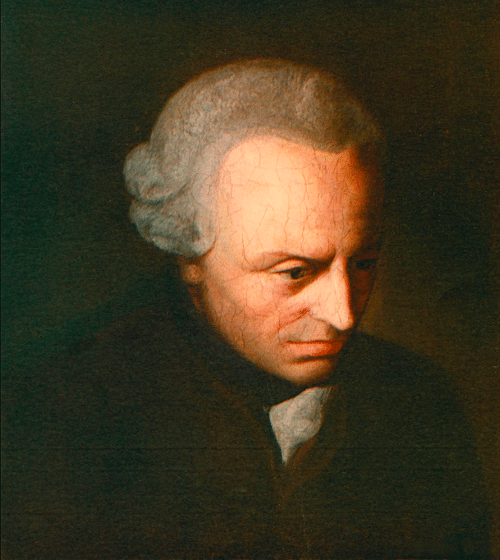
Immanuel Kant, 1790
Early Life
Immanuel Kant was born in Königsberg, East Prussia (today's Kaliningrad, Russia) on 22 April 1724. His parents, both Pietist Lutherans, were possibly of Scottish descent. His father earned a modest living as a maker of harnesses and saddles, but Immanuel had the opportunity to further his education thanks to a priest who recognised his early intellectual talent. Aged 16, Kant began to study at the University of Königsberg, starting with theology. Kant graduated in 1746 and worked as a private tutor for several different families for most of the next decade. He returned to his old university and gained a master's degree in 1755. Acquiring a license as a Privatdozent, he continued to eke out a living teaching more academic subjects, which included mathematics, natural sciences, and history to private students. His fortunes improved significantly in 1770 when he secured a professorship of logic and metaphysics at the University of Königsberg, a position he would hold until 1796. Kant went on to become the rector of the university.
Character
Kant lived a remarkably quiet life of study and teaching, as here summarised by the historian H. Chisick:
Kant was not only a profound and original thinker, but also an articulate and popular teacher. He lived a highly disciplined private life, devoting fixed and long hours to study, but he also valued company, and was socially accomplished.
(238)
S. Blackburn notes that "his life was orderly to the point of caricature" (258). Locals in Königsberg were even said to set their timepieces to the regularity of Kant's daily walks. Kant never married and he spent all his life in Königsberg.
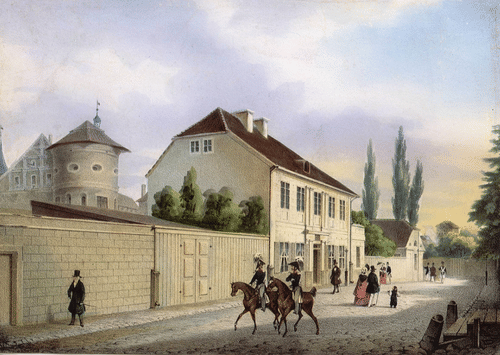
Friedrich Heinrich Bils (Public Domain)
Source: https://www.worldhistory.org/Immanuel_Kant/
Comments