


All those who have studied the Bible know it: Mary, the mother of Jesus. People in many religions and in many places in the world worship her. Who is this saint and "Mother of God"? What does the Bible say about her? What place does she occupy in Christianity? And, is she also a model for women today?
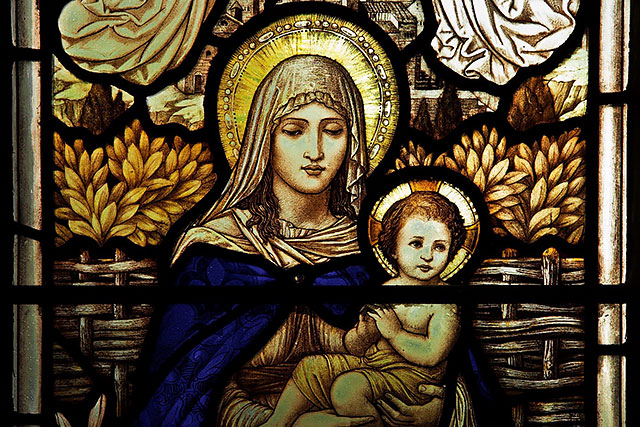
Table of contents
- The life of Mary Mother of Jesus
- Mary in the Bible
- Mary and Jesus
- Marian devotion in Christianity
- What does Mary mean for women today?
- FAQ: The most important information about Maria
The life of Mary Mother of Jesus
Mary, a Jewish woman from Palestine and mother of Jesus, plays only a minor role in the Bible. Who was Mary? The Holy Scriptures give only vague information about her.
Mary in the Bible
Nothing is written in the Bible about Mary's parentage or youth. In the New Testament, she appears by name in the birth narratives of the Evangelists Matthew and Luke and in the Acts of the Apostles, where she is often referred to as "Mother of Jesus" However, the texts of the two evangelists do not count as reliable biographical sources, since the proclamation of Jesus Christ is central to them.
An indication of their prominent position is given by the words of the angel Gabriel in Luke 1:28-30:
And he came in to her and said: Hail, beloved! The Lord is with you. But she was dismayed at the word and wondered what kind of greeting it was. And the angel said to her, "Fear not, Mary. For you have found favour with God.
Mary's life is only described in more detail in religious writings outside the Bible - the so-called Apocrypha. However, these are not intended as an account, but as a personal interpretation of an event by its author. An example is the Protoevangelium of James from the 2nd century, which refers to the Gospels. In it we read, among other things, that Mary is the daughter of the owner of the flock, Joachim, and his wife Anne.
Since the Bible tells only a little about Mary, legends and myths have formed around the Mother of God. A myth is also the biblical statement that Mary was still a virgin when Jesus was born. Only the Greek translation turned a 'young woman', as the original Hebrew says, into a 'virgin'. The virgin myth, however, has become the starting point for a deep Marian devotion in the Catholic Church.
Mary and Jesus
During the Christmas season, as a believer, there is no getting around Mary: no nativity set without the 'Mother of God', who gave birth to the Son of God and Saviour in perfect purity. After his birth he had to flee to Egypt to save his newborn son from Herod's persecution. When they finally returned to their hometown of Nazareth, Jesus spent more time in the temple and with people on the fringes of society than with his own family. The relationship with his mother was not without its tensions. Thus, in the biblical passage about the wedding in Canaan (John 2:4), Jesus asked his mother: "Woman, what shall I do with you? My hour is not yet come". With this he expressed that he obeyed his own law and that faith in God was more important than family. Nevertheless, Mary remained the first disciple at her Son's side and lived through even his most difficult hours - torture and death in the cross. She died according to different hypotheses, both in Israel and Turkey. According to Christian tradition, she is buried in Mary's tomb in the Kidron Valley in Jerusalem.
Marian devotion in Christianity
Although historically the Gospels testify to Mary only indirectly and neglect her in their texts, the veneration of Mary, which originated in popular piety, plays an important role in the official teaching of the Church. Why is Mary, the mother of Jesus, so venerated by the faithful? Mary was no one special, just one girl among many. But her deep faith and trust in God distinguished her from other women of her age.
Previous
Madonna Gardenafrom 26 €
Madonna R.I.from 50 €
Madonna of the Alpsfrom 41 €
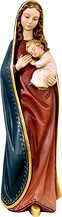
Madonna of Lovefrom 32 €
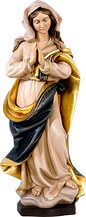
Praying Madonnafrom 50 €
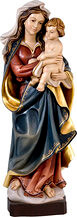
Madonna Tyrolfrom 75 €
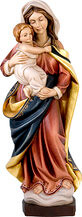
Madonna R.I. Newfrom 59 €
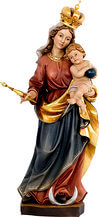
Madonna Bavariafrom 49 €
Next
- 1
- 2
- 3
Mary represents the interface to heaven for believers - although Mary is never worshipped, only venerated. Adoration represents the veneration of God. But for a Christian, Mary and the other saints are 'only' admirable religious models, from whom one seeks help and with whom one has a personal dialogue. A believer would therefore never say: 'Holy Mary, I adore you and I praise you'.
Mary is "one of us", she knows human life with all its concerns and needs from personal experience. This makes her sympathetic. By welcoming Mary into heaven after her death, Jesus showed her his promise to rise again after death.
Among all saints Mary occupies a prominent position in the Catholic Church. This is demonstrated by the four binding declarations of faith in Mary, the so-called Marian dogmas.:
- Mary as Mother of God: At the Council of Ephesus in the year 431 it was decided that Mary is not only the "Mother of Jesus", but must be called the "Mother of God". Because in the Son the divine nature is united with human nature.
- Mary as an eternal virgin: According to the teaching of the Church, Mary was a virgin before, during and after the birth of Jesus.
- Mary as immaculate conception: With the fall of Adam and Eve, original sin came into the world, in which every human being participates as a descendant. God saved only Mary from the stain of original sin.
- Mary's Assumption into Heaven: Mary was assumed into heaven as a human being with body and soul.
Numerous small and large Marian shrines also testify to the deep attachment to Mary. The faithful seek refuge with their small and great sorrows and, like a mother, rely on her joy but also on the blows of fate. In gratitude for the support of the Mother, the first Marian shrines were founded on the initiative of individual believers. The largest Marian shrines in the world today are in Guadalupe (Mexico), Aparecida (Brazil), Lourdes (France), Fatima (Portugal) and Czestochowa (Poland), which welcome millions of pilgrims every year.
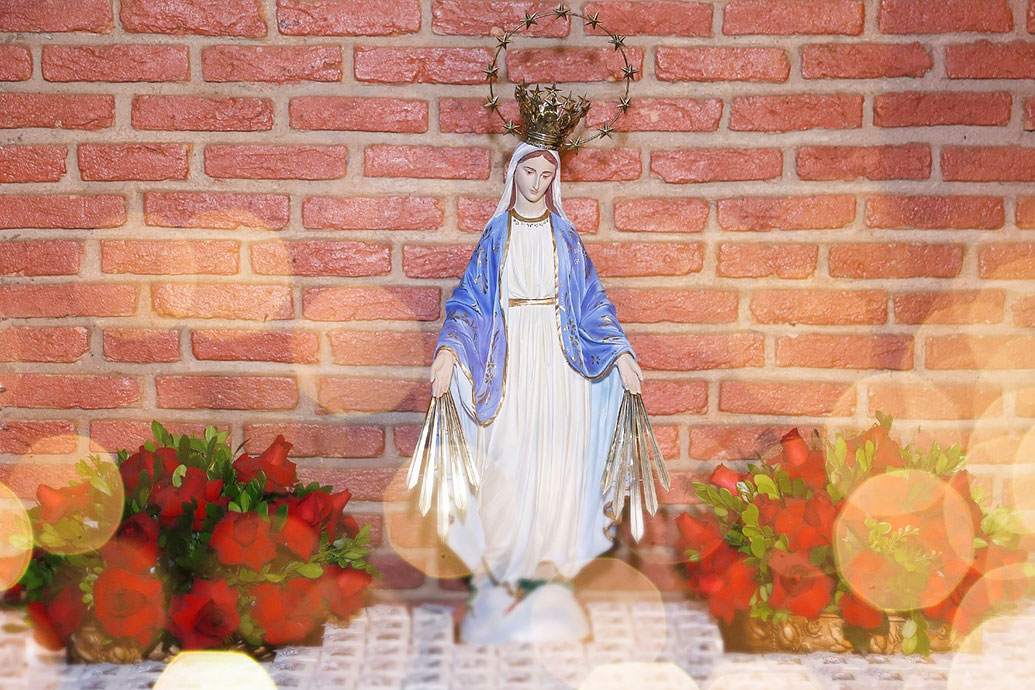
Marian feasts are feasts and days of remembrance in the liturgical year that serve to venerate Mary.
The church also has a rich tradition of Marian feasts and commemorations. In this way, it recognises that Mary is the one person who has accepted God's love without reservation. Many Marian feasts are known to most of the faithful, while others are less well known:
- Our Lady of Grace (2 July): the feast of the Visitation of Mary commemorates the visit ("Visitation") of the pregnant Mary to her cousin Elizabeth, who is also pregnant. She greets her cousin with the words: "Blessed are you among women and blessed is the fruit of your womb. Who am I that the mother of my Lord should come to me? Today we find Elizabeth's greeting in the Hail Mary and the Rosary.
- The Queenship of the Blessed Virgin Mary (22 August): on the feast of Mary Queen, the faithful celebrate the Mother of God Mary as Queen of Heaven - and thus also as Queen of the Angels and Saints. It represents the completion of Mary's glorious reception into heaven.
- Feast of the Most Holy Name of Mary (12 September): the feast of the Name of Mary dates back to a feast in honour of the name of Mary. Pope Innocent XI made this feast compulsory for the whole Church after the Christian armies had victoriously ended the siege of Vienna by the Turks on 12 September 1683. The armies carried the banner with Our Lady of Protection inside, who was to protect them during the battle.
- National Day of the Virgin of the 7 Sorrows of Mary (15 September): century people venerate Mary as a suffering and compassionate woman. The day of remembrance is depicted in Mater Dolorosa, the suffering mother.
What does Mary mean for women today?
What does Our Lady mean for women in times when religious customs such as May devotion are increasingly forgotten? An ideal of womanhood based on virtues such as obedience, humility, submission and chastity no longer has anything in common with the reality of modern women's lives. This is also said by the women of the "Maria 2.0" Münster Initiative, who work for a change in the Catholic Church. They do not see in Mary the ideal image of the silent, serving woman.
But in addition to this traditional image, there is another side of Our Lady that makes Mary attractive again for some women. She is a woman who, despite an uncertain future, never loses her courage and always makes the best of her situation, for example when she flees to Egypt with her son. Maria also has both feet on the ground and knows the concerns of parents with their rebellious offspring.
Archbishop of Munich and Freising, Cardinal Reinhard Marx, sees Maria in an interview as a confident woman, which invites us to reflect again and again on the right relationship between the sexes.
Comments