


Jiang Tangyao, also known as Yao, also known as Tang Yao, was the first emperor of Emperor Yao Tao Tang's regime in the Chinese clan alliance era. His grandfather was Jiang Mei, the fourteenth emperor of Emperor Zhi Qingyang's regime, and his father was the sixteenth emperor Jiang Sisui. , the fifteenth emperor Jiang Siji was his uncle, and the seventeenth emperor Jiang Kuanger (the emperor of prey) was his eldest brother. Tang Yao's father Jiang Sisui married Chen Feng's daughter Qingdu and lived in Danling.
In the twenty-fourth year of Sisui (Renwu, 2379 BC), Qingdu gave birth to Tang Yao. Yao was smart and eager to learn from a young age, until he was 15 years old. He was conscientious and eloquent. He was sealed in Taoyi (now Nan Taoqiu, Heze City, Shandong) by his father; Called 'Tang Yao'. His father, Jiang Sisui, was the Emperor Ku in the history books, and he had four sons: the first named Yu, the second named Qi, the third named Qi, and the fourth named Yao. The prey was Jiang Kuanger, the last emperor of the Qingyang clan, who was the last emperor of the Qingyang clan. When he was on the throne, he reused his cronies and was greedy for pleasure, causing the rebellion of the people, frequent disasters, and turmoil. At that time, Tang Yao's fief also suffered from drought, but he effectively led the local residents to build dams and divert water to irrigate the fields, which not only defeated the drought, but also achieved a bumper harvest, causing many disaster victims from other places to flee to Tang. Tang Yao accepted and rescued the disaster victims in various places, and won the respect of all the people.
At this time, the major tribes of the Dongyi (Shandong Peninsula) rebelled one after another. They believed that the imperial regime was exhausted, and the Tokazu tribe ruled the world.

The Shiri clan is the ten branches of the Xihe clan in Shaohao. The Book of Mountains and Seas - The Great Wilderness Southern Classic records: "Xihe, the wife of Emperor Jun, was born on the tenth day." Here is the origin of the Shiri clan. Emperor Shaohao married a woman from the Xihe clan and asked her to monitor the changes of the sundial. Later, the Xihe clan gave birth to 10 sons (the 10 sons here refer to the ten branches of the Xihe clan, not children in the narrow sense), which were named after the days, which are called: 'Japanese A, Japanese B, Japanese C, Ri Ding, Ri Wu, Ri Ji, Ri Geng, Ri Xin, Ri Ren, Ri Gui. 'Xihe these 10 sons developed into ten important branches, collectively referred to as the 'Toki'.
At this time, the Toshi clan first rebelled and invaded the area under the rule of Emperor Zhi Qingyang clan; then, other tribes of Dongyi responded and defected one after another. The Fangyi Fengxi tribe, the Renyi Xiushe tribe, the Fengyi Fengbo tribe, the Shaohao Chitooth tribe, the Huangyi Lingyao tribe, and the Yuyi Jiuying tribe declared their independence. The southeastern border of the Emperor Zhi's regime is in the midst of war. Facing the rebellion of the princes and the Fang Kingdom, the emperor, who is the general leader of the Central Tribal Alliance, ignores it and is still obsessed with his own enjoyment. Seeing this, Tang Yao contacted some loyal and brave clan tribes to fight the rebellion together. First of all, he joined forces with the Yi people to defeat the Tokazu tribe, and killed nine Japanese leaders, leaving only one who was willing to surrender, and was crowned the Japanese chief and led the entire Japanese tribe. This counter-insurgency war lasted for three years before it ended with Tang Yao's victory.
In the 12th year of the emperor's prey (Jiachen, 2357 BC), Tang Yao led the major clan alliances to defeat natural disasters, quell domestic rebellions, and win the support of the people all over the world. The chiefs of the clan alliances attacked the emperor, forcing him to abdicate and surrendering the throne to his younger brother Tang Yao.
After Tang Yao ascended the throne, he moved the imperial capital to Pingyang in Jizhong. This area is the birthplace of the Chiyou Jiuli people, and also the place where the Huangdi Xuanyuan clan thrived. Therefore, Tang Yao believed that the mountains and rivers here have the aura of reaching the sky and the earth, and the capital can be protected by the gods of heaven and earth.
In the imperial capital of Pingyang, Tang Yao awarded and rewarded the meritorious ministers who pacified the world: appointed the archer Yi as Shezheng, sealed him in Qianshi (now southwest of Huoqiu County, Lu'an City, Anhui), given the surname Yu, and the name was 'you poor' Shi', his family developed into a poor country in later generations; Tang Yao's second brother Qi was sealed in Taiyi by the late emperor, specializing in the research of agricultural production, creating and inventing a series of new technologies for planting grains, which were deeply loved by the local people. After hearing this, Tang Yao summoned him to the court and appointed him as Nongzheng, named 'Hou Ji', in charge of the country's agriculture; appointed the third brother Ji as the Great Sima, in charge of the army; appointed Xi Zhong, Xi Shu, He Zhong, He Zhong, and He Zhong. Uncle is Lizheng, in charge of calendar; the descendants of Gonggong are appointed as Gongzheng, in charge of industries (textile, pottery, bone, wood, jade, metallurgy, etc.); Appoint the descendants of Yibo as Huozheng, and the descendants of Shishen as Jinzheng; Feng Kui as music worker, Gao as Dali, and Zhong as engineer.
In the second year of Emperor Yao (Yi Si, 2356 BC), Tang Yao ordered the promulgation of a new calendar, stipulating that there are 366 days per year, divided into four seasons: spring, summer, autumn and winter. Each year is 12 months, and each month is 30 days. The method of setting the leap month adds one month every 5 years to adjust the seasonal errors of the four seasons; it also determines the exact time of the spring equinox, summer solstice, autumn equinox and winter solstice, so that farmers can accurately arrange agricultural production according to the seasons.
In the fifth year of Emperor Yao (Wushen, 2353 BC), Tang Yao led some ministers to patrol the four mountains.
In the spring and February of the same year, he toured the east to Mount Tai.
In the summer and May, the southern patrol went to Hengshan.
Autumn and August, the west tour to Huashan.
In November of winter, the northern patrol goes to Hengshan.
At the end of the year, when he returned from his hunting tour, the Nanyi Yueshang Kingdom sent an envoy to congratulate him and presented him with a big tortoise. According to the messenger, this tortoise is a divine tortoise with a lifespan of more than 1,000 years and a diameter of more than three feet. Tadpole characters are densely engraved on the back of the tortoise, which records the history of mankind since the beginning of the world. Hearing this, Tang Yao ordered the historian to translate these precious histories into the circulating words at that time and record them in the history books.
In the seventh year of Emperor Yao (Gengxu, 2351 BC), someone found a unicorn in a lake on the outskirts of the capital. At the same time, there are phoenixes nesting in the attic of the palace.
In the twelfth year of Emperor Yao (Yi Mao, 2346 BC), Tang Yao ordered the conscription of troops in the whole country and built a standing army specially to maintain social order.
In the sixteenth year of Emperor Yao (Jiwei, 2342 BC), the Qusou clan in the west surrendered to the regime of Emperor Yao Tao and Tang clan. The Qusou clan was a small country in Xirong, belonging to the nomadic peoples, and its main activities were in today's Qinghai and Gansu.
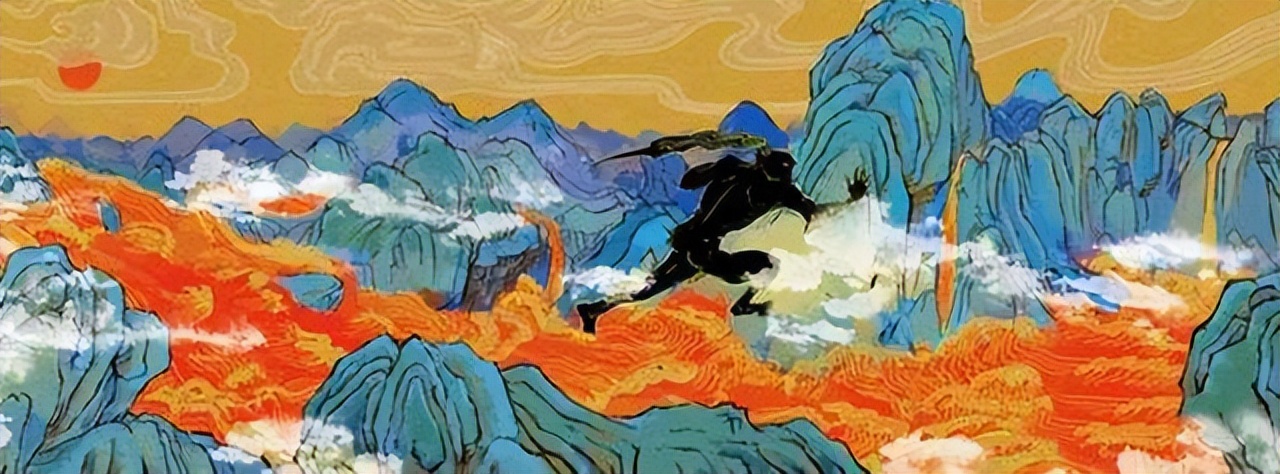
In the nineteenth year of Emperor Yao (Renxu, 2339 BC), the Yellow River flooded and many houses in the middle and lower reaches of the Yellow River were washed away. Tang Yao then ordered Gonggong, who was in charge of water conservancy, to lead the flood control. However, Gonggong's blindly adopted the method of 'cutting the high to make up for the low', which resulted in more serious floods and greater loss of life and property of the people.
In the 21st year of Emperor Yao (Jiazi, 2337 BC), the Gonggong clan had no success in controlling the water for 3 years. Tang Yao wanted to remove him, and the Stork Dou clan came forward and tried to protect the Gonggong clan. He has rich experience in flood control. Although he failed in this flood control, he can learn lessons from it, which will be beneficial to future flood control. Tang Yao agreed to the request and continued to let the Gonggong clan lead the people to control the flood. It happened that the year was drought, the Yellow River recovered, and the flood receded by itself.
In the 40th year of Emperor Yao (Guiwei, 2318 BC), Tang Yao died at the age of 62, and his body was buried in Yao Mausoleum outside Pingyang City (now Pingyang Town, southeast of Fuping County, Baoding City, Hebei Province).
Emperor Yao Tao's Tang Dynasty regime initially established the capital in Pingyang, the second emperor Yi Fangxun moved the capital to Yaocheng (now East Old City, Longyao County, Xingtai City, Hebei), and the third emperor Jijiang moved the capital to inherit (now Jiyuan City, Henan). The fourth emperor Jiang Qi relocated the capital to Yangping (now Yaodu District, southwest of Linfen City, Shanxi), and the sixth emperor Jiang Mi moved the capital to Yuanyang (now Chengguan Town, Yuanyang County, Xinxiang City, Henan).
Emperor Yao, Tao and Tang's regime had a total of six emperors, and passed down the country for 230 years (2357 BC - 2128 BC).
The first emperor: Emperor Yao reigned in power for forty years (2357 BC - 2318 BC)
Second Emperor: Emperor Qi's reign in power for fifty-three years (2318 BC - 2266 BC)
Three Emperors: Di Jiang's reign in power for 43 years (2266 BC - 2224 BC)
Four Emperors: Thirty-nine years of Emperor Qi's reign (2224 BC - 2186 BC)
Five Emperors: Emperor Qiu reigned for twenty-two years (2186 BC - 2165 BC)
Six Emperors: Thirty-eight years of Emperor Mi's reign (2165 BC - 2128 BC)
Comments