


When did the Huangdi Era begin?
There are also many versions of this issue; opinions differ.
Regarding the Yellow Emperor Chronicles, the current general theory is that the first year of the first year is the year of the reign of the Huangdi Xuanyuan, the ancestor of the Chinese humanities, after the unification of the Central Plains (ie "China") (some referred to as the "Yellow Emperor's Birth Year").
Last time, we talked about
01Mr. Sun Yat-sen announced that "November 13, 4609 of the Yellow Emperor Era" will be the New Year's Day of the first year of the Republic of China (1912.1.1)
I concluded last time:
The year of Guihai in 1923 on the Gregorian calendar = 4620 in Huangdi Era.
Therefore, the editor regards 2697 BC as the first year of the Huangdi era.
Therefore, it can be understood as the year 4719 of the Yellow Emperor Era after the Spring Festival in 2022 of the Gregorian calendar.
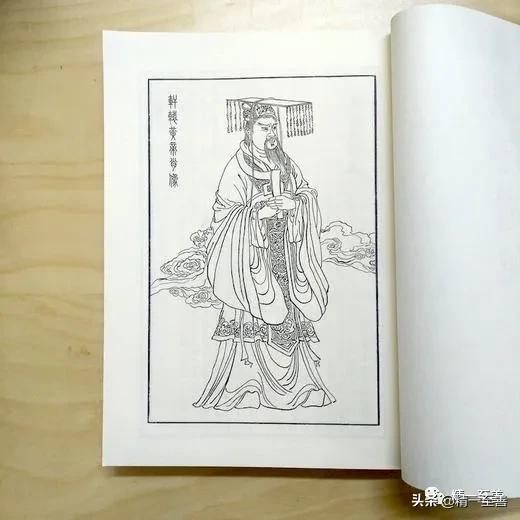
We initially believe that after the Chinese New Year in 2022, we will enter the Yellow Emperor Era 4719.
When was the change from the Yellow Emperor Era 4718 to the Yellow Emperor Era 4719?
At this time, we need to know the time point of the "Four Jiazi", that is, when is Jiazi Year, Jiazi Month, Jiazi Day, and Jiazi Time.
In the simplest terms, you can't find this day in all the calendars now, but this day has really existed, and a long period of time has passed.
Jiazi year, Jiazi month, Jiazi day, Jiazi time, is a starting point in time, the source of our circulating zodiac chronology.
Ten heavenly stems, twelve earthly branches, sixty combinations, yin and yang are opposite. The round starts from Jiazi and ends at Guihai (sixtieth), and then the round starts from Jiazi.
.
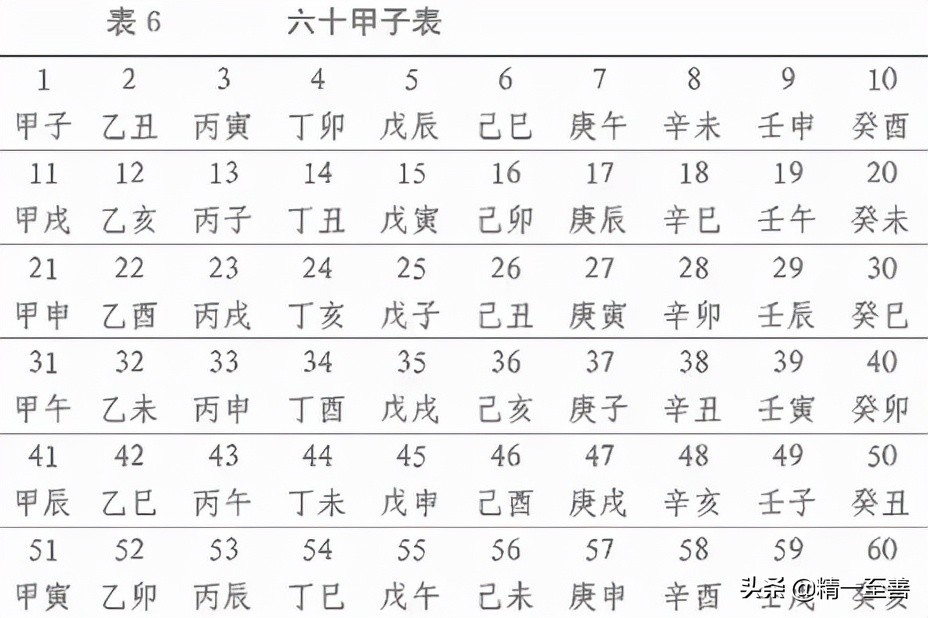
01 Jiazi year, 02 Yichou year, 03 Bingyin year, 04 Dingmao year, 05 Wuchen year,
06 Jisi year, 07 Gengwu year, 08 Xinwei year, 09 Renshen year, 10 Guiyou year;
11 Jiaxu year, 12 Yihai year, 13 Bingzi year, 14 Ding Chou year, 15 Wuyin year,
16 years of Ji Mao, 17 years of Gengchen, 18 years of Xinsi, 19 years of Renwu, 20 years of Guiwei;
21 Jiashen year, 22 Yiyou year, 23 Bingxu year, 24 Dinghai year, 25 Wuzi year,
26 Ji Chou year, 27 Geng Yin year, 28 Xin Mao year, 29 Renchen year, 30 Guisi year;
31 Jiawu year, 32 Yi year, 33 Bingshen year, 34 Dingyou year, 35 Wuxu year,
36 Jihai year, 37 Gengzi year, 38 Xinchou year, 39 Renyin year, 40 Guimao year;
41 Jiachen year, 42 Yisi year, 43 Bingwu year, 44 Dingwei year, 45 Wushen year,
46 Jiyou years, 47 Gengxu years, 48 Xinhai years, 49 Renzi years, and 50 Kuichou years;
51 Jiayin year, 52 Yimao year, 53 Bingchen year, 54 Dingsi year, 55 Wuwu year,
56 years of Jiwei, 57 years of Gengshen, 58 years of Xinyou, 59 years of Renxu, and 60 years of Guihai.
The question of the calendar is the key, the Xia Li Jian Zi, Shang Li Jian Chou, Zhou Li Jian Yin.
This is about the way to choose years.
According to our modern chronology, there are 365 days in a year, with a leap every four years.
In this ancient time, it was also suggested that the thousand-character essay has "Rap Yu Cheng Sui"
Going back and continuing to talk about the issue of "Zodiac Chronicle". The Ganzhi calendar we see now can be said to be the current Ganzhi calendar. The Huangdi Era uses the ancient Chuanqianzhi calendar.
The ancient calendar of the Huangdi era, Jianzi. Take the winter solstice as the year's first.
The first day of the Yellow Emperor's Era is the Jiazi Period, Jiazi Period, Moon, Jiazi Period, and Jiazi Period. The initial state is the winter solstice.
therefore
The winter solstice of the year 2698 BC was the first day of the first month of the first year of the Huangdi Era.
Therefore, it can be understood as the winter solstice of 2021 in the Gregorian calendar. It has entered the Yellow Emperor Era 4719.
Therefore, January 1, 4719 in the Yellow Emperor Era = December 21, 2021 in the Gregorian calendar = 01 in the year of the tiger in the Chinese Yi nationality's twelve animal calendar.
Replenish:
A starting point is needed to formulate a calendar, and this starting point is called an epoch.
The epoch of the Kung (Western) calendar is based on the birth date of Jesus in the first year of Christ, while the Chinese epoch is related to the celestial phenomenon. It is often said in historical books: Zhu, Qi Yao Qi Yuan."
The lunar calendar of the Chinese people begins with the year of Jiazi, Jiazi month, Jiazi day, Jiazi, and the winter solstice. The epoch of the lunar calendar is the epoch of the lunar calendar on the day of the day of the month of the month of the year of the year and the year of the year of the year.
The Taiyi number reunion records: "At the time of Jiazi, Jiazi, Jiazi, Jiazi, and Jiazi, in the ancient times, the celestial heart and energy were on the winter solstice. Zi is for Shangyuan."
Every winter solstice is the beginning of the year, Shuodan is the beginning of January, midnight is the beginning of the day, and Jiazi Day is the beginning of Ganzhi Day. The beginning of the epoch can only be considered the beginning of the epoch when it happens to be the midnight hour of the winter solstice and the day of Shuo.
It is said that around December 22, 2698 BC, the day when the Yellow Emperor ascended the throne was Jiazi Year, Jiazi Moon, Jiazi Day, and Jiazi Time, which happened to be the time when the five-star Lianzhu in astronomy was the beginning of the Ganzhi calendar and the Chinese. The moment when the saint, the ancestor of national humanities, came to the throne, it naturally became the beginning of the Chinese calendar.
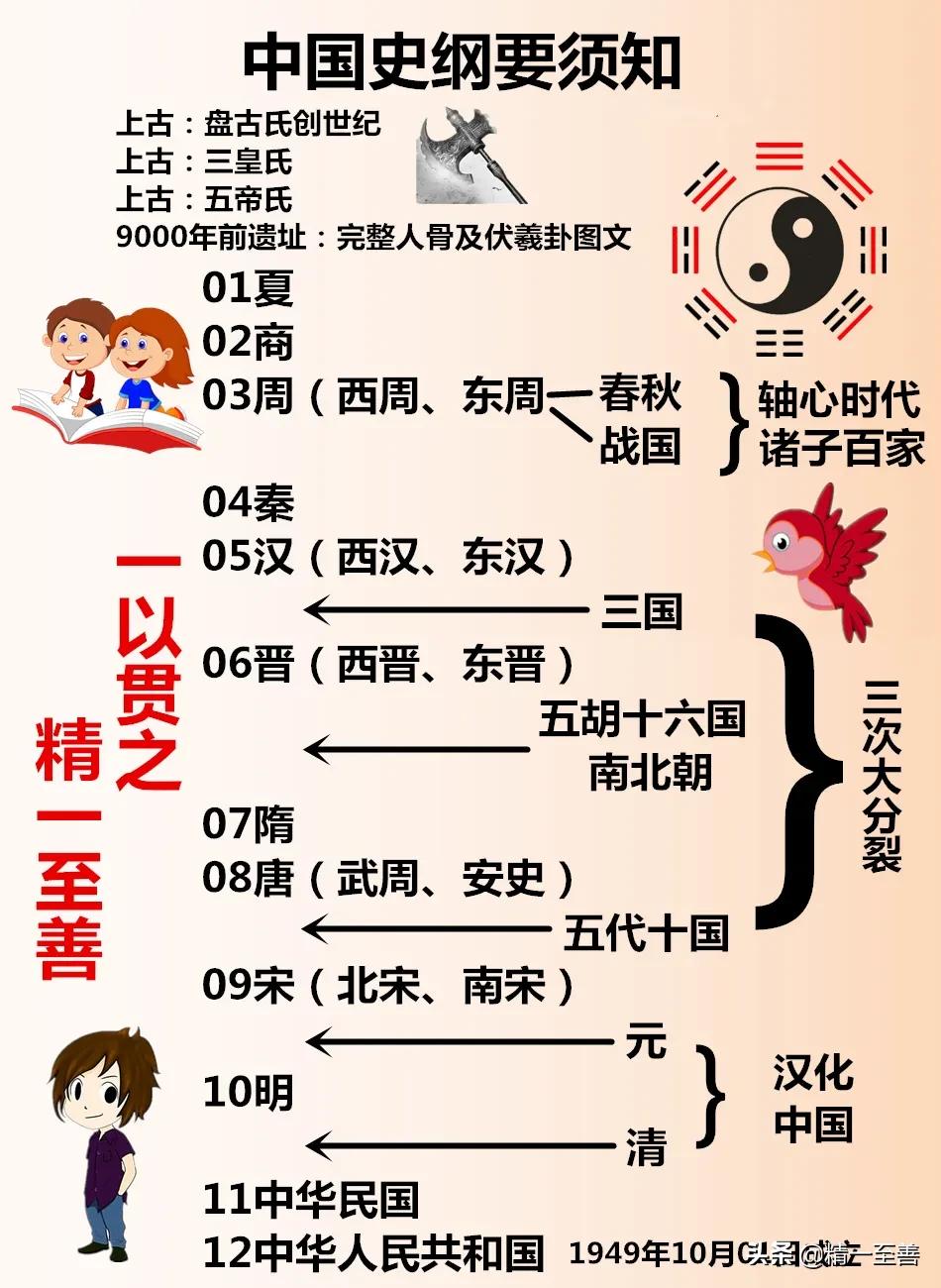
Pangu opened up the world with one axe, and Nuwa made up people.
Fuxi draws and creates gossip, Yan and Huang dominate Hua Xia Sheng.
It's endless, and it's passed down to this day.
Be cautious in chasing farther away, and be perfect.
Xuanyuan Huangdi is the humanistic ancestor of the Chinese nation, and the common ancestor of the Chinese nation with Shennongyan Emperor and Chi You, the ancestors of Dongyi and Miao people (Zhuolu, Hebei has the Chinese Three Ancestor Hall).
The two emperors of Yan and Huang opened up territories and promoted the integration of nationalities. Initiated Chinese civilization and created Chinese culture. The division of Kyushu and the Central Plains gave birth to descendants of Yan and Huang.
The descendants of Yan and Huang are called common people, and the descendants of Chi You are called Li Min, and they are commonly known as Li Min people. It is the foundation of the main body formed by the Chinese nation.
Comments