


James VI and I
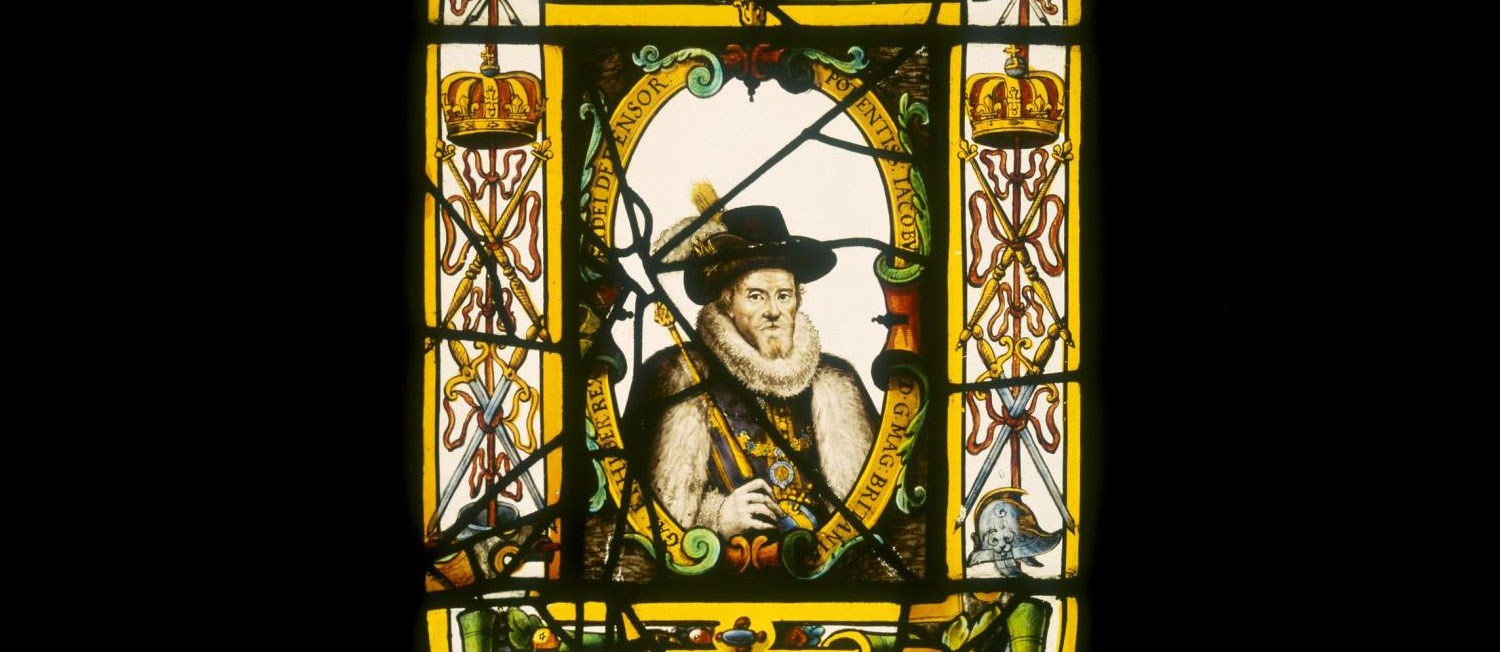
James VI and I was a hugely significant Stewart king, but has been overshadowed by his notorious relations: his predecessor in Scotland, his mother, Mary, Queen of Scots; in England, his cousin, Elizabeth I; and his successor in both kingdoms, Charles I.
Who was James VI and I?
James VI and I was a hugely significant Stewart king, but has been overshadowed by his notorious relations: his predecessor in Scotland, his mother, Mary Queen of Scots; in England, his cousin, Elizabeth I; and his successor in both kingdoms, Charles I.
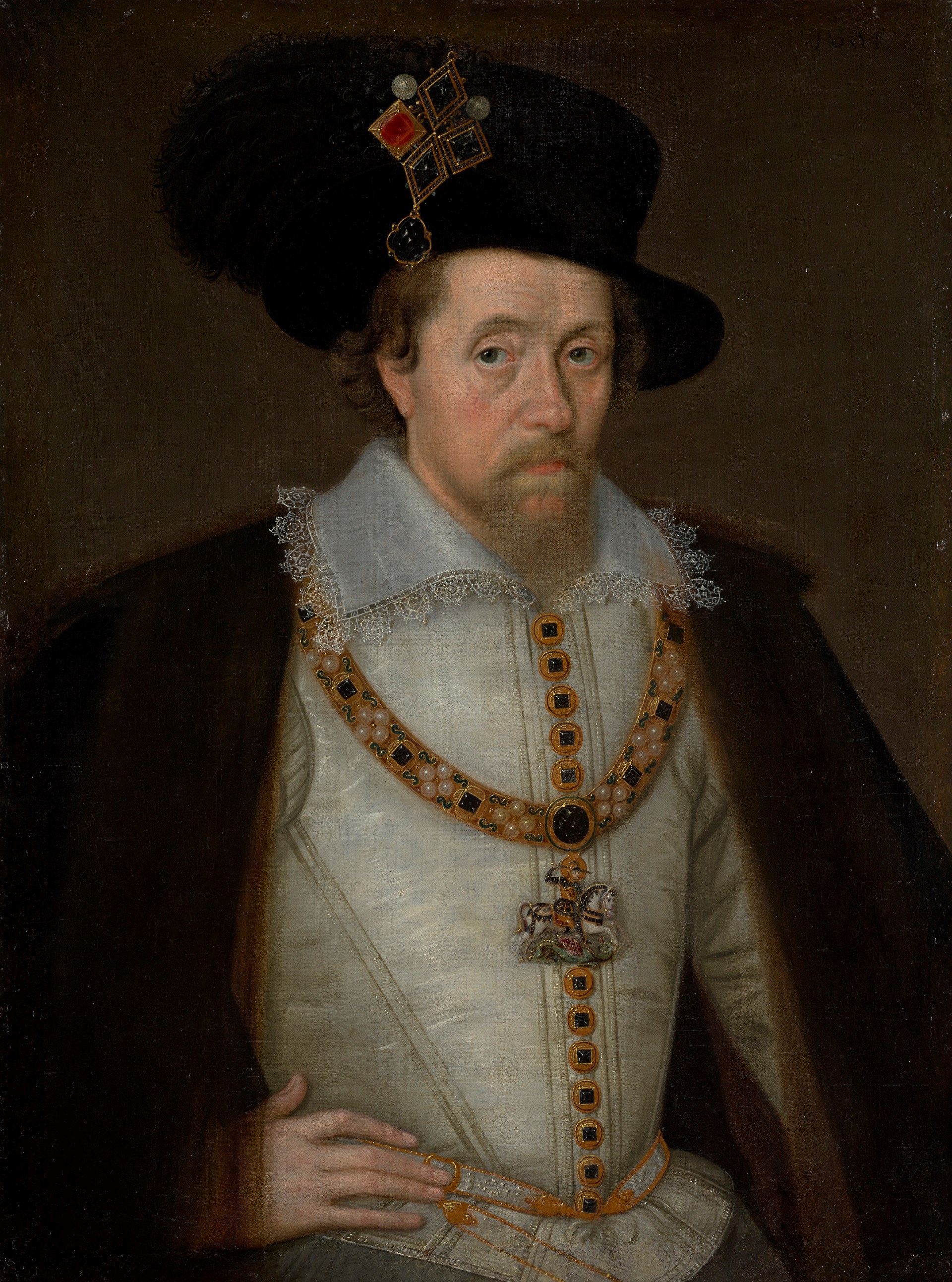
Above: James VI and I after he had acceded to the throne and moved to London. Bequeathed to National Galleries Scotland by Sir James Naesmyth 1897. Image courtesy of National Galleries Scotland.
Born in 1566, he was the product of Mary’s ill-fated marriage to Henry, Lord Darnley. Darnley’s assassination in early 1567, and Mary’s subsequent over-hasty marriage to one of its perpetrators, Lord Bothwell, triggered events that led to Mary’s downfall.
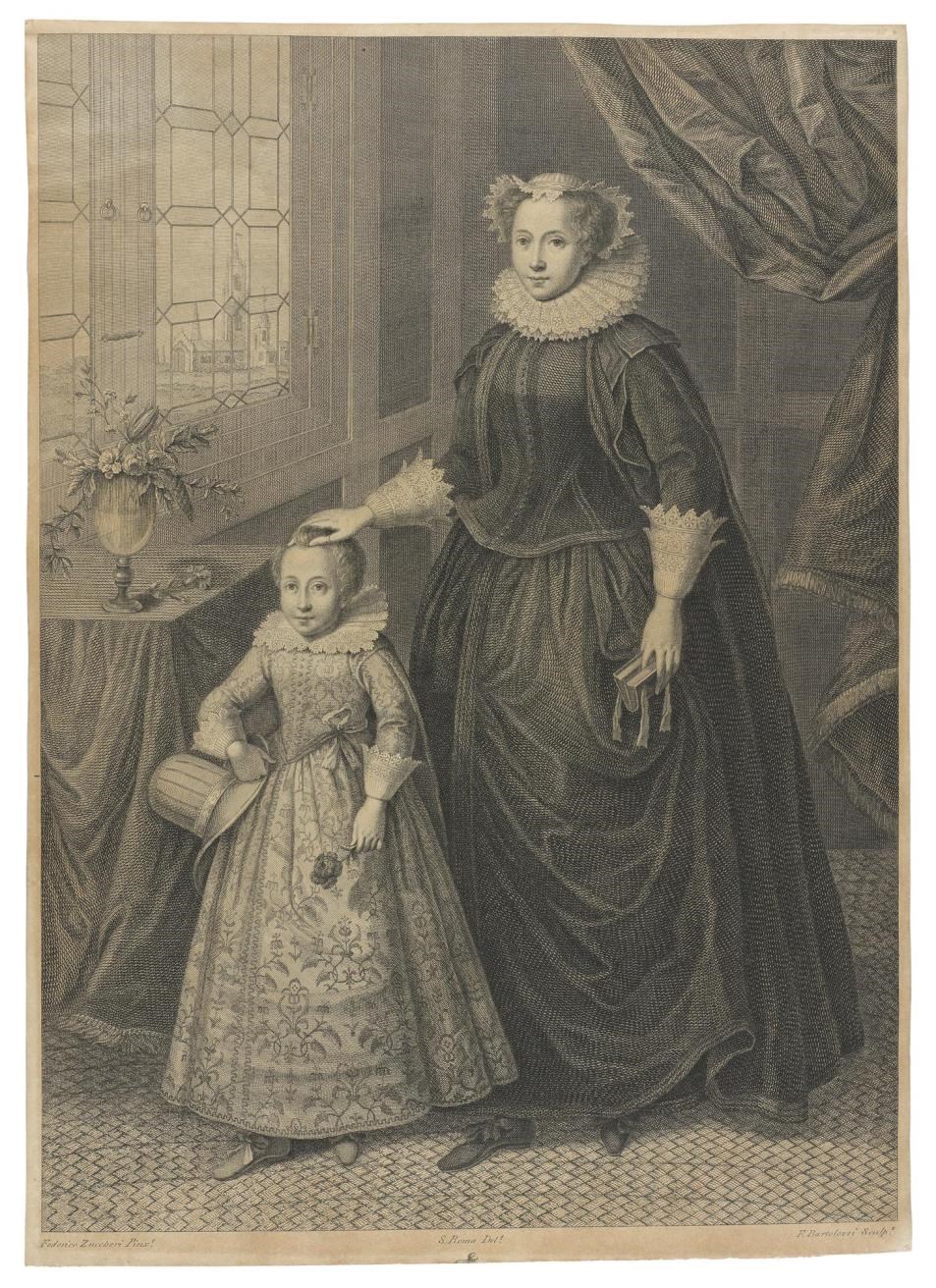
Above: Engraving of Mary Queen of Scotland with her son (later James VI and I), after a painting by F. Zucherri, published 1779.
James VI became king of Scotland in 1567 when Mary was forced to abdicate. On the death of Elizabeth in 1603, he became James I of England. He is thus known as James VI and I.
In 1590 he married Anna, the sister of the Danish king, Christian IV. They had numerous children, three of whom survived infancy: Henry, who died after a short illness in 1612, Charles who was to succeed James, and Elizabeth, who married Frederick, elector of Palatine, and the swiftly deposed King of Bohemia. Romantically she has become known as the Winter Queen.
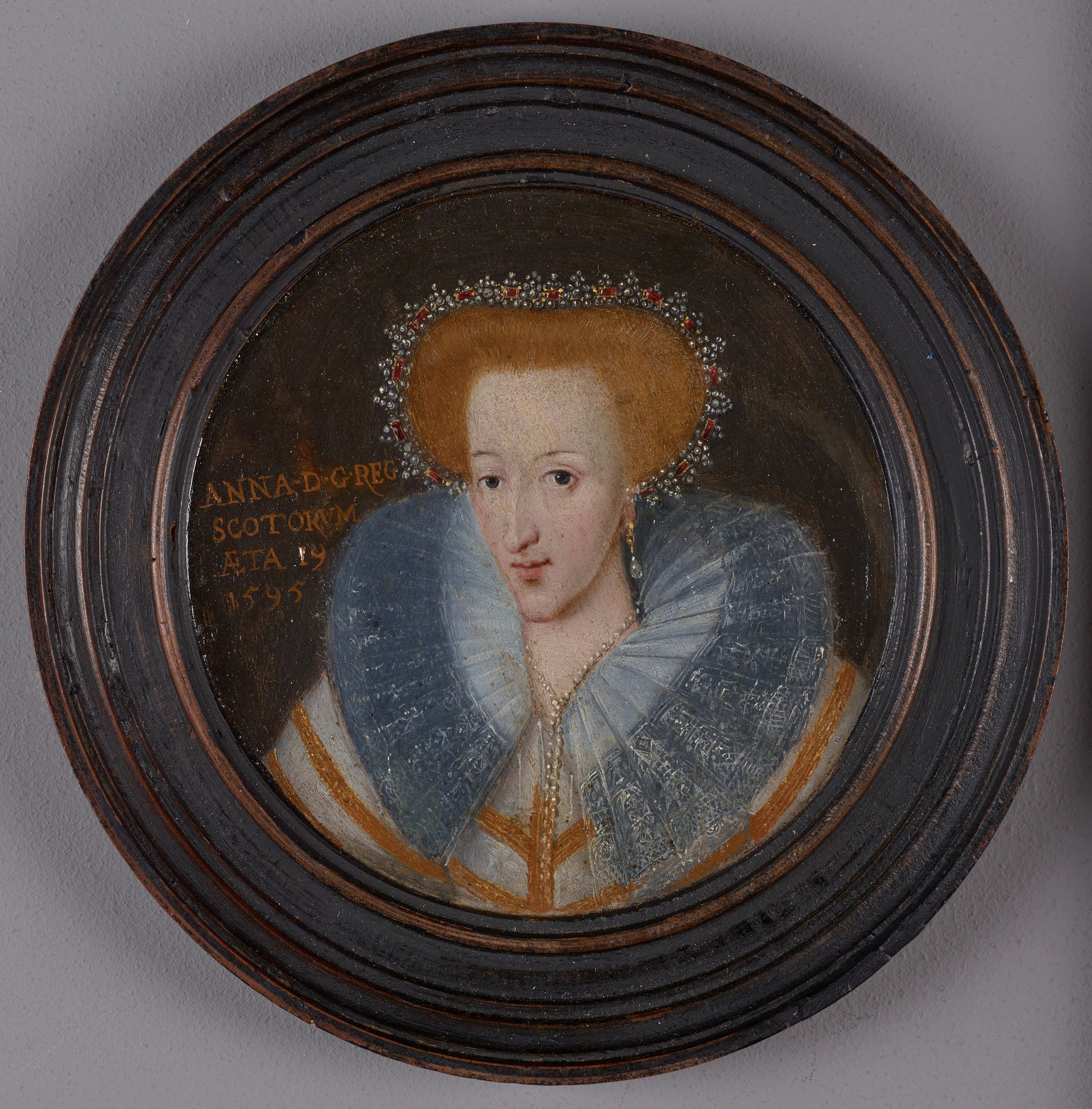
Above: Anne of Denmark, by an unknown artist. Bequeathed to National Galleries Scotland by A.W. Inglis 1929. Image courtesy of National Galleries Scotland.
Unlike his mother or his son Charles, James died of natural causes in his own bed in 1625.
A notable monarch
James was one of the most long-standing monarchs of Scotland, king for 58 years from the age of one. Of the Scottish monarchs before the Anglo-Scottish union of 1707, only William the Lion (1165–1214) comes close in longevity.
But he is notable not just for the length of his reign, but for the amount that he managed to achieve within it.
Of these achievements, perhaps the most significant of all was his careful management of his peaceful succession to the English throne in 1603. In doing so, he brought the ‘auld enemies’, the kingdoms of Scotland and England, together under the kingship of one monarch. This dynastic or regnal union became known as the ‘Union of the Crowns’, which included that of Ireland too. In 1604, James proclaimed himself King of Great Britain. So James’s reign produced the first Anglo-Scottish union (though this was not full political union) which helped to form the background to the formal union of 1707.
James and Mary, Queen of Scots: a troubled relationship
In 1567, at the age of one, James was placed in Stirling Castle for his care and safety. Following a visit to see him, Mary was ‘abducted’ by James Hepburn, Lord Bothwell (whether or not she was a willing participant is unknown) and forced into marriage to him. This visit proved to be the last time James ever saw his mother.
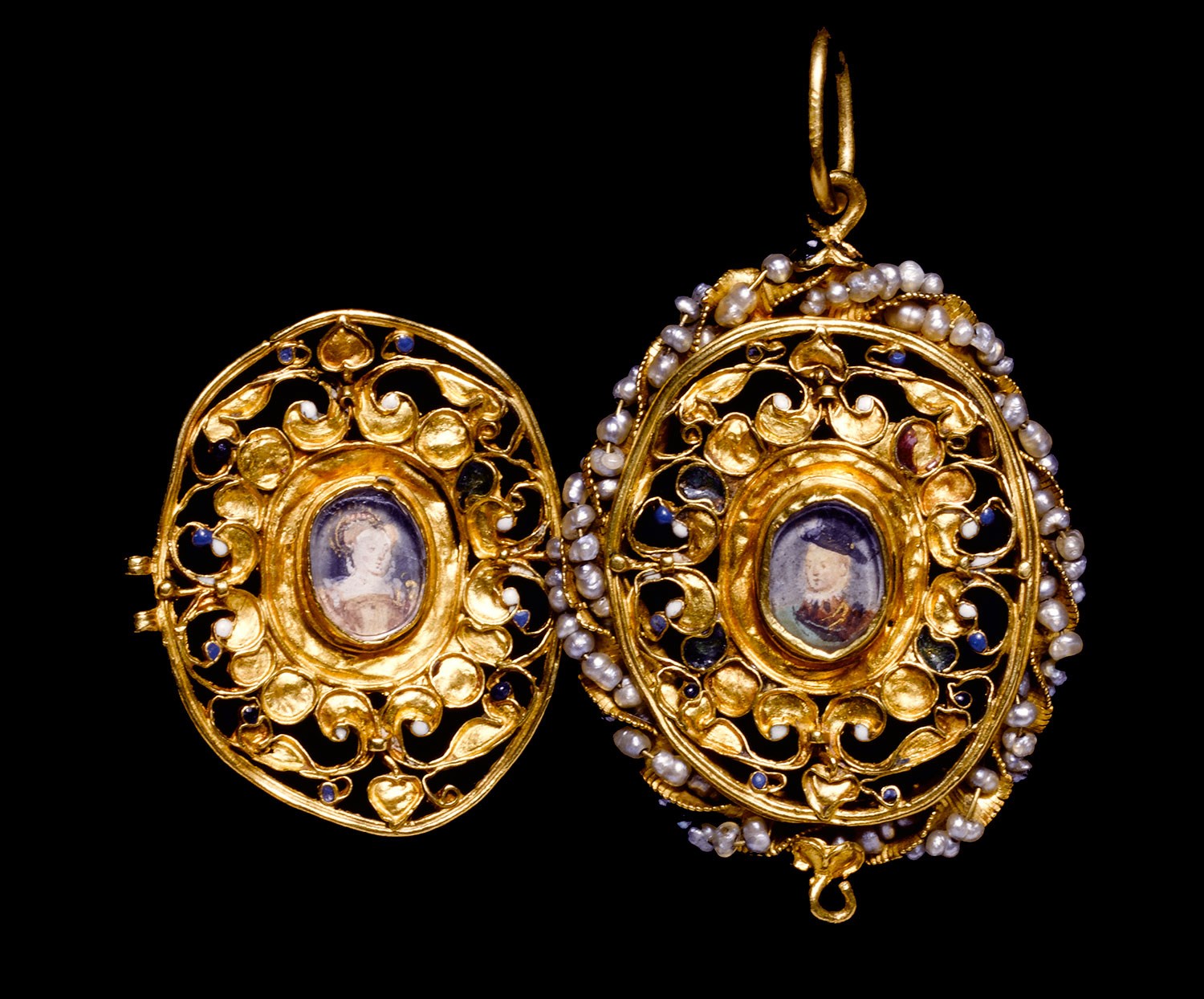
Above: The Penicuik jewels. This locket is said to show Mary, Queen of Scots and her son James on the reverse. The Clerks of Penicuik had a connection with Mary through marriage. In the 17th century, a member of the family married a granddaughter of Giles Mowbray, one of the Queen's servants during her English imprisonment. It is possible that the necklace is made from the beads of bracelets given by the Queen to Giles Mowbray, just before her death in 1587
Over the next twenty years they had a difficult relationship – hampered by the physical distance between them, the problems of communication by letter or word of mouth, and dependent on who had custody of the young king – and most importantly, tensions over Mary’s attempts to regain her Scottish throne during her English captivity. Mary’s return would have compromised James’s own kingship. Famously, James did little other than protest to Elizabeth over Mary’s execution in 1587.
James ordered a splendid tomb to be made for Mary in Westminster Abbey when he became king of England. Mary’s marble tomb with its elaborate canopy outshines the one he created for his predecessor on the English throne, Elizabeth I. In death you could say that Mary triumphed over the queen that had signed her death warrant, and in memorialising Mary in such a way, James perhaps assuaged any guilt he may have felt. Given her claim to the English throne (as a great-granddaughter of Henry VII), Mary would have thought it fitting to be laid to rest alongside other English monarchs
Comments