
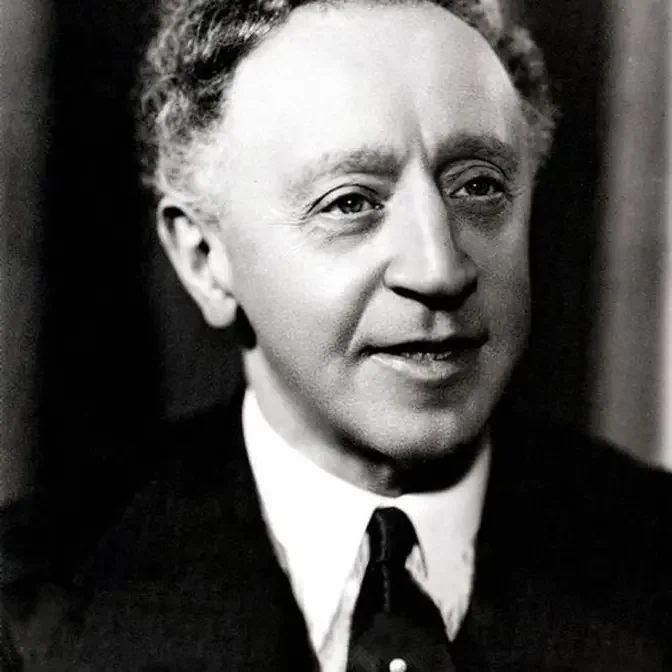


Artur Rubinstein, 1961, photo: Library of Congress / East News
Arthur Rubinstein
28.01.1887—20.12.1982#musicAuthor: Culture.plShare:FacebookTwitter
Widely regarded as one of the greatest pianists. He received international acclaim for his performances of the music written by a variety of composers and many regard him as one of the greatest Chopin interpreters of his time. He played in public for eight decades. Born 28 January 1887 in Łódź, died 20 December 1982 in Geneva.

THE CULTURE.PL NEWSLETTER
#staycultured
The best in Polish culture, delivered straight to your inbox.
Rubinstein took his first piano lessons from Adolf Prechner in Łódź. He first appeared in public at the age of seven, playing music by Wolfgang Amadeus Mozart, Franz Schubert and Felix Bartholdy-Mendelssohn in his home town. Having continued his education under Aleksander Różycki in Warsaw, he left for Berlin in 1897 to study piano in the class of Heinrich Barth and theory under Max Bruch and Robert Kahn at the Hochschule für Musik.
His debut as a pianist took place on 1st December 1900 in Berlin's Beethoven-Saal; he played Wolfgang Amadeus Mozart's Piano concerto in A major and Camille Saint-Saëns' Piano concerto in G minor with Berliner Philharmoniker conducted by Josef Rebícka. The concert was his artistic triumph. In April 1902 he played Saint-Saëns' Concerto at Warsaw Philharmonic directed by Emil Mlynarski. In 1903 Ignacy Jan Paderewski invited him twice for consultation to his villa in Riond Bosson, Switzerland.
How Much of a Chopin Competition Fan Are You?
In 2021, for the 18th time, pianists from all over the globe are competing to become the ultimate Chopin master! For those who didn’t qualify for the competition itself, we’ve got an equally challenging quiz! Will you master it?go to the#musictopic pageRead more
Artur Rubinstein – Image Gallery
1 / 14



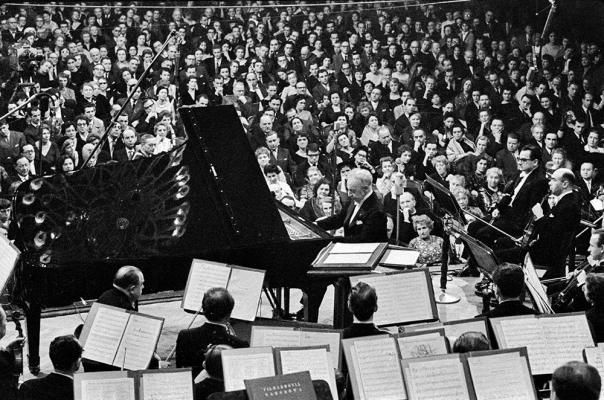
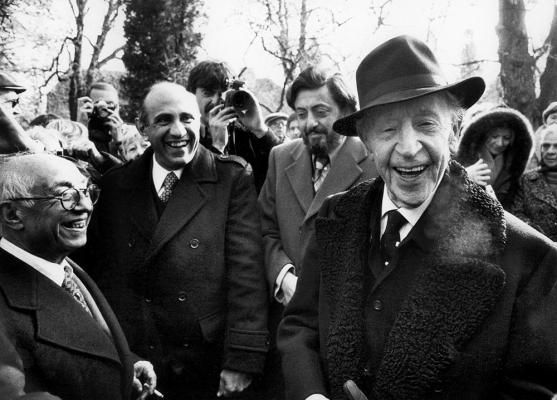

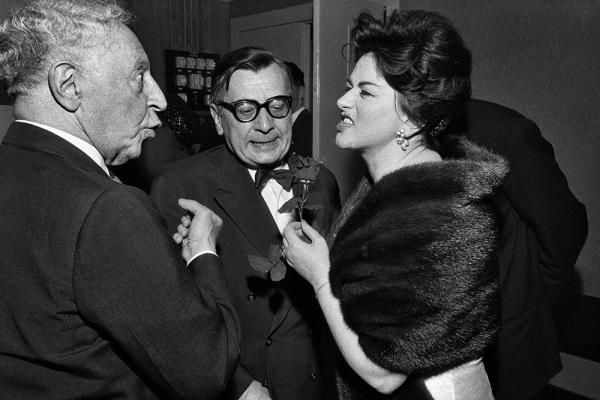
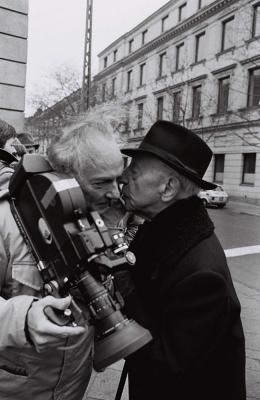

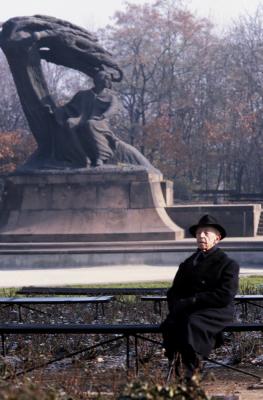
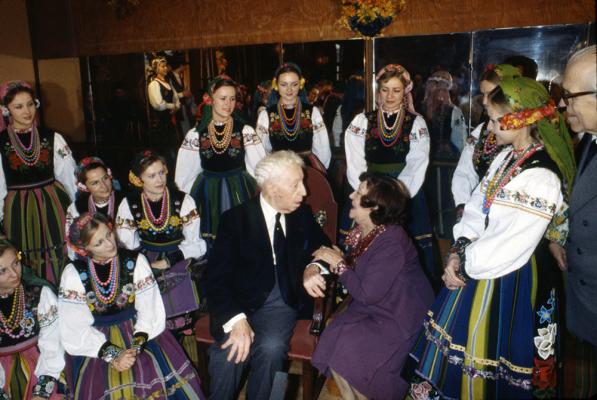
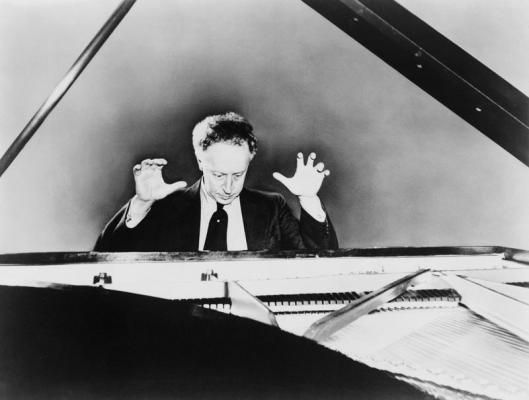
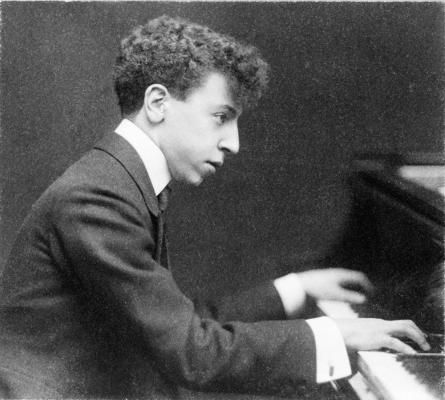
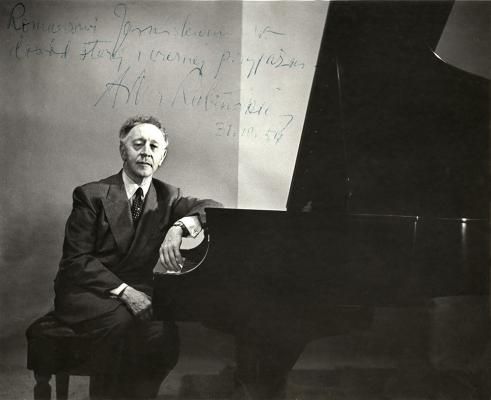
Upon his move to Paris in 1904, Rubinstein met the impresario Gabriel Astruc and signed a contract with him. This sparked off his great international career, taking him on world-round tours: to the United States in 1906 (New York's Carnegie Hall, Philadelphia, Chicago, Boston), Vienna, Rome, Russia, London (where he played in duo with Pablo Casals and Jacques Thilbaud), Spain, and, on a number of occasions, to Warsaw to give a series of recitals, chamber concerts (played with the violinist Paweł Kochański, the cellist Jan Sebelik and other top musicians) and symphony concerts with the Warsaw Philharmonic Orchestra under Emil Młynarski, Grzegorz Fitelberg and Henryk Opieński. In 1917-18 he took his first artistic trip to South America, performing in Buenos Aires and, a number of times, in Montevideo, Santiago de Chile and Rio de Janeiro.
After Mussolini's anti-Jewish laws were proclaimed in 1938, Rubinstein cancelled his Italian concerts, returned the decorations received from the Italian government and, in October 1939, left with his family for the United States. He became an American citizen in 1946, refusing ever to play in Germany in protest of Nazi crimes.
His first post-war visit to Poland took place in 1958 and included concerts in Kraków and Warsaw. In 1960 he was the honorary chair of the jury of the 6th Chopin International Piano Competition in Warsaw, the event which he opened by playing Frederick Chopin's Piano concerto in F minor with the National Philharmonic Orchestra conducted by Witold Rowicki. In 1966 he opened the 10th "Warsaw Autumn" International Festival of Contemporary Music, performing Karol Szymanowski's Symphony no. 4 (dedicated to himself) with the National Philharmonic Orchestra conducted by Stanisław Wisłocki. In 1975 he took part in a concert marking the 60th anniversary of the Lodz Philharmonic, playing Chopin's Concerto in F minor and Beethoven's Piano concerto in E flat major with the Łódź Philharmonic Orchestra under Henryk Czyż. His last public appearance was in London's Wigmore Hall in May 1976, and his last visit to Poland and to his home town took place in 1979.
Diagnosing Chopin: Uncovering a Life of Illness
He spat out bowls of blood, overused opium, and was constantly sleep-deprived. What ailed Fryderyk Chopin?go to the#musictopic pagego to the#heritagetopic pageRead more
Altogether, Rubinstein performed more than six thousand times and his career continued for over eighty years. His repertoire covered a broad range of piano works and, while dominated by classical and romantic music, incorporated a lot of contemporary works by Karol Szymanowski, Alexander Skryabin, Maurice Ravel, Isaac Albéniz, Manuel de Falla, Heitor Villa-Lobos, Francis Poulenc, Darius Milhaud. He premiered many of those. His recordings for labels such as Gramophone Company/His Master's Voice and RCA Victor included music by Frederic Chopin, solo piano works by composers ranging from Johann Sebastian Bach to the 20th century ones, piano concertos by Wolfgang Amadeus Mozart, Ludwig van Beethoven, Johannes Brahms, Edvard Grieg, Camille Saint-Saëns, Peter Tchaikovsky, Sergei Rachmaninoff, with conductors such as John Barbirolli, Daniel Barenboim, Vladimir Golschmann, Eugene Ormandy and Fritz Reiner, and 19th century chamber music with violinists Paweł Kochański, Jascha Heifetz, Henryk Szeryng, cellists Emanuel Feuermann, Pierre Fournier, Gregor Piatigorsky, and string quartets Guarneri, Pro Arte, and Paganini.
Author: Małgorzata Kosińska, Polish Music Information Center, October 2006
Memory, Intuition & Joy: The Charm of Nela Rubinstein’s Cooking
Nela’s Cookbook, which was published almost 40 years ago, was intended just to be a form of therapy after her marriage with the legendary pianist Arthur Rubinstein ended. But it became an instant classic, admired by the Parisian and New York bohème. What made her cookbook special was that it wasn’t written for chefs, but rather for ordinary people who enjoyed cooking or wanted to learn how.go to the#polish cuisinetopic pageRead more
Comments