
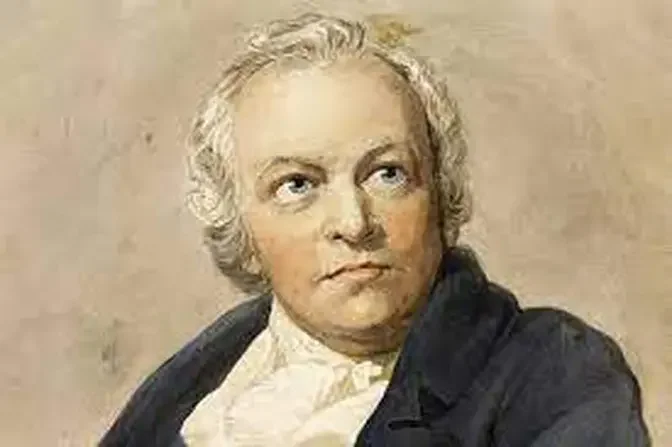

William Blake
William Blake was a 19th-century writer and artist who is regarded as a seminal figure of the Romantic Age. His writings have influenced countless writers and artists through the ages.
(1757-1827)
Who Was William Blake?
William Blake began writing at an early age and claimed to have had his first vision, of a tree full of angels, at age 10. He studied engraving and grew to love Gothic art, which he incorporated into his own unique works. A misunderstood poet, artist and visionary throughout much of his life, Blake found admirers late in life and has been vastly influential since his death in 1827.
Early Years
William Blake was born on November 28, 1757, in the Soho district of London, England. He only briefly attended school, being chiefly educated at home by his mother. The Bible had an early, profound influence on Blake, and it would remain a lifetime source of inspiration, coloring his life and works with intense spirituality.
At an early age, Blake began experiencing visions, and his friend and journalist Henry Crabb Robinson wrote that Blake saw God's head appear in a window when Blake was 4 years old. He also allegedly saw the prophet Ezekiel under a tree and had a vision of "a tree filled with angels." Blake's visions would have a lasting effect on the art and writings that he produced.
The Young Artist
Blake's artistic ability became evident in his youth, and by age 10, he was enrolled at Henry Pars' drawing school, where he sketched the human figure by copying from plaster casts of ancient statues. At age 14, he apprenticed with an engraver. Blake's master was the engraver to the London Society of Antiquaries, and Blake was sent to Westminster Abbey to make drawings of tombs and monuments, where his lifelong love of gothic art was seeded.
Also around this time, Blake began collecting prints of artists who had fallen out of vogue at the time, including Durer, Raphael and Michelangelo. In the catalog for an exhibition of his own work in 1809, nearly 40 years later, in fact, Blake would lambast artists "who endeavour to raise up a style against Rafael, Mich. Angelo, and the Antique." He also rejected 18th-century literary trends, preferring the Elizabethans (Shakespeare, Jonson and Spenser) and ancient ballads instead.
Comments