


Caruso was born in Naples in 1873. Just 14 months earlier, the world premiere of Verdi’s opera Aida had taken place. Caruso was to play its Radamès years later.
Some of the roles that would later catapult him to fame (Maurizio in Adriana Lecouvreur, Loris in Fedora, Mario in Tosca or Pinkerton in Madama Butterfly, among others) had not even been written when he was born.
Caruso grew up in a family of limited means. From the age of ten he combined working as a mechanic with occasional performances as a street singer. In 1891 he really began his training with the maestro Guglielmo Vergine. The first time Vergine heard him, he was not optimistic: È ‘na voce 'e niente (“It’s a voice and nothing else”), he said. But Caruso’s perseverance would soon pay off.
His official debut came in 1894 at the Teatro Nuovo in Naples in L'amico Francesco by Mario Morelli.
Four years later he would begin one of the most promising chapters of his career with the world premieres at the Teatro Lírico in Milan of works such as L'Arlesiana (1897), Fedora (1898) and Adriana Lecouvreur (1902).
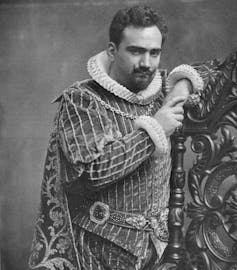
Enrico Caruso as the Duke in Rigoletto, photograph by Aimé Dupont. Wikimedia Commons

Also in 1902 he made his debut at London’s Covent Garden in Rigoletto. He starred again in Rigoletto on his successful first appearance at the Metropolitan Opera in New York the following year, beginning a very active relationship with the American opera house. He would come to dominate every season until 1920.
Comments