


By Avi KapachLast updated on Apr 11, 2023
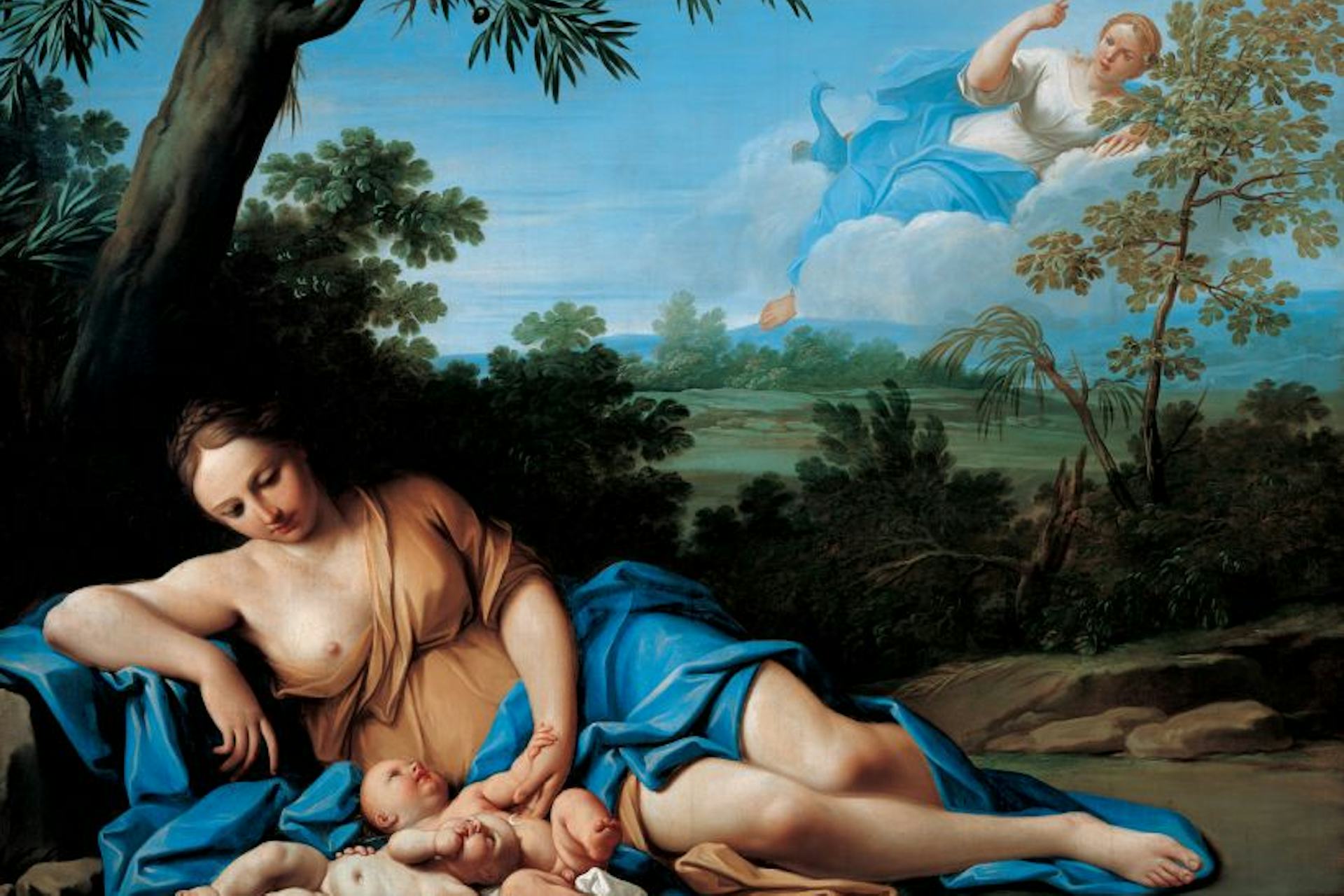
The Birth of Apollo and Diana by Marcantonio Franceschini (ca. 1692–1709)
LIECHTENSTEIN MUSEUM, VIENNAPUBLIC DOMAIN

Overview
Apollo was a powerful Greek god and one of the Twelve Olympians. He served as the divine patron of prophecy, healing, art, and culture, as well as the embodiment of masculine beauty.
Apollo belonged to the second generation of Olympians, along with his twin sister Artemis, goddess of the wild and hunting. He was commonly represented as a kouros—that is, as a young, beardless male. In ancient art, he could be seen carrying a lyre or a bow and arrow.
Key Facts
Who were Apollo’s parents?
Apollo was the son of Zeus, the supreme god of the Greek pantheon, and Leto, a descendant of the Titans. In myth, he and his twin sister Artemis were born on the island of Delos, the only place on earth that would give Leto shelter when Hera, Zeus’ jealous wife, sought to prevent her from giving birth. Apollo rewarded the island by making it one of the centers of his worship.
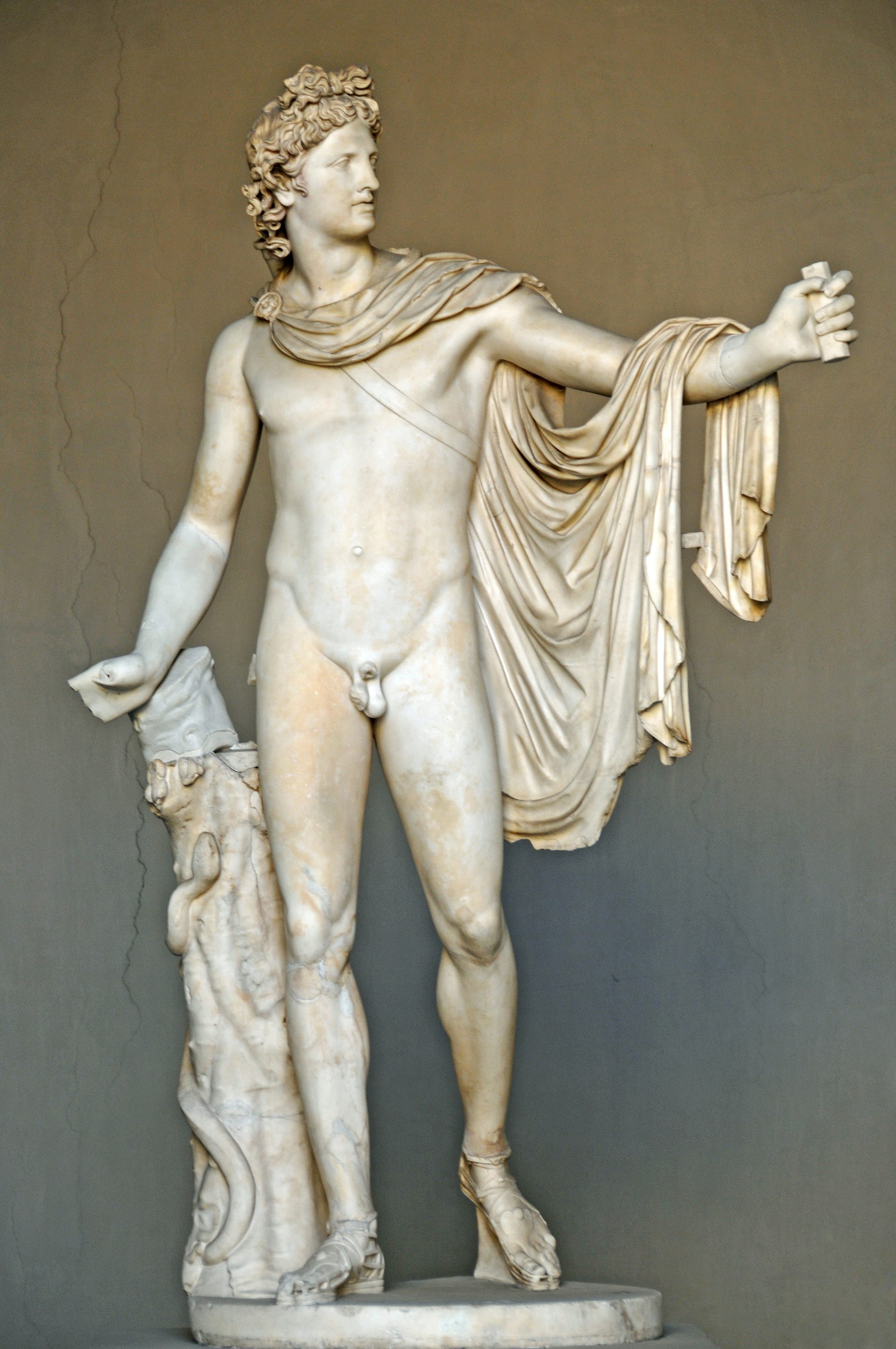
The Apollo Belvedere (ca. 120–140 CE)
VATICAN MUSEUMS / DENNIS JARVISPUBLIC DOMAIN

What were Apollo’s attributes?
Apollo was usually viewed as the prototypical beautiful young man (kouros in Greek). He was distinguished by various symbols of his roles and powers, including the bow, lyre, and cithara, and was often depicted wearing a laurel wreath. Apollo’s sacred animals included the raven and the wolf.
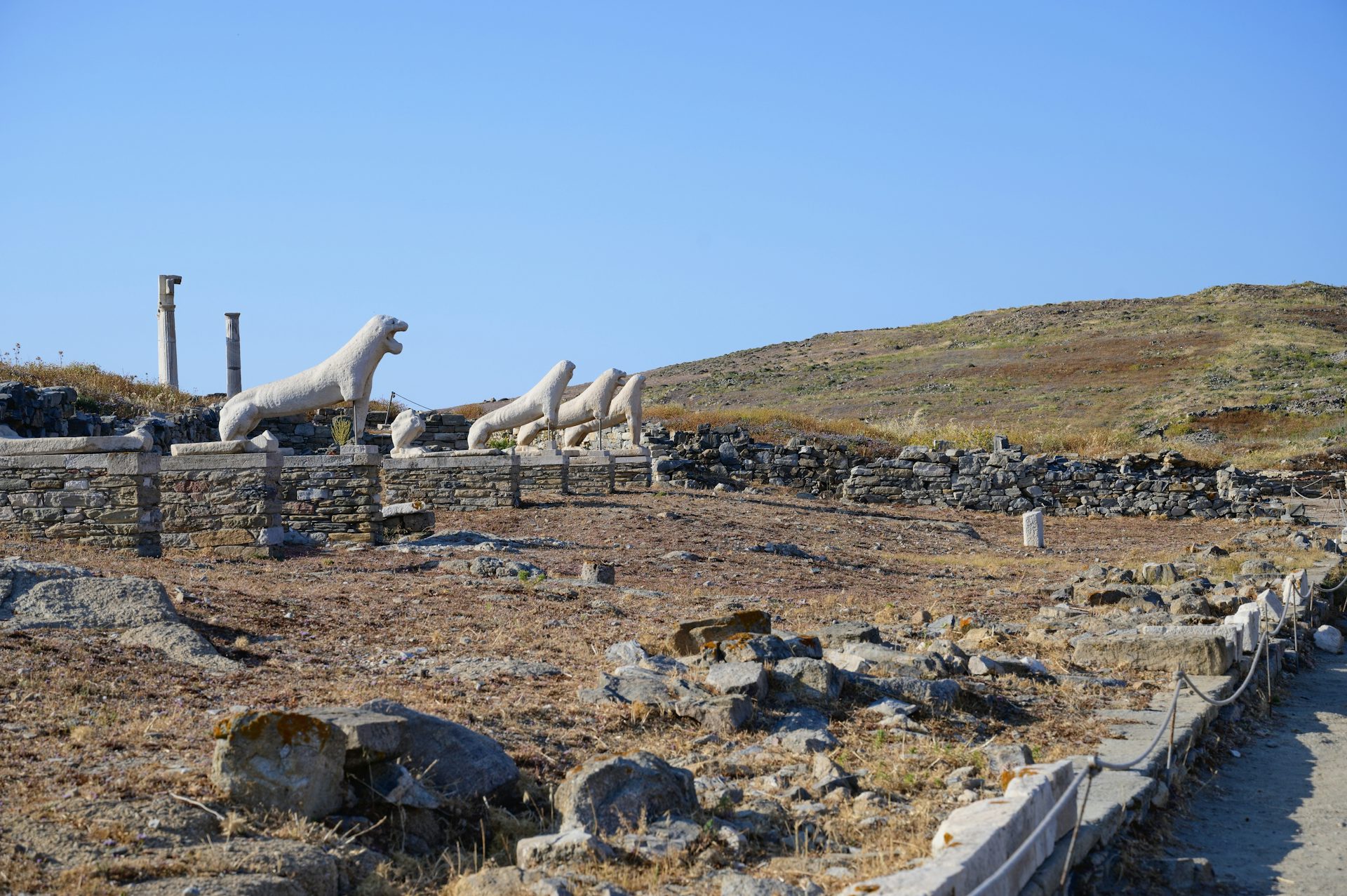
The "Terrace of the Lions" at Delos, a gift from the Naxians (ca. 620–600 BCE)
ZDECC BY-SA 4.0

How was Apollo worshipped?
Apollo was widely worshipped with sanctuaries and festivals. His oracle at Delphi was one of the most influential in the Greek world. Apollo also had a major sanctuary on the tiny island of Delos, where he was said to have been born.
Like the other Olympian gods, Apollo had a rich temple cult and was honored with regular festivals throughout the Greek world, including the Pythian Games at Delphi. He was also worshipped in connection with aspects of everyday life, such as health and medicine. Ritual invocations called paeans were sung to Apollo in various contexts.
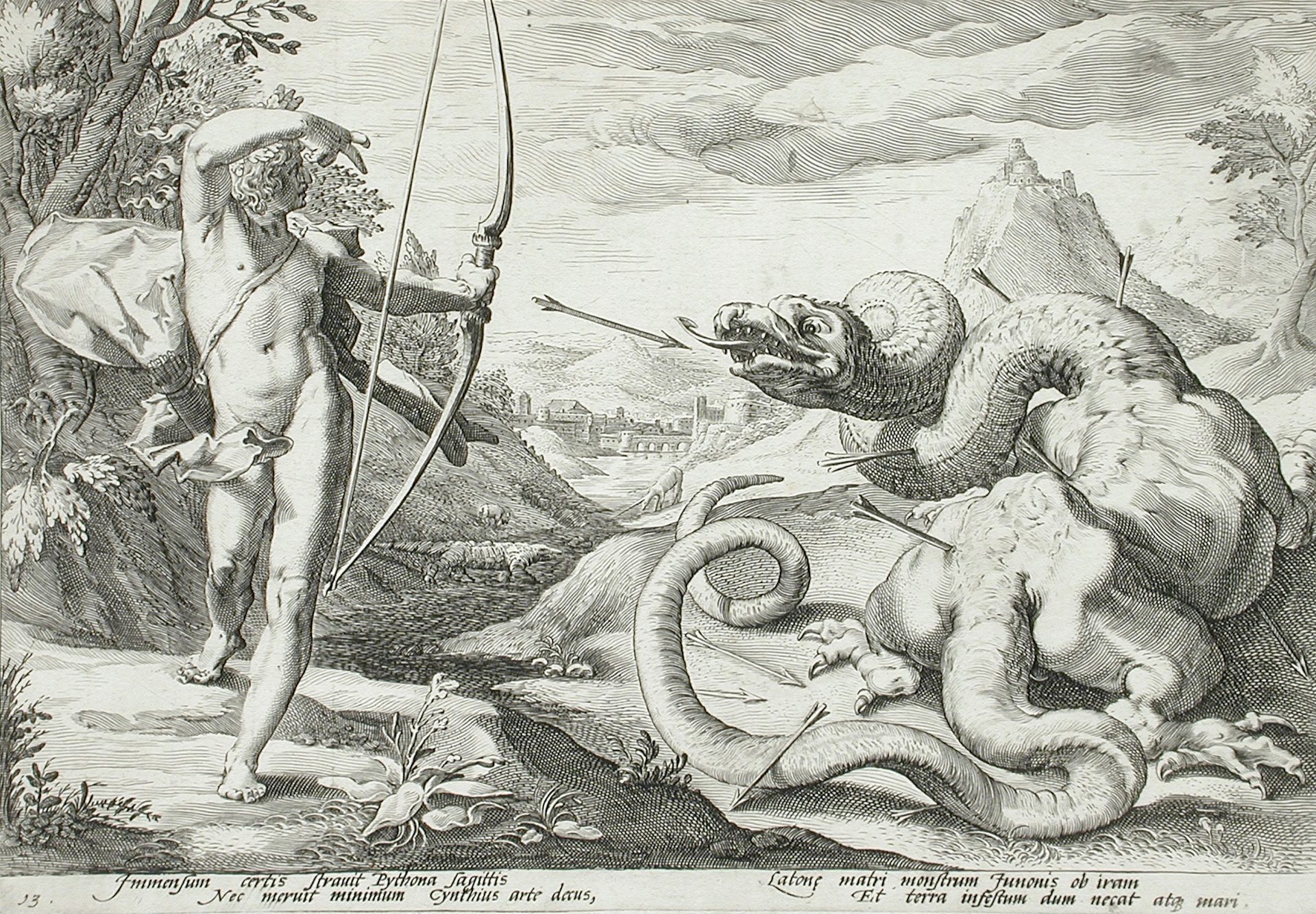
Apollo Killing the Python by Hendrik Goltzius (published 1589)
LOS ANGELES COUNTY MUSEUM OF ARTPUBLIC DOMAIN

Apollo and Python
According to one myth, while the young Apollo was establishing his oracle at Delphi, he encountered a monstrous serpent or dragon called Python. After a violent battle, Apollo won the upper hand and slew Python with his arrows. He then built his oracle over the corpse of his defeated enemy. Henceforth, the priestess of Apollo at Delphi was known as the “Pythia” to commemorate the god’s victory.
[FIGURE FOUR]
Comments