
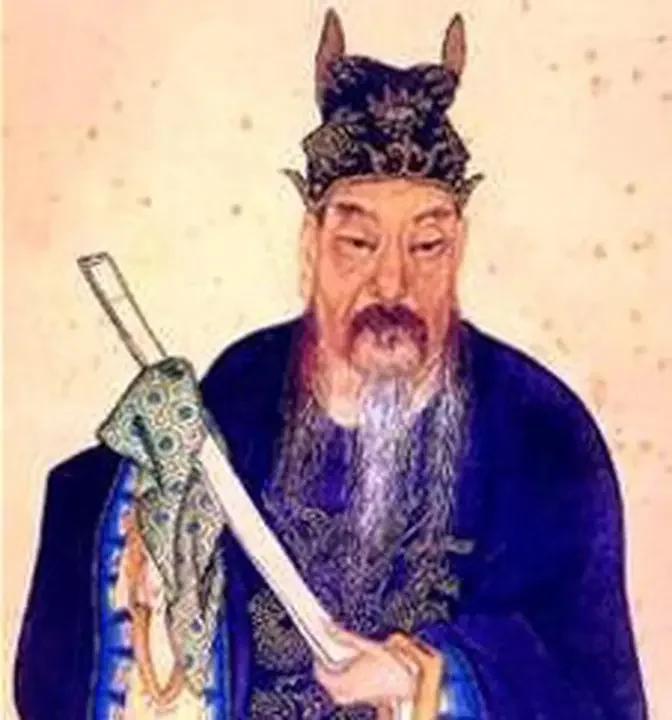

When news of the Tibetan attack reached Emperor Daizong, he dispatched Guo Ziyi to defend the Tang with only few thousand men. When Guo was within a day's march from the enemy, he decided to go alone to see the Uyghur chieftains. His officers and son Guo Xi (郭晞) were so dismayed and panicked by his intention that they would not let go of his horse's reins, declaring such an act would be suicide. Guo laughed and convinced his officers to let him go, but his son would not. Angered, Guo whipped his son's hand so that he released the reins, reprimanding him and telling him that this was a life and death situation for the empire; their force was small and if they fought the Tibetans alone, both father and son, and their troops, would die. If he succeeded in his plan the empire would be defended, but if it failed only his own life would be lost.
When Guo arrived at the Uyghur's camp, he did not reveal his identity and appeared to be a messenger who had been sent to tell them that Guo Ziyi was coming to see them. The Uyghur chieftains, many of whom had joined the rebel side in the An Lushan Rebellion, were surprised and panicked to hear that Guo was alive, deciding that they had to meet with him. Guo laughed at them and asked them why they would want to face Guo Ziyi again after their defeat at his hands during the An Shi Rebellion. The Uyghur chieftains replied they had been told that he was dead, but if they met with him and saw he was alive, they would retreat. Guo, however, insisted that Guo Ziyi did not seek their retreat but instead wanted them to join him against the Tibetans. The Uyghur chieftains, saying they had been deceived by the Tibetans about Guo's death, agreed to break the alliance with them. They even claimed that shamans had foretold that a great man would lead them to victory and that they now believed this man must be Guo, and agreed to join forces with the Tang.
Guo’s most important non-battle took place two years later. A treacherous Marshal, Pugu Huai’en, seized a troublemaking opportunity, coaxing the Uyghurs and Tibetans to again invade Chang’an. Three hundred thousand enemy soldiers were about to descend. Ziyi, with only 10,000 troops, was sent to stop them.
At nearly 70 years of age, Ziyi decided the best solution was simply to go to the Uyghur commander and discuss the matter. His own officials thought it too risky — but Ziyi went ahead. Guo’s son pleaded that “you will be feeding yourself to the tigers.” Ziyi responded: “Our country is in a life and death situation. If I can convince the Uyghurs to side with us, the country can be safe. What else is there to consider?” He whipped his son’s hand free from his horse, slapped the reins, and galloped forth.
The Uyghur commander, wary, ordered his soldiers to continue preparing for battle. Ziyi, seeing this, tossed aside his armor and weapons as he rode closer. Ziyi already knew these troops: They had served under him during actions when he put down other rebels. Ziyi, gracious and generous to the Uyghurs, had become a father figure to them. Recognizing him, the Uyghurs knelt.
Comments