


by Jesse Jacobs February 22, 2023
Revisit the most beloved films by the master of animation, Hayao Miyazaki, with this list of his top five Studio Ghibli movies!
As the heart and soul of Studio Ghibli, Hayao Miyazaki has brought fans around the world some of the best anime films of all time. There is something magical about the movies this director brings to the big screen and how he can bring all the characters to life. That aside, all his films carry memorable lessons for their viewers. Whereas one will be a coming-of-age tale, another might touch on the prospect of letting things go or the importance of friendship. However, there are so many of his films that it is hard to decide which are worth checking out.
So, what are Hayao Miyazaki’s best films of all time? This article will include a list of Hayao Miyazaki’s top five films of all time. That is not to say that all his movies are not great, but the ones included here are some of his best. The list will also coincide with some of his most famous films, as his most successful are the best ones to date. If you are curious as to what his top 5 movies are, then without further ado, here is the ranked list:
5. Howl’s Moving Castle (2004)
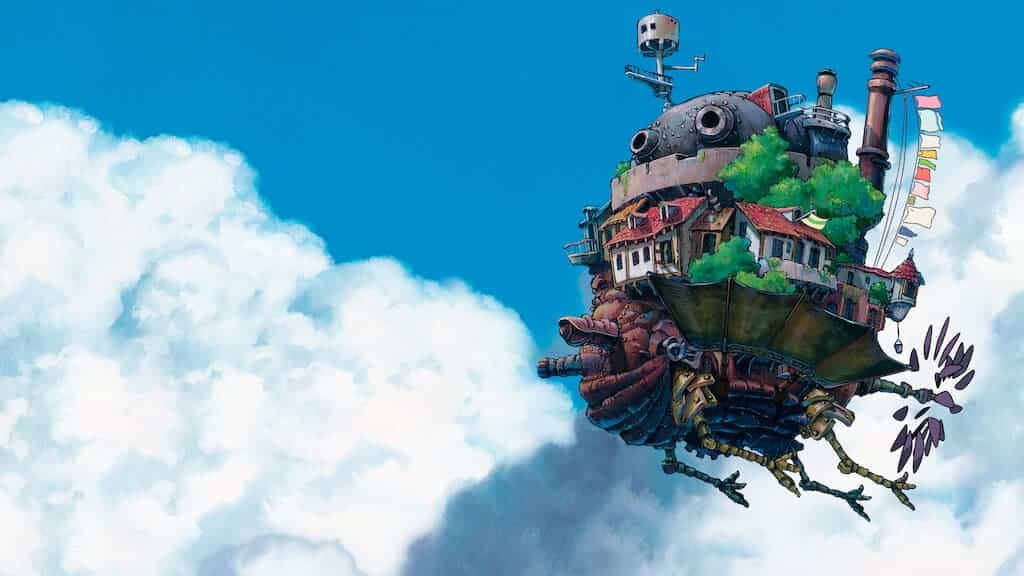
Based on Diana Wynne Jones’ novel of the same name, this Japanese animated film was written and directed by Hayao Miyazaki. So naturally, the film was also animated by Studio Ghibli, who did a fantastic job bringing this beautiful world to life on our screens. What makes the film even better is Miyazaki’s inspiration behind it. The filmmaker explained that he was against the United States invading Iraq in 2003, and this project was started with the intent of being badly received in the US. Because the occurrence immensely angered him, the film heavily explores themes of anti-war and feminism and portrays old age in a positive light. It also sends a message of compassion and how valuable it is. In comparison to the novel, the film breaks away from the themes of challenging gender and class norms.
The film is set in a fictional kingdom where they are currently at war with another kingdom. In addition, magic and twentieth-century technology are both a prevalent part of the world and lore. The story focuses on a young hatter named Sophie, who meets the Witch of the Waste on her way home from her sister Lettie. The witch curses her and turns her into a 90-year-old woman, and seeking to break the curse, she sets out into the countryside. She meets a scarecrow named Turnip Head here, who then takes her to Howl’s moving castle, so he can help her break the curse. The film ended up being Japan’s most notable commercial success, receiving critical acclaim and winning 9 out of 12 awards at multiple film festivals.
Howl’s Moving Castle is definitely one of Hayao Miyazaki’s best Studio Ghibli movies.
4. Kiki’s Delivery Service (1989)
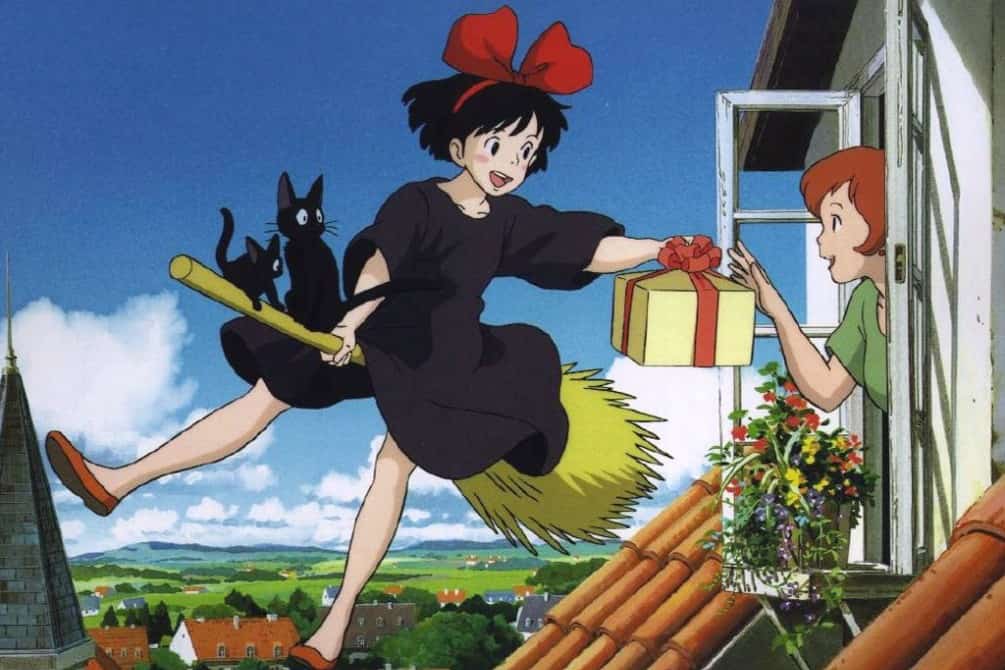
As a film released under a distribution partnership between Walt Disney and Studio Ghibli, the film received universal acclaim for its coming-of-age tale about a young witch trying to find her place in the world. The film ended up being the highest-grossing in Japan in 1989, and the gross amount continued to expand. As of 2020, the film has grossed over $41,795,218 worldwide, a considerable amount. This was due to late releases and re-releases that allowed the number to grow to this amount. In addition, the movie won the Animage Anime Grand Prix prize and saw an English dub produced and released by Walt Disney in 1997.
Following the story of Kiki, a thirteen-year-old trainee witch who must leave home as part of her training, she takes her talking black Jiji and uses her broomstick to fly to Koriko. Here she must find a place to live, and while doing so, she befriends a boy named Tombo. She manages to find accommodation by helping the owner of a bakery named Osono. From here, Kiki opens a business dependent on her flying abilities called “Witch Delivery Service”. The movie explores the themes of independence and reliance in teenage girls in Japan. Furthermore, it also looks at the concept of maturity, which is heavily focused on in the film. But, then, there is also the concept of vulnerability that is displayed in Kiki’s sometimes strange behaviour and further explored in her apparent isolation in a place she does not know.
3. Princess Mononoke (1997)
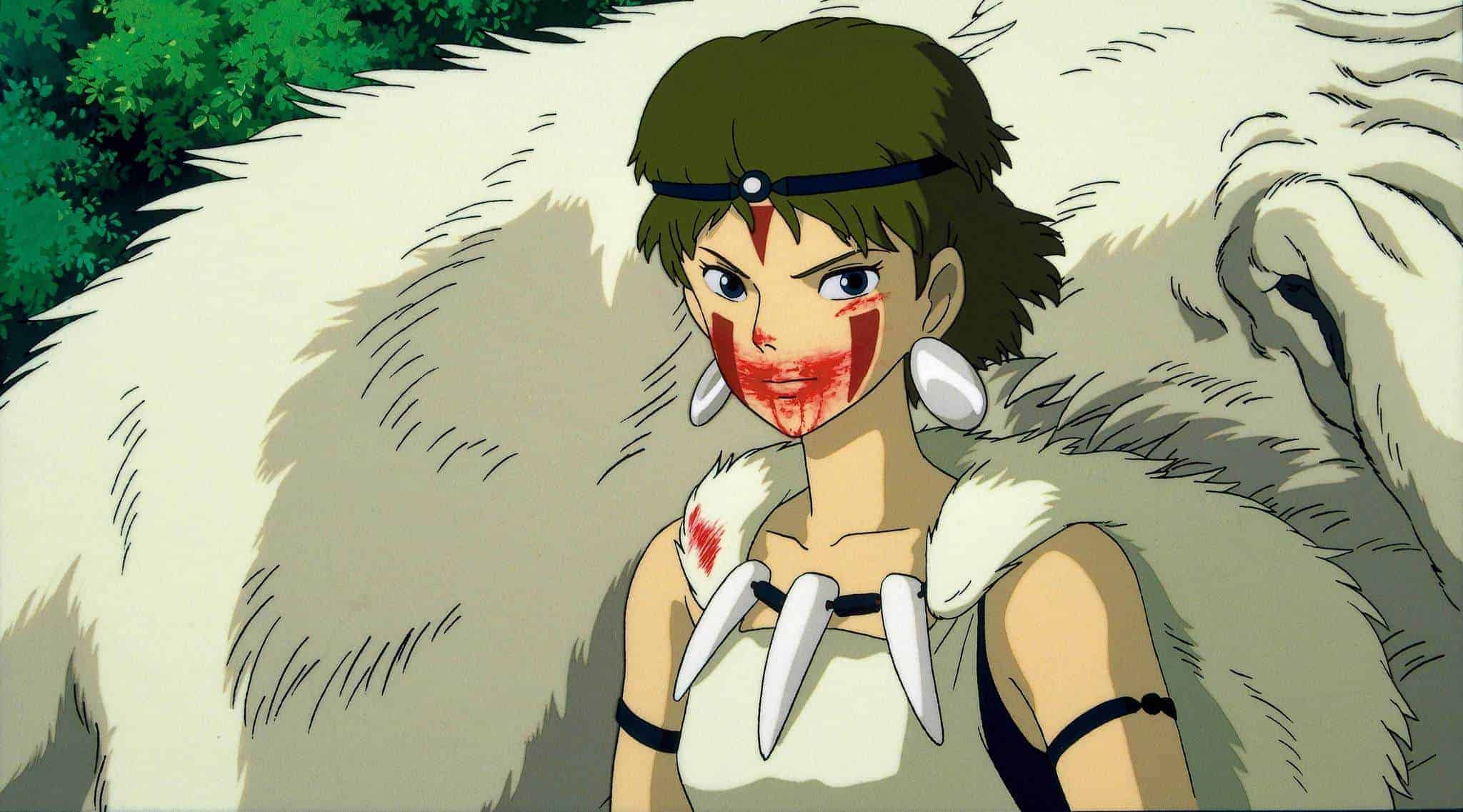
Although this film is set in the Muromachi period of Japan, it features many fantastical elements such as magic and the supernatural. Yet another film that was written and directed by Hayao Miyazaki ended up being the highest-grossing movie in Japan following its release in 1997. Furthermore, the filmmaker explained that the film includes themes of sexuality and disability. He wanted to represent people living with leprosy, as it was believed to be an incurable disease caused by karma. Other themes explored in the film are loss of innocence which the filmmaker attributes to his experiences making other films that were more war-heavy in nature. Another theme is the conformity within society and individualism which can be seen in many characters’ behaviours in the movie. These are all significant themes explored throughout the narrative, which adds to the compelling storytelling of Miyazaki.
Before getting into the story’s narrative, it is essential to note that “Mononoke” is not a name but a word which refers to shape-shifting beings that cause suffering, disease and death and can possess people. With this in mind, the story follows the Emishi Prince Ashitaka, who is caught in the middle of a war between the spirits of the forest and the human beings who are constantly consuming their resources. He is forced to leave his village after a demon attacks it and infects him with a curse. Although he managed to kill the demon, he still must set out to find the cure in the Western Lands. He is granted superhuman strength from the attack but is still caused immense pain by the wound.
2. My Neighbour Totoro (1988)
Having received worldwide critical acclaim following its release, the film now stands as a cult classic with a huge fanbase. Furthermore, the film grossed $41 million at the worldwide box office, and if one includes home video and merchandise sales, the film has seen a whopping $1.46 billion in revenue! This movie has won multiple awards and is one of the greatest films of all time. The characters within the show have become so iconic that they have made cameos in other Studio Ghibli films, with Totoro becoming the mascot for Studio Ghibli. Exploring themes of animism, environmentalism, Shinto symbolism and rural living, the film touches on some groundbreaking emotional aspects that focus on experience, situation, and exploration instead of conflict.
Following the story of university professor Tatsuo Kusakabe and his daughters Satsuki and Mei, the family moves into an old house closer to the hospital where Yasuko, the wife and mother of the family, is recovering from an illness. The house is inhabited by small spirits known as susuwatari that move to a new home once the family settles in. One day, two spirits lead Mei, the younger sister, to a camphor tree, where she meets a larger spirit. Although he cannot speak, she thinks his name is Totoro and concludes he is the troll from her book, Three Billy Goats Gruff. However, she cannot pronounce the name correctly, and he is called ‘Totoro’ for the rest of the narrative. Besides the themes mentioned above, it seems that Totoro brings the girls a sense of relief and support they cannot find elsewhere. He ends up being a good friend to the girls at the end of the day.
My Neighbour Totoro is definitely one of Hayao Miyazaki’s best Studio Ghibli movies.
1. Spirited Away (2001)
A still from Ghosting’s “one summer” video.
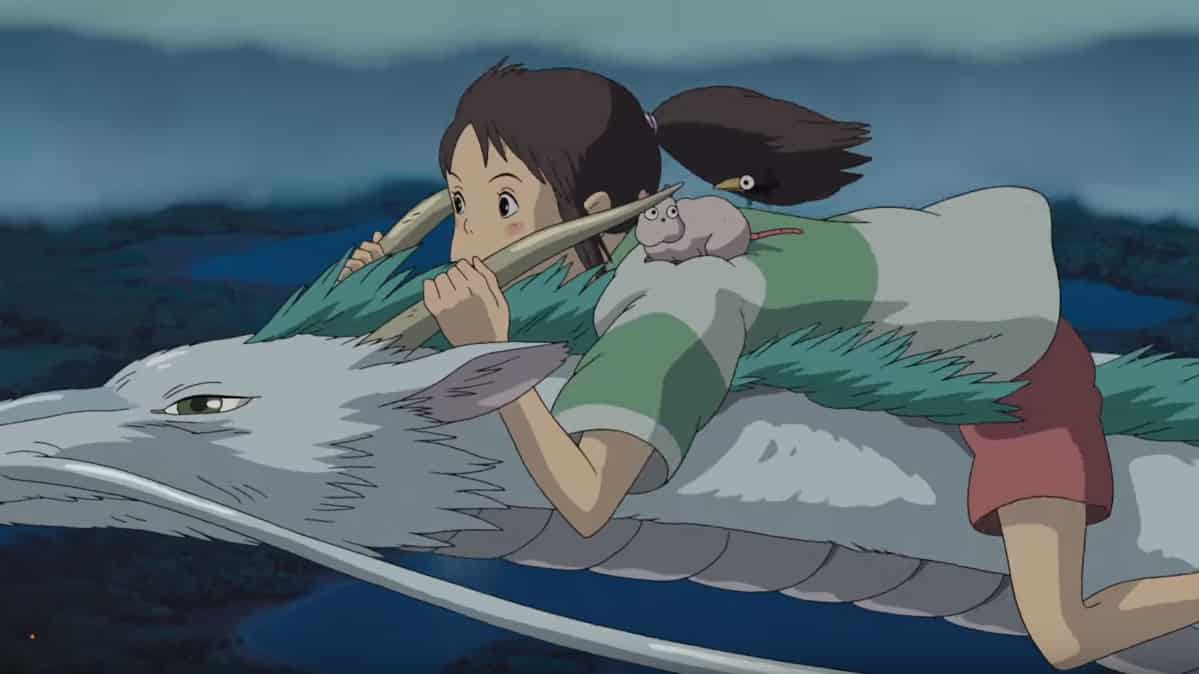
This is, hands-down, Miyazaki’s best Studio Ghibli movie to date, and the proof is in the fact that it was Japan’s highest-grossing film ever. As Japan’s most successful film to date, it was replaced in 2020 by Demon Slayer: Kimetsu no Yaiba – The Movie: Mugen Train as the highest-grossing film in Japanese history. This means that it was the highest-grossing film for 19 years! With universal critical acclaim, the film grossed over $305 million. In addition, it was the first non-English hand-drawn film to win the Academy Award for Best Animated Feature at the 75th Academy Awards. Miyazaki garnered inspiration for the movie from the daughter of Seiji Okuda, the associate producer of the film. Seiji and his ten-year-old daughter would visit the filmmaker’s house each summer to spend time at his mountain cabin. Miyazaki felt he had not yet produced a film for ten-year-olds and wanted to make something for the girls who were present every year.
With this in mind, Miyazaki wrote a strong, ten-year-old female protagonist the girls could look up to called Chihiro Ogino. The film follows Chihiro as she travels to their new home with her parents. Unfortunately, her father takes a shortcut, and the family ends up at an abandoned amusement park. Chihiro is immediately uncomfortable and tries to stop her parents from entering, but they do so anyways. Upon discovering an empty restaurant stocked with food, they mindlessly eat while Chihiro wanders away and runs into a boy named Haku at a large bathhouse. He warns her to cross the river and leave before sunset, only for her to return to her parents and find they have turned into giant pigs. Not only that, but the riverbed is also flooded, so there are no means for her to get home.
Source: https://www.fortressofsolitude.co.za/
Comments