

Henri Vieuxtemps - Viola Sonata, Op. 36 (1862) {Nobuko Imai}
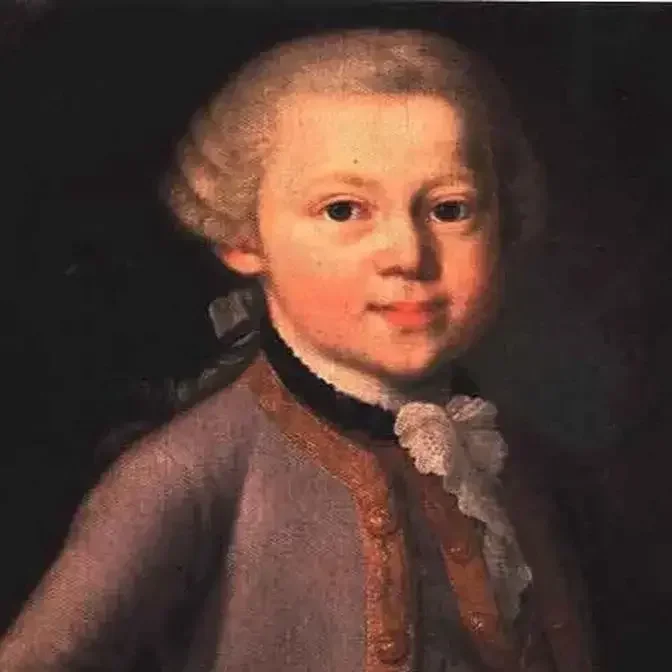
Henri François Joseph Vieuxtemps (17 February 1820 – 6 June 1881) was a Belgian composer and violinist. He occupies an important place in the history of the violin as a prominent exponent of the Franco-Belgian violin school during the mid-19th century. He is also known for playing what is now known as the Vieuxtemps Guarneri del Gesù, a violin of superior workmanship.
Please support my channel:
https://ko-fi.com/bartjebartmans
Viola Sonata in B-flat major, Op. 36 (1863)
Dedication: George V King of Hannover (1819–1878)
I. (Maestoso) (0:00)
II. Barcarolla. Andante con moto (11:46)
III. Finale scherzando. Allegretto (17:59)
Nobuko Imai, viola and Roger Vignoles, piano
Details by Edition Silvertrust:
Henri Vieuxtemps' Viola Sonata dates from 1862. Most of his compositions were for the violin, however, after suffering a stroke which ended his career as a virtuoso, he turned to other instruments and penned this sonata which his publisher asked him to arrange for cello as well. In three movements, the first is massive, actually two movements in one, beginning with a lengthy and gorgeous Maestoso section which eventually leads to an Allegro. The second movement is an elegiac barcarola. The work concludes with a captivating Rondo scherzando.
Henri Vieuxtemps (1820-1881) was born in Verviers, Belgium. He received his first violin instruction from his father, subsequently studying with Charles de Bériot. He toured Europe for several decades and was regarded as one of the leading violinists of his time. Schumann compared Vieuxtemps to Paganini,. Vieuxtemps also devoted himself to composition, having studied composition with Simon Sechter in Vienna, and Anton Reicha in Paris. His violin concertos are still in the repertoire. In addition to this, he became an important teacher, founding the violin school in St. Petersburg and teaching at the Brussels Conservatory, where Eugène Ysaÿe was among his many students.
A second stroke in 1879 ended his career as a violinist for good. He spent his last years in a sanatorium in Mustapha Supérieur, Algeria, where his daughter and her husband had settled, and continued to compose, though frustrated by his inability to play or, far from the musical centers of Europe, even hear his music played by others.