
[Sheet music] Michael Arne (c.1740-1786) - Overture 'Cymon' (1767)
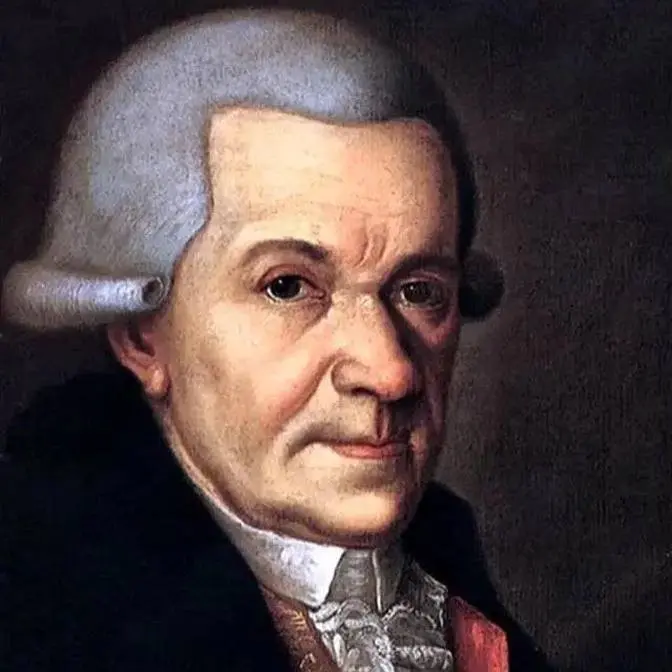
.
Consider to support this project on https://ko-fi.com/michaelhaydn
★ WORLD PREMIERE RECORDINGS ★
♫ Recovery project of sheet music by Johann Michael Haydn (1737-1806) and by other neglected composers ♫
Composer: Michael Arne (c.1740-1786)
Work: Overture 'Cymon' (1767)
Software: Sibelius + Harpsichord samples
World Premiere: Yes
Overture 'Cymon' (1767)
1. Con spirito 0:05
2. Andantino 4:04
3. Allegro 7:42
Sheet music (pdf): https://s9.imslp.org/files/imglnks/usimg/c/c3/IMSLP248785-PMLP403301-Arne_-_Cymon_SelVS.pdf
Sheet music (xml): https://www.mediafire.com/file/ikgjt0pnqrhqjru/ARNE-OvertureCymon.xml/file
Info about sheet music recovering project: https://i.ibb.co/hML4xyJ/HAYDN-M-3.jpg
---
Michael Arne
(c.1740 - Lambeth, 14 January 1786)
English composer. He was previously thought to be the ‘natural son’ of Thomas Arne mentioned by Burney. This comment, however, is now thought to refer to another son, Charles Arne, who was christened on 9 January 1734, before Thomas Arne’s marriage to Cecilia Young. There is no record for Michael Arne at St Paul’s, Covent Garden, where most of the Arne family were christened. His aunt, Mrs Susanna Cibber, was responsible for his upbringing. Under her guidance he is said to have made his stage début as the Page in Otway’s tragedy The Orphan. He first appeared as a singer in Manfredini’s concert on 20 February 1750, but his career as actor and vocalist was brief. Burney comments that ‘his father tried to make him a singer, but he was naturally idle and not very quick. However, he acquired a powerful hand on the harpsichord’. He showed an early gift as a composer. The Floweret, his first collection of songs (1750), contains ‘The Highland Laddie’, a song in the Scottish style which became popular and as late as 1775 was adapted by Linley in The Duenna. On 5 February 1751 he first played one of his father’s organ concertos, of which he was the principal exponent for 30 years. Thereafter he found his true vocation as keyboard player and composer to the theatres and pleasure gardens. From 1756 onwards he contributed songs to various dramatic productions and in 1764 collaborated with Battishill in setting Richard Rolt’s Almena, which enjoyed a limited success. His most famous song, The Lass with the Delicate Air, first appeared in 1762. He was elected to the Madrigal Society on 20 March 1765. On 5 November 1766 he married Elizabeth Wright, a young singer whom he had heard at Ranelagh in 1763. The marriage register indicates that he was a widower, though nothing is known of his first wife.
His second wife sang the leading roles in many Drury Lane productions, including Arne’s setting of Garrick’s Cymon in 1767; this was his biggest success. In the same year he is reputed to have built a laboratory at Chelsea in order to study alchemy, which led him to a debtors’ prison. When Mrs Arne died, on 1 May 1769, Burney bluntly placed the blame for her early death on the overwork to which her husband had subjected her. In 1771-72 he toured Germany with a pupil, Ann Venables, and conducted the first public performance in Germany of Handel’s Messiah on 21 May 1772 at Hamburg (preceded by a private performance on 15 April). On his return to England he married Miss Venables. In December 1776 he was engaged by Thomas Ryder to produce Cymon in Dublin, where his new wife was a popular attraction. But the lure of alchemy again prevailed; he took a house at Clontarf to resume the search for the philosopher’s stone, which again drove him into debt. While confined to a Dublin sponging-house, he was assisted by Michael Kelly’s father, who provided him with a piano in return for young Kelly’s daily lesson. Returning to London, he was engaged as composer at Covent Garden for several seasons. One unusual engagement was to provide a harpsichord accompaniment for a display of moving pictures, Eidophusikon, in 1781. In 1784-85 he directed the Lenten Oratorios at the Haymarket. After his father’s death he retained many of his unpublished manuscripts, including the organ concertos, and in 1784 announced his intention of publishing them. But he died, leaving his wife destitute, without having done so. The concertos were preserved and published in 1787 by John Groombridge. His daughter Sarah was a leading singer at Drury Lane from 1795 to 1800. The daughter who nursed him in his last illness, however, was called Jemima. Whether they are one and the same person or whether he had two daughters is uncertain. #ClassicalMusic