Gan Jing World
Back to the collection
65-year timeline

Humans and the Moon

From Kennedy's 1962 Rice speech to Artemis II's 2026 return — 11 milestones in the human lunar program. Not just Apollo: the 54 years between 1972 and 2026 had no human footprints, but China, India, and commercial US landers kept sending machines back.

Kennedy's Rice University Moon speech
September 12, 1962

Kennedy's Rice University Moon speech

"We choose to go to the Moon. Not because it is easy, but because it is hard." Kennedy addressed a crowd of 40,000 at Rice University's stadium, publicly re-committing the country to the lunar goal he had first announced to Congress 16 months earlier (May 25, 1961). At that point, NASA's total crewed spaceflight experience was Alan Shepard's 15-minute 22-second suborbital hop. The starting gun of the Space Race.

Photo / NASA
John Glenn orbits Earth three times
February 20, 1962

John Glenn orbits Earth three times

Friendship 7. Glenn became the first American in orbit — three laps, 4 hours 55 minutes. The big concern was a possibly loose heat shield; during the entire reentry, Glenn didn't know whether he would burn up. He splashed down safely, putting the U.S. back in the race after Gagarin's 1961 orbit for the Soviets.

Photo / NASA
Ed White performs first U.S. spacewalk
June 3, 1965

Ed White performs first U.S. spacewalk

Gemini 4. Tethered only by a 25-foot gold umbilical, White floated outside the spacecraft for 23 minutes — the first American EVA. When Mission Control ordered him back in: "It's the saddest moment of my life." Nineteen months later, he died in the Apollo 1 fire.

Photo / NASA
Apollo 11 steps onto the Moon
July 20, 1969

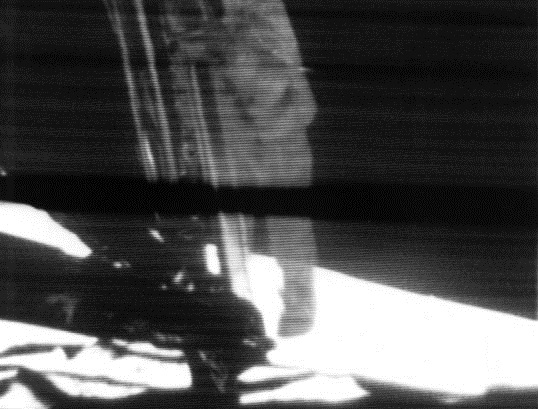
Apollo 11 steps onto the Moon

UTC 20:17 — Eagle landed in the Sea of Tranquility. UTC 02:56 (July 21) — Armstrong's first step: "That's one small step for man, one giant leap for mankind." 600 million people watching live. Kennedy's 10-year goal met, nearly six years after his assassination.

Photo / NASA
Apollo 17: The last step
December 14, 1972

Apollo 17: The last step

Before climbing the LEM ladder for the final time, Gene Cernan: "We leave as we came and, God willing, as we shall return, with peace and hope for all mankind." No human has walked on the Moon since (though plenty of machines have). On this same mission, geologist Jack Schmitt discovered orange volcanic glass — rewriting lunar history.

Photo / NASA
Luna 24: The first lunar era ends
August 22, 1976

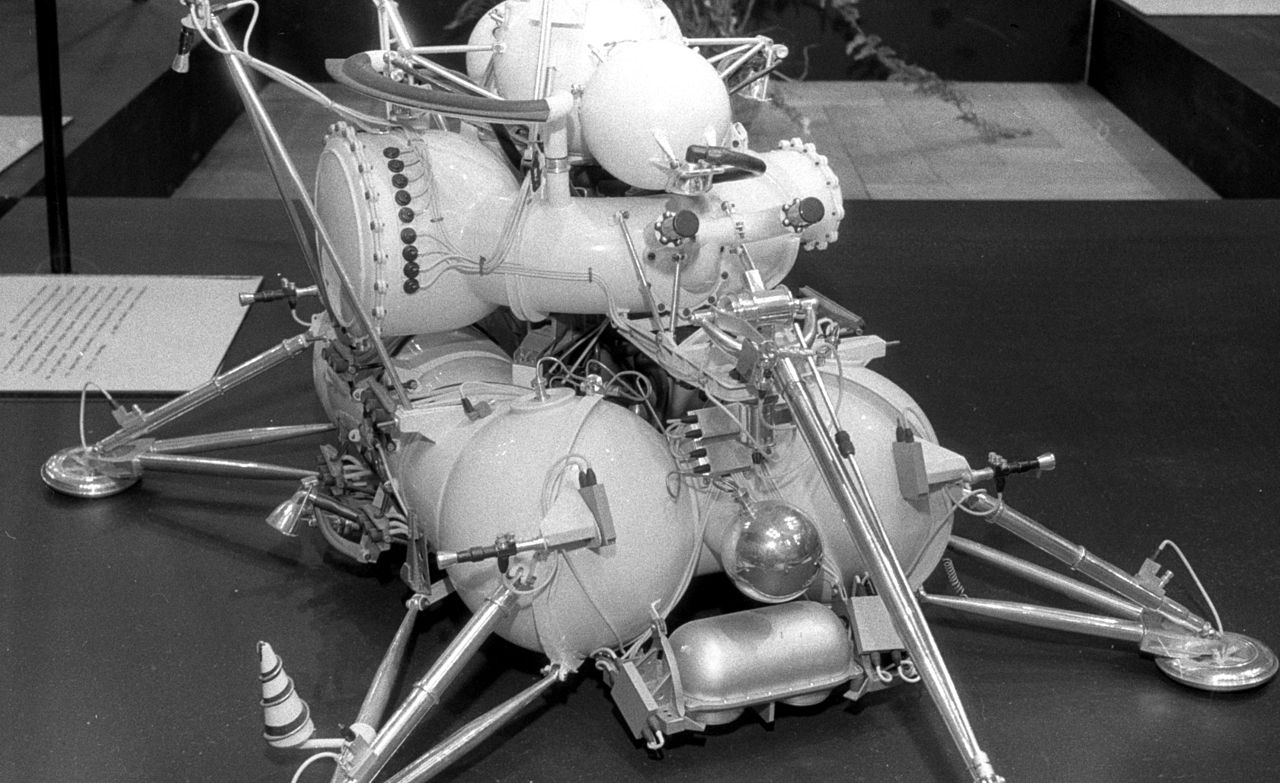
Luna 24: The first lunar era ends

The Soviet Luna 24 returned a 170-gram core sample from Mare Crisium, splashing down on the Kazakh steppe. The last successful Moon mission of the Space Race era — and the start of a 37-year silence on the lunar surface: no humans, no spacecraft, just NASA's orbiters watching from afar.

Photo / Svobodat · CC BY-SA
Chang'e 3: First soft landing in 37 years
December 14, 2013

Chang'e 3: First soft landing in 37 years

China's Chang'e 3 soft-landed in Sinus Iridum (Bay of Rainbows) and deployed the Yutu ("Jade Rabbit") rover — the first successful Moon landing since Luna 24 in 1976. Yutu operated for 31 months and produced China's first in-situ spectral map of the lunar surface.

Photo / CNSA · Chinese Academy of Sciences
Chang'e 4: First-ever landing on the Moon's far side
January 3, 2019

Chang'e 4: First-ever landing on the Moon's far side

China's Chang'e 4 landed in Von Kármán Crater on the Moon's far side — a human-spaceflight first. The far side never faces Earth, so no direct radio contact is possible; China pre-positioned the "Queqiao" relay satellite in 2018 to make this mission work. The Yutu-2 rover has now operated longer than any other rover in lunar history, and is still working.

Photo / CNSA
Chandrayaan-3: India's first Moon landing — at the south pole
August 23, 2023

Chandrayaan-3: India's first Moon landing — at the south pole

ISRO's Chandrayaan-3 Vikram lander soft-landed near the lunar south pole — the first-ever landing in the polar region by any nation. The Pragyan rover operated for 14 Earth days and detected sulfur, aluminum, calcium, and iron in the regolith. Artemis IV (2028) will return to this same region for the first human landing.

Photo / ISRO
IM-1 Odysseus: First U.S. Moon landing in 52 years
February 22, 2024

IM-1 Odysseus: First U.S. Moon landing in 52 years

Intuitive Machines' Nova-C lander "Odysseus" touched down near the lunar south pole — the first U.S. spacecraft to reach the Moon's surface since Apollo 17 in 1972, and the first-ever commercial soft landing. A snapped landing leg tipped it on its side, but most instruments still worked. Paves the way for NASA's commercial lunar delivery model that will feed Artemis.

Photo / Intuitive Machines
Artemis II: Humans back in lunar orbitLatest
April 1-10, 2026

Artemis II: Humans back in lunar orbit

Reid Wiseman, Victor Glover, Christina Koch, Jeremy Hansen became the first humans to leave Earth orbit since 1972. The 10-day flyby mission broke Apollo 13's 56-year record for the farthest a crewed spacecraft has traveled from Earth. Artemis III (2027) will test the lander in Earth orbit; Artemis IV (2028) attempts the first crewed lunar landing — closing the 53-year gap at last.

Photo / NASA
Ready to unlock all 10 films?
Subscribe Now
Sources & credits

All images on this page are NASA, ESA, JAXA, CNSA, ISRO, or other space-agency public-domain archival materials, sourced via Wikimedia Commons; each image is credited to its specific photographer/institution inline. Fact sources: NASA History Office mission press kits, peer-reviewed journals (Nature, Geophysical Research Letters), space-agency official archives, Wikipedia cross-referenced. All quotes are from the historical record with sources given.