




The History of Communism, in Films and Documentaries
In one century, communism went from an idea to a system that at its peak ruled a third of humanity — at a cost counted at 100 million lives. Follow the whole story, moment by moment, through 38 films and documentaries, all streaming here. Three states will require this subject from the 2026–27 school year — Texas from grade 4, Florida from grade 6, Arkansas from grade 7. See it first-hand, and decide for yourself.
“…first-person accounts, in the form of in-person, video-recorded, or written testimony, from the victims of communist regimes.”
Texas Education Code § 28.002(h-11)(8), added by Senate Bill 24 (2025) · in force from the 2026–27 school year, grades 4–12
Told by the victims
First-person testimonySix first-hand accounts, told by the people who lived them. A labor-camp prisoner who risked his life to film his own detention in secret. Survivors of the 2002 Changchun broadcast. A girl forced back across the North Korean border three times before she got out. Start with these.
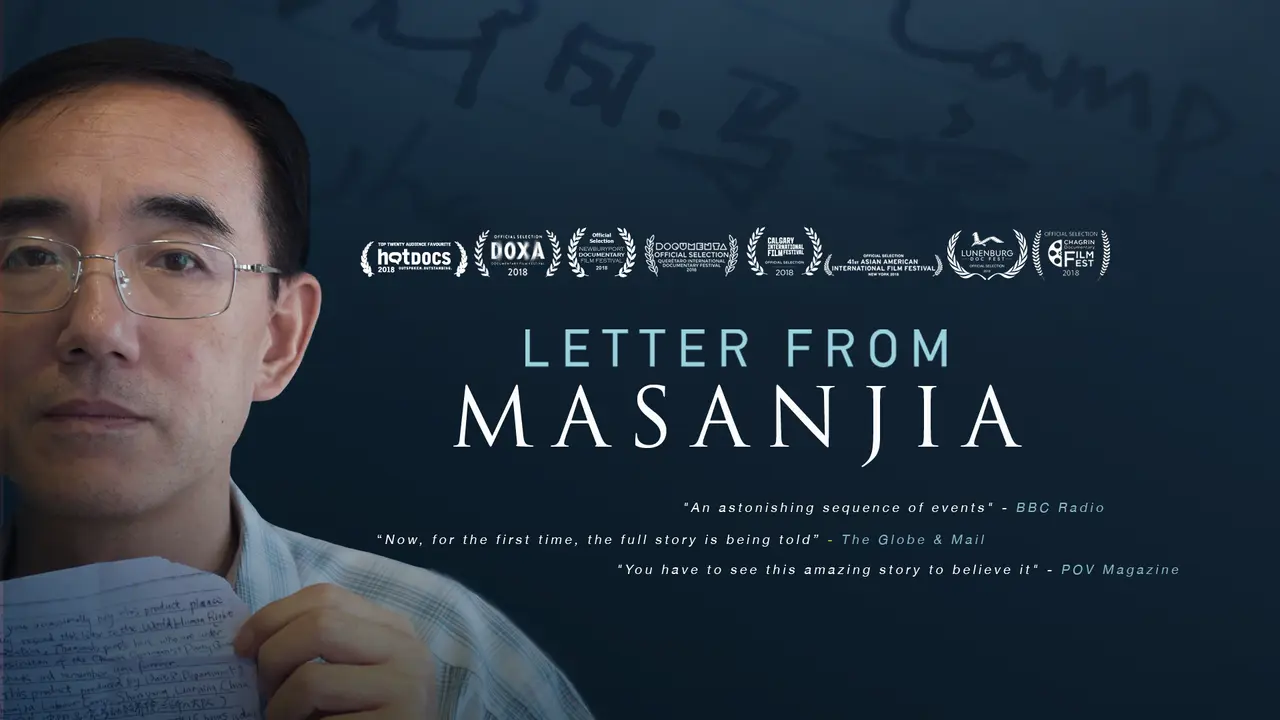 GJW+75 minLetter From Masanjia2018 · China · 75 minA cry for help hidden inside a box of Halloween decorations, found by a shopper in Oregon. The man who wrote it then filmed his own life in secret, at enormous risk — written testimony and video testimony from the same victim.
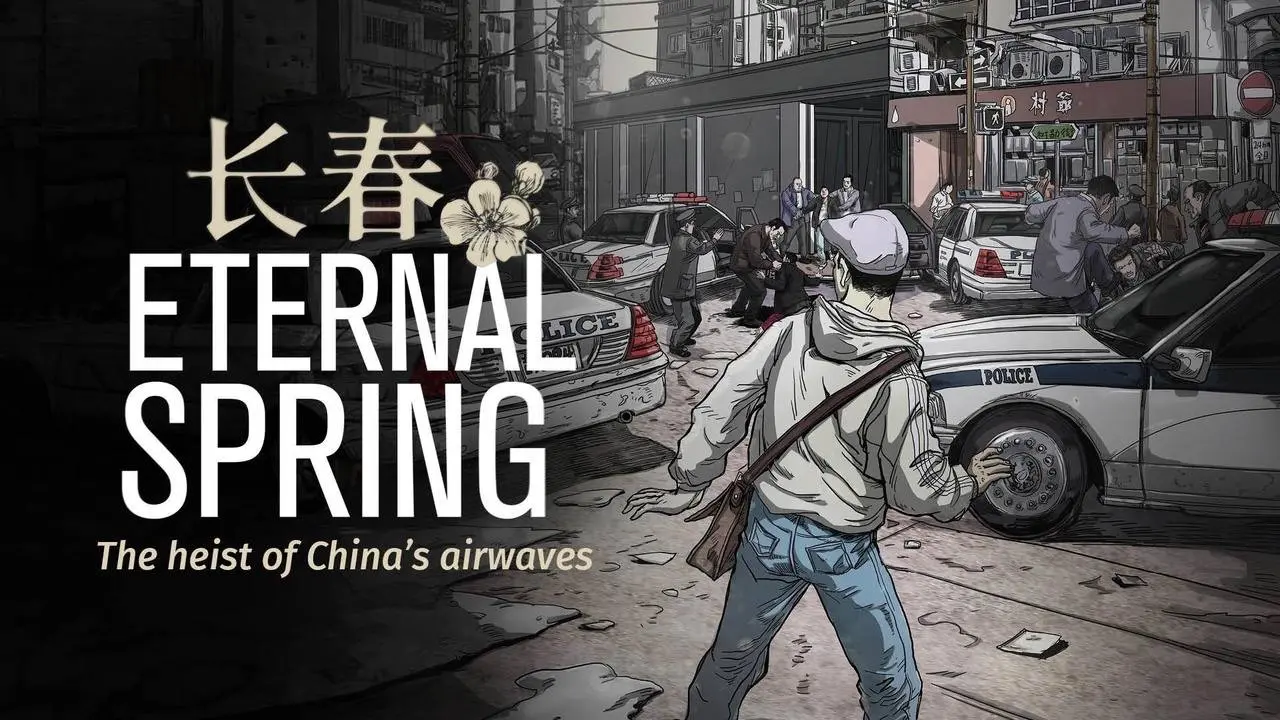 GJW+86 minEternal Spring2022 · China · 86 minCanada’s entry for the 95th Academy Awards. Survivors of the 2002 Changchun broadcast tell their own story, drawn by a comic artist who fled China — animation lets it carry what footage could not.
 82 minUNBROKEN: The Untold Story of Shen Yun2026 · 82 minPerformers who got out describe what their families went through, and what still follows them abroad.
 GJW+38 minShe Escaped North Korea 3 Times2026 · Grace Jo · American Thought Leaders · 38 minGrace Jo was six when her mother carried her across the Tumen River. Her grandmother had already died of starvation; her father died after crossing the border for a bag of rice. Forced back into North Korea three times, the family finally reached America in 2008. Her eldest sister has been missing for twenty-six years.
 GJW+79 minAsk No Questions2020 · China · 79 minA former state-television insider explains, on camera, how a broadcast that shocked the world was made — and what happened to the people who questioned it.
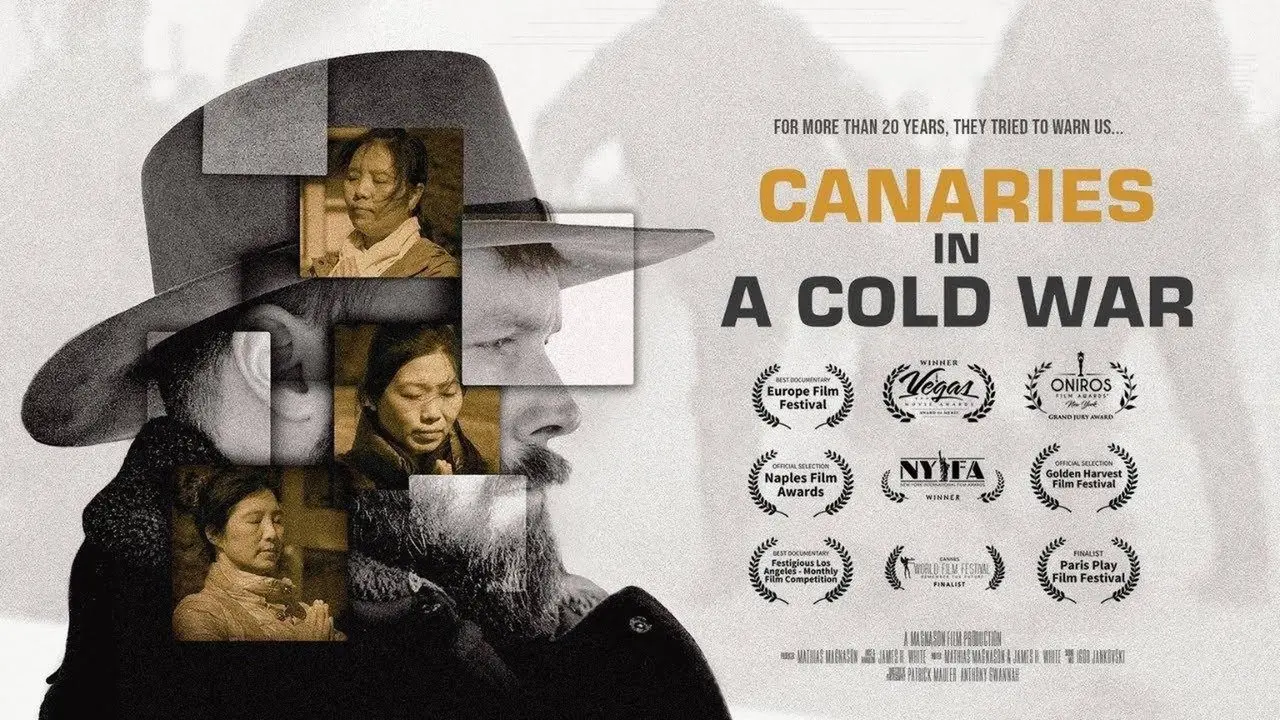 GJW+49 minCanaries in a Cold War2022 · China · 49 minThree sisters describe what was done to them in Chinese custody. The songwriter who heard their account set out to write one protest song for the Beijing Olympics, and crossed the Atlantic instead.
Where the idea came from
1789 – 1917 · EuropeThe idea’s first century — France, Germany, the Paris Commune — before it ever held a state.
The Reign of Terror — and the first communist
The French Revolution turns on its own people in the Reign of Terror. In its wake, Gracchus Babeuf’s “Conspiracy of the Equals” plots to abolish the ownership of property — twenty years before Marx was born.
The idea travels east
Born in Paris, written down in London, armed in Petrograd.
Three cities carry this early chapter.
“A specter is haunting Europe”
As revolutions sweep the continent, Marx and Engels publish the Communist Manifesto — a program that, in its own words, calls for the abolition of private property.
“A specter is haunting Europe — the specter of communism.”The opening line of the Communist Manifesto, 1848 — quoted at the start of The Specter of Communism, Ep.1

The first seizure of power
The Paris Commune holds the French capital for seventy-two days — the series calls it communism’s “first attempt at seizing power.” It ends with the city’s treasures burned and thousands dead.

The revolution takes power
February bread riots bring down the Tsar. In October, Lenin’s Bolsheviks seize power. For the first time, the idea has an army, a police force and a country.
deaths under communist regimes in the century that followed — the figure the series attributes to records compiled by the U.S. Congress.
Specter Ep.3 — free, with English captionsThe first communist state
1917 – 1961 · Russia & the USSRTerror, famine and camps — the machinery every later communist state would copy.
The Red Terror
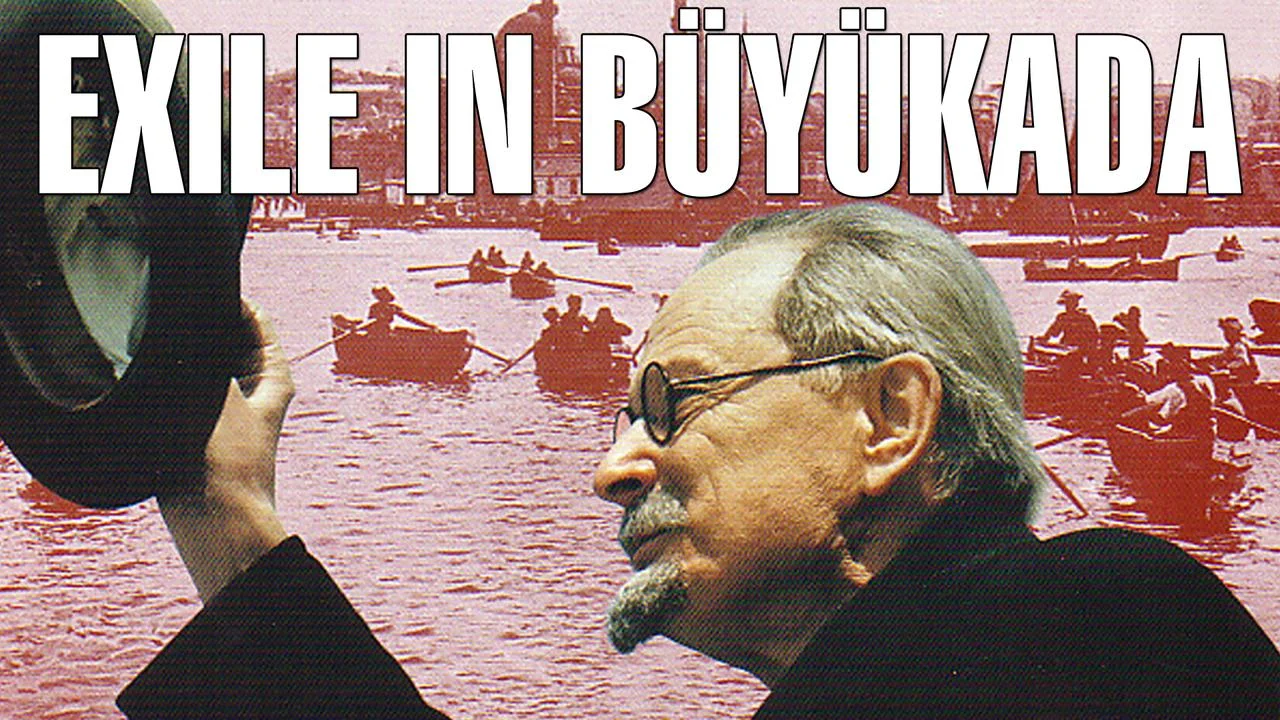
Within weeks of the Bolshevik coup, the Cheka secret police is created with sweeping powers, including execution without trial. Strikers and peasants who resist are jailed or shot. The revolution begins turning its violence inward, eventually driving out even Trotsky, one of its principal architects, who would spend his final years in exile before being assassinated.

Eleven time zones of machinery
Terror in Moscow, famine in Ukraine, and a camp network spanning the country.
Camp dots mark Solovki, Vorkuta, Norilsk and Magadan — far corners of the Gulag network.
deaths in Ukraine’s Holodomor famine, 1932–33, by the count the series gives — while the state exported grain.
Specter Ep.3 Pt.2, from 11:29 — freeThe Holodomor
Collectivization seizes the land, then the harvest. As famine spreads, grain is confiscated and starving Ukrainians are prevented from leaving. Millions die in a terror-famine created and enforced by the Soviet state — the template China would follow a generation later.
The Gulag
A continent-wide network of forced-labor camps, stretching from the White Sea to the Pacific. The series calls the Gulags “Europe’s first concentration camps” — built to hold not criminals but anyone the state decided was an enemy.
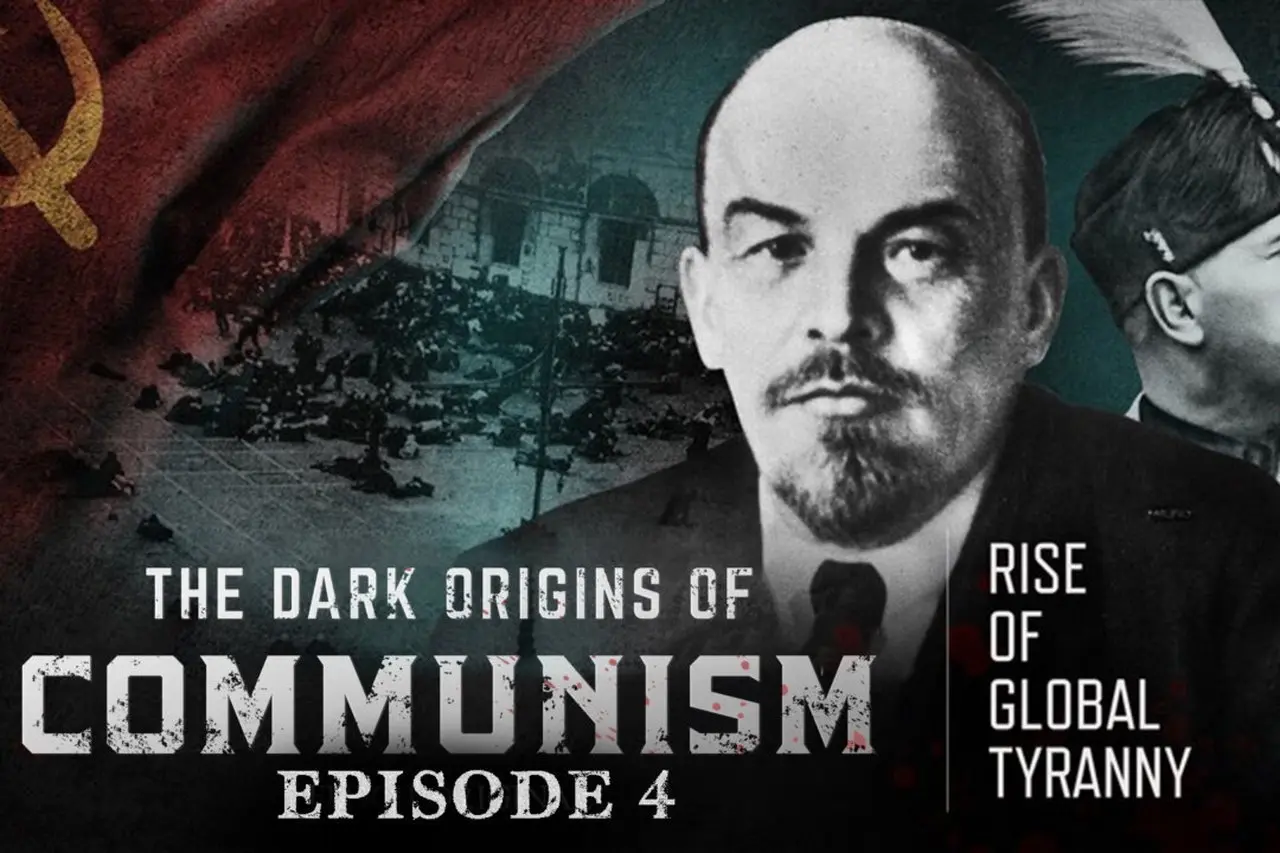
deaths in the Soviet Union — the Black Book of Communism’s tally for the first communist state.
Cited in Specter Ep.3 Pt.2, from 27:37The empire beyond Russia
At Yalta, the victors negotiate the shape of postwar Europe. Within a few years, every country between Germany and the Soviet border has a communist government none of them chose, enforced through secret police, purges and repression. Berlin is divided. In 1961, a wall goes up — built not to keep invaders out, but to keep the regime’s own people in.
 Free · account required72 minAnimal Farm (1954)1954 · animated · Not Rated · 72 minOrwell’s 1945 allegory of the Russian Revolution, animated. Note that this adaptation’s ending departs from the book’s.
 GJW+44 minThe Soviet Union — Ep.2: The 100th AnniversaryEp.2 of 3 · the eastern front, Yalta, and the Berlin Wall
The famine and the Cultural Revolution
1949 – 1976 · ChinaThe world’s most populous nation — and the century’s highest death toll.
A quarter of humanity
The CCP defeats the Nationalist government and Mao proclaims the People’s Republic from Tiananmen. One in four human beings now lives under a communist state. The same year, on the other side of the world, George Orwell publishes Nineteen Eighty-Four — a warning about what happens when the state controls the truth.
1 in 4 people
What 1949 meant for the world, at a glance.
1 in 4
people lived under a communist state after 1949.
Campaign after campaign
Barely three months after the founding, “land reform” begins — landlords are eliminated as a class. From 1949 to 1966, in the campaigns that follow, the series counts tens of millions of Chinese lives lost.
One country, two catastrophes
The campaigns were ordered in Beijing; the famine struck hardest in the countryside.
The Great Leap famine
1958–62: collectivized agriculture collapses and tens of millions starve in the deadliest famine in recorded history — while Beijing keeps exporting grain and funding revolution abroad. Free to watch, in full.

deaths in China — the highest national toll in the Black Book of Communism’s count.
Cited in Specter Ep.3 Pt.2, from 27:37The Cultural Revolution
A decade in which children denounce parents and students beat teachers; temples, books and five thousand years of tradition are marked for destruction. The best film on it is free.

Where the Cold War stopped being cold
1950 – 1979 · Korea, Vietnam, CambodiaRevolution exported by arms and aid: three wars and a genocide, each in a single sitting.
The first hot war
North Korea invades South Korea, triggering a three-year war that ends in an armistice rather than a peace treaty. The border it drew still stands. At night, from space, one side is lit and the other is dark.
Three wars, one export
Korea, Vietnam, Cambodia — the revolution traveled by arms and aid.
The longest proxy war
Two decades of war, fueled and supported by Beijing and Moscow, while China’s own people were starving. The Black Book of Communism attributes one million deaths to the communist regime, separate from combat deaths in the war.

The Khmer Rouge
Pol Pot’s Khmer Rouge empty the cities and abolish money, family and religion. In four years, by the estimates the series cites, 1.4 to 2.2 million people die — up to a third of Cambodia’s population.
Up to 1 in 3 Cambodians
Four years of Khmer Rouge rule, 1975–79.
1 in 3
of Cambodia’s population died — 1.4 to 2.2 million people, by the estimates the series cites.
The Cold War elsewhere
1957 – 1989 · Washington, London, RomeThe Cold War was fought far beyond the Iron Curtain: through propaganda, espionage, political influence and the contest for Western opinion.
Aimed west
From Moscow outward: a campaign directed not at armies but at opinion.
The Western response came from London, Rome and Washington within the same few years.
The shop window
Sputnik stuns the West, showcasing what Soviet science and central planning can achieve. The space program becomes the regime’s most powerful advertisement to the world: proof, in its telling, that communism can deliver modernity, technological power and progress — while the same economy struggles to provide the basics at home.
The long infiltration
The highest-ranking intelligence officer ever to defect from the Soviet bloc explains what he spent his career doing: disinformation, aimed not at armies but at minds. The free Ep.5 traces the same campaign through Western institutions.

The West answers
Thatcher, then Reagan and John Paul II — the decade the West stops apologizing and starts winning the argument. In 1979, the first Polish pope returns home and draws crowds the communist regime cannot disperse. In 1981, within six weeks of each other, both the pope and the president survive assassination attempts.

Latin America
1959 – today · Cuba and VenezuelaRevolution exported to the Americas — for a great many American families, not foreign history at all.
The first beachhead
Castro takes Cuba, the first country in Latin America to establish ties with the Soviet Union. It becomes the staging ground for revolution across the hemisphere. Start with the ten-minute video below; the interview that follows goes deeper.
 Free10:07Cuba: Tito’s Trouble with Communism2025 · PragerU Kids · Around the World · animated · 10 min · FreeTito is fourteen, in Havana, and wants to box. Animated fiction, written for classrooms — PragerU publishes a free lesson plan for it, pitched at grade 6 and up.
 GJW+44 minHow Cuba Penetrated America’s Security Elite | John Suarez2026 · John Suarez · American Thought Leaders · 44 minA bomb at Fraunces Tavern, 1975 — where Washington said goodbye to his troops. Four dead. The bomb maker lives in Havana today.
From Havana outward
Cuba first — then the 1967 guerrilla wave across seven countries.
Brazil, Peru, Bolivia, Colombia, Chile, Venezuela and Ecuador.
deaths in Latin America, mainly Cuba — the Black Book of Communism’s tally for the hemisphere.
Cited in Specter Ep.3 Pt.2, from 27:37The guerrilla wave
Maoist organizations in Brazil, Peru, Bolivia, Colombia, Chile, Venezuela and Ecuador; two guerrilla groups formed in 1967 with Chinese backing. One free segment covers the whole wave, and fits inside a lunch break.
What did not end
1989 – todayCommunist governments still rule roughly a fifth of the world’s population. This chapter is not history.
1989: Two answers
In June, tanks clear Tiananmen Square. In November, the Berlin Wall falls. Within two years, communist governments across Eastern Europe collapse. China chooses the opposite path: crush the movement for political freedom and preserve the communist state. Two responses to the same crisis, both still shaping the world today.
Still standing
China, North Korea, Cuba, Vietnam, Laos.
Source: How the Specter of Communism Is Ruling Our World, Ep.4 Pt.2, from 23:30 — watch free.
The persecution continues
In July 1999 the CCP launches a nationwide campaign against Falun Gong — a meditation practice that, by the count the series cites, had drawn some 100 million practitioners. The 2006 Bloody Harvest report by David Matas and David Kilgour documented forced organ harvesting from prisoners of conscience; in 2016 the U.S. House unanimously passed Resolution 343 demanding its end. These five films — one of them Canada’s official submission to the 95th Academy Awards — are told by the people it happened to.
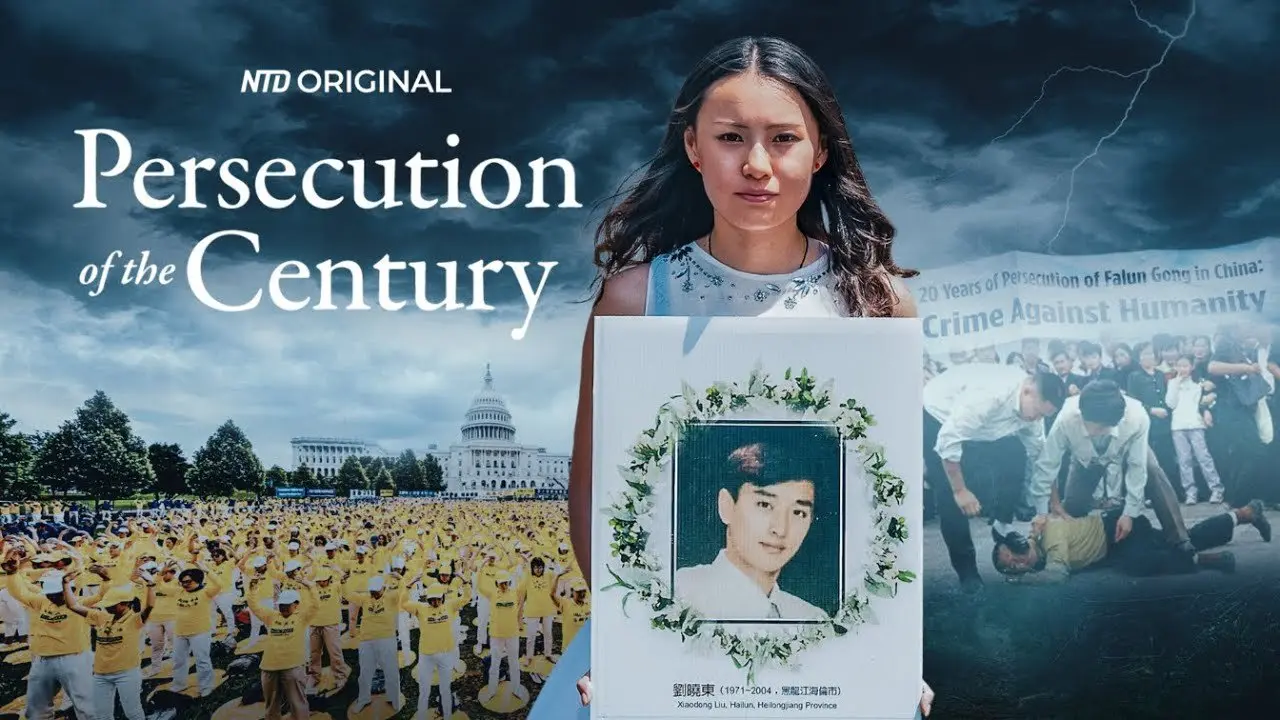
practitioners Falun Gong had drawn in China by 1999, by the count the series cites — more than the Party’s own membership.
Nine Commentaries Pt.5, from 15:40 — freeThe Nine Commentaries
The Epoch Times publishes the Nine Commentaries on the Communist Party — the editorial series narrated in full in the free library below. Its publication set off the Tuidang movement to renounce Party membership.
Not history yet
North Korea’s 1990s famine killed an estimated 240,000 to 420,000 people, according to the figures cited in the series. The prison camps still operate. And the influence campaigns that began decades ago did not stop at the border. The free film below traces how they continue to reach into the West today.
GJW+49 minCanaries in a Cold WarA songwriter set out to write one protest song for the Beijing Olympics. He came back with this. GJW+47 minNorth Korea: Life Inside the Secret State2013 · Channel 4 Dispatches · 47 minA Japanese journalist spent fifteen years training secret cameramen inside North Korea. Their tapes crossed the Tumen — the same river Grace Jo’s mother carried her across.
 Free58 minChina's Stealth InvasionBuilt on a book by one of the seven men at the top of the Party — and ending with an American father identifying his daughter after a fentanyl overdose.
 GJW+64 minHollywood Takeover: China's Control in the Film IndustryOpens with Mao’s line on art, set against MGM’s lion. Told by the executive who took Iron Man 3 into China.
 GJW+156 minThe Final WarEpoch Times reporters and a retired Air Force general trace the plan back to 1949. Two and a half hours — the first hour is today, the rest is how we got here.
The Black Book of Communism’s tally — 94 million counted, country by country
As presented in How the Specter of Communism Is Ruling Our World, Ep.3 Pt.2, from 27:37 — free, with English captions
“The history of communism is a history of murder, and every page is written in the blood of its victims.”How the Specter of Communism Is Ruling Our World, Ep.3
Plus 10,000 attributed to communist movements not in power. Scholarly estimates vary by country; the series itself gives “at least 100 million” as the total. Watch the passage, free.
Complete works, free
English narration and English captions throughout. The most complete account of communism anywhere on Gan Jing World.
 Free5 episodes · 3 hrs 57How the Specter of Communism Is Ruling Our WorldDocumentaryThe five-part documentary — the part to watch first. The same free playlist also carries the complete book, narrated: 19 chapters, 25 hrs 40.
 Free9 parts · 7 hrs 58
Nine Commentaries on the Communist PartyAll captionedThe landmark 2004 editorial series, narrated in full. Each part is titled and self-contained — Pt.3 The Tyranny of the Chinese Communist Party and Pt.6 How the Party Destroyed Traditional Culture stand on their own. Historically significant in itself: its publication set off the movement to renounce Party membership.
Free9 parts · 7 hrs 58
Nine Commentaries on the Communist PartyAll captionedThe landmark 2004 editorial series, narrated in full. Each part is titled and self-contained — Pt.3 The Tyranny of the Chinese Communist Party and Pt.6 How the Party Destroyed Traditional Culture stand on their own. Historically significant in itself: its publication set off the movement to renounce Party membership.
 Free6 parts · 5 hrs 57
The Ultimate Goal of CommunismAll captionedThe most explicitly religious of the three in its framing — chapter titles refer to devils and the divine. Useful background for adults; not a first stop.
Free6 parts · 5 hrs 57
The Ultimate Goal of CommunismAll captionedThe most explicitly religious of the three in its framing — chapter titles refer to devils and the divine. Useful background for adults; not a first stop.
Or start with a single chapter of the Specter book — each stands on its own: