


João Stanganelli Jr. sat quietly in the corner of his small living room, the soft sound of yarn weaving through his fingers. He had only recently learned the art of crocheting—five days, to be exact—but now, his hands moved fluidly, almost as if they had always known the rhythm. The warmth of the Brazilian sun filtered in through the open window, casting golden light on the delicate threads he held. He was in his own world, one he had stepped into after a year of unexpected turns.
At 64, João wasn’t supposed to be here. He had spent most of his life working in the food industry, building a career that kept him busy and out of touch with his body. But when health issues forced him to step away from his job, he found himself at a crossroads. For the first time in years, he had time on his hands—and the realization that he needed something to fill it. He found that something in the art of crocheting.
He had started with small projects, simple rugs that added warmth to his home. But it wasn’t until his granddaughter, Isabella, came over one afternoon that João discovered the deeper purpose of his newfound hobby.
Isabella was only six, with wide, curious eyes and a smile that could light up the darkest of rooms. She had grown up knowing her grandfather’s vitiligo, the skin condition that caused patches of depigmented skin to appear unpredictably on his face, hands, and arms. João had lived with vitiligo since he was 38, and though it never caused him much personal discomfort, he knew that for many others, the condition was a source of insecurity.
“I want to make you something special, meu amor,” he told Isabella one day, his voice warm with affection. He had been thinking for days about what would make the perfect gift—a token that would carry a piece of him with her always. Then it came to him: a doll, just like him.
The doll’s skin would mirror his own, with patches of vitiligo scattered across its tiny body. João crocheted carefully, shaping each piece with love and precision, ensuring that the doll looked like it had a life of its own. When he presented it to Isabella, her eyes filled with awe and wonder.
“Grandpa, it’s just like you!” she gasped, holding the doll close to her chest.
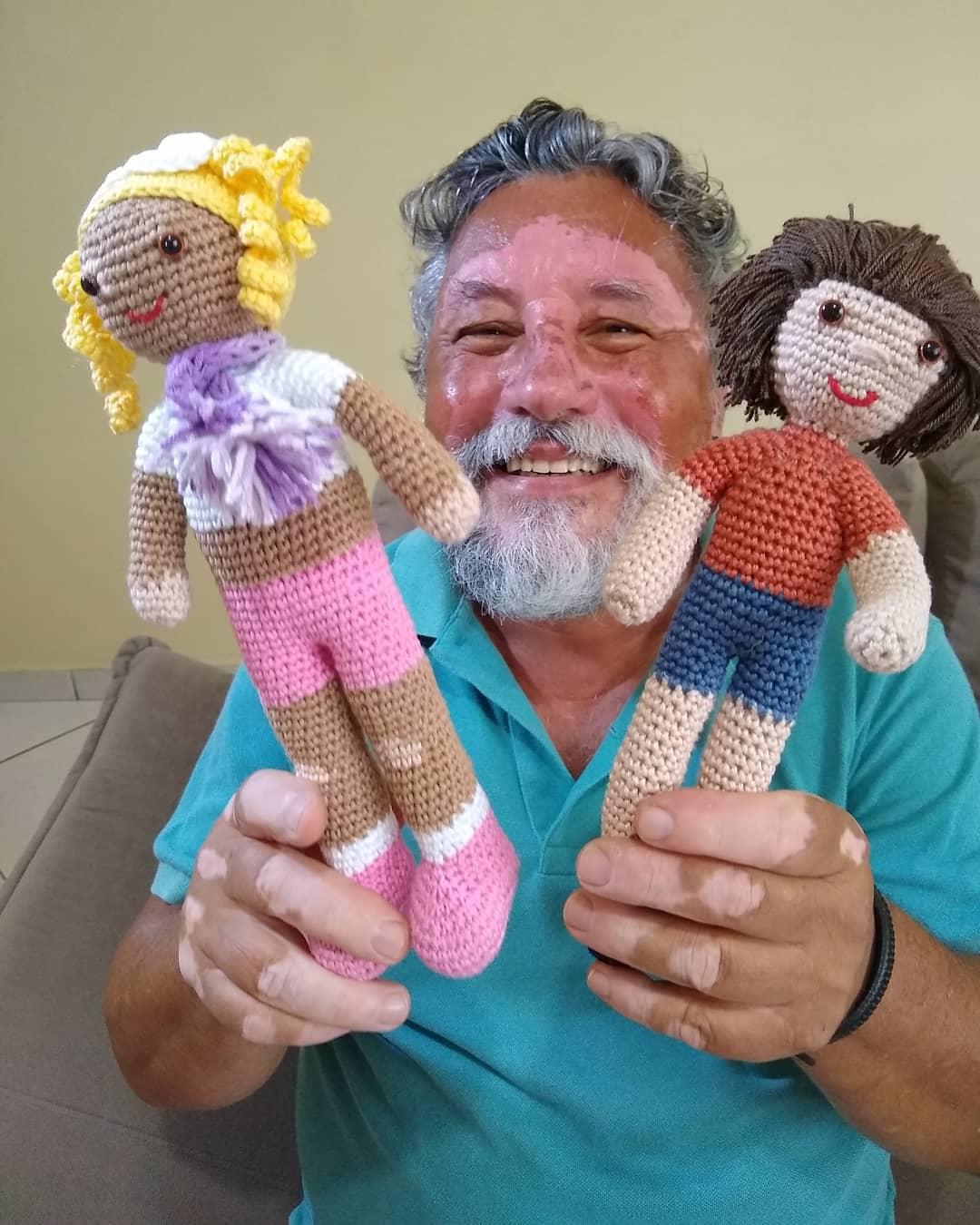
The pride that filled João’s heart was overwhelming. For the first time, he felt that his condition, which had once made him feel self-conscious, was something beautiful. The doll was not just a gift—it was a way for him to show Isabella that differences were something to be proud of, something to celebrate.
As the days passed, Isabella showed off her new doll to everyone, sharing pictures on social media. Soon, João began receiving requests from others—requests for dolls that represented various visible differences and disabilities. Parents of children with alopecia, psoriasis, and other skin conditions reached out, asking if he could create dolls that resembled their children.
João was taken aback. What started as a simple gift for his granddaughter had turned into something much larger. He was no longer just a grandfather knitting dolls in his spare time—he was an advocate for self-esteem and diversity. The response was overwhelming, but João was more than happy to meet the demand.
“I’m happy to be a good influencer,” he said, his voice tinged with humility during an interview. “Stains on vitiligo are beautiful. What is ugly is stains on people’s character.”
He took to Instagram to showcase his creations, sharing photos of dolls with different skin conditions, body types, and even disabilities, like a doll crocheted in a wheelchair. As of March 2020, his followers had grown to nearly 20,000, each one drawn to his message of acceptance and love.
The dolls became more than just toys. They became symbols of acceptance, each stitch telling a story of overcoming insecurities and celebrating diversity. The messages from his followers poured in, each one expressing gratitude for the dolls that had helped their children feel seen.
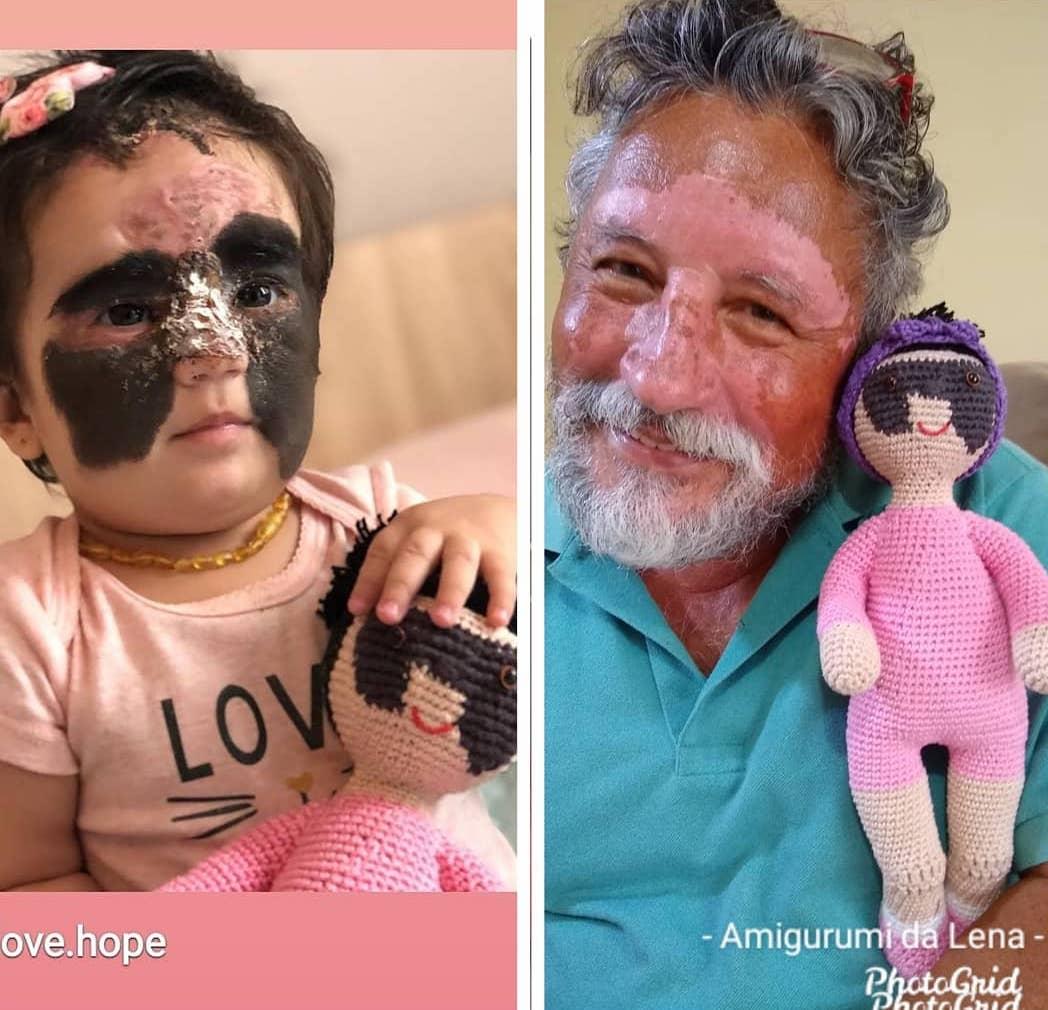
One follower shared, “God bless you, you are a great man.” Another wrote, “I wish the world was 100 percent like that, like you!”
For João, these words were the greatest reward. The crocheting had started as a hobby to pass the time, but it had become his mission. A mission to show the world that beauty comes in all forms—whether it's in the patches of vitiligo on his own skin, or in the carefully crocheted bodies of the dolls he made for others.
But the path hadn’t been without its challenges. The calluses on his fingers ached from hours of crocheting, and sometimes he had to rest his hands to recover. Yet, despite the discomfort, João couldn’t help but feel fulfilled. He had found his purpose in the most unexpected way. Through his art, he was helping children embrace their uniqueness, teaching them that they were beautiful just as they were.
One evening, as João sat by his window, the soft glow of the setting sun bathing the room in warmth, he looked at the collection of dolls surrounding him. Each one told a story—a story of resilience, of love, and of acceptance.
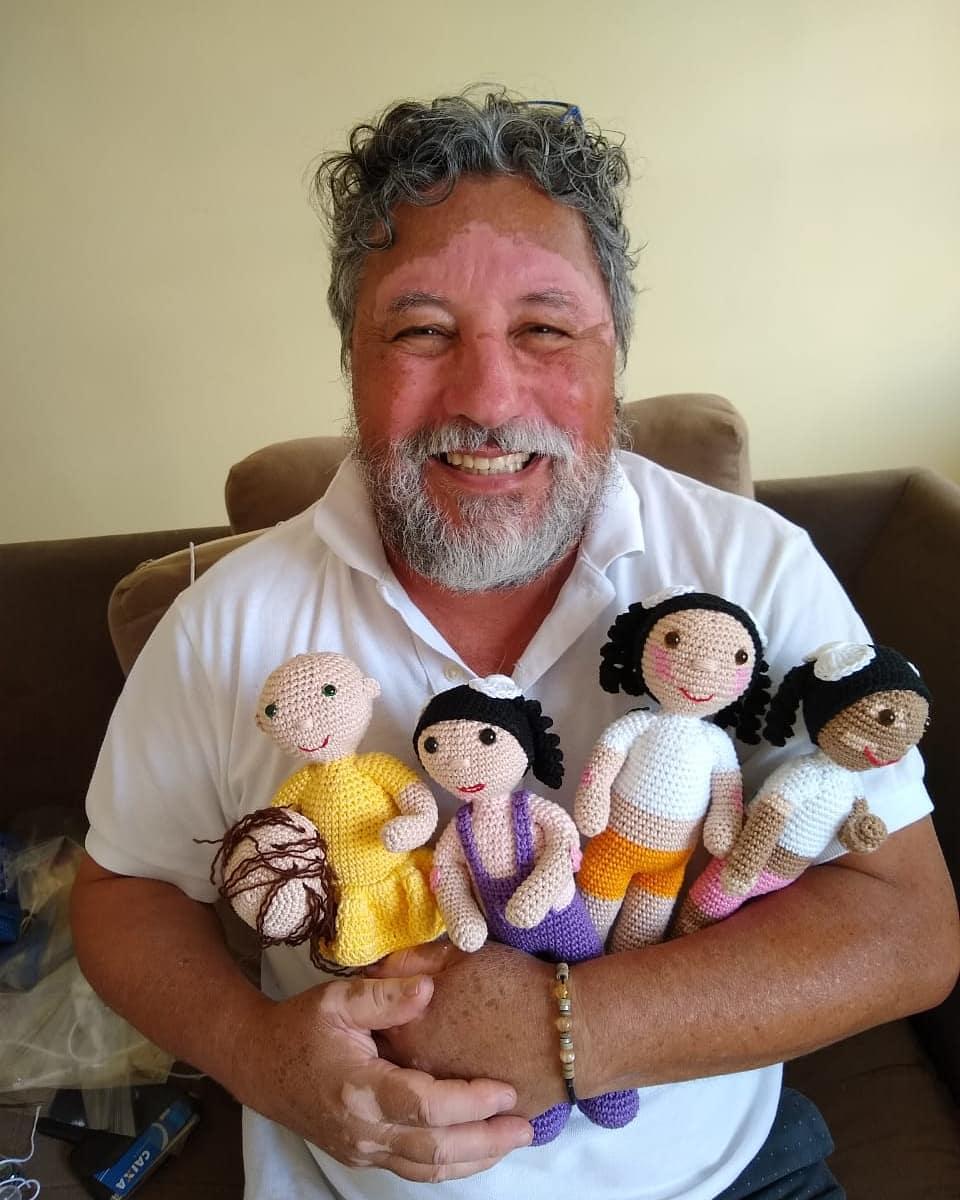
He smiled to himself, knowing that his dolls had done more than just fill a space in his home. They had filled a need in the hearts of countless children who needed to feel seen, heard, and understood. And in that moment, João knew he had created something far more precious than any rug—he had created hope.
“I’m not just making dolls,” he thought. “I’m making a difference.”
WATCH THE VIDEO