
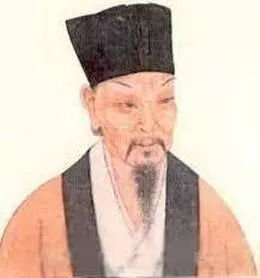

Su Dongpo (1037 – 1101 AD) (the literary name for Su Shi) was one of Chinese history’s greatest all-rounders.
His talent in multiple fields (calligraphy, poetry, painting, tea culture, and fashion) stood out amongst others in an age when Chinese culture was flourishing like never before.
He was also the first person to articulate the Chinese concept of ‘scholar artist’, a field he himself excelled in like few before or after.
Su Dongpo’s China: The Northern Song dynasty
 Northern Song Dynasty map. (Image source: Wikipedia Commons)
China’s Song dynasty (960 – 1276 AD) is often divided into two main periods:
- The Northern Song (960 – 1126 AD)
- The Southern Song (1126 – 1276 AD)
Su Dongpo’s lived entirely in Northern Song dynasty. This was a time of great economic growth and stability. Confucian virtues were elevated throughout elite society in what some have even gone as far to call a “Chinese renaissance.”
Between 750 and 1100 AD, China’s population is thought to have doubled. Commercial practices drove this, and diversification and specialisation of the economy led to strong urban growth. The world’s first ever paper money also appeared in this time.
China’s elite class also grew rapidly. A revival of the study of the classics and expansion of state-held examinations meant their social and cultural position was higher than ever.
Flourishing Song culture
During the Song dynasty, Chinese art and culture was seen as deeply central to Chinese civilisation. The Song elite are generally seen to have been less martial than their Tang dynasty predecessors.
Some historians speculate that this could have been lined to Song rivalry with the nomadic tribes (Mongol, Khitans, Jurchen) on their northern borders. These same tribes would eventually bring an end to the Northern (and after that, Southern) Song.
For more than seventy years the Song dynasty has flourished without people knowing the perils of war, but enjoying the blessings of affluence and education.
– Extract from Preface to the Complete Works of Ouyang Xiu (1091 AD), Su Dongpo
Either way, the northern aristocratic system that had been in place for centuries before was gone. The social system that replaced it was helped by a booming publishing industry.
Books were replacing scrolls, and the education system – though still highly competitive – was accessible to more young men than ever before.
Powerful new government positions were given to civil service examination graduates that were selected for their literary ability. And artistic and philosophical ideas developed in new ways.
This was the world Su Dongpo was born into.
A scholar should congratulate himself that he was born in such a time.
– Chief imperial examiner Zhao Ruyu, 1194
Family Background & early life
 Harmonizing with a Poem by Qin Guan (1079 AD) by Su Dongpo, ink on paper, running script. National Palace Museum, Taipei. Image source: National Palace Museum’s Open Data collection)
Su Dongpo (his real name was Su Shi) was born near the city of Meishan in Sichuan province on January 8th 1037 AD.
He was born into a wealthy and literary family. His father, Sun Xun (1009 – 1066 AD) was a silk merchant and a famous scholar in his own right. And his younger brother, Su Zhe (1039 – 1112 AD), grew up to be a well-known politician, poet, and writer, too.
Su married at aged 17, to the first of his three (separate) wives. It was a successful marriage, but his wife died in childbirth 13 years later – something Su later wrote movingly about.
Passing the imperial exam (with flying colours)
In 1056/57, aged 19, Su passed the highest level civil service examinations, attaining the status of ‘presented-scholar‘ (进士 [jìnshì]).
The great statesman and calligrapher Ouyang Xiu (1045 – 1072 AD) remarked that Su’s examination paper showed he would ‘surely lead the literary world one day.’
This task had required years of deep study of the Chinese classics. At least part of this study was led by Su’s mother. By Su’s time, the focus of education lied particularly on the following texts:
- The Analects of Confucius
- Mencius
- The Great Learning
- Maintaining Perfect Balance
- Two chapters of the Book of Rites
Why is Su Shi also called Su Dongpo?
Su Shi gave himself the literary pseudonym Su Dongpo after moving to a farm called Dongpo in Huangzhou, Hubei province during his first political exile (1080 – 1086 AD). Su is his family name, and ‘Dongpo‘ means ‘eastern slope’.
Like many Chinese poets, painters and calligraphers, Su was known by several literary names. Nowadays, the names Su Dongpo and Su Shi are both still used to refer to him.
Personality
Su was known to have been a gregarious and outgoing character. He had a wide circle of friends, including many other famous artistic and political Song figures.
There are accounts of him enjoying drinking, artistic games and humour. He even got on with his political opponent, Wang Anshi.
Wang was the powerful politician whose sweeping reform policies Su openly opposed, leading to his first exile. Despite this, Su and Wang remained on good terms, even writing to one another.
Philosophical beliefs
Su held relatively conservative social and political views. And – like many other Chinese – he held a mixture of primarily Confucian, but also Daoist and Buddhist values.
His Confucian beliefs would inform both his career and personal relations. Contrary to a popular misconception, Confucianism does not bound its adherents to blindly accept authority.
So some of Su’s later outspokenness can be seen in the light of him following the Confucian precept of essentially speaking truth to power. This principle can be summed up by a precept of the great Confucian thinker Xun Zi (ca. 298 – 235 BC):
A minister follows the way; he does not follow the ruler.
– Xun Zi
Daoism is in many ways a more metaphysical and inward looking system than Confucianism. Su’s thoughts on art in particular and his outlook more broadly seem to be clearly inspired by Daoist precepts (see below, ‘Daoism’s impact on Su’s art’).
Career & later life
 One Night (1080 – 1083) by Su Shi, running script, ink on paper. 27.6 x 45.2cm. National Palace Museum, Taipei. (Image source: National Palace Museum’s Open Data collection)
A promising start
Early on in his career, Su was fortunate to be mentored in the imperial court by a fellow artist and government official Ouyang Xiu.
Su climbed through the ranks of office quickly, working in the Northern Song capital of Kaifeng, Henan province. And then in 1071 for his first posting in the prosperous city of Hangzhou, Zhejiang province.
First exile
However, despite living in relatively peaceful and very prosperous times, the Song dynasty was undergoing radical change.
The politician Wang Anshi played played a big part in this. Wang Anshi’s reforms targeted almost every aspect of life in the Song state, including the military, education, and economics.
Wang’s appointment and mandate to make such sweeping reforms was unusual. About a century later, the intellectual Zhu Xi wrote that it was something “that comes only once in a thousand years.”
Many believed that change was needed, but disagreed on how it should be implemented. Su belonged to a conservative faction that believed by doubling down on Confucian values, change would naturally occur.
子曰:“为政以德,譬如北辰,居其所而众星共之。”
– Analects (2.1)
Confucius said: “He who rules by virtue is like the North Star, which remains fixed where it is whilst all the other stars revolve around it.
Su’s criticism of Wang’s reforms led to his imprisonment for over one hundred days. During this time, he was unsure whether he would face execution.
Fortunately, the Confucian ethos of the Song emperor meant that officials were not often executed.
季康子问政于孔子曰:“如杀无道,以就有道,何如?” 孔子对曰:“子为政,焉用杀?子欲善而民善矣。”
– Analects (12.19)
Lord Ji Kang asked Confucius about government. “If I killed the bad to help the good, would that be good?” Confucius replied: “You are here to govern, why kill?”
It then saw him sent on internal exile in a relatively lowly government post between the years 1080 – 1086 AD.
This was to Huangzhou in Hebei province. And it was that place where, as mentioned above, he gained took his literary pseudonym.
By this point, he had already been married to his second wife, Wang Runzhi, for several years. It’s said that her chiding of him for telling off one of his sons led him to writing his poem ‘Young Son’, which contains the following lines:
人皆生子望聪明,
– Extract from ‘Young Son’ by Su Dongpo
我因聪明误一生。
但愿我儿愚且鲁,
无灾无病到公卿。
When a son is born, everyone hopes he will be intelligent.
I, through intelligence, have wrecked my whole life.
Just hope the baby will prove ignorant and stupid,
Then he will lead a tranquil life as a cabinet minister.
Despite the remoteness and poverty Su experienced in Huangzhou, he was very productive there.
He wrote many poems, including his famous former and latter ‘Odes on the Red Cliffs‘ (see below), and his most famous piece of calligraphy (see below, ‘Cold Food Observance‘).
And it’s clear that his optimistic personality influenced his personal sentiments of affection for the area.
Return to politics and second exile
Like many other government officials, Su was recalled to the Northern Song capital, Kaifeng, in 1086. He was soon posted to Hangzhou in Zhejiang Province (not to be confused with Huangzhou, where he had been in exile) again.
Hangzhou’s famous West Lake still has a 1.7-mile (2.8 km) causeway (raised track of land) named after him. He proposed and led this project, which is said to have taken the work of about 200,000 labourers to complete.
And in 1089, he donated 50 ounces of his own gold to a hospital open to all people in Hangzhou, the Peace and Happiness hospital.
Misfortune befell Su again when his second wife, Wang Runzhi, died in 1195. Soon after he married a third time, to one of his servants, Wang Zhaoyun. She is said to have been a bright and witty individual who had taught herself how to read.
And then, politics intruded again. Su was again accused of using his poetry to criticise the emperor, and was sent down on another remote posting, this time in Huizhou, Guangdong province.
Not long after this, he was sent to a posting on the even more remote Hainan Island. This was about as far as an official could be sent from the Northern Song capital of Kaifeng.
Later life
In 1100, Su received a pardon from the new Emperor Huizong (himself a passionate calligrapher and artist). Su was once again given a posting in Chengdu, in his native Sichuan province.
However, this return to home and prestige wasn’t to be realised. He died en route in the city of Changzhou, Jiangsu province.
人生到处知何似,应似飞鸿踏雪泥。
– Su Dongpo
泥上偶然留指瓜,鸿飞那复计东西。
To what should human life be compared? A wild goose trampling on the snow.
The snow momentarily retains the imprint of its feet, then the goose flies away to no one knows where.
Literary afterlife: Banned and then bestseller
Su received praise and had a profound influence on other artists and poets during his lifetime.
However, his works were banned by government officials for twenty-five years after his death. This is because of his criticisms of Wang Anshi’s policies.
However, unlike those policies, which were soon reversed, his work lived on. It was published at least 9 different editions during the Song dynasty alone.
Throughout the centuries, he has been revered as one of the most erudite and talented cultural figures in all of Chinese history – no small feat!
Su Dongpo’s art: the three perfections…
‘The three perfections’ are the three arts that traditional Chinese culture most values: calligraphy, poetry, and painting.
Su Dongpo’s artistic philosophy
Su is credited with formulating a lot of the distinction that later came to be called literati art. This was art seen as different to the kind created by professional artisan artists.
In fact, he is the first person to directly define the concept, which once referred to as ‘shírén huà ‘gentlemen painting‘ (士人画 [shírén huà]).
Later on, the Ming scholar-artist Dong Qichang (1555 – 1636) would give literati painting the name it’s now known by in Chinese: ‘literati painting‘ (文人之画 [wénrén zhī huà]).
Literati art is art created by gentlemen scholars that aimed at something different to the professionals’ realistic and direct representation. It is something done by cultured scholars in their free time, which expressed their inner cultivated self.
Professional artists, by contrast, were trained from youth to focus mainly on the skill and techniques of art. They painted what they were told to paint for money.
For the literati, the opposite was the case – Su or others would gift people calligraphy and paintings, but would never accept commissions or payments.
Su once wrote:
论画以形似,见与儿童邻。
– Su Dongpo
赋诗必此诗,定非知诗人。
诗画本一律,天工与清新。
If anyone discussed painting in terms of formal likeness,
His understanding is nearly that of a child.
If when someone composes a poem, it must be a certain poem,
He is definitely not a man who knows poetry.
There is one basic rule in poetry and painting:
Natural genius and originality.
He had a clear hierarchy of the three perfections of Chinese art: calligraphy, poetry, painting – in that order.
其文之毫末;诗不能尽,溢而为书,变而为画,皆诗之余。
– Su Dongpo
What is used up in poetry overflows to become calligraphy and is transformed to become painting: both are what is left over from poetry.
And he often improvised paintings and poems when drunk with friends. One account has it that he would often fall asleep quickly after drinking, before waking up revived to paint at the same party.
Perhaps it was after one of these moments that led him to apologising to a friend for painting bamboo on his walls…
Art historian Susan Bush wrote:
Perhaps the closest we can come to Su’s [view] [is] painting is said to now be similar to calligraphy and poetry and to reflect the character of the maker as these two arts do.
– Susan Bush, The Chinese Literati on Painting: Su Shih (1037 – 1101) to Tung Chi’i-ch’ang (1555 – 1636) (1971)
Daoism’s impact on Su’s art
Daoism’s influence can clearly be seen in Su’s philosophy of art. He often made comments that reflect the Daoist (and Confucian) seeking of ‘Dao‘ (‘the Way’).
And his opinions on how to do this reflect the Daoist emphasis naturally becoming one with the inexpressible Dao rather than focusing on rigid definitions and conventions.
I say that Dao can be made to come but cannot be sought. What do I mean by ‘made to come’?…. In the south there are many divers who live in the water in every day. At seven they wade, at 10 they can float, and at fifteen they are able to dive. Could the divers be what they are without effort? They must have grasped the way of the water…. Thus, a hardy man from the north who questions the divers to seek their method of diving and tries out what they tell him in the Yellow River, will inevitably drown. Hence, anyone who does not study and insists on seeking Dao is a northerner learning diving.
– Su Dongpo
This implicitly echoes a passage from a key Daoist text, the Zhuangzi (3rd century BC):
If [a good swimmer] can swim underwater, he can operate a boat even if he has never seen one before… A good swimmer can usually do this because he has forgotten that the water exists…. because to him surging water is no different from a gentle hill… even if his vessel is tossed and turned in all directions, it doesn’t get to him, so he is relaxed and leisurely wherever he sails.
– Zhuangzi (19. 4)
1. Poetry
Su wrote poems throughout his life. Today, 2,700 of them survive, ranging across the shi, fu and ci styles.
Su’s poetry is often described as being very visual. His own words show that he believed strongly in the connection, or spill over, between poetry, painting and his calligraphy.
In politics, he had clear Confucian leanings. But as mentioned, His Daoist and Buddhist concerns seem to shine through in a lot of his poetry:
长恨此身非我有,
– Su Dongpo
何时忘却营营。
夜阑风静縠纹平。
小舟从此逝,
江海寄余生。
I hate not to be the master of my own life,
When at last shall I be able to forsake the worries of this world?
And, dropping the mooring of my little boat,
Entrust my remaining years to the rivers and the seas?
‘Former Ode on the Red Cliffs’ and ‘Latter Odes on the Red Cliffs’
Suring his first exile in Huangzhou, Su wrote two of his most well-known poems: ‘Former Ode on the Red Cliffs’ (前赤壁赋 [qiàn chìbì fù]) and ‘Latter Ode on the Red Cliffs’ (后赤壁赋 [hòu chìbì fù]).
As their Chinese names suggest, both were written in the fu style of Chinese poetry. This is a poetic-prose style that is sometimes translated as ‘rhapsody’ or ‘poetic exposition’.
Both are set during a boat journey Su and his friends are making past the spot on the Yangtze River where famous Battle of the Red Cliffs had taken place eight centuries before in 208 – 9 AD.
The ‘Former Ode on the Red Cliffs’ (1082) takes place on a moonlit cruise in a during calm waters. The friends are drinking and singing songs. Mist rises from the river, which reflects the stars, and off into the vast sky.
Su, the narrator, feels moved and nostalgic; someone plays the flute, and this feeling intensifies.
So, he asks the other guests, “Why does this flute make us sad?” His friend answers that it’s because being at the scene of such a great historical event is a stark reminder of how fleeting and insignificant life is:
寄蜉蝣于天地,渺沧海之一粟。哀吾生之须臾,羡长江之无穷。挟飞仙以遨游,抱明月而长终。知不可乎骤得,托遗响于悲风。
– Extract from ‘Former Ode on the Red Cliffs‘ by Su Dongpo
Friends, drifting in this small boat, toasting to one another, we are like mayflies in this vast world, as small as a grain of corn in the sea.
In return, Su tells his friend that time, like water, doesn’t decrease or vanish, it just moves on. Nature’s bounty is inexhaustible, and we can all share it.
盖将自其变者而观之,则天地曾不能以一瞬;自其不变者而观之,则物与我皆无尽也,而又何羡乎!且夫天地之间,物各有主,苟非吾之所有,虽一毫而莫取。惟江上之清风,与山间之明月,耳得之而为声,目遇之而成色,取之无禁,用之不竭。是造物者之无尽藏也,而吾与子之所共适。
– Extract from ‘Former Ode on the Red Cliffs’ by Su Dongpo
From the perspective of everything being changeable, relentless change doesn’t cease even for an instant. But from the perspective of things not changing, everything is eternal, so what is there for us to envy? What’s more, everything between heaven and earth has its own ultimate master, and not even a penny can be held onto forever. Only the wind of the river, and the moon in the mountains can forever cast their sounds and sights into ears and eyes. No one can stop them, or obtain them. Once you experience this, you won’t have endless worries. This is natures bounty, an endless treasure, which we can share in.
Su’s friends are pleased with what he said. Soon after, they all pull out their pillows and fall sleep aboard the boat.