


Tomorrow, April 20, the ninth day of March in Xin Chou year, Gu Yu, the last solar term of spring. Tomorrow, the capricious, warm and cold weather is over, and summer is coming.
Gu Yu
"Guyu" means "rain-bearing hundreds of grains". The increased rain and rising temperature greatly benefit the growth of cereal crops. There is a custom of eating toon in the northern areas before and after Guyu, while in the southern areas, they will drink tea to maintain health on Guyu.
The former Cangjie wrote the book, and the raindrops in the sky, the ghost cried at night; Boyi was the well, and the dragon Dengxuanyun, the gods dwelling in Kunlun, the more you can, the weaker the virtue. Therefore, Zhou Ding used the calligraphy to make the title of his finger, and it was impossible for him to do anything with great ingenuity.
—"Huainanzi"
According to "Huainanzi", since the beginning of the world, humans have not had characters until the time of Emperor Xuanyuan Huangdi, when the historian Cangjie created hieroglyphs.
This was an earth-shattering event. The Yellow Emperor was very happy. He issued an edict at the end of spring and early summer, announcing the success of Cangjie's writing of characters, and calling on his subjects all over the world to learn it together. The Jade Emperor in the sky was also moved by it and gave an extraordinary rain to the world, dropping countless grains and rice, covering the mountains and plains, and also making the farmland and crops in the world be nourished by rain and grow vigorously.
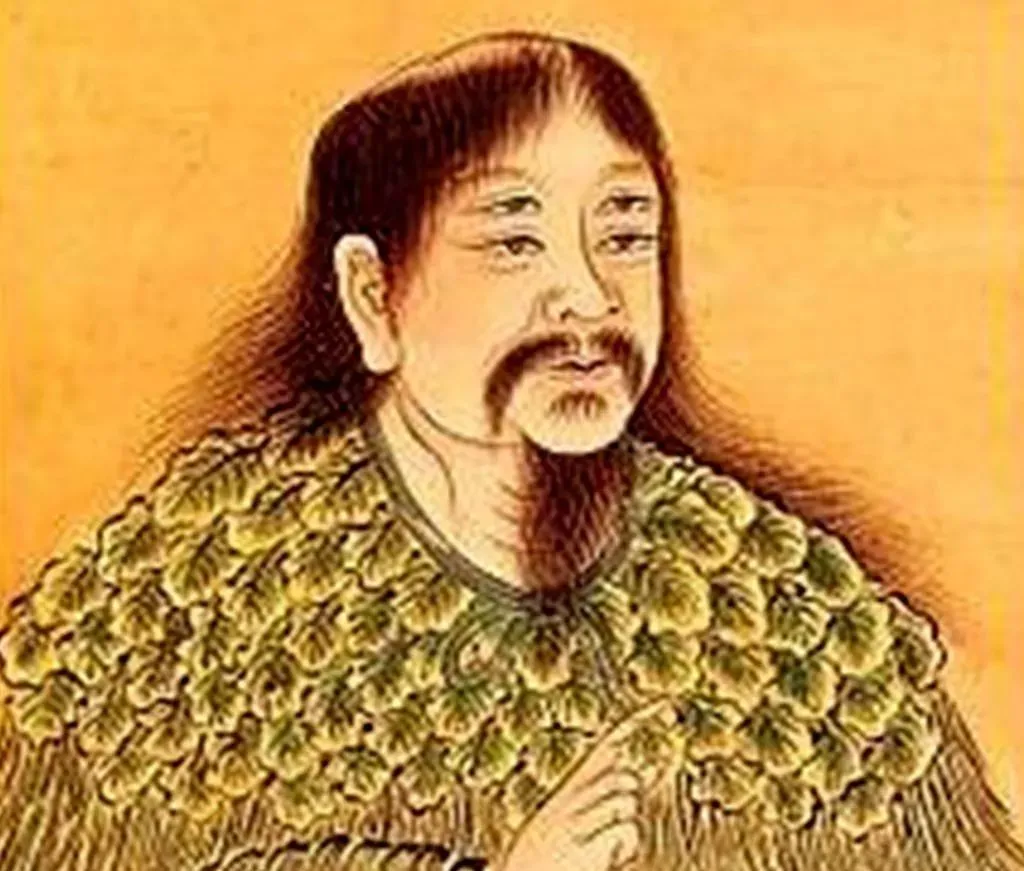
There is a saying among the folks that “Cangjie created a stone valley and passed it to Confucius for the eight fights, and the remaining two fights are not passed on, leaving behind the monk's painting incantations.” The writing is an important medium for all civilizations to begin and be passed down, precisely because of Cangjie's creation. It is the words that gave birth to brilliant literary works and thoughts such as classics, history, literature, and anthologies, and it is the continuation of such a brilliant and colorful Chinese culture.
Therefore, it is called the "Sage of Characters". Because of the Gu Yu story, there is also the "Qingming Festival to the Yellow Emperor, Gu Yu worships Cangjie." In other words, as the ancestor of the Chinese civilization, like the Yellow Emperor, he is commemorated by descendants.
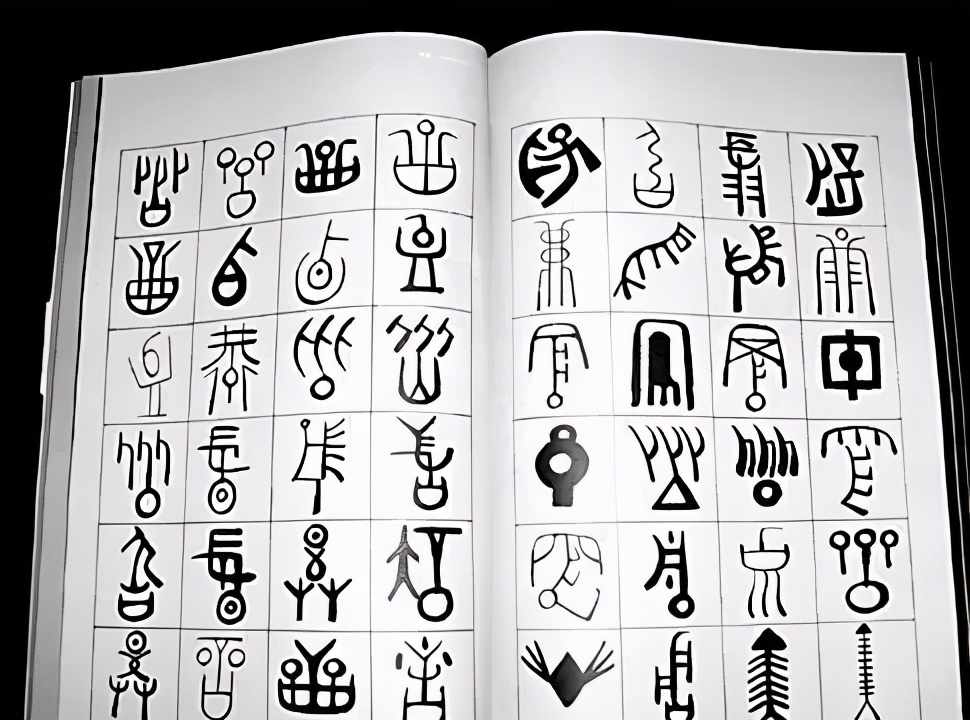
But where to visit is another question, hometown, hometown, death place, burial place? These can be called places of worship. We can often hear that there are Cangjie Mausoleum, Cangjie Temple, Cangjie Relics, etc. in different places, and even I don't know where to find them. There are too many controversies.
Here is a summary of the various relics of Cangjie, and see how they are different! If you are close, you can pay a visit during Gu Yu!
Remains of Cangjie
In summary, among the numerous Cangjie relics, four were built in the Han Dynasty, including Nanle, Yucheng, Kaifeng and Baishui in Shaanxi; two were built in the Jin Dynasty, Shouguang and Dong'a in Shandong; they were built in the Song Dynasty. Among the two places, Yangwu, Luoning, Henan, etc., there is also the Cangjie Tomb of Lushan in Pingdingshan, Henan. According to expert research, after Cangjie's death, he was buried in Cangtou, Lushan, and was given the name of Cangzitou by the Yellow Emperor.
Among them, Baishui is a national security unit, Nanle is a provincial security unit, and Yuzhou is a county security unit. Let's look at the earlier ones:
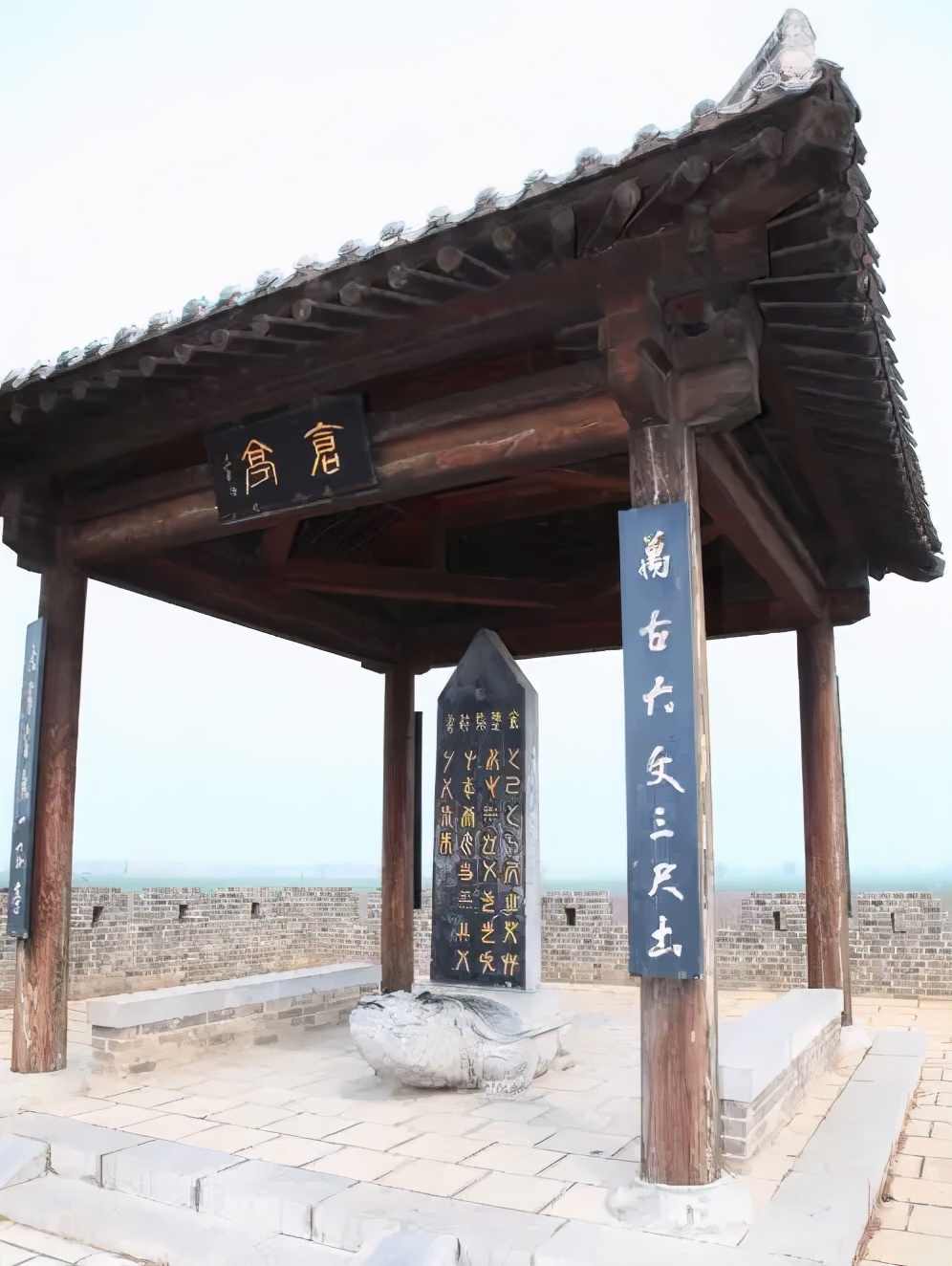
Cangjie Temple, Cangjie Tomb, and Character-making Platform, Baishui, Shaanxi
Cangjie Temple is the only surviving temple in China that commemorates writing inventions. It was approved by the State Council as a national cultural relics protection unit in June 2001. Shiguan Township, 35 kilometers northeast of Baishui County, is located at the southern foot of the Huanglong Mountains. The terrain is low in the south and high in the north, and is a relatively gentle plateau slope. There are towering ancient cypresses in the temple, and there are many inscriptions. Although they have been lost after the war, there are still eighteen links in the front hall, which are arrayed in the front hall. Among them, the Cangsheng bird monument and the monument are well preserved so far. There are 70 buildings along the central axis from south to north. Adjacent to the apse are the Cangjie tomb and cemetery.
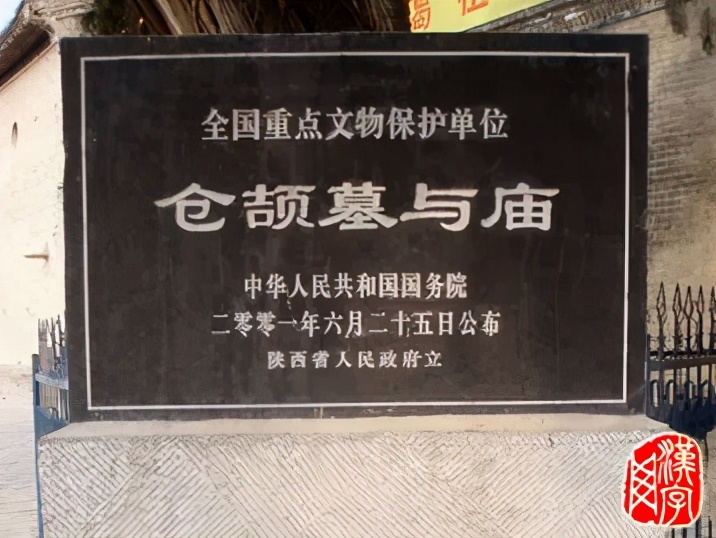
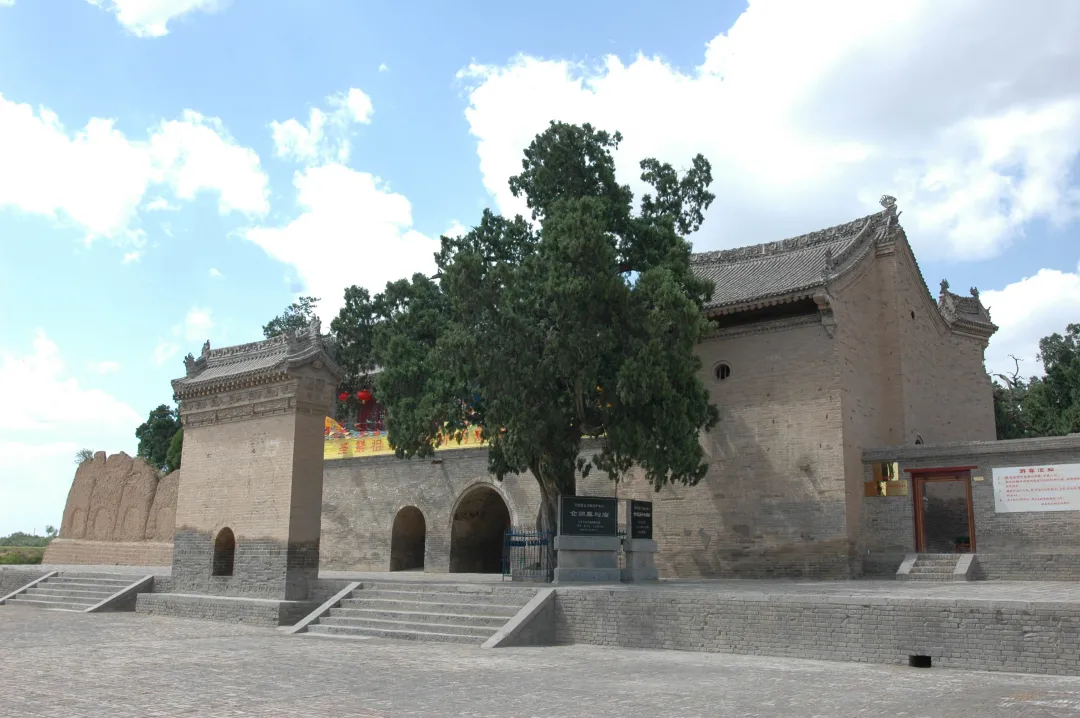
Miaodong Yili is mostly Wuzhuang Village. According to legend, Cangjie lived and lived in this village before his death; Miaonan Yiliyu is Shiguan Village. It is the name of Cangjie for later generations to commemorate Cangjie. It is about five li to the northwest of the temple. Di Pengya Village is the seat of Gubaishui County Government; about 20 kilometers southwest of the temple is Yangwu Village, the birthplace of Cangjie.
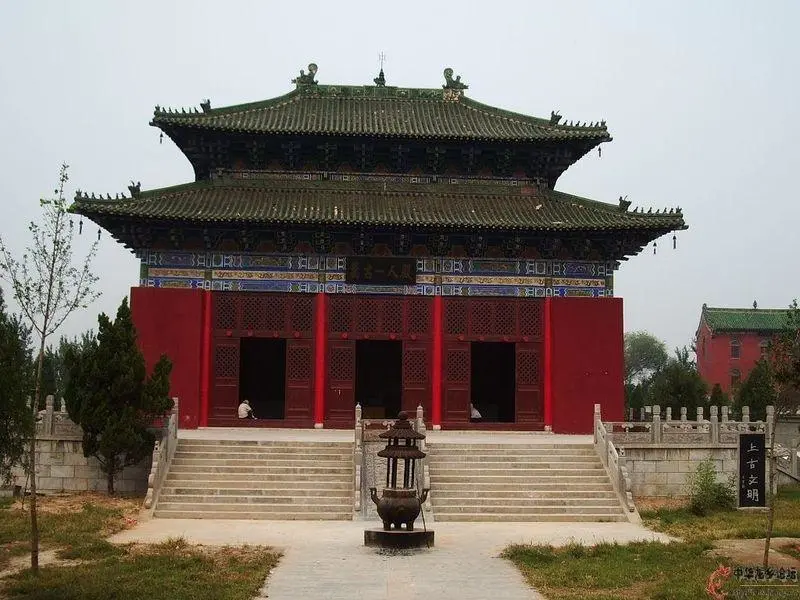
Cangjieling, Nanle, Henan
On the west side of Wu Village, Liangcun Township, Nanle County, Henan Province, Wu Village has now been renamed "Shiguan Village". It faces the local Cangjie Temple and is a five-meter-high mound. Below the mausoleum, there are ancient cultural relics from the Yangshao to Longshan period. In front of the mausoleum, Weng Zhong, stone lions exist, and there is a stone workshop with the word "Cangjie" written on it.
It was built in the second year of Yongxing in the Eastern Han Dynasty (154 AD). There is a remnant stele from the Yanyou period of the Yuan Dynasty in the temple, which contains the inscription: "Cangjie was born in Si and buried in Si, it is the light of the people". In the long history of more than 1800 years, due to soldiers and natural disasters, Nanle Cangjie Temple suffered repeated disasters, but it was destroyed and built repeatedly. "Since the Han and Tang Dynasties, it has not been replaced."
In 1966, a devastating disaster left the Cangjie Temple in ruins and the Cangjie Tomb was also excavated. Unexpectedly, the tattered pots, stone axe and sickle unearthed from the Cangjie tomb were identified by experts and turned out to be Longshan cultural relics. After planned archaeological excavations, the unearthed cultural relics are very rich, mainly Longshan. And artifacts from the Yangshao period. This unexpected discovery doubled the value of Nanle Cangjie Mausoleum. The Cangjie Chinese Character Culture Festival also started in Wu Village, Liangcun Township, Nanle County.
Regarding this place, there are many records of Cangjie's hometown. According to the "Tong Pu of Wan Xing·Volume 52", "The ancient Cangjie, a native of Wu Village in Nanle, was born Qi Sheng, has four eyes, and the bird-watching traces and insects were originally written. The use of words in place of the government of knotting ropes is the official historian of the Huangdi Xuanyuan." "The Unification of Ming Dynasty·Characters in Ancient Times" also records: "Cangjie, a native of Wucun in Nanle, was born to be a sage, with four eyes. The bird-watching traces and insects were originally written to replace the rope-tie policy, which is the official historian of Xuanyuan Huangdi." .
The appearance of ancient ruins has increased the credibility of Nanle Cangjie Tomb. The famous scholar Xu Xusheng made a conjecture in favor of Nanle in "The Legendary Age of Ancient Chinese History". An old stele in the Cangjie Temple: "Pangu's Wendi, Kaitian Sage" is the joint language left by the Northern Song Dynasty name Xiangkou Zhun when he made a special trip to worship Cangjie Temple after the alliance between the Song Dynasty and the Khitan Chanyuan. At the Cangjie Temple in Tokyo near the foot of the imperial court, he didn't inscribe a single word, but he ran to the Nanle worship inscription hundreds of miles away. In Kou Zhun's mind, the weight of Nanle Cangjieling is still relatively heavy.
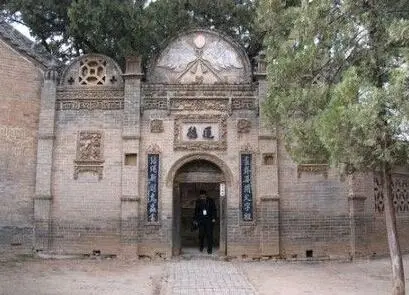
Tomb of Cangjie, Yucheng, Henan
It was built in the Western Han Dynasty and was rebuilt several times during the Kaiyuan period of the Tang Dynasty and the Kangxi period of the Qing Dynasty. After all the vicissitudes of life, now there is only one hall, two blood cypresses and a stone stele. The chrysanthemums around the tomb of Cangjie in Yucheng are the chrysanthemums around the tomb-Cangjie chrysanthemum (Cang chrysanthemum for short), a rare species in the Compositae family. There is an inscription on the remaining Natong stone stele: "Cluster chrysanthemum grows around the tomb, and the fragrance can be filled with tea." It is said that drinking Cang chrysanthemum tea for many years can nourish the eyes and keep the eyes open. It is especially strange that Cangjie chrysanthemum cannot be transplanted. After transplanting elsewhere, although the chrysanthemum can live, its medicinal and tea properties will change quickly. In this regard, it seems to be similar to the word beat (top) on the Kaifeng Cangjie Monument.
Tomb of Cangjie, Kaifeng, Henan
There are the Cangwang (Jie) Tomb, Cangwang Temple, and the Cangwang Temple. It is located in the Liuzhuang and Bandi villages on the south bank of the Yellow River embankment in the northeast of Kaifeng. You can see the three-way stone steles here, all of which were erected in 1995 and carved in one pass. There is "Tomb of Cangjie, the ancestor of writing", one is "Cangjie Tombstone", and the other is engraved with two poems praising Cangjie and the names of donors. I just saw the stone tablet and there is no tomb. The tomb is in the field of Lucy. A huge tomb was found in an empty field about 300 meters away. The tomb is oval in shape, covering an area of 30 square meters and a height of 4 meters. It is a cultural relic protection unit in Kaifeng City.
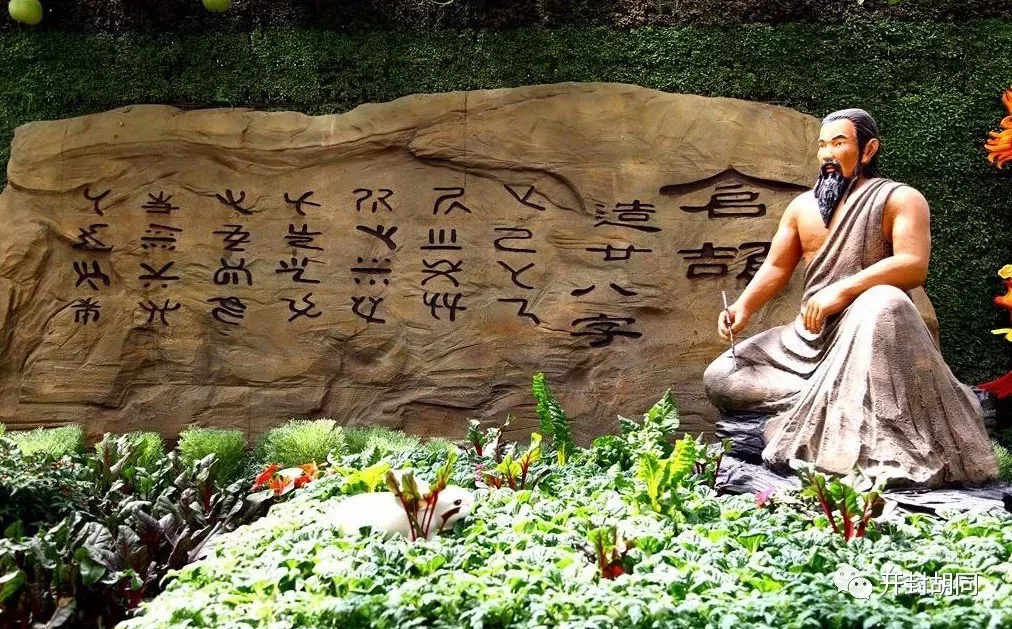
The famous Kaifeng historian, Mr. Kong Xianyi, wrote in an article in 1990: "The Cangjie tombs in the north of Kaifeng city are earlier and more reliable, while the Cangjie tombs and temples in Baishui, Shouguang, Dong'a, and Yucheng are monumental temples. "
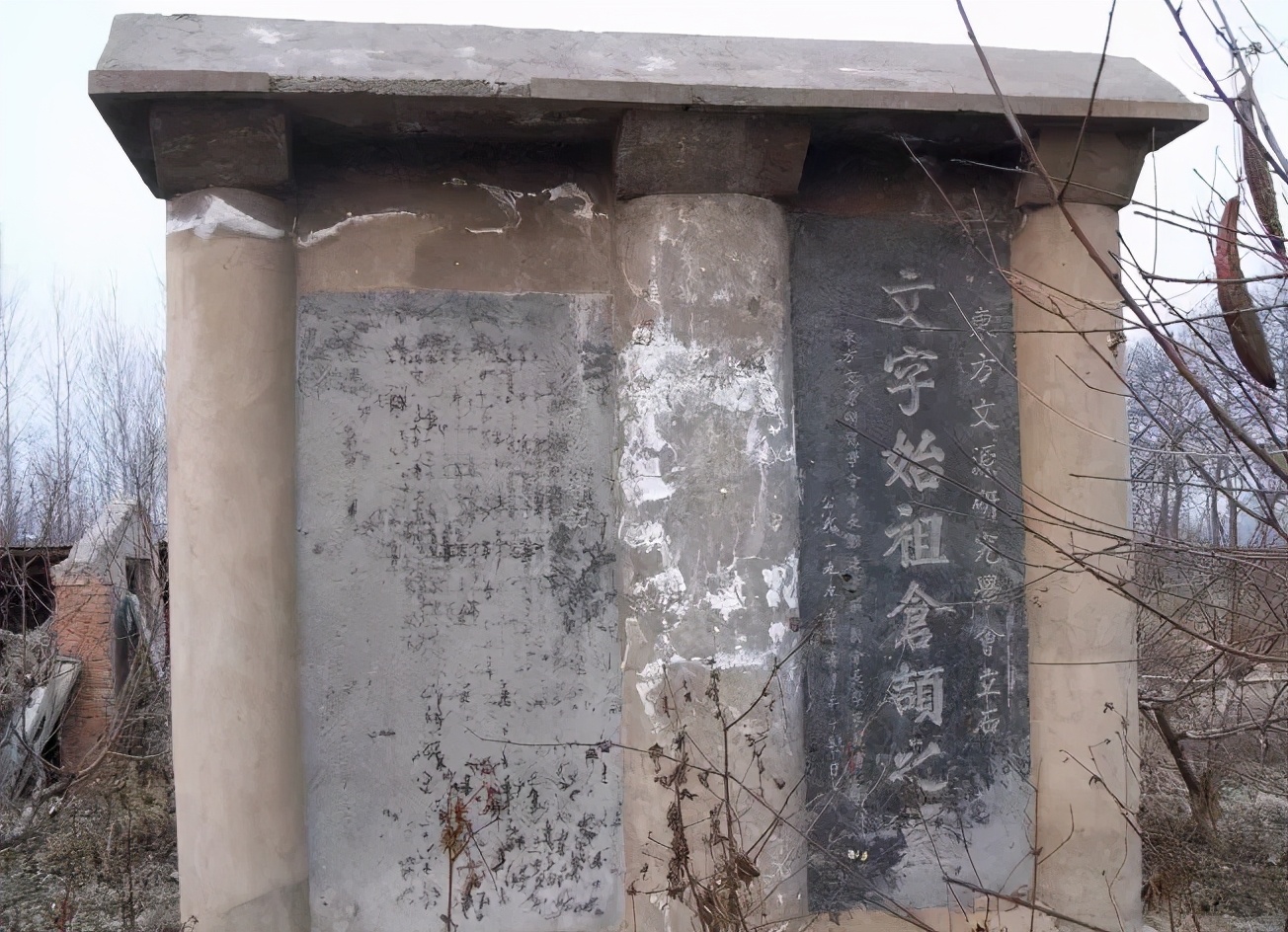
There is also a local legend in Kaifeng, saying that "Cangjie made characters and guessed it, and the twenty-eight characters have not been opened." It's about a time when Sage Kong passed by and saw 28 characters on the Cangjie stele, and he didn't know a word. An original Cangjie inscription monument in the Cangjie Temple in Kaifeng has disappeared. According to local villagers, the monument is probably still buried under the writing platform. Regarding this Tongbei, Kaifeng circulated: The characters on the Cangwang monument will change as soon as it gets out of the village. Now that the monument is gone, there is no way to verify whether it will go or not.
There are relatively few records of the Cangjie relics in the later ages, and most of them are records in county chronicles:
Shandong Dong'a Cangjie Tomb is a tomb dedicated to Cangjie. Legend has it that there is one 1.5 kilometers southeast of Wangzongtang Village, Tongcheng Office, Dong'e County, Shandong Province. Dong'a Cangjie Tomb was newly built. In the twenty-fourth year of Wanli of the Ming Dynasty (1596), the "Yanzhou Fuzhi" edited by Yu Shenxing recorded: "The former residence of Cangjie was 30 miles northwest of the city (the old rule of Dong'e County, which is now Dong'e Town, Pingyin County). There are tombs, There is a temple." The Qing Dynasty "Dong'e County Chronicles·Historic Relics" records: "The Cangjie Tomb is 30 miles northwest of the county (now Dong'e Town, Pingyin County), and there is a temple in front of the tomb, Jiuyu. Li Xianshu, the magistrate of Daoguang five years, was rebuilt by donation. "
Cangjie Tomb in Shouguang, Shandong , the newly edited "Shouguang County Chronicles" "Cangjie Tomb" contains: Cangjie Tomb is located in the north outside the Daxi Gate of Shouguang County, on the west side of the avenue (in the courtyard of the Luxi Urban and Rural Construction Committee in the north section of Central Avenue today). Cangsheng Park was founded in 1991 and covers an area of 350 acres. It is a comprehensive open park with the theme of commemorating Cangjie, the saint who made characters, that integrates play, entertainment and leisure.
According to legend , Yangwu, Henan, was the capital of Cangjie. "Tongji of Chan" said that "Cangjie lived in Yangwu and was buried in Lixiang".
The ruins of Cangjie Zitai in Luoning, located at the east of Yangyu River, Xinghua Township, Luoning County, Luoyang City, are one of the important sites of ancient Chinese culture. According to legend, Cangjie followed the emperor on a tour of the south, and to this day, Changshui Xixuanhushui entered Luohu, and the tortoise carried the book to give it, so he built a site and made characters. The platform of the ruins is 3.4 meters high, the top diameter is 3.3 meters, and the circumference is l3.5 meters. The platform is engraved with "Cangjie inscriptions". It is still well preserved.
Lushan Cangjie Temple, also known as the hometown of Cangjie, contained more than 100 "Cangzitou" inscriptions and other inscriptions. It was used as a spillway roof when the Cangtou reservoir was built in 1958. There are only 3 stone steles left in the temple today. In 2004, Mr. Liu Daocheng, a well-known Chinese medicine doctor in Hubei, invested more than 300,000 yuan to cast a gilt bronze Cangjie statue and enshrine it in the Cangjie Temple.
Pan Gu gracefully, Kaitian saint's house
The public is justified, and the mother-in-law is reasonable. So many places have their own good reasons to say that the Cangjieling Mausoleum is authentic, but no real evidence can be given. Maybe there are Cangjie deeds and experiences everywhere. It is hard to say. This is like the dispute between Zhuge Liang's farmland in Nanyang and Xiangyang, and it is still inconclusive.
But fighting may be a good thing. If you want to fight, you must first check the literature and find information from a historical perspective; second, start from the field and engage in development and construction. In these two respects, Nanle County has already started, and it is effective. It seems that a few years ago, Kaifeng also had an initiative to rebuild Cangjie Mausoleum and include it in the Yellow River Tourist Area. This should be a viable good thing.
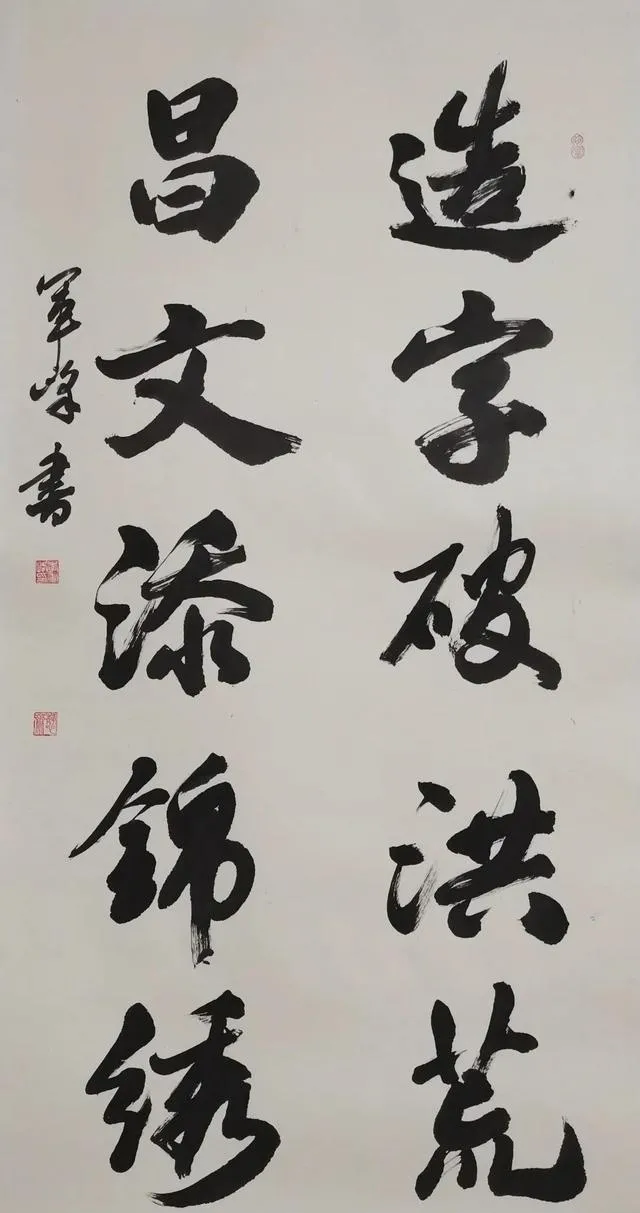
Regardless of whether our Cangjie tomb actually has a person under it, it is an indisputable fact that Cangjie has been active on our land. We have documents, legends, and relics. It is our responsibility to receive it and promote it. I believe that by making Cangjie culture bigger and stronger, Zisheng will surely be able to reproduce its glory!