


Skywatchers around the world will have their first chance of the year to witness a dramatic celestial event on Feb. 17, 2026, when an annular solar eclipse — often called a “ring of fire” — unfolds over Earth’s far Southern Hemisphere. The eclipse will be visible mainly from remote parts of Antarctica and the surrounding oceans, while millions in South America and southern Africa will see a partial eclipse, according to EarthSky.
The event will mark the opening of the year’s first eclipse season, a period that occurs roughly every six months when the sun, moon and Earth align in space. During these times, the moon can cast its shadow across the planet, creating either solar or lunar eclipses, according to The Epoch Times.
When and Where to Watch
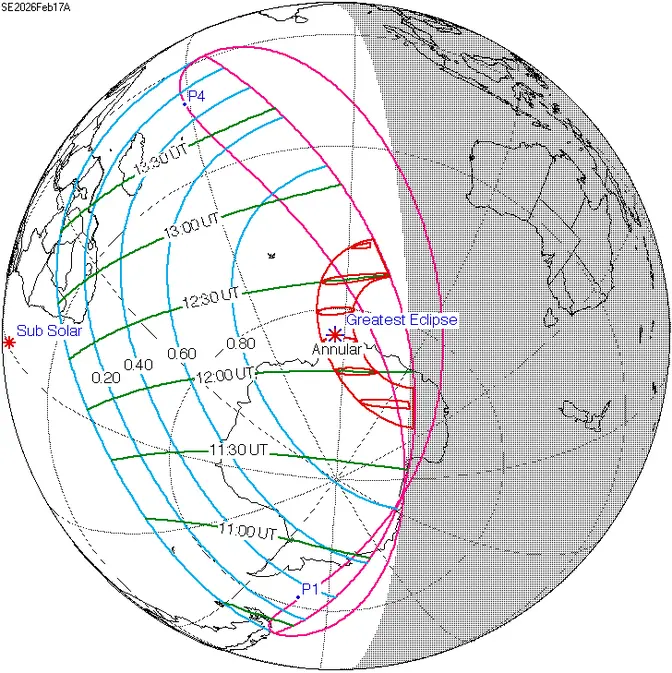
The February eclipse will begin as a partial event at 9:56 UTC, with the annular phase starting at 11:42 UTC, EarthSky reports. Maximum eclipse will occur at 12:12 UTC, when up to 96 percent of the sun will be obscured by the moon. The annular phase will last about two minutes and 20 seconds, ending at 12:41 UTC, while the entire eclipse — including its partial phases — will conclude at 14:27 UTC.
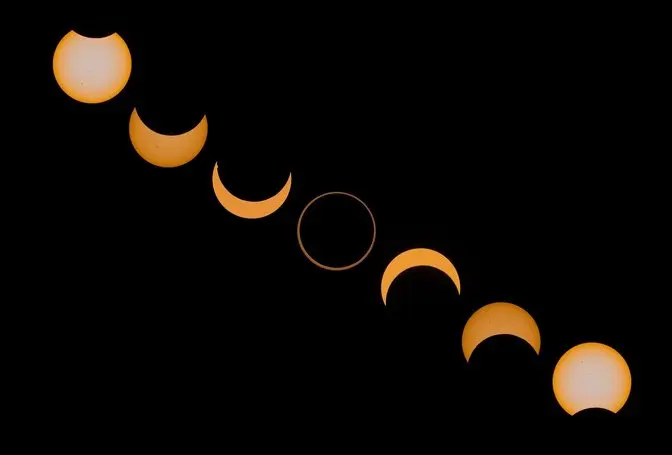
In the United States Eastern time zone, The Epoch Times notes that the eclipse shadow will begin sweeping across the Southern Hemisphere at 4:56 a.m. EST, with annularity appearing at 6:42 a.m. EST and reaching its maximum at 7:11 a.m. EST.
The narrow path of the true ring of fire effect will arc briefly along Antarctica’s icy coast and across the Davis Sea. Only those in a small band of the Antarctic Circle will experience the full annular view. Most other regions — including the southern tip of South America, parts of southern Africa and vast stretches of ocean — will see the moon take a noticeable bite out of the sun instead.
What Makes It a Ring of Fire?
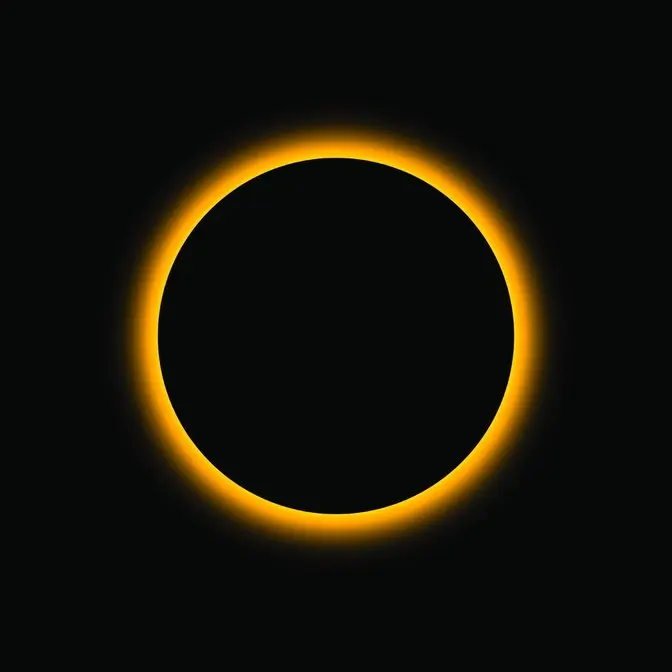
Unlike a total solar eclipse, an annular eclipse occurs when the moon is too far from Earth to completely cover the sun. Because the moon’s orbit is slightly elliptical, its apparent size changes over time. When it reaches its farthest point from Earth, known as apogee, the moon appears slightly smaller in the sky. During such times, it cannot fully block the sun’s bright surface, leaving a brilliant outer ring of sunlight visible.
Astronomers refer to this phenomenon as an annular eclipse, a name derived from the Latin word annulus, meaning ring. Although not as dark or dramatic as a total eclipse, the glowing halo effect is still one of nature’s most striking sights.
Safety First
Despite its beauty, the February eclipse will never be safe to view with the naked eye. Because the sun remains partially visible at all times, proper eye protection — such as certified solar filters or eclipse glasses — is essential throughout the event, EarthSky emphasizes.
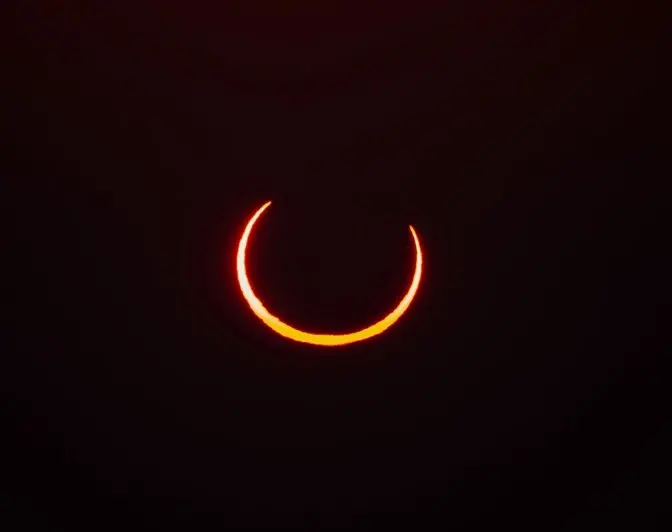
The Epoch Times echoes this warning, noting that even in Antarctica, where the ring of fire will be most visible, observers must use the correct equipment to safely watch the sun. With appropriate protection, viewers may be able to glimpse solar prominences — bright arcs of gas that can appear around the moon’s dark silhouette.
A Remote Spectacle
Because the path of annularity lies almost entirely over Antarctica and the Southern Ocean, opportunities to see the full ring in person will be extremely limited. The Epoch Times points out that only Antarctic researchers and extreme travelers are likely to witness it firsthand, and even livestream coverage may be difficult due to the region’s harsh conditions.
Still, the event will be widely observable as a partial eclipse across broad areas of the Southern Hemisphere, offering many people a chance to participate in the excitement from afar.
Part of a Cosmic Rhythm
The February eclipse is the first of two solar eclipses expected in 2026. Another, a total solar eclipse, will occur on Aug. 12, 2026, passing over parts of Greenland, Iceland and Spain, EarthSky reports.
Both events are part of a larger astronomical pattern known as eclipse seasons, which arise because the moon’s orbit is tilted about 5 degrees relative to Earth’s path around the sun. Only when the moon crosses this plane at the right time can an eclipse occur.
For now, all eyes — protected, of course — will turn southward as the year’s first solar spectacle unfolds.
Subscribe to The Bright Story and step into a world of hope, wonder, and humanity at its best. With unlimited access, discover powerful personal journeys, heartwarming family and animal stories, incredible discoveries, and the everyday kindness that makes life brighter.