


If you’re planning to dig in your yard or on your property — whether for landscaping, fencing, building a deck or installing a shed — the last thing you want is to strike an underground line you didn’t know about. While many public utilities are located by calling the one-call system, there is a special category you must pay extra attention to: private utility locating. These are the pipes, conduits and cables that often begin at your meter or property line and serve specific fixtures or buildings on your property.
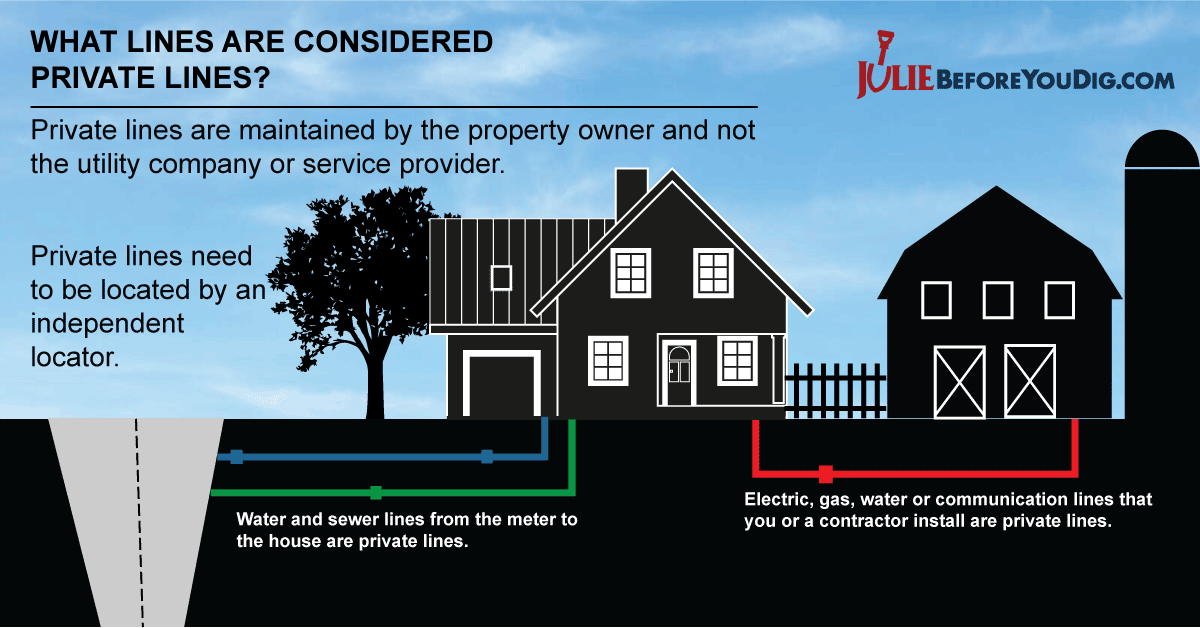
What Are Private Utility Lines?
Public utilities (electric, gas, water, sewer, communications) are typically marked through services like Illinois One-Call when you submit a request. However, private utility lines are those beyond what the utility company owns and maintains — examples include:
- A gas line running from the meter to a detached garage or grill
- A private water or sewer service line on your property
- Underground sprinkler systems or invisible pet fencing
- Secondary electrical feeders to outbuildings
Because these lines are not owned by the utility company, they often are not marked through the standard one-call system. This means homeowners or project contractors must take extra precautions to find and protect them.
Why Private Line Locating Matters
- Safety risk: Striking a private line can cause leaks, electrocution, or hazardous situations just like a public utility line can.
- Damage & cost: Repairing or replacing a damaged private utility line is often costly and entirely the homeowner’s responsibility.
- Service interruption: You could lose access to water, gas, power or other services — not just to your property, but possibly to shared systems.
- Liability: If you dig without checking and damage a private line, you could face legal or insurance issues.
What the Illinois One-Call System Offers
Under Illinois law, when you plan any digging project you must contact JULIE/Illinois One-Call at least two business days before starting. The service will alert the utility companies that are members of the one-call system, and those companies will come mark their owned underground lines free of charge. These marks use color-coded paint or flags to show the location of the utilities.
Important caveats:
- Even when the public utilities mark their lines, private lines are not included in what they will mark. Homeowners must find or contract separate locators for those.
- After you receive the “dig number” from the one-call request, you must begin your project within a specified time-limit and you must not dig until all markings are in place.
Steps for Safe Digging and Private Line Locating
- Pre-mark your proposed dig area. Use white paint or flags to outline the area where you’ll dig so that locators know where to focus.
- Call or go online to submit your locate request. For public utilities, use Illinois One-Call at 811 or the designated number.
- Wait the required time. The standard minimum is two business days (excluding weekends and holidays).
- Respect the markings. Once the public utilities have marked their lines, do not move flags or markings and treat the area with caution.
- Address private lines separately. If you have sprinklers, garage feeders, or other non-public utilities, hire a private locator or take extra care to identify them before you dig.
- Dig with care. Especially when you are near marked lines — switch to hand tools and avoid mechanized digging within the tolerance zone (often 18–24 inches around the mark).
Bottom Line
Professional locating of underground utilities — both public and private — is not optional if you are going to dig. For public utilities, one call to Illinois One-Call does most of the work, free of charge. For private lines, you have the responsibility to ensure they are located or clearly known. Knowing “what’s below” before you dig can save your wallet, protect your safety, and preserve services you rely on.
Join the excitement of Dig in the Park and explore the importance of calling 811 before you dig.